




Home > Blog > Top 10 Cheapest Countries for Kidney Transplant (Cost, Safety & Success Rate Comparison Guide)
Top 10 Cheapest Countries for Kidney Transplant (Cost, Safety & Success Rate Comparison Guide)
Filters & Insights
Looking for the kidney transplant? Compare the top 10 affordable destinations, costs, success rates, and why India ranks #1
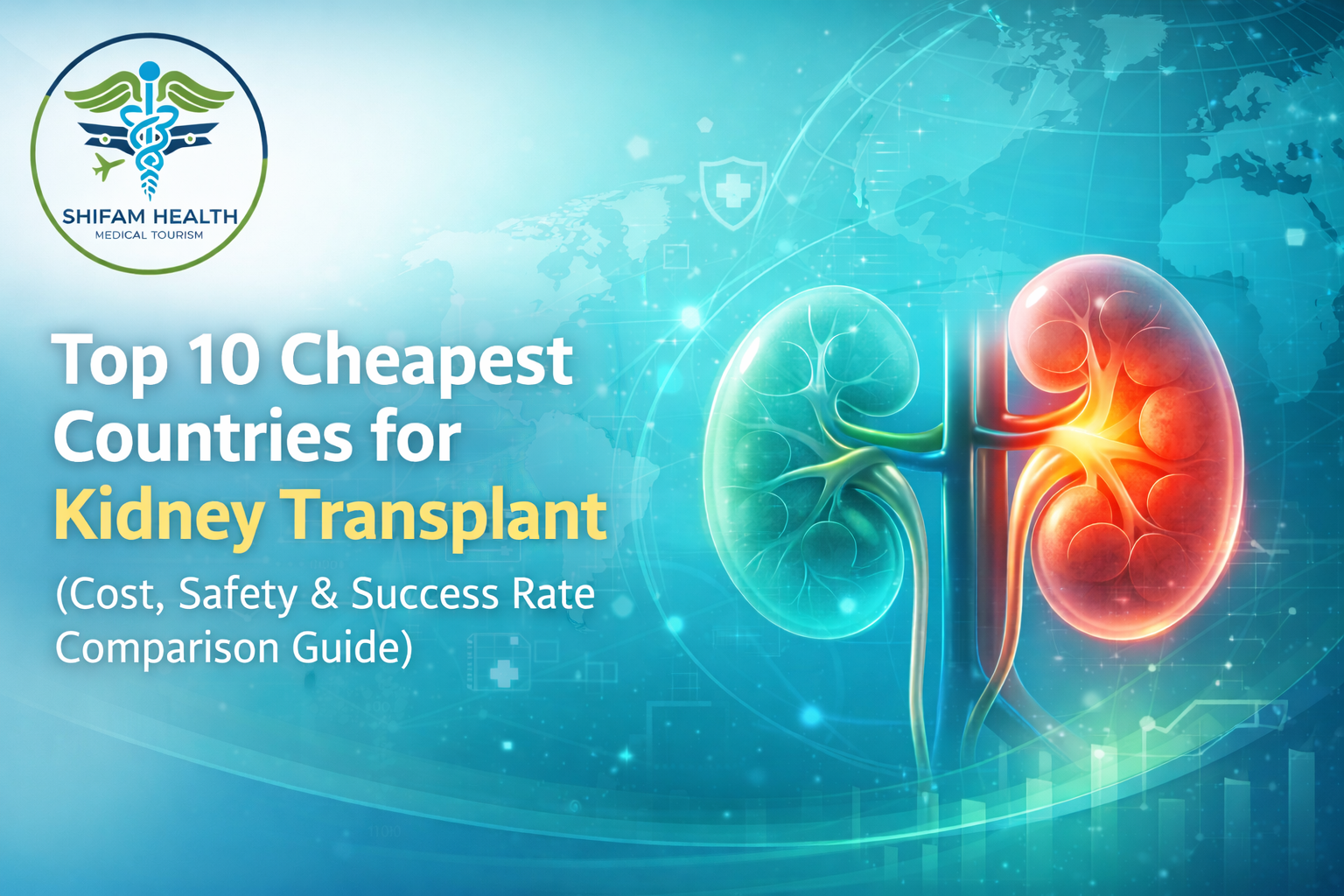
A kidney transplant can save and transform a life — but for many patients, the biggest obstacle is cost. In countries like the US and the UK, transplant surgery expenses can reach $200,000–$400,000, and waiting lists for deceased donors may stretch for years. Because of this, families across America, Europe, the Gulf region, and Africa are actively searching for the cheapest country for kidney transplant, comparing kidney transplant cost worldwide, and looking for safe, affordable kidney transplant countries with trusted hospitals.
You are not alone in this search. Every year, thousands of international patients explore treatment abroad to find a balance between medical safety, surgical expertise, and financial affordability.
The encouraging news is that several countries now provide:
- Advanced transplant surgery programs
- Experienced, high-volume transplant surgeons
- Modern ICUs and infection-controlled transplant units
- International patient support services
- Costs that are often 70–85% lower than Western healthcare systems
When treatment is done at the right hospital, under strict donor laws and proper medical evaluation, patients can receive world-class care at a realistic cost.
This guide was created to help patients and families make informed decisions. We compare the top 10 affordable kidney transplant destinations, including:
- Average treatment costs
- Success rate ranges
- Donor law strictness
- Waiting time expectations
- Travel convenience
- Which type of patient each country is best suited for
Whether you are from the USA, UK, Gulf countries, or Africa, this comparison will help you understand where quality, safety, and affordability meet — so you can move forward with clarity and confidence.
Quick Comparison Table
| Country | Average Cost (USD) | Success Rate Range | Waiting Time | Donor Law Strictness | Why Patients Choose It |
|---|---|---|---|---|---|
| India | $13,000–$18,000 | 90–95% | Short (living donor) | Strict, regulated | Best balance of cost + expertise |
| Turkey | $17,000–$23,000 | 90–95% | Short | Strict | Strong private hospitals |
| Pakistan | $14,000–$20,000 | 85–92% | Short | Tightened laws | Low cost |
| Egypt | $15,000–$22,000 | 85–92% | Moderate | Strict | Regional option for Africa |
| Philippines | $18,000–$25,000 | 88–93% | Moderate | Regulated | English-speaking system |
| Thailand | $22,000–$30,000 | 90–95% | Moderate | Strict | High-end hospitals |
| Mexico | $25,000–$35,000 | 88–93% | Moderate | Strict | Close to USA |
| Malaysia | $20,000–$28,000 | 90–95% | Moderate | Strict | Medical tourism hub |
| Brazil | $30,000–$40,000 | 88–94% | Longer | Public-focused | Latin America option |
| Poland | $28,000–$38,000 | 90–95% | Moderate | Strict EU laws | European standards |
Top 10 Affordable Countries for Kidney Transplant (Detailed Comparison)
1. India
| Factor | Details |
|---|---|
| Cost Range | $13,000–$18,000 |
| Success Rate | 90–95% (short-term graft survival at experienced centers) |
| Hospital Standard | Internationally accredited, high-volume transplant centers |
| Medical Expertise | Surgeons with decades of transplant experience; advanced tissue matching labs |
| Donor Law | Strict authorization committee approval; legal documentation mandatory |
| Waiting Time | Short with living donor; deceased donor depends on registry |
| Technology | Modern ICUs, infection-controlled transplant units |
| Travel Access | Excellent global flight connectivity |
| Best For | Patients seeking lowest cost with strong clinical standards |
2. Turkey
| Factor | Details |
|---|---|
| Cost Range | $17,000–$23,000 |
| Success Rate | 90–95% |
| Hospital Standard | High-end private hospitals with advanced surgical units |
| Expertise | Strong transplant surgery reputation |
| Donor Law | Strict and regulated; documentation required |
| Travel Access | Easy access from Europe, Middle East |
| Best For | Patients wanting premium hospital infrastructure |
3. Pakistan
| Factor | Details |
|---|---|
| Cost Range | $14,000–$20,000 |
| Success Rate | 85–92% |
| Hospital Standard | Selected private centers offer transplant services |
| Expertise | Growing experience in transplant care |
| Donor Law | Laws strengthened; legal approval required |
| Travel Access | Convenient for regional patients |
| Best For | Cost-focused patients in nearby regions |
4. Egypt
| Factor | Details |
|---|---|
| Cost Range | $15,000–$22,000 |
| Success Rate | 85–92% |
| Hospital Standard | Expanding transplant infrastructure |
| Expertise | Improving surgical programs |
| Donor Law | Strict oversight |
| Travel Access | Accessible for Africa & Middle East |
| Best For | Regional access with moderate cost |
5. Philippines
| Factor | Details |
|---|---|
| Cost Range | $18,000–$25,000 |
| Success Rate | 88–93% |
| Hospital Standard | English-speaking healthcare system |
| Expertise | Established transplant units |
| Donor Law | Regulated donor approval process |
| Travel Access | Good connectivity from Asia-Pacific |
| Best For | English-speaking patients |
6. Thailand
| Factor | Details |
|---|---|
| Cost Range | $22,000–$30,000 |
| Success Rate | 90–95% |
| Hospital Standard | Premium hospital environment |
| Expertise | Experienced transplant surgeons |
| Donor Law | Strict regulation |
| Best For | Patients prioritizing hospital comfort |
7. Mexico
| Factor | Details |
|---|---|
| Cost Range | $25,000–$35,000 |
| Success Rate | 88–93% |
| Hospital Standard | Selected private transplant centers |
| Travel Access | Very convenient for US patients |
| Best For | Reduced travel distance |
8. Malaysia
| Factor | Details |
|---|---|
| Cost Range | $20,000–$28,000 |
| Success Rate | 90–95% |
| Hospital Standard | Strong medical tourism infrastructure |
| Expertise | Modern transplant programs |
| Best For | Balanced cost and comfort |
9. Brazil
| Factor | Details |
|---|---|
| Cost Range | $30,000–$40,000 |
| Success Rate | 88–94% |
| Hospital Standard | Strong public transplant system |
| Waiting Time | Longer for international patients |
| Best For | Latin American patients |
10. Poland
| Factor | Details |
|---|---|
| Cost Range | $28,000–$38,000 |
| Success Rate | 90–95% |
| Hospital Standard | European standards of care |
| Donor Law | Strict EU regulations |
| Best For | European patients seeking lower cost than Western Europe |
Why India Is the #1 Value Destination
India is widely regarded as one of the best-value destinations for kidney transplantation because affordability is combined with structured transplant systems, experienced surgical teams, and established hospital infrastructure. The country performs a high number of kidney transplants annually, allowing hospitals to maintain refined surgical skills and coordinated post-operative care pathways.
Major hospital networks such as Apollo Hospitals, Fortis Healthcare, and Max Healthcare operate specialized transplant programs supported by advanced diagnostic and critical care facilities.
Key advantages include:
- Dedicated transplant ICUs with infection-controlled environments
- Advanced tissue-typing and cross-matching laboratories
- Multidisciplinary transplant teams (nephrologists, surgeons, anesthetists)
- English-speaking doctors and transplant coordinators
- International patient departments for travel and treatment coordination
- Lower ICU and operating room costs due to healthcare economics, not reduced standards
These factors together make India not only affordable but also medically reliable when treatment is done at experienced centers.
Kidney Transplant Success Rates Explained
Globally, short-term kidney graft survival in established centers commonly ranges from 85% to 95%. Outcomes vary depending on several medical and patient-specific factors.
Key elements influencing transplant success:
- Donor match quality (blood group and tissue compatibility)
- Surgeon experience and hospital transplant volume
- Infection-control practices in ICU and wards
- Patient adherence to post-transplant medications
- Overall health condition before surgery
Hospitals performing transplants regularly tend to show more consistent results because of structured protocols and experienced teams.
Safety and Risk Awareness
Kidney transplantation is major surgery and involves important medical risks. Patients should understand these before proceeding.
Possible risks include:
- Surgical bleeding
- Post-operative infection
- Organ rejection episodes
- Side effects from lifelong immunosuppressive medicines
Careful hospital selection, experienced surgeons, and strict follow-up significantly reduce complication rates and support long-term graft function.
Legal and Ethical Donor Laws
Organ transplantation follows strict legal frameworks to protect both donors and recipients.
Common legal principles worldwide:
- Living related donors such as parents, siblings, or spouses are generally permitted
- Living unrelated donation requires legal committee approval
- Deceased donor transplantation depends on national waiting list systems
- Commercial organ trade is illegal internationally
Ethical compliance and legal documentation are mandatory parts of the transplant process.
Understanding the Overall Cost
Kidney transplant expenses include several components beyond surgery.
Typical cost components may include:
- Surgery and surgeon fees
- ICU and hospital room stay
- Pre-transplant tests and imaging
- Initial post-transplant medicines
- Travel and accommodation expenses
Even with these combined, treatment in India often remains significantly more affordable than in many Western countries.
Step-by-Step Treatment Journey
The transplant journey follows a structured medical pathway.
General stages include:
- Medical record review and case evaluation
- Donor compatibility testing and legal documentation
- Hospital selection and treatment planning
- Visa and travel arrangements
- Pre-transplant assessments on arrival
- Transplant surgery
- ICU monitoring and recovery
- Ward care and discharge preparation
- Follow-up planning and return home
Frequently Asked Questions
Which country is the most affordable for kidney transplant?
India is frequently considered one of the most cost-effective options with established expertise.
How long do patients stay abroad?
Most patients remain for about four to six weeks.
Can a patient bring their own donor?
Yes, subject to legal and medical approval processes.
What is the typical survival rate?
Short-term graft survival at experienced centers often exceeds 90%, though individual outcomes vary.
Are English-speaking doctors available?
Yes, particularly in major hospitals in India and several Asian medical hubs.
Is kidney transplant safe?
It is a major operation but considered safe at qualified transplant centers.
Are medicines lifelong?
Yes, immunosuppressive therapy is required for life.
Can older patients undergo transplant?
Eligibility depends on overall medical fitness.
How Shifam Health Supports You
Shifam Health assists international patients through coordinated, step-by-step support.
Services include:
- Hospital and doctor coordination
- Hospital Invitation Letter
- Appointment scheduling
- Visa guidance
- Accommodation arrangements
- Airport pickup support
- Post-treatment follow-up planning
Conclusion
As we have discussed in this guide, choosing the right country for a kidney transplant involves more than just cost. Patients must consider medical expertise, hospital infrastructure, donor law compliance, safety standards, and long-term follow-up care. While many countries offer affordable options, India stands out as a strong value destination because it combines experienced transplant teams, modern facilities, structured legal oversight, and significantly lower treatment costs.
A well-planned transplant journey — from donor evaluation to post-surgery care — greatly improves outcomes and reduces risks. Seeking professional guidance early, discussing your case with transplant coordinators, and arranging a detailed medical review can help you move forward with clarity and confidence. Patients and families who take the next step to understand hospital options, legal requirements, and recovery planning are better prepared for a safe and organized treatment experience.
Recent Posts

Quick Inquiry Form
Popular Posts From Last Week
- March 31, 2026
- Areen Fatima
The Fontan Procedure is a highly specialized and life-saving heart surgery performed in children born with complex congenital…
- March 31, 2026
- Maliha Rasul
Excessive use of smartphones and social media has become a global concern, impacting mental health, productivity, and overall…
- March 31, 2026
- Maliha Rasul
In an era dominated by smartphones, social media, and constant digital engagement, mental burnout and screen addiction have…
Atrial Septal Defect (ASD) Surgery in India: Treatment, Cost, Hospitals & Comprehensive Guide (2026)
- March 31, 2026
- Areen Fatima
Atrial Septal Defect (ASD) is a common congenital heart condition where there is a hole in the wall…
- March 30, 2026
- Maliha Rasul
In today’s hyper-connected world, digital overload has become a leading cause of stress, anxiety, and mental fatigue. For…
- March 30, 2026
- Zainab Khan
Hyderabad has quietly become one of India’s most formidable healthcare destinations, and international patients are taking notice. The…
- March 31, 2026
- Zainab Khan
Ahmedabad has rapidly emerged as one of India’s leading medical tourism hubs, offering world-class healthcare at a fraction…
- March 30, 2026
- Zainab Khan
India has established itself as one of the world’s leading medical tourism destinations, offering JCI-accredited hospitals, internationally trained…
- March 30, 2026
- Zainab Khan
Laminectomy is a spinal decompression surgery performed worldwide to remove a portion of the vertebral bone, relieving pressure…
- March 31, 2026
- Zainab Khan
Russia is consistently among the top 10 source countries for medical tourism to India, and the numbers tell…
- April 4, 2026
- Zainab Khan
Goa is not just one of India’s most loved travel destinations; it is steadily emerging as a premium…
- March 30, 2026
- Areen Fatima
Arterial Switch Operation (ASO) is a life-saving heart surgery performed mainly in newborns diagnosed with Transposition of the…