
Top 10 Corneal Transplant Surgery Hospitals in India: A Detailed Analysis of Cost, Procedure and Success for International Patients

Introduction: Why India is the Premier Destination for Corneal Transplant Surgery
India has emerged as a global leader in ophthalmic care, particularly for corneal transplant surgeries. With state-of-the-art facilities, internationally trained surgeons, and costs that are 70-80% lower than Western countries, India attracts thousands of international patients annually seeking vision restoration through corneal transplantation.
Corneal transplant surgery, also known as keratoplasty, involves replacing a damaged or diseased cornea with healthy donor tissue. This procedure has transformed countless lives, offering hope to patients suffering from corneal scarring, keratoconus, corneal dystrophies, and other vision-threatening conditions.
Understanding Corneal Transplant Surgery: Types and Procedures
What is Corneal Transplant Surgery?
The cornea is the transparent, dome-shaped front surface of the eye that plays a crucial role in focusing vision. When the cornea becomes clouded, scarred, or irregularly shaped due to disease or injury, vision can be significantly impaired or lost entirely. Corneal transplantation replaces the damaged corneal tissue with healthy donor tissue from a deceased donor.
Types of Corneal Transplant Procedures
1. Penetrating Keratoplasty (PK): This traditional full-thickness transplant replaces all layers of the cornea. It’s typically used for extensive corneal damage, advanced keratoconus, or severe scarring.
2. Endothelial Keratoplasty (EK): This includes DSEK (Descemet’s Stripping Endothelial Keratoplasty) and DMEK (Descemet’s Membrane Endothelial Keratoplasty), which replace only the innermost layer of the cornea. These procedures offer faster recovery and better visual outcomes for conditions like Fuchs’ dystrophy.
3. Deep Anterior Lamellar Keratoplasty (DALK): This partial-thickness transplant preserves the patient’s own endothelium, reducing rejection risks for conditions affecting only the front layers of the cornea.
4. Keratoprosthesis: An artificial cornea is implanted when traditional transplants aren’t viable due to multiple graft failures or severe dry eye conditions.
🌟 Let Shifam Health guide your journey to clearer vision with expert consultation and personalized treatment planning. 👁️✨
Cost Analysis: Corneal Transplant Surgery in India vs. Other Countries
India’s Cost Advantage
One of the most compelling reasons international patients choose India for corneal transplant surgery is the significant cost savings without compromising on quality.
Comprehensive Cost Comparison Table
| Country | Corneal Transplant Cost (USD) | Hospital Stay | Post-Op Care Included |
|---|---|---|---|
| 🇮🇳 India | $3,000 – $5,500 | 1–2 days | Yes |
| 🇺🇸 United States | $23,000 – $32,000 | 1–2 days | Partial |
| 🇬🇧 United Kingdom | $18,000 – $27,000 | 1–2 days | Partial |
| 🇦🇺 Australia | $20,000 – $28,000 | 1–2 days | Limited |
| 🇸🇬 Singapore | $12,000 – $18,000 | 1–2 days | Partial |
| 🇹🇭 Thailand | $7,000 – $11,000 | 1–2 days | Yes |
| 🇦🇪 UAE | $15,000 – $22,000 | 1–2 days | Partial |
| 🇩🇪 Germany | $19,000 – $26,000 | 1–2 days | Limited |
| 🇨🇦 Canada | $17,000 – $24,000 | 1–2 days | Partial |
| 🇲🇽 Mexico | $8,000 – $12,000 | 1–2 days | Limited |
Cost Breakdown in India:
- Pre-operative consultations and tests: $200-$400
- Surgery (including donor tissue): $2,500-$4,500
- Hospital charges: $200-$400
- Post-operative medications: $100-$200
- Follow-up visits (3-6 months): $100-$300
💼 Shifam Health offers transparent pricing with no hidden costs—get your personalized quote today! 📊💚
Top 10 Corneal Transplant Surgery Hospitals in India
1. L V Prasad Eye Institute, Hyderabad

Overview: Founded in 1987, LVPEI is recognized globally as a center of excellence in eye care, research, and education.
Specializations: Comprehensive corneal services including complex keratoplasty, keratoprosthesis, and corneal cross-linking.
Success Rate: 96-98% for primary transplants
Cost Range: $3,200 – $5,000
International Patient Services: Dedicated international patient department, language interpreters, visa assistance, and airport pickup.
Accreditations: NABH, JCI accredited
Notable Features: World’s largest eye tissue bank, pioneering research in regenerative medicine, telemedicine consultations available.
2. Sankara Nethralaya, Chennai

Overview: Established in 1978, this 70-year-old institution is a premier eye care provider with a strong focus on community outreach.
Specializations: Advanced endothelial keratoplasty, pediatric corneal transplants, and management of complex corneal diseases.
Success Rate: 95-97%
Cost Range: $3,000 – $4,800
International Patient Services: International patient coordinator, assistance with accommodation, translation services.
Accreditations: NABH accredited, ISO certified
Notable Features: Comprehensive eye care under one roof, advanced research center, extensive experience with over 50,000 corneal transplants.
🌈 Trust Shifam Health to connect you with India’s most experienced ophthalmologists for superior outcomes. 🩺✅
3. Aravind Eye Hospital, Madurai

Overview: Known as the “McDonald’s of eye care,” Aravind revolutionized affordable, high-quality eye care delivery through its innovative model.
Specializations: High-volume corneal transplantation, community eye health, and training programs.
Success Rate: 94-96%
Cost Range: $2,800 – $4,500
International Patient Services: Patient liaison officers, comfortable accommodation options, multilingual support.
Accreditations: NABH accredited, multiple international partnerships
Notable Features: Performs over 4,000 corneal transplants annually, operates one of the world’s largest eye banks, affordable care model.
4. Fortis Memorial Research Institute, Gurgaon

Overview: A multi-specialty tertiary care hospital with a state-of-the-art ophthalmology department.
Specializations: DMEK, DSEK, therapeutic keratoplasty, and management of post-transplant complications.
Success Rate: 95-97%
Cost Range: $4,000 – $5,500
International Patient Services: International Patient Services Center, personalized treatment plans, concierge services.
Accreditations: NABH, JCI accredited
Notable Features: Advanced surgical technology including femtosecond laser-assisted keratoplasty, luxury patient amenities.
5. Centre for Sight, New Delhi

Overview: A chain of eye hospitals across India with cutting-edge technology and experienced surgeons.
Specializations: All types of corneal transplants, corneal cross-linking, and complex anterior segment surgery.
Success Rate: 94-96%
Cost Range: $3,500 – $5,200
International Patient Services: Dedicated international desk, travel arrangements, follow-up via telemedicine.
Accreditations: NABH accredited
Notable Features: Multiple locations across India, advanced diagnostic equipment, comprehensive pre and post-operative care.
6. Narayana Nethralaya, Bangalore

Overview: Established in 1982, this super-specialty eye hospital is known for clinical excellence and research.
Specializations: Pediatric keratoplasty, complex corneal surgeries, keratoconus management.
Success Rate: 95-97%
Cost Range: $3,300 – $5,000
International Patient Services: International patient cell, visa invitation letters, accommodation assistance.
Accreditations: NABH, ISO certified
Notable Features: Collaboration with international institutions, extensive research publications, patient-centric approach.
7. Apollo Hospital, Chennai

Overview: Part of Asia’s largest integrated healthcare group, Apollo offers world-class ophthalmology services.
Specializations: Full spectrum of corneal transplant procedures, corneal infection management, ocular surface reconstruction.
Success Rate: 94-96%
Cost Range: $3,800 – $5,300
International Patient Services: Apollo International Patient Services, 24/7 support, medical visa assistance.
Accreditations: JCI, NABH accredited
Notable Features: Cutting-edge infrastructure, experienced team of corneal specialists, seamless patient experience.
8. Dr. Shroff’s Charity Eye Hospital, New Delhi

Overview: A charitable institution providing high-quality eye care with a special focus on underprivileged communities.
Specializations: Corneal transplantation, corneal ulcer treatment, keratoprosthesis implantation.
Success Rate: 93-95%
Cost Range: $2,900 – $4,300
International Patient Services: International patient coordinator, affordable accommodation options, language support.
Accreditations: NABH accredited
Notable Features: Highly affordable care, strong community outreach, excellent clinical outcomes.
🌍 Make healthcare affordable without compromising quality—Shifam Health makes it possible! 💰✨
9. Medanta – The Medicity, Gurgaon

Overview: A multi-specialty medical institute with a comprehensive ophthalmology department equipped with advanced technology.
Specializations: Endothelial keratoplasty, full-thickness transplants, management of corneal diseases in systemic conditions.
Success Rate: 95-97%
Cost Range: $4,200 – $5,500
International Patient Services: International Patient Care Centre, personalized care managers, luxury facilities.
Accreditations: NABH, JCI accredited
Notable Features: Multidisciplinary approach, advanced diagnostic facilities, comfortable patient environment.
10. Raghudeep Eye Hospital, Ahmedabad

Overview: A trusted name in Gujarat for comprehensive eye care with a strong focus on corneal services.
Specializations: Keratoplasty, corneal cross-linking, anterior segment surgery, pediatric ophthalmology.
Success Rate: 93-95%
Cost Range: $3,000 – $4,600
International Patient Services: Patient assistance program, local sightseeing arrangements, cultural sensitivity.
Accreditations: NABH accredited
Notable Features: Personalized care, experienced surgeons with international training, modern infrastructure.
📈 Track your recovery with Shifam Health‘s comprehensive post-operative support and follow-up care! 🔍💙
The Corneal Transplant Procedure: Step-by-Step
Pre-Operative Phase (1-2 Weeks Before Surgery)
- Comprehensive Eye Examination: Including visual acuity testing, corneal topography, pachymetry, and endothelial cell count.
- Medical Assessment: Overall health evaluation, blood tests, ECG, and anesthesia consultation.
- Patient Education: Understanding the procedure, risks, benefits, and post-operative care requirements.
- Donor Tissue Matching: The eye bank prepares suitable donor corneal tissue based on size, endothelial cell density, and other factors.
Day of Surgery
- Pre-Operative Preparation: Eye drops to dilate the pupil and prevent infection, IV line placement.
- Anesthesia: Local anesthesia with sedation or general anesthesia depending on patient preference and medical condition.
- Surgical Procedure:
- Removal of diseased corneal tissue
- Preparation of donor tissue
- Placement and suturing of donor cornea (technique varies by procedure type)
- Duration: 45-90 minutes depending on complexity
- Recovery Room: Monitoring for 1-2 hours post-surgery, eye shield placement.
Post-Operative Care
First Week:
- Daily follow-up visits
- Antibiotic and steroid eye drops
- Eye shield protection during sleep
- Activity restrictions (no rubbing, swimming, heavy lifting)
First Month:
- Weekly check-ups
- Gradual reduction in eye drop frequency
- Vision gradually improves
Long-Term (3-12 Months):
- Monthly then quarterly visits
- Suture removal (if applicable) between 3-18 months
- Ongoing eye drop therapy to prevent rejection
- Regular monitoring for complications
🩹 Shifam Health ensures seamless care coordination from pre-op to full recovery—you’re never alone! 🤝✨
Why International Patients Choose India for Corneal Transplant Surgery
1. Cost-Effectiveness
With savings of 70-80% compared to Western countries, patients can access world-class care without financial burden. Many find they can afford to bring family members for support.
2. No Waiting Lists
Unlike countries with public healthcare systems where waiting times can extend to 1-2 years, India offers immediate availability of donor tissue and surgery scheduling within 2-4 weeks.
3. Highly Skilled Surgeons
Indian ophthalmologists often receive training at prestigious international institutions and perform significantly higher volumes of procedures, leading to exceptional expertise.
4. Advanced Technology
Top Indian hospitals invest heavily in the latest surgical equipment, diagnostic tools, and treatment modalities, ensuring patients receive cutting-edge care.
5. Comprehensive Care Packages
Hospitals offer all-inclusive packages covering consultation, surgery, hospitalization, medications, and follow-up care, making budget planning straightforward.
6. English-Speaking Medical Staff
English is widely spoken in Indian hospitals, eliminating language barriers and ensuring clear communication about treatment plans and instructions.
7. Cultural Experience
Patients can combine their medical treatment with tourism, experiencing India’s rich culture, historical sites, and diverse landscapes during their recovery period.
8. Telemedicine Follow-Up
After returning home, patients can continue follow-up care through video consultations, ensuring continuity of care without additional travel.
Frequently Asked Questions (FAQs)
The procedure is performed under anesthesia, so you won’t feel pain during surgery. Post-operative discomfort is usually mild and managed with medications.
Vision improvement varies by procedure type. DMEK patients may see improvement within weeks, while PK patients may take 6-12 months for optimal vision.
Rejection risk is 5-20% depending on the procedure and underlying condition. Immunosuppressive eye drops and regular monitoring minimize this risk.
It’s recommended to stay in India for at least 10-14 days for initial recovery and follow-up visits before international travel.
There’s no strict age limit. Patients from young children to elderly individuals can undergo surgery based on overall health and specific conditions.
Hospitals provide telemedicine follow-up, and you can consult with local ophthalmologists while maintaining communication with your Indian surgical team.
Many corneal transplants last 10-20 years or longer with proper care. Some patients never require repeat surgery.
Conclusion: Your Path to Restored Vision Starts Here
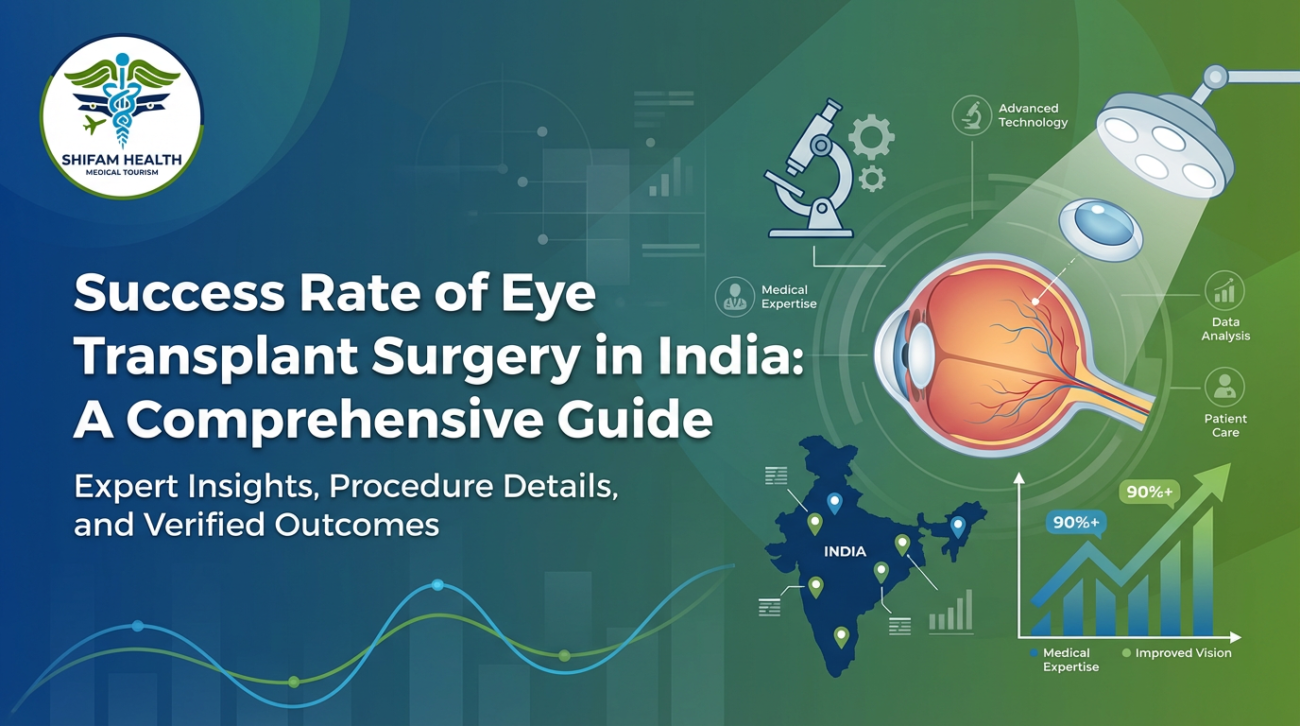
Corneal transplant surgery in India offers international patients an unparalleled combination of world-class medical expertise, cutting-edge technology, and affordability. The top 10 hospitals featured in this guide represent the pinnacle of ophthalmic care, with success rates matching or exceeding global standards.
Whether you’re suffering from keratoconus, corneal scarring, Fuchs’ dystrophy, or other corneal diseases, India’s premier eye care institutions provide hope for vision restoration and improved quality of life. The comprehensive care packages, experienced surgeons, and patient-centric approach ensure you receive not just medical treatment but a transformative healthcare experience.
With savings of 70-80% compared to Western countries, no waiting lists, and the opportunity to combine treatment with cultural exploration, India has rightfully earned its position as the world’s leading destination for medical tourism in ophthalmology.
Don’t let corneal disease limit your vision and life experiences any longer. Take the first step toward clearer vision by exploring your options for corneal transplant surgery in India.
🌟 Ready to Begin Your Journey to Better Vision? 🌟
Shifam Health is your trusted partner in navigating India’s world-class healthcare system. We connect international patients with the finest corneal transplant surgeons and hospitals, ensuring quality care at transparent, affordable prices.
✨ From initial consultation to post-operative follow-up, we’re with you every step of the way! 💚
📞 Contact Shifam Health Today:
- 🌐 Visit our website for a free consultation
- 📧 Email us your medical reports for expert evaluation
- 💬 Chat with our 24/7 support team
- 🎯 Get personalised treatment plans within 48 hours
Your vision transformation is just one click away—let Shifam Health illuminate your path to clarity! 👁️✨🏥
Click Here For Free Consultation.