
Heart Attack and Stroke: How Are They Different – Full Guide (Expert Medical Overview)

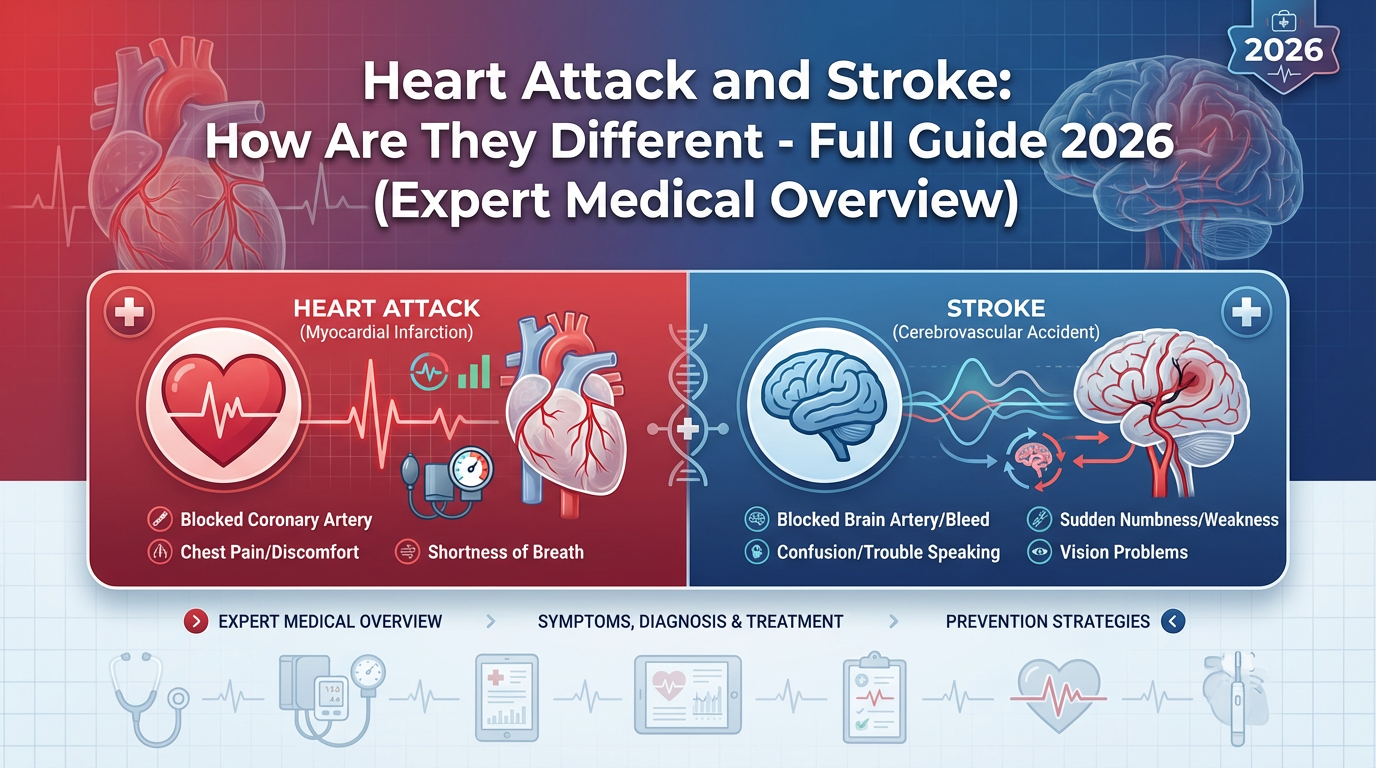
Introduction: Understanding Two Life-Threatening Emergencies
Heart attacks and strokes are among the leading causes of death and disability worldwide, yet many people confuse these two distinct medical emergencies. While both are cardiovascular events that can be fatal if not treated immediately, they affect different organs, present different symptoms, and require different emergency responses.
In 2026, medical advancements have improved survival rates and outcomes for both conditions, but the critical factor remains the same: recognizing symptoms early and seeking immediate medical attention. Understanding the key differences between heart attacks and strokes can literally save lives—yours or someone you love.
💙 Shifam Health connects you with top cardiovascular and neurological specialists who provide life-saving emergency care. 🏥⚡
This comprehensive guide explores everything you need to know about heart attacks and strokes—their differences, warning signs, causes, treatments, and prevention strategies based on the latest 2026 medical knowledge.
What is a Heart Attack? Complete Medical Overview
Defining Myocardial Infarction
A heart attack, medically termed myocardial infarction (MI), occurs when blood flow to a portion of the heart muscle becomes blocked, usually by a blood clot. Without oxygen-rich blood, the affected heart muscle begins to die, causing permanent damage if blood flow isn’t restored quickly.
The Mechanism:
- Coronary arteries (blood vessels supplying the heart) become narrowed by plaque buildup (atherosclerosis)
- A plaque ruptures, triggering blood clot formation
- The clot blocks blood flow through the artery
- Heart muscle downstream from the blockage is deprived of oxygen
- Without intervention, heart tissue dies within 20-40 minutes
🌟 Get rapid cardiac assessment and treatment coordination through Shifam Health’s emergency response network! 🚑💚
Types of Heart Attacks
1. STEMI (ST-Elevation Myocardial Infarction)
- Complete blockage of a coronary artery
- More severe and life-threatening
- Requires immediate intervention
- Shows characteristic changes on ECG
2. NSTEMI (Non-ST-Elevation Myocardial Infarction)
- Partial blockage of coronary artery
- Less severe but still dangerous
- May cause less immediate damage
- Different ECG pattern than STEMI
3. Silent Heart Attack
- Occurs without obvious symptoms
- Often discovered later during routine tests
- More common in diabetics and elderly
- Still causes heart damage
Heart Attack Symptoms: What to Watch For
Classic Heart Attack Warning Signs:
Primary Symptoms:
- Chest Pain or Discomfort: Often described as pressure, squeezing, fullness, or pain in the center or left side of the chest lasting more than a few minutes
- Radiating Pain: Discomfort spreading to shoulders, arms (especially left arm), back, neck, jaw, or upper abdomen
- Shortness of Breath: May occur with or without chest discomfort
- Cold Sweat: Sudden onset of unexplained sweating
- Nausea or Vomiting: Especially common in women
- Lightheadedness or Dizziness: Feeling faint or weak
🔍 Learn to recognize cardiac emergencies with Shifam Health‘s patient education resources and expert guidance! 📚✨
Atypical Symptoms (More Common in Women, Elderly, and Diabetics):
- Unusual fatigue lasting days
- Sleep disturbances
- Indigestion or heartburn-like sensation
- Anxiety or sense of impending doom
- Upper back or shoulder pain
- No chest pain at all (in some cases)
Critical Fact: Women are more likely to experience atypical symptoms, leading to delayed treatment. Any unexplained combination of these symptoms warrants immediate medical evaluation.
What is a Stroke? Complete Medical Overview
Defining Cerebrovascular Accident
A stroke, also called a cerebrovascular accident (CVA) or “brain attack,” occurs when blood supply to part of the brain is interrupted or reduced, depriving brain tissue of oxygen and nutrients. Within minutes, brain cells begin to die, potentially causing permanent neurological damage or death.
The Mechanism:
- Blood flow to brain is blocked or a blood vessel ruptures
- Brain cells are deprived of oxygen and nutrients
- Affected brain tissue begins dying rapidly
- Functions controlled by that brain region are impaired
- Permanent disability occurs without rapid treatment
💊 Access emergency stroke protocols and specialized neuro-care through Shifam Health‘s hospital network! 🧠💙
Types of Strokes
1. Ischemic Stroke (87% of all strokes)
- Caused by blood clot blocking brain artery
- Two subtypes:
- Thrombotic: Clot forms in artery supplying brain
- Embolic: Clot forms elsewhere (often heart) and travels to brain
- Most common type
- Treatable with clot-busting drugs if caught early
2. Hemorrhagic Stroke (13% of strokes)
- Caused by rupture of blood vessel in brain
- Two subtypes:
- Intracerebral: Bleeding inside brain tissue
- Subarachnoid: Bleeding between brain and skull
- More deadly than ischemic stroke
- Often caused by aneurysm or high blood pressure
3. Transient Ischemic Attack (TIA) – “Mini-Stroke”
- Temporary blockage of blood flow
- Symptoms resolve within 24 hours (usually minutes)
- Warning sign of future stroke
- Medical emergency requiring immediate evaluation
- One-third of TIA patients have major stroke within a year if untreated
Stroke Symptoms: The FAST Test
FAST Stroke Recognition:
F – Face Drooping
- Does one side of face droop or feel numb?
- Ask person to smile—is smile uneven?
A – Arm Weakness
- Is one arm weak or numb?
- Ask person to raise both arms—does one drift downward?
S – Speech Difficulty
- Is speech slurred or hard to understand?
- Ask person to repeat simple phrase—is it garbled?
T – Time to Call Emergency
- If any symptoms present, call emergency immediately
- Note the time symptoms began (critical for treatment decisions)
🚨 Recognize stroke emergencies faster with Shifam Health‘s 24/7 medical consultation hotline! ⏰💚
Additional Stroke Warning Signs:
- Sudden confusion or trouble understanding
- Sudden trouble seeing in one or both eyes
- Sudden severe headache with no known cause
- Sudden trouble walking, dizziness, or loss of balance
- Sudden numbness or weakness (face, arm, leg—especially one side)
Key Differences: Heart Attack vs Stroke Side-by-Side
Comprehensive Comparison Table
| Cancer Stage | Description | 5-Year Survival Rate (India) | 5-Year Survival Rate (Global Average) | Treatment Approach |
|---|---|---|---|---|
| Stage 0 (DCIS) | Non-invasive, confined to ducts | 98-100% | 98-100% | Lumpectomy/Mastectomy + Radiation |
| Stage I | Small tumor, no lymph nodes | 90-95% | 95-99% | Surgery + Chemotherapy/Hormone therapy |
| Stage II | Larger tumor or 1-3 lymph nodes | 85-90% | 85-93% | Surgery + Chemotherapy + Radiation |
| Stage III | Extensive lymph node involvement | 60-75% | 66-75% | Neoadjuvant Chemo + Surgery + Radiation |
| Stage IV | Metastatic, distant organs | 25-35% | 22-28% | Systemic therapy, Palliative care |
| Overall Average | All stages combined | 75-80% | 75-85% | Multidisciplinary approach |
Causes and Risk Factors: What Makes Them Similar and Different
Common Risk Factors for Both
Many risk factors increase the likelihood of both heart attacks and strokes:
Modifiable Risk Factors:
- High blood pressure (hypertension)—the #1 risk factor for stroke
- High cholesterol levels
- Diabetes or prediabetes
- Obesity and excess weight
- Physical inactivity
- Smoking and tobacco use
- Excessive alcohol consumption
- Poor diet (high in saturated fats, trans fats, salt)
- Chronic stress
- Sleep apnea
Non-Modifiable Risk Factors:
- Age (risk increases after 55)
- Gender (men at higher risk for heart attack; women for stroke after menopause)
- Family history of cardiovascular disease
- Ethnicity (higher rates in African Americans, South Asians)
- Previous heart attack or stroke
Heart Attack-Specific Causes
- Coronary artery disease (CAD)
- Atherosclerosis (plaque buildup)
- Coronary artery spasm
- Spontaneous coronary artery dissection (SCAD)
- Cocaine or methamphetamine use
- Extreme emotional or physical stress (Takotsubo cardiomyopathy)
Stroke-Specific Causes
For Ischemic Stroke:
- Atrial fibrillation (irregular heartbeat)
- Carotid artery disease
- Blood clotting disorders
- Heart valve disease
- Patent foramen ovale (hole in heart)
For Hemorrhagic Stroke:
- Uncontrolled high blood pressure
- Brain aneurysm
- Arteriovenous malformation (AVM)
- Head trauma
- Blood thinning medications (paradoxically)
- Amyloid angiopathy
🩺 Identify your personal risk factors with Shifam Health‘s advanced cardiovascular screening packages! 🔬💚
Emergency Treatment: What Happens When You Arrive at the Hospital
Heart Attack Emergency Protocol
First Hour (The “Golden Hour”):
- Immediate Assessment:
- ECG within 10 minutes of arrival
- Vital signs monitoring
- Oxygen administration if needed
- IV access established
- Diagnosis:
- Blood tests for cardiac enzymes (troponin)
- Continuous ECG monitoring
- Chest X-ray
- Echocardiogram
- Immediate Treatment:
- Aspirin to prevent further clotting
- Nitroglycerin to improve blood flow
- Pain medication (morphine)
- Anti-clotting medications
Definitive Treatment:
- Percutaneous Coronary Intervention (PCI/Angioplasty): Catheter-based procedure to open blocked artery and place stent (preferred method)
- Thrombolytic Therapy: Clot-busting drugs if PCI unavailable
- Coronary Artery Bypass Graft (CABG): Surgery if multiple blockages
Stroke Emergency Protocol
First 60 Minutes (Critical “Time is Brain”):
- Immediate Assessment:
- FAST test performed
- Vital signs checked
- Blood glucose level tested
- Neurological examination
- Imaging:
- CT scan immediately (to distinguish ischemic from hemorrhagic)
- MRI for detailed assessment
- CT angiography to locate blockage
- Blood tests
- Treatment Decision:
- For Ischemic Stroke:
- tPA (tissue plasminogen activator) if within 3-4.5 hours
- Mechanical thrombectomy (removing clot) up to 24 hours in selected cases
- For Hemorrhagic Stroke:
- Blood pressure management
- Reversal of blood thinners
- Surgery to repair vessel or relieve pressure
- For Ischemic Stroke:
Time Windows Matter:
- tPA most effective within 3 hours
- Extended window to 4.5 hours for some patients
- Mechanical thrombectomy effective up to 24 hours in selected cases
- Every minute matters—2 million brain cells die per minute during stroke
Prevention Strategies: Protecting Your Heart and Brain
Lifestyle Modifications for Both
1. Heart-Healthy Diet:
- Mediterranean or DASH diet
- Plenty of fruits, vegetables, whole grains
- Lean proteins (fish, poultry, legumes)
- Healthy fats (olive oil, nuts, avocados)
- Limit red meat, processed foods, added sugars
- Reduce sodium intake
- Stay hydrated
2. Regular Physical Activity:
- At least 150 minutes moderate exercise weekly
- Or 75 minutes vigorous exercise weekly
- Strength training twice weekly
- Activities: brisk walking, swimming, cycling, dancing
- Even small amounts of activity help
3. Weight Management:
- Maintain healthy BMI (18.5-24.9)
- Focus on waist circumference (under 40″ men, 35″ women)
- Gradual, sustainable weight loss
- Combination of diet and exercise
4. Tobacco Cessation:
- Quit smoking immediately
- Avoid secondhand smoke
- Smoking cessation programs
- Medications and counseling support
- Risk decreases significantly within years of quitting
5. Alcohol Moderation:
- Up to 1 drink/day for women
- Up to 2 drinks/day for men
- Some benefit from moderate consumption
- Excessive drinking increases risk
6. Stress Management:
- Regular relaxation practices
- Meditation or mindfulness
- Adequate sleep (7-9 hours)
- Work-life balance
- Social connections
- Professional counseling if needed
🧘♀️ Build resilience with Shifam Health’s integrated mind-body wellness programs! 🌿✨
Medical Management
Regular Monitoring:
- Blood pressure checks (at least annually, more if elevated)
- Cholesterol screening (every 4-5 years or as advised)
- Diabetes screening (every 3 years after age 45)
- Regular physician visits
Medications (If Prescribed):
- Blood pressure medications (ACE inhibitors, ARBs, diuretics)
- Cholesterol-lowering drugs (statins)
- Antiplatelet agents (aspirin, clopidogrel)
- Diabetes medications
- Blood thinners (for atrial fibrillation or history of stroke)
Adherence is Critical:
- Take medications exactly as prescribed
- Don’t stop medications without consulting doctor
- Attend all follow-up appointments
- Report side effects promptly
Frequently Asked Questions
While rare, it’s possible, especially in conditions like atrial fibrillation where a clot forms in the heart and fragments travel to both coronary and brain arteries.
Family history increases risk, but lifestyle factors often play a bigger role. You can’t change genetics, but you can modify risk factors.
About 90% survive heart attacks with prompt treatment; stroke survival is about 84%, but disability rates are higher with strokes.
No, about 15% of heart attacks are “silent” with no chest pain, especially in women, diabetics, and elderly patients.
For clot-busting drugs (tPA), within 3-4.5 hours. Mechanical clot removal can work up to 24 hours in selected cases. Every minute counts.
Chronic stress increases risk by raising blood pressure and promoting unhealthy behaviors. Acute severe stress can trigger heart attacks (Takotsubo cardiomyopathy).
Absolutely. TIAs are warning signs—one-third of people who have TIAs will have a major stroke within a year without treatment.
Heart attack is blocked blood flow to heart muscle; cardiac arrest is when the heart stops beating entirely (often due to electrical malfunction).
Many people make excellent recoveries with proper treatment and lifestyle changes, though some heart damage may be permanent.
Yes, women are more likely to have atypical symptoms like fatigue, nausea, back pain, and jaw pain rather than classic chest pain.
Conclusion: Knowledge Saves Lives
Understanding the crucial differences between heart attacks and strokes can mean the difference between life and death, full recovery and permanent disability. Both are medical emergencies requiring immediate action—remember, time is muscle for heart attacks and time is brain for strokes.
Key Takeaways:
- Heart attacks affect the heart muscle due to blocked coronary arteries, typically causing chest pain
- Strokes affect the brain due to blocked or burst brain arteries, causing sudden neurological symptoms
- Both share common risk factors like high blood pressure, smoking, and diabetes
- Immediate medical treatment dramatically improves outcomes for both conditions
- Prevention through lifestyle modifications is highly effective
- Modern treatments in 2026 offer better survival and recovery than ever before
The most important action you can take is recognizing symptoms early and calling emergency services immediately. Don’t wait to see if symptoms improve—every minute counts.
🌟 Protect Your Heart and Brain with Expert Care 🌟
Shifam Health connects you with world-class cardiologists and neurologists specializing in emergency cardiovascular care, prevention, and rehabilitation. Our network spans India’s top hospitals equipped with state-of-the-art cardiac catheterization labs and comprehensive stroke centers.
✨ From prevention to emergency response to recovery—we safeguard your cardiovascular health at every step! ❤️🧠
📞 Contact Shifam Health Today and Book Your Free Consulation.
Your heart and brain deserve the best care—let Shifam Health be your partner in cardiovascular wellness! 💙⚡✨