
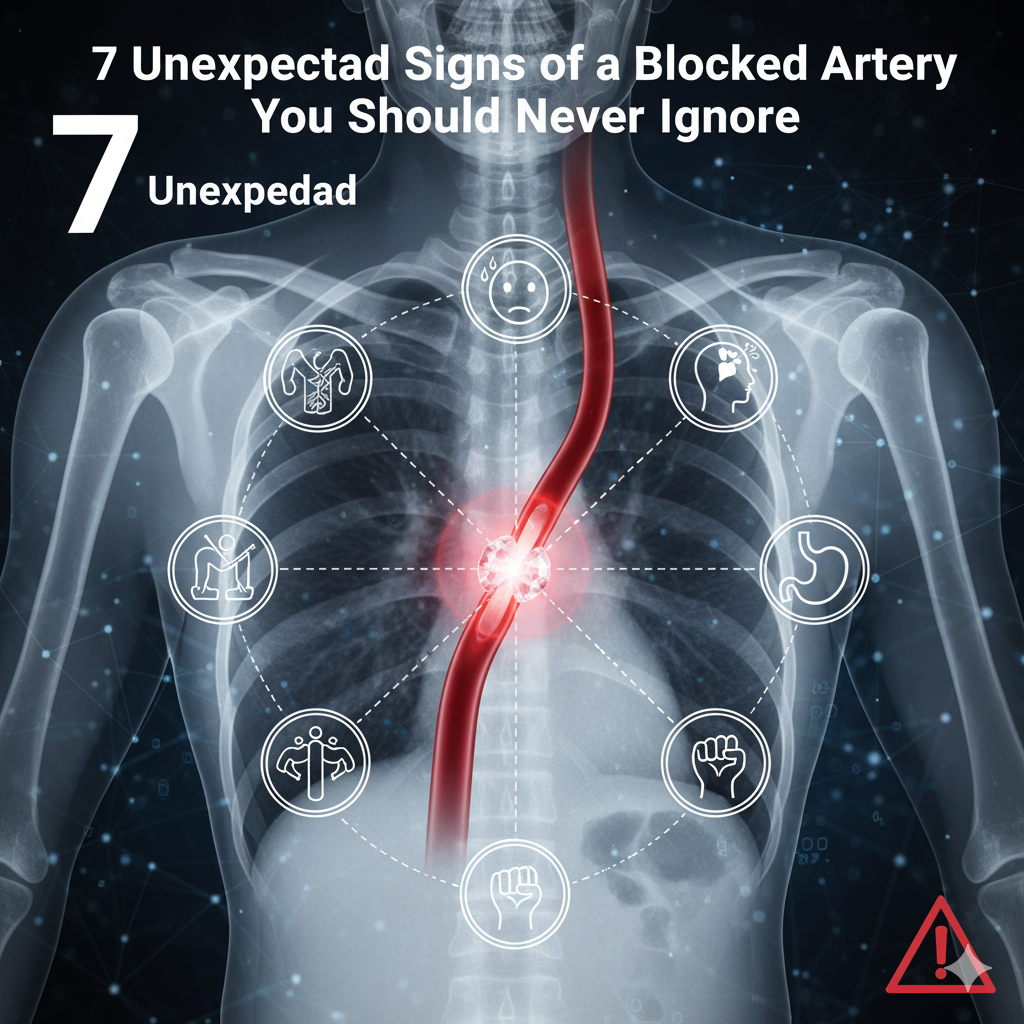
7 Unexpected Signs of a Blocked Artery You Should Never Ignore

Introduction: Your Body’s Quiet Alarm System
We often imagine a heart attack as a dramatic, Hollywood-style event—a sudden clutch of the chest and a collapse. But the reality of heart disease is often much quieter and more insidious. Long before a major cardiac event, your body sends out subtle distress signals, like a silent alarm you can’t afford to ignore.
Clogged arteries, or atherosclerosis, develop over years. It’s a process where plaque—made of fat, cholesterol, calcium, and other substances—builds up inside your arteries, narrowing them and restricting blood flow. This “silent” process can start as early as young adulthood, and its early warning signs are often mistaken for minor, everyday ailments.
This guide will illuminate those quiet whispers from your body, helping you recognize the blocked artery signs that don’t make the dramatic headlines but are critical for your long-term health.
First, a Quick Refresher: What is a Blocked Artery?
Think of your arteries as the superhighways of your body, delivering oxygen-rich blood to your tissues and organs. A blocked artery is like a major traffic jam on this critical highway system.
Plaque Buildup: Over time, factors like high cholesterol, high blood pressure, and smoking can damage the inner lining of an artery. The body repairs this damage by depositing cholesterol and other substances, forming plaque.
- Stable Plaque: This grows slowly, causing a gradual narrowing of the artery.
- Unstable Plaque: This can rupture suddenly, causing a blood clot that completely blocks the artery, leading to a heart attack or stroke.
Understanding this helps explain why the symptoms can be both gradual and sudden. Let’s decode the subtle, gradual signs.
The 7 “Silent” Signs You Shouldn’t Dismiss
While chest pain is the classic red flag, your body has other, less obvious ways of signaling trouble.
1. Erectile Dysfunction (For Men)
What it feels like: Consistent trouble achieving or maintaining an erection.
Why it’s a sign: The arteries supplying blood to the penis are much smaller than those supplying the heart. If they’re becoming clogged, it’s often one of the first places to show reduced blood flow. It can be an early warning that the larger coronary arteries are also at risk. This can appear 3-5 years before a cardiac event.
2. Intermittent Calf Pain When Walking (Claudication)
What it feels like: A cramping, tired, or burning pain in your calf, thigh, or buttock muscles that starts when you’re active (like walking) and reliably goes away after a few minutes of rest.
Why it’s a sign: This is a classic sign of Peripheral Artery Disease (PAD), where arteries in your legs are blocked. Your muscles are screaming for oxygen during exercise that they aren’t getting. Many people dismiss this as “just getting older” or arthritis.
3. Unexpected Shortness of Breath
What it feels like: Getting winded doing tasks that used to be easy, like making the bed, walking up a flight of stairs, or carrying groceries.
Why it’s a sign: When your heart’s arteries are compromised, it can’t pump blood as effectively. This can cause blood to “back up” in the vessels of your lungs, leading to fluid buildup and shortness of breath. It’s your heart’s way of saying it’s struggling to keep up.
4. A Unexplained Tightness in Your Jaw or Neck
What it feels like: A dull ache, pressure, or tightness that radiates from your chest to your jaw, neck, or even your shoulders (especially the left side) and down your arm. It may come and go.
Why it’s a sign: The nerves that serve your heart also connect to these areas. When the heart muscle is starved for oxygen (a condition called angina), the pain can “refer” to these other locations. This is especially common in women.
5. Frequent Indigestion or “Heartburn” That Won’t Quit
What it feels like: A burning sensation in your chest or upper abdomen, nausea, or a feeling of fullness that isn’t relieved by antacids and seems unrelated to what you’ve eaten.
Why it’s a sign: The heart and the esophagus are close neighbors. Reduced blood flow to the heart can irritate the nerves in that area, mimicking classic heartburn. If your “indigestion” is new, persistent, or feels different, it’s worth a cardiac check.
6. Breaking Out in a Cold Sweat
What it feels like: Suddenly feeling clammy and breaking into a sweat for no apparent reason—not because you’re hot, anxious, or have been exercising.
Why it’s a sign: This is your nervous system reacting to extreme stress on the body. A severely blocked artery puts your entire cardiovascular system under duress, triggering a “fight or flight” response that includes cold sweats. This sign, especially with other symptoms, is a major red flag.
7. Overwhelming, Unexplained Fatigue
What it feels like: A deep, pervasive tiredness that isn’t relieved by sleep. You may feel completely drained after simple, routine activities.
Why it’s a sign: When your heart can’t pump enough oxygen-rich blood to meet your body’s demands, your systems have to run on empty. Your body diverts blood away from less vital areas (like your muscles) to protect your brain and heart, leaving you feeling exhausted.
Gender-Specific Symptoms: Heeding the Body’s Unique Language
Heart disease can present differently in men and women. While men more often experience the “classic” chest-clutching pain, women’s symptoms are frequently more subtle and easier to dismiss.
Signs More Common in Women:
- Nausea or vomiting
- Pain in the back, neck, or jaw (without chest pain)
- Lightheadedness or dizziness
- Severe, unexplained fatigue (for days or weeks)
- Sleep disturbances
The key takeaway is this: If something feels “off,” or not quite right with your body, especially if it’s new, worsening, or unexplained, get it checked out. Don’t talk yourself out of seeking help.
What to Do Next: Your Action Plan
If you recognize any of these silent signs in yourself or a loved one, don’t panic—but do take action.
- Schedule an Appointment with Your Doctor: Be your own advocate. Describe your symptoms clearly and mention your concern about heart health.
- Know When It’s an Emergency: If you experience chest pain, pressure, or discomfort that lasts more than a few minutes OR is combined with shortness of breath, cold sweats, or pain radiating to your jaw/arm, call emergency services immediately. Do not drive yourself.
- Understand Your Risk Factors: Be aware of what puts you at higher risk:
- High blood pressure
- High cholesterol
- Smoking
- Diabetes
- Family history of heart disease
- Obesity
- Sedentary lifestyle
Prevention: How to Keep Your Arteries Clear
The best way to fight blocked arteries is to prevent them from forming in the first place.
- Eat a Heart-Healthy Diet: Focus on fruits, vegetables, whole grains, lean proteins, and healthy fats. Reduce processed foods, sugar, and saturated fats.
- Move Regularly: Aim for at least 150 minutes of moderate-intensity exercise per week (like brisk walking).
- Manage Your Weight: Losing even 5-10% of your body weight can significantly improve heart health.
- Quit Smoking: This is the single most important change a smoker can make for their heart.
- Manage Stress: Chronic stress can raise blood pressure and damage arteries.
- Get Regular Check-ups: Know your numbers—blood pressure, cholesterol, and blood sugar.
Conclusion: Listen to the Whispers, So You Don’t Have to Hear the Roar
Your body is a brilliant communication system. The “silent” signs of a blocked artery are its way of whispering for help long before it has to scream. By learning to recognize these subtle cues—from calf pain to unexplained fatigue—you empower yourself to take control of your heart health.
Ignoring these whispers can have devastating consequences. Heeding them can save your life. Schedule that check-up, talk to your doctor, and make the lifestyle changes that will keep your body’s highways clear for years to come.
Disclaimer: This blog post is for informational purposes only and does not constitute medical advice. Please consult with a qualified healthcare professional for any health concerns or before making any decisions related to your health.
👉 Don’t Ignore the Whispers. Protect Your Heart with Expert Guidance.
If any of these “silent” signs feel familiar, it’s time to listen. Let Shifam Health connect you with India’s leading cardiologists and vascular specialists for a comprehensive evaluation.
📞 Start Your Confidential Heart Health Assessment on WhatsApp: +91 81785 95807
- Get a free, no-obligation preliminary consultation.
- Receive transparent guidance on next steps and potential diagnostics.
- Understand your options for advanced cardiac care in India.
Your path to clarity, peace of mind, and a healthier heart begins with one simple conversation.