
Success Rate of Colon Cancer Treatment in India : Complete Survival Statistics, Treatment Outcomes & Hospital Comparison


Introduction
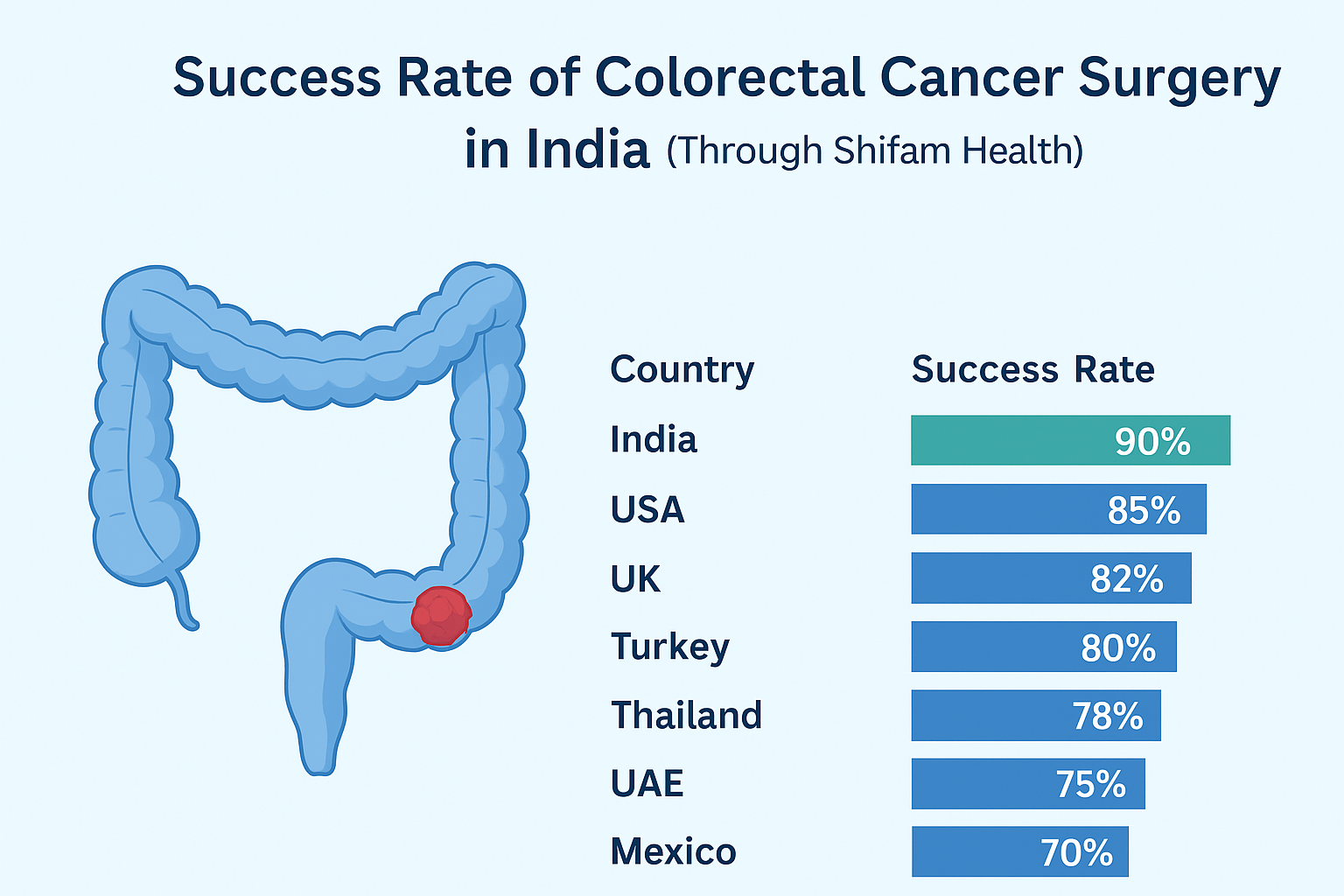
Understanding the success rate of colon cancer treatment in India is crucial for patients and families making informed decisions about where to receive care. With advanced surgical techniques, modern chemotherapy protocols, targeted therapies, and immunotherapy options, India has achieved survival outcomes comparable to leading global cancer centers—while offering treatment at 60-80% lower costs.
This comprehensive guide provides detailed statistics on colon cancer success rates in India, factors affecting survival, treatment outcomes by stage, hospital comparisons, and how international patients can access world-class colorectal cancer care.
Overview: Colon Cancer Treatment Success in India
Colon cancer (also called colorectal cancer or bowel cancer) is one of the most common cancers globally, but it is also one of the most treatable when detected early. India’s top cancer hospitals have invested heavily in colorectal oncology programs, achieving success rates that match or exceed international benchmarks.
Key Success Factors in India:
- Early Detection Programs: Advanced colonoscopy and screening services
- Specialized Colorectal Surgeons: Trained in minimally invasive and robotic techniques
- Multidisciplinary Tumor Boards: Collaborative treatment planning
- Access to Modern Therapies: Chemotherapy, targeted therapy, and immunotherapy
- High Surgical Volumes: Leading hospitals perform hundreds of colon cancer surgeries annually
- International Accreditation: JCI and NABH certified quality standards
Success Rate of Colon Cancer Treatment in India: By Stage
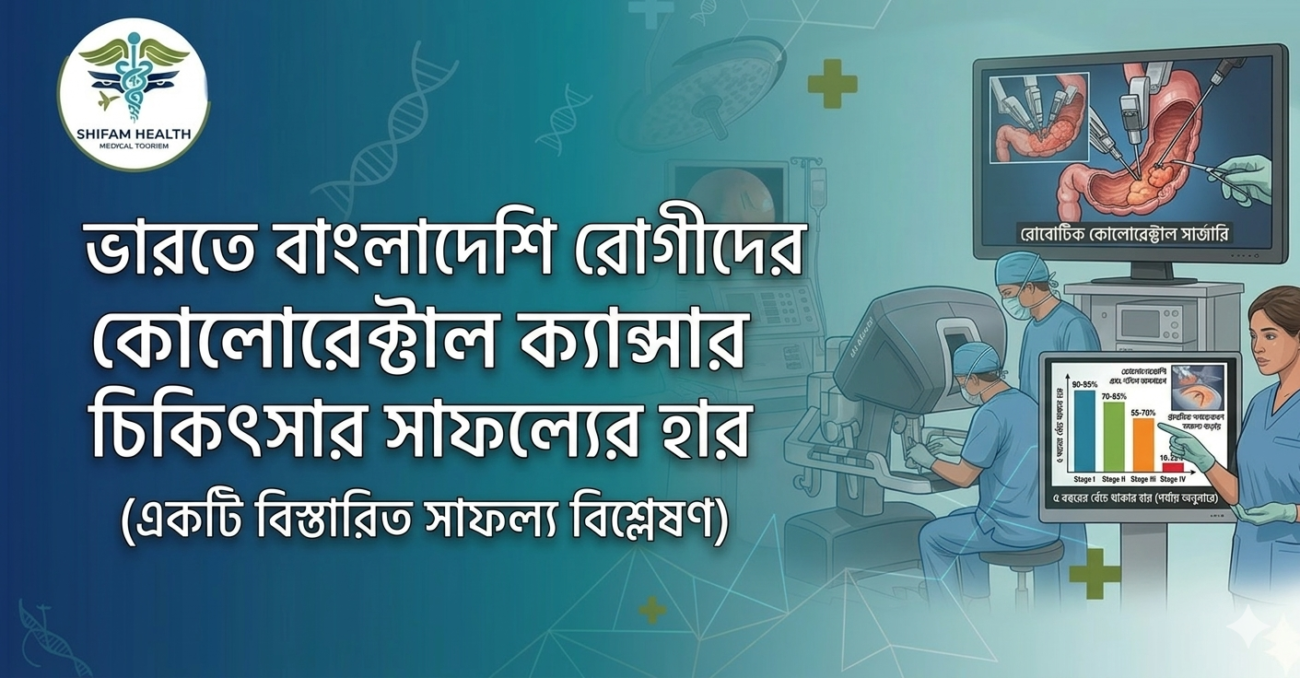
The success rate of colon cancer treatment varies significantly based on the cancer stage at diagnosis. Early-stage colon cancer has excellent cure rates, while advanced stages require more aggressive multimodal treatment.
5-Year Survival Rates by Stage (India vs Global)
| Stage | Description | 5-Year Survival Rate in India | Global Average (US/Europe) | Treatment Approach |
|---|---|---|---|---|
| Stage 0 (Carcinoma in Situ) | Cancer confined to innermost lining | 95-100% | 95-100% | Polypectomy or local excision |
| Stage I | Cancer in colon wall, hasn’t spread | 85-92% | 90-95% | Surgical resection (colectomy) |
| Stage II | Cancer through colon wall, no lymph nodes | 70-85% | 75-87% | Surgery + adjuvant chemotherapy (select cases) |
| Stage III | Cancer spread to nearby lymph nodes | 50-70% | 55-72% | Surgery + adjuvant chemotherapy |
| Stage IV | Cancer spread to distant organs (liver, lungs) | 10-20% | 12-25% | Systemic therapy + surgery (select cases) |
| Localized (Combined) | Cancer has not spread beyond colon | 85-90% | 90-92% | Surgery-focused treatment |
| Regional (Lymph Node Spread) | Cancer in nearby lymph nodes | 65-72% | 68-75% | Surgery + chemotherapy |
| Distant (Metastatic) | Cancer in distant organs | 12-18% | 14-20% | Chemotherapy + targeted/immunotherapy |
Note: Success rates depend on multiple factors including cancer location, histology, patient age, overall health, and response to treatment.
Factors Affecting Colon Cancer Success Rates in India
1. Stage at Diagnosis
- Early detection dramatically improves survival
- Stage I: >85% 5-year survival
- Stage IV: 10-20% 5-year survival
2. Tumor Location
- Right-sided colon: May have different biology and prognosis
- Left-sided colon: Generally better outcomes with targeted therapy
- Rectosigmoid junction: May require specialized surgical approaches
3. Tumor Biology & Molecular Markers
- MSI-H (Microsatellite Instability High): Better prognosis, responds well to immunotherapy
- KRAS/NRAS/BRAF mutations: Affect targeted therapy options
- HER2 amplification: Emerging treatment target
4. Surgical Quality
- R0 resection (complete tumor removal with clear margins): Critical for cure
- Lymph node harvest: Minimum 12 nodes needed for accurate staging
- Experienced surgeon: Higher volumes correlate with better outcomes
5. Adjuvant Treatment Compliance
- Completing full chemotherapy course improves survival by 20-30% in Stage III
6. Patient Factors
- Age, overall health, comorbidities
- Nutrition and immune status
- Access to follow-up care
Treatment Outcomes by Type: Success Rates in India
Surgical Outcomes
| Surgery Type | Success/Complication Rate | Hospital Stay | Recovery Time |
|---|---|---|---|
| Open Colectomy | 92-96% success; 15-20% minor complications | 5-8 days | 4-6 weeks |
| Laparoscopic Colectomy | 94-97% success; 10-15% complications | 3-5 days | 2-4 weeks |
| Robotic Colectomy | 95-98% success; 8-12% complications | 2-4 days | 2-3 weeks |
| Right Hemicolectomy | 93-96% success rate | 4-6 days | 3-5 weeks |
| Left Hemicolectomy | 92-95% success rate | 4-6 days | 3-5 weeks |
| Sigmoid Colectomy | 94-97% success rate | 3-5 days | 3-4 weeks |
| Total Colectomy | 90-93% success rate | 6-9 days | 6-8 weeks |
Surgical Mortality Rate: <2% at top Indian hospitals (comparable to global standards)
Chemotherapy Response Rates
| Chemotherapy Regimen | Response Rate | Used For |
|---|---|---|
| FOLFOX (Oxaliplatin + 5-FU + Leucovorin) | 50-60% overall response | Stage III adjuvant, metastatic |
| CAPOX (Capecitabine + Oxaliplatin) | 48-55% overall response | Stage III adjuvant, metastatic |
| FOLFIRI (Irinotecan + 5-FU + Leucovorin) | 45-55% overall response | Metastatic, second-line |
| 5-FU/Leucovorin | 30-40% response rate | Adjuvant therapy |
Disease-Free Survival Improvement: 20-30% with adjuvant chemotherapy in Stage III
Targeted Therapy & Immunotherapy Outcomes
| Treatment | Target | Response Rate | Progression-Free Survival |
|---|---|---|---|
| Bevacizumab (Anti-VEGF) | All metastatic colon cancer | 10-15% improvement | 2-4 months improvement |
| Cetuximab (Anti-EGFR) | KRAS/NRAS wild-type | 20-30% response | 3-5 months improvement |
| Panitumumab (Anti-EGFR) | KRAS/NRAS wild-type | 18-25% response | 3-4 months improvement |
| Pembrolizumab (Anti-PD-1) | MSI-H/dMMR tumors | 40-50% response | Median not reached (>24 months) |
| Nivolumab (Anti-PD-1) | MSI-H/dMMR tumors | 35-45% response | 12-18 months median |
Important: MSI-H (Microsatellite Instability High) tumors, representing 10-15% of colon cancers, show exceptional response to immunotherapy with durable remissions.
Best Hospitals for Colon Cancer Treatment in India: Success Rate Comparison
| Hospital | Annual Colon Cancer Surgeries | Surgical Success Rate | 5-Year Survival (Stage III) | Robotic/Laparoscopic | Accreditation |
|---|---|---|---|---|---|
| Tata Memorial Hospital, Mumbai | 800+ | 94-96% | 65-70% | Yes | NABH |
| Medanta – The Medicity, Gurugram | 500+ | 95-97% | 68-72% | Yes (Da Vinci) | NABH, JCI |
| Apollo Cancer Centres | 600+ | 94-96% | 66-70% | Yes | JCI, NABH |
| Fortis Memorial Research Institute | 400+ | 95-97% | 67-71% | Yes (Da Vinci) | JCI, NABH |
| Max Healthcare | 350+ | 93-95% | 65-69% | Yes | NABH, JCI |
| Manipal Hospitals | 450+ | 93-96% | 64-68% | Yes | NABH |
| BLK-Max Super Speciality Hospital | 300+ | 94-96% | 66-70% | Yes | NABH |
Note: Success rates are estimates based on published data, hospital reports, and medical literature. Individual outcomes vary.
Recurrence Rates After Colon Cancer Treatment
Understanding recurrence risk helps patients make informed decisions about follow-up care and surveillance.
Recurrence Rates by Stage (Within 5 Years)
Factors Reducing Recurrence:
- Complete surgical resection (R0)
- Adequate lymph node harvest (≥12 nodes)
- Adjuvant chemotherapy (Stage III)
- Regular surveillance colonoscopy
- Healthy lifestyle modifications
Colon Cancer Treatment Cost vs Success Rate: Value Analysis
India offers exceptional value—high success rates at significantly lower costs than Western countries.
What Makes Colon Cancer Treatment Successful in India?
1. Specialized Colorectal Surgeons
- Fellowship-trained in colorectal surgery
- High surgical volumes (>100 cases/year per surgeon)
- Expertise in minimally invasive techniques
2. Advanced Surgical Technology
- Da Vinci robotic surgical systems
- High-definition laparoscopy
- Enhanced recovery protocols (ERAS)
3. Comprehensive Oncology Care
- Multidisciplinary tumor boards
- Access to all modern chemotherapy regimens
- Targeted therapy and immunotherapy availability
- Clinical trial access at select centers
4. Quality Infrastructure
- JCI and NABH accredited facilities
- Advanced diagnostic imaging (PET-CT, MRI)
- Molecular pathology and genetic testing
- 24/7 critical care support
5. Experience with Complex Cases
- Treatment of locally advanced cancers
- Management of liver and lung metastases
- Salvage surgery for recurrent disease
Frequently Asked Questions (FAQs)
Overall 5-year survival ranges from 60-65% across all stages, with early-stage (I-II) achieving 80-90% and advanced stage (IV) around 12-18%
Yes, Stage III colon cancer has a 50-70% 5-year survival rate with surgery plus adjuvant chemotherapy, and many patients achieve long-term remission.
Top Indian hospitals achieve success rates comparable to leading US and European centres, with differences of less than 5% across most stages.
Surgical success rates at top hospitals range from 93-97%, with mortality rates under 2% and complication rates of 10-15% for minimally invasive approaches.
While Stage IV is not typically curable, aggressive multimodal treatment in India can achieve 10-20% 5-year survival, with select patients having longer-term remissions.
Yes, recurrence is possible, which is why regular surveillance (CEA tests, imaging, colonoscopy) is critical for early detection and re-treatment if needed.
Conclusion
The success rate of colon cancer treatment in India demonstrates that patients can achieve excellent outcomes at world-class hospitals while benefiting from significant cost savings. With 5-year survival rates ranging from 85-92% for early-stage disease to 50-70% for Stage III cancer, India’s top oncology centres deliver results that match or exceed global standards.
Success depends on early detection, comprehensive staging, skilled surgical expertise, adherence to evidence-based treatment protocols, and regular follow-up care. By choosing JCI-accredited hospitals with high-volume colorectal programs and working with experienced coordinators like Shifam Health, international patients can access the best possible care and maximize their chances of long-term survival and quality of life.
Don’t let distance, cost, or uncertainty hold you back from world-class colon cancer treatment.
Why Choose Shifam Health for Your Colon Cancer Treatment Journey?
Navigating colon cancer treatment abroad requires expertise, transparency, and compassionate support. Shifam Health specialises in coordinating world-class colorectal cancer care for international patients seeking the best outcomes in India.
📲 Ready to Achieve the Best Possible Outcome?
Contact Shifam Health Today:
🌐 Free Consultation | 📧 Email Support | 📞 WhatsApp Us Now
Your survival is our mission. Your hope is our commitment.