What Is Wilms Tumor? Symptoms, Causes, Diagnosis, and Treatment Options

Introduction
Wilms tumor, also known as nephroblastoma, is a rare type of kidney cancer that primarily affects children. As the most common kidney cancer in pediatric patients, Wilms tumor typically occurs in children between ages 3 and 4, though it can develop in older children and rarely in adults. Despite its serious nature, Wilms tumor has one of the highest cure rates among childhood cancers, with survival rates exceeding 90% when diagnosed early and treated appropriately.
Understanding Wilms tumor, its warning signs, and available treatment options empowers parents and caregivers to seek timely medical intervention. This comprehensive guide explores everything you need to know about this pediatric kidney cancer, from initial symptoms to cutting-edge treatment approaches that are saving young lives worldwide.
Understanding Wilms Tumor: What Parents Need to Know
Wilms tumor develops in the kidneys, the bean-shaped organs responsible for filtering waste from blood and producing urine. This cancer typically affects one kidney (unilateral), though approximately 5-10% of cases involve both kidneys (bilateral). The tumor originates from kidney cells that failed to develop properly before birth, remaining dormant until they begin growing abnormally during early childhood.
The tumor often grows quite large before symptoms become noticeable, sometimes reaching the size of a softball. Despite its potentially large size, Wilms tumor is highly treatable, particularly when detected in its early stages. Modern treatment protocols have transformed this once-fatal disease into one with excellent prognosis and long-term survival outcomes.
✨ Shifam Health connects families with world-class pediatric oncology specialists for comprehensive Wilms tumor diagnosis and treatment with compassionate care coordination.
Recognizing Wilms Tumor Symptoms in Children
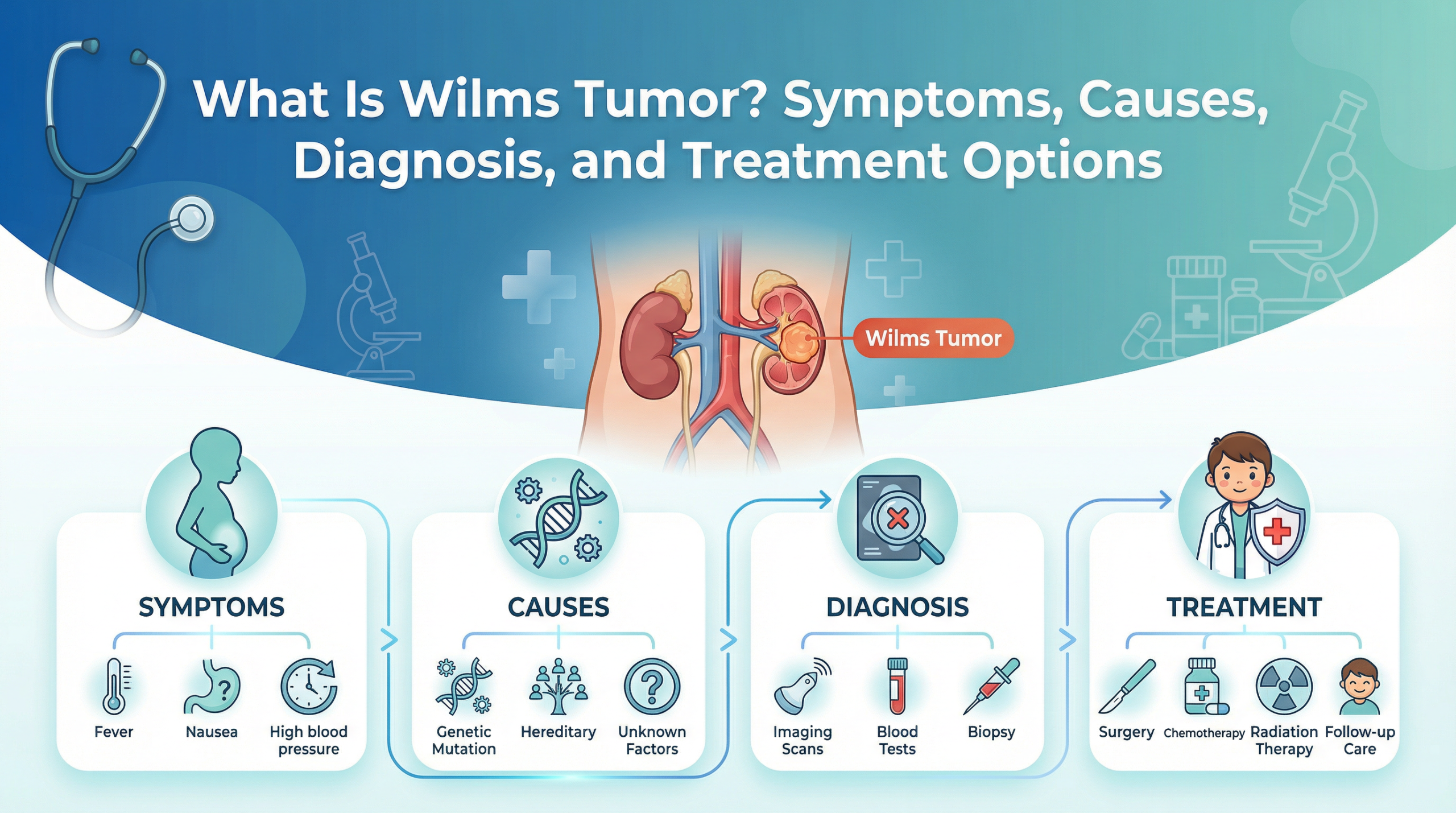
Early detection significantly improves treatment outcomes for Wilms tumor. Parents should remain vigilant for several warning signs that may indicate kidney abnormalities. The most common symptom is a firm, smooth abdominal mass that parents or pediatricians discover during routine examination or bathing. This painless swelling in the abdomen often appears on one side and may be the only noticeable sign initially.
Additional symptoms include abdominal pain or discomfort, though many children experience no pain even with large tumors. Blood in the urine (hematuria) occurs in approximately 25% of cases, ranging from visible red coloration to microscopic amounts detected only through laboratory testing. Children may also experience fever without infection, high blood pressure, loss of appetite, nausea, vomiting, and general fatigue or weakness.
Some children develop constipation due to the tumor pressing against intestines, while others may show unexplained weight loss despite maintaining normal eating habits. Swelling in the legs or abdomen can result from fluid accumulation caused by kidney dysfunction. Parents should seek immediate medical evaluation if they notice any unexplained abdominal swelling or combination of these symptoms.

💚 Trust Shifam Health to arrange urgent pediatric oncology consultations and second opinions from leading cancer specialists worldwide.
What Causes Wilms Tumor? Risk Factors and Genetic Connections
The exact cause of Wilms tumor remains unclear, though researchers have identified several risk factors and genetic associations. The tumor develops from nephrogenic rests—clusters of kidney cells that persist after birth instead of maturing normally. These abnormal cells can transform into cancerous tumors during early childhood.
Genetic factors play a significant role in Wilms tumor development. Approximately 1-2% of cases show familial patterns, suggesting inherited genetic mutations increase susceptibility. Several genetic syndromes substantially elevate risk, including WAGR syndrome (Wilms tumor, Aniridia, Genitourinary abnormalities, and intellectual disability), Denys-Drash syndrome, and Beckwith-Wiedemann syndrome, which causes overgrowth and predisposition to various childhood cancers.
Children with certain birth defects face higher Wilms tumor risk, including aniridia (absence of the colored part of the eye), hemihypertrophy (one side of the body grows larger than the other), cryptorchidism (undescended testicles), and hypospadias (abnormal urethral opening in boys). African American children show slightly higher incidence rates compared to Caucasian children, while Asian children have lower rates. Girls develop Wilms tumor slightly more often than boys, though the difference is minimal.
✨ Shifam Health provides genetic counseling services and connects families with specialized pediatric genetic testing facilities for comprehensive risk assessment.
How Is Wilms Tumor Diagnosed? Medical Tests and Procedures
Diagnosing Wilms tumor involves multiple steps to confirm the cancer’s presence, determine its stage, and plan appropriate treatment. The diagnostic journey typically begins when parents or pediatricians detect an abdominal mass during physical examination. The doctor will perform a thorough physical assessment, checking for abdominal swelling, measuring blood pressure, and evaluating overall health.
Imaging studies form the cornerstone of Wilms tumor diagnosis. Abdominal ultrasound serves as the initial screening tool, using sound waves to create kidney images and identify abnormal masses. This painless, non-invasive test helps differentiate solid tumors from fluid-filled cysts. Computed tomography (CT) scans provide detailed cross-sectional images of the abdomen and chest, revealing tumor size, location, and potential spread to lymph nodes or other organs.
Magnetic resonance imaging (MRI) offers superior soft tissue visualization, particularly useful for assessing blood vessel involvement and evaluating bilateral cases. Chest X-rays or CT scans detect potential lung metastases, the most common site for Wilms tumor spread. Complete blood count (CBC) and comprehensive metabolic panel assess kidney function, electrolyte balance, and overall health status before treatment.
💚 Shifam Health facilitates rapid diagnostic imaging and pathology services at internationally accredited facilities with pediatric radiology expertise.
Unlike many cancers, Wilms tumor diagnosis typically does not require pre-treatment biopsy. Surgeons usually remove the tumor and affected kidney first, with pathologists examining the tissue afterward to confirm diagnosis and grade the cancer. This approach prevents potential tumor rupture and cancer cell spillage that biopsy might cause. In bilateral cases or when surgery poses high risk, doctors may perform biopsy to guide initial chemotherapy decisions.
Stages of Wilms Tumor: Understanding Cancer Progression
Staging determines how far the cancer has spread and guides treatment planning. The Children’s Oncology Group uses a five-stage system for Wilms tumor classification. Stage I represents the most favorable prognosis, where cancer remains completely within the kidney with intact capsule. Surgeons can remove the entire tumor without rupture, and cancer has not spread to blood vessels or lymph nodes.
Stage II indicates the tumor has grown beyond the kidney into surrounding fatty tissue or blood vessels, but surgeons still achieve complete removal with clear margins.
III Stage means cancer has spread to regional lymph nodes, tumor cells remain in the abdomen after surgery, tumor rupture occurred before or during surgery, or surgeons could not remove all cancer completely.
Stage IV represents distant metastases, most commonly to lungs, liver, bone, or brain. Stage V, the most complex, involves both kidneys at diagnosis (bilateral Wilms tumor), requiring specialized treatment approaches to preserve kidney function while eliminating cancer. Each stage requires tailored treatment protocols balancing cure rates with long-term health preservation.
Shifam Health connects families with pediatric oncology teams experienced in treating all Wilms tumor stages with personalized treatment plans.
Treatment Options for Wilms Tumor: A Comprehensive Approach
Wilms tumor treatment combines surgery, chemotherapy, and sometimes radiation therapy, with specific protocols depending on stage, histology, and patient age. Surgery remains the primary treatment for most cases, with nephrectomy (kidney removal) being the standard approach. Surgeons remove the affected kidney along with surrounding tissue, nearby lymph nodes, and any visible tumor extensions.
During surgery, the surgical team carefully examines the opposite kidney to ensure it appears normal. Children with bilateral tumors require kidney-sparing surgery (partial nephrectomy) when possible, removing only tumor tissue while preserving healthy kidney function. This complex procedure requires exceptional surgical skill and careful planning to maintain adequate kidney function for normal growth and development.
Chemotherapy plays a crucial role in Wilms tumor treatment, used both before surgery (neoadjuvant) to shrink large tumors and after surgery (adjuvant) to eliminate remaining cancer cells. Common chemotherapy drugs include vincristine, dactinomycin, and doxorubicin, administered through intravenous infusion over several months. Treatment protocols vary by stage, with early-stage tumors requiring shorter chemotherapy courses than advanced-stage disease.
💚 Trust Shifam Health to coordinate comprehensive cancer treatment including surgery, chemotherapy, and supportive care at world-renowned pediatric oncology centers.
Radiation therapy targets remaining cancer cells in specific body areas, particularly useful for Stage III and IV disease. Modern radiation techniques precisely target tumor sites while minimizing exposure to healthy tissues, reducing long-term side effects. Doctors carefully calculate radiation doses based on the child’s age, tumor location, and stage, balancing cancer control with protecting growing organs.
Wilms Tumor Treatment Cost Comparison by Country
| Country | Surgery (Nephrectomy) | Chemotherapy (Full Course) | Radiation Therapy | Complete Treatment Package | Follow-up (1st Year) |
|---|---|---|---|---|---|
| India | $4,000 – $7,000 | $3,000 – $6,000 | $2,500 – $4,500 | $12,000 – $20,000 | $800 – $1,500 |
| USA | $50,000 – $100,000 | $30,000 – $80,000 | $15,000 – $40,000 | $150,000 – $300,000 | $8,000 – $15,000 |
| UK | £25,000 – £50,000 | £15,000 – £40,000 | £10,000 – £25,000 | £70,000 – £140,000 | £4,000 – £8,000 |
| Canada | CAD 60,000 – 120,000 | CAD 40,000 – 90,000 | CAD 20,000 – 45,000 | CAD 150,000 – 280,000 | CAD 6,000 – 12,000 |
| Australia | AUD 70,000 – 130,000 | AUD 45,000 – 95,000 | AUD 22,000 – 50,000 | AUD 160,000 – 300,000 | AUD 7,000 – 14,000 |
| Singapore | $30,000 – $60,000 | $20,000 – $50,000 | $12,000 – $28,000 | $80,000 – $160,000 | $4,000 – $8,000 |
| Thailand | $15,000 – $28,000 | $10,000 – $22,000 | $6,000 – $14,000 | $40,000 – $75,000 | $2,000 – $4,000 |
| Turkey | $12,000 – $25,000 | $8,000 – $18,000 | $5,000 – $12,000 | $32,000 – $65,000 | $1,500 – $3,500 |
Prevention and Early Detection: Protecting Your Child
While Wilms tumor cannot be prevented due to its unclear causes and genetic components, early detection dramatically improves outcomes. Children with known risk factors—particularly those with genetic syndromes or family history—should undergo regular screening ultrasounds every three months until age 7-8, when risk substantially decreases.
Parents should familiarize themselves with normal abdominal appearance and immediately report any unusual swelling or masses to pediatricians. Regular well-child visits allow doctors to perform thorough physical examinations that may detect abnormalities before symptoms develop. Children with birth defects associated with increased Wilms tumor risk require heightened vigilance and specialized monitoring protocols.
Genetic counseling benefits families with Wilms tumor history, helping identify inherited mutation risks and guide screening recommendations for siblings and future children. While most Wilms tumors occur sporadically without family history, understanding genetic factors allows proactive monitoring for at-risk children.
💚 Shifam Health offers genetic testing coordination and preventive screening programs for children at elevated Wilms tumor risk.
Advances in Wilms Tumor Research and Treatment
Medical research continues improving Wilms tumor outcomes while reducing treatment toxicity. Scientists are developing targeted therapies that attack cancer cells specifically while sparing healthy tissues, potentially reducing long-term side effects. Immunotherapy research explores ways to harness the immune system against Wilms tumor cells, offering potential alternatives to traditional chemotherapy.
Precision medicine approaches analyze individual tumor genetics to customize treatment protocols, maximizing effectiveness while minimizing unnecessary treatments for low-risk patients. Researchers are investigating kidney-sparing surgical techniques for unilateral tumors in select patients, potentially preserving kidney function and reducing future health complications.
Clinical trials test new chemotherapy combinations, reduced treatment intensities for low-risk patients, and innovative approaches for anaplastic histology tumors. International collaboration through groups like the Children’s Oncology Group ensures rapid dissemination of research findings and standardized treatment protocols worldwide.
Frequently Asked Questions (FAQs)
Most cases occur between ages 3-4, with 75% diagnosed before age 5, though it can develop in older children and rarely adults.
A: Yes, children live completely normal lives with one healthy kidney, which grows larger to compensate for the removed kidney.
Treatment duration ranges from 6-12 months depending on stage, including surgery, chemotherapy, and possible radiation therapy.
Overall survival exceeds 90% for favorable histology tumors, with Stage I approaching 99% five-year survival with proper treatment.
Yes, it most commonly spreads to lungs and liver, but even metastatic disease maintains 85-90% survival with aggressive treatment.
Frequent visits occur during the first 2 years (every 3 months), gradually decreasing to annual check-ups for several years.
Possible effects include kidney function changes, heart issues from chemotherapy, and scoliosis from radiation, though most survivors thrive with monitoring.
Conclusion
Wilms tumor, while a serious childhood cancer diagnosis, offers exceptional cure rates and positive outcomes when treated by experienced pediatric oncology teams. Understanding the symptoms, causes, and treatment options empowers parents to recognize warning signs early and seek appropriate medical care. Modern treatment protocols balance aggressive cancer control with preservation of quality of life and kidney function.
The journey through Wilms tumor diagnosis and treatment challenges families emotionally and financially, but the excellent prognosis provides hope and reassurance. With survival rates exceeding 90% and most children returning to completely normal lives, Wilms tumor represents a childhood cancer success story. Continued research promises even better outcomes with fewer side effects for future generations.
Early detection, expert treatment, and comprehensive follow-up care ensure children overcome Wilms tumor and thrive into healthy adulthood. Families facing this diagnosis should seek care at specialized pediatric cancer centers where multidisciplinary teams provide evidence-based treatment and compassionate support throughout the healing journey.
Is your child facing a Wilms tumor diagnosis?
Shifam Health specializes in connecting families with world-leading pediatric oncology centers offering cutting-edge treatment and compassionate care. We coordinate every aspect of your medical journey—consultations, treatment planning, travel arrangements, and ongoing support.
Give your child the best chance for complete recovery with expert guidance from Shifam Health.
Contact us today for your free consultation!