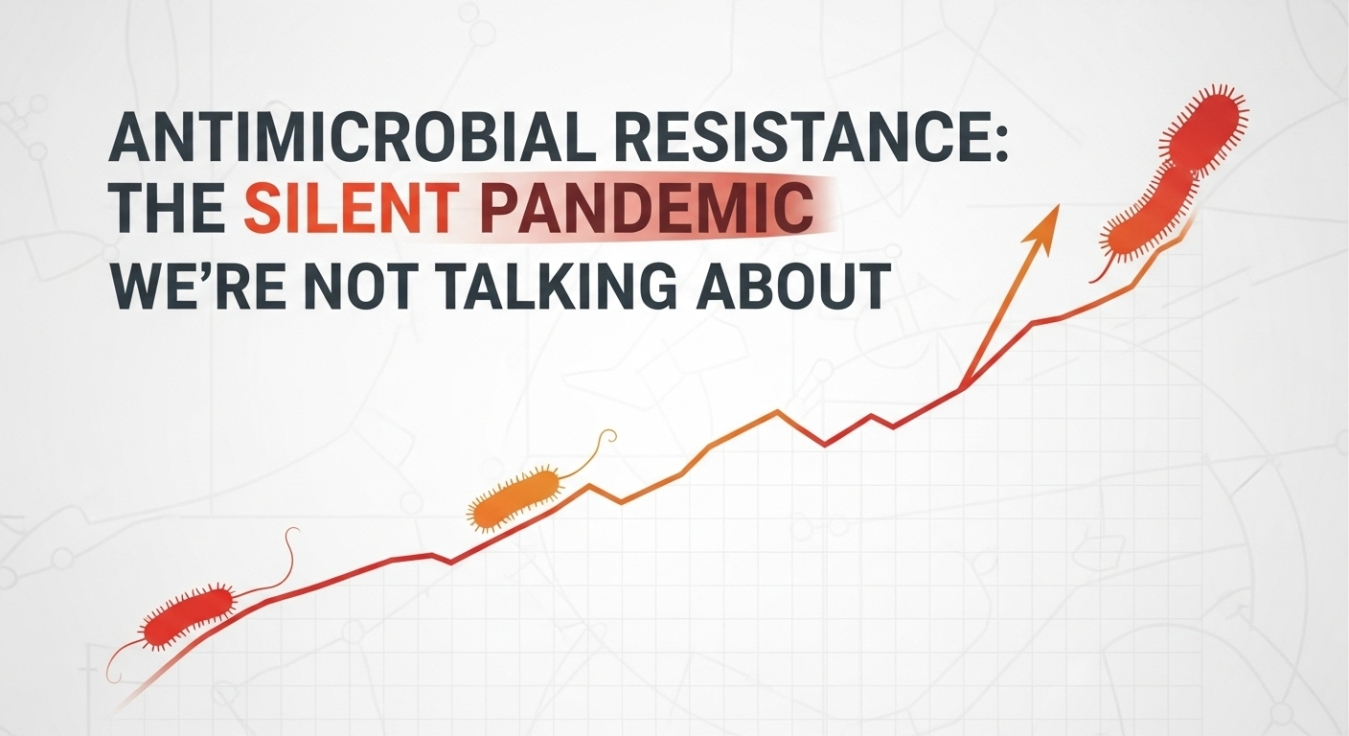
Antimicrobial Resistance: The Silent Pandemic We’re Not Talking About

Introduction
While headlines focus on emerging infectious diseases, a quieter but equally devastating crisis continues to claim lives around the world. Antimicrobial resistance (AMR) directly caused 1.14 million deaths in 2021, with another 4.71 million deaths involving drug-resistant infections. Yet despite its deadly toll, AMR remains largely invisible to the public—a silent pandemic that threatens to undo a century of medical progress.
The numbers are staggering and the trajectory is alarming. An estimated 39 million people are expected to die from AMR between 2025 and 2050. Without urgent action, we risk returning to a pre-antibiotic era where common infections become untreatable and routine medical procedures become life-threatening.
This comprehensive guide explores what antimicrobial resistance really means, examines the latest 2024-2025 research on its causes and consequences, and outlines evidence-based solutions to combat this global health emergency.
Understanding Antimicrobial Resistance: The Basics
Antimicrobial resistance occurs when bacteria, viruses, fungi, and parasites evolve to survive exposure to drugs designed to kill them. The misuse and overuse of antimicrobials in humans, animals and plants are the main drivers in the development of drug-resistant pathogens.
When microorganisms become resistant, standard treatments fail. Infections persist, spread more easily to others, and dramatically increase the risk of severe illness and death. Modern medical procedures that depend on effective antimicrobials—including surgery, chemotherapy, and organ transplants—become extremely dangerous or impossible.
How Resistance Develops
Resistance emerges through several biological mechanisms:
Genetic Mutations: During bacterial reproduction, random DNA mutations occasionally occur. Some mutations provide resistance to specific antibiotics, allowing those bacteria to survive when antibiotics are present.
Horizontal Gene Transfer: Bacteria can share resistance genes with each other through plasmids (small DNA molecules) and transposons, even across different species. This allows resistance to spread rapidly through bacterial populations.
Selection Pressure: Every time antibiotics are used—appropriately or not—they kill susceptible bacteria while resistant ones survive and multiply. This evolutionary pressure accelerates the development and spread of resistance.
Want help choosing the right hospital? Talk to Shifam Health for a free treatment estimate today.
The Global Burden: Latest Statistics from 2024-2025
Recent comprehensive analyses paint a sobering picture of AMR’s impact worldwide.
Death Toll and Disease Burden
AMR has claimed more than 36 million lives since 1990, with annual deaths rising from approximately 1 million in 1990 to 1.14 million in 2021. The trajectory shows deaths could reach 1.91 million annually by 2050 without significant intervention.
In 2019, of the roughly 8.9 million deaths due to bacterial infections, 1.27 million deaths were directly attributable to AMR and 4.95 million deaths were associated with drug-resistant infections.
United States Impact
In the United States specifically, more than 2.8 million antimicrobial-resistant infections occur each year, with more than 35,000 deaths resulting from these infections.
Recent CDC data shows that six bacterial antimicrobial-resistant hospital-onset infections increased by a combined 20% during the COVID-19 pandemic compared to pre-pandemic levels, peaking in 2021 and remaining above pre-pandemic levels in 2022.
Age-Specific Patterns
Between 1990 and 2021, AMR deaths among children under five years old declined by 50%, largely due to vaccination programs and improved water, sanitation, and hygiene access. However, deaths among people aged 70 years and older increased by more than 80%, due to rapidly aging populations and older people’s greater vulnerability to infection.
Economic Impact
The financial burden is enormous. The estimated national cost to treat infections caused by six antimicrobial-resistant germs frequently found in healthcare settings exceeds $4.6 billion annually in the United States.
WHO’s 2024 Priority Pathogens: The Most Dangerous Threats
In 2024, the World Health Organization updated its list of bacterial priority pathogens to guide research, development, and public health strategies.
The 2024 WHO Bacterial Priority Pathogens List covers 24 pathogens spanning 15 families of antibiotic-resistant bacteria, grouped into critical, high, and medium priority categories.
Critical Priority Pathogens
Critical priority pathogens include Acinetobacter baumannii and other Gram-negative bacteria that are resistant to last-line antibiotics, along with drug-resistant Mycobacterium tuberculosis due to its substantial burden on public health.
Carbapenem-Resistant Acinetobacter baumannii: Causes severe infections in hospitalized patients, particularly those on ventilators, with resistance to last-resort antibiotics.
Carbapenem-Resistant Enterobacterales (including Klebsiella pneumoniae and Escherichia coli): Antibiotic-resistant Gram-negative bacteria including K. pneumoniae, Acinetobacter species, and E. coli were ranked in the highest quartile of priority pathogens.
Rifampicin-Resistant Mycobacterium tuberculosis: RR-TB is listed as critical priority because of its ability to resist treatment and its severe impact, particularly in low- and middle-income countries.
High Priority Pathogens
High priority pathogens include Salmonella species and Shigella species due to substantial community-level burden and increasing resistance levels, as well as Pseudomonas aeruginosa and Staphylococcus aureus, which are highly transmissible in healthcare settings with high mortality rates.
Among bacteria commonly responsible for community-acquired infections, the highest priority rankings were for fluoroquinolone-resistant Salmonella enterica serotype Typhi (72%), Shigella species (70%), and Neisseria gonorrhoeae (64%).
Methicillin-Resistant Staphylococcus aureus (MRSA): Deaths from MRSA increased most worldwide, directly causing 130,000 deaths in 2021—more than doubling from 57,200 in 1990.
Drug-Resistant Neisseria gonorrhoeae: N. gonorrhoeae has limited treatment options due to emergence of multi-drug resistant strains.
Medium Priority Pathogens
Medium priority pathogens include Group A and B streptococci, Streptococcus pneumoniae, and Haemophilus influenzae, which disproportionately impact infants, young adults, and older people in settings with limited healthcare resources.
Emerging Fungal Threat
The number of reported clinical cases of Candida auris—a yeast that spreads in healthcare facilities, is often resistant to antifungal medications, and can cause severe illness—increased nearly five-fold from 2019 to 2022.
Major Drivers of Antimicrobial Resistance
Understanding what fuels AMR is essential for developing effective interventions.
Overuse and Misuse in Human Medicine
Inappropriate antibiotic prescribing remains widespread. Studies indicate that 30-50% of antibiotic prescriptions in outpatient settings are unnecessary or inappropriate, including prescriptions for viral infections where antibiotics provide no benefit.
Patient expectations, diagnostic uncertainty, and time pressures contribute to overprescribing. When patients don’t complete prescribed courses or engage in self-medication, partial bacterial populations survive and develop resistance.
Get expert care and clear guidance with Shifam Health. Reach out today for a free treatment estimate.
Agricultural and Veterinary Use
The agricultural sector’s contribution to AMR is substantial and well-documented. Worldwide, an estimated 73% of antimicrobials are consumed by farm animals rather than humans.
In the United States, approximately 80% of antibiotics sold are for use in animal agriculture, with about 70% classified as medically important—meaning they belong to classes important to human medicine.
Antibiotics are administered to animals in feed to marginally improve growth rates and prevent infections, a practice projected to increase dramatically worldwide. This routine use creates constant selection pressure favoring resistant bacteria.
Resistant bacteria are transmitted to humans through direct contact with animals, exposure to animal manure, consumption of undercooked meat, and contact with uncooked meat or contaminated surfaces.
The classes of antibiotics used in agriculture often overlap with those critical for human medicine. The highest priority critically important antimicrobials for human medicine include quinolones, third-generation and higher cephalosporins, macrolides, glycopeptides, and polymyxins (colistin)—all of which are used in animal agriculture in various countries.
Environmental Contamination
Antibiotics and resistant bacteria contaminate the environment through multiple pathways:
- Pharmaceutical manufacturing waste discharged into waterways
- Agricultural runoff containing antibiotics and resistant bacteria from manure
- Hospital and municipal wastewater that treatment plants cannot fully process
- Improper disposal of unused medications
These environmental reservoirs allow resistance genes to persist and spread through bacterial communities in soil and water.
Global Spread Through Travel and Trade
AMR affects countries in all regions and at all income levels, though low- and middle-income countries are most affected as its drivers and consequences are exacerbated by poverty and inequality.
International travel, global food supply chains, and migration facilitate the rapid worldwide spread of resistant pathogens. A resistant infection acquired in one country can be transported globally within hours.
Lack of New Antibiotics
The antibiotic development pipeline is dangerously thin. Since release of the 2017 WHO priority pathogens list, at least 13 new antibiotics targeting bacterial priority pathogens have been approved, though AMR continues to emerge with many pathogens showing resistance to most newer antibiotics.
Developing new antibiotics is expensive and time-consuming, with limited profitability since new drugs are typically reserved as last-resort options. Many pharmaceutical companies have abandoned antibiotic research in favor of more profitable drug development.
Consequences of Antimicrobial Resistance
The implications of AMR extend far beyond individual infections.
Threatens Modern Medicine
AMR puts many gains of modern medicine at risk, making infections harder to treat and other medical procedures—such as surgery, caesarean sections, and cancer chemotherapy—much riskier.
Surgery relies on prophylactic antibiotics to prevent infections. Chemotherapy and organ transplantation require effective antibiotics to protect immunocompromised patients. Without reliable antimicrobials, these procedures become extremely dangerous.
Healthcare System Burden
Resistant infections require longer hospital stays, more expensive treatments, and isolation precautions that strain hospital resources. Patients may need toxic alternative antibiotics with serious side effects when first-line drugs fail.
Regional Variations
The 2025 WHO Global Antibiotic Resistance Surveillance report showed that Southeast Asia and Eastern Mediterranean regions reported the highest resistance rates (31.1% and 30.0% respectively), while European and Western Pacific regions had the lowest rates (10.2% and 9.1% respectively), with an overall global rate of 17.2%.
Future Projections
Forecasts indicate the highest levels of AMR deaths will occur in South Asia—including India, Pakistan, and Bangladesh—with a total of 11.8 million attributable AMR deaths projected between 2025 and 2050.
Super-regions with the highest all-age AMR mortality rates in 2050 are forecasted to be South Asia and Latin America and the Caribbean, with increases in deaths attributable to AMR being largest among those 70 years and older (65.9% of all-age deaths in 2050).
. Need trusted medical advice? Connect with Shifam Health and take the first step toward better health.
Evidence-Based Solutions to Combat AMR
While the situation is serious, comprehensive interventions can make a significant difference.
Antimicrobial Stewardship
Healthcare facilities worldwide are implementing stewardship programs that promote appropriate antibiotic prescribing through:
- Evidence-based treatment guidelines
- Rapid diagnostic tests to confirm bacterial infections
- Prescribing the narrowest-spectrum antibiotic for the shortest effective duration
- Regular audits and feedback to prescribers
Infection Prevention and Control
Preventing infections reduces the need for antibiotics. Key measures include:
- Rigorous hand hygiene protocols in healthcare settings
- Vaccination programs to prevent bacterial infections
- Improved water, sanitation, and hygiene infrastructure
- Isolation of patients with resistant infections
Vaccination programs, including pneumococcal conjugate vaccines, and improved access to clean water, sanitation, and hygiene have contributed to the 50% decline in AMR deaths among children under five since 1990.
Reducing Agricultural Antibiotic Use
Several countries have successfully reduced veterinary antibiotic consumption. The European Union banned antibiotics for growth promotion in 2006, and many member countries have achieved dramatic reductions in use without compromising animal health or productivity.
Between 2011 and 2022, sales of antibiotics for livestock in Europe fell by 53%, and in the UK, antibiotic use in livestock decreased by about 59% since 2014.
Alternatives to routine antibiotic use include:
- Improved animal husbandry and farm hygiene
- Vaccination programs for livestock
- Better breeding for disease resistance
- Later weaning in piglets to reduce stress-related infections
- Higher welfare farming systems that reduce disease transmission
Surveillance and Data Collection
As of year-end 2023, 178 countries had developed AMR national action plans aligned with the WHO Global Action Plan.
The WHO Global Antimicrobial Resistance and Use Surveillance System (GLASS) reported data from 104 countries in 2023 and 110 countries between 2016 and 2023, analyzing more than 23 million bacteriologically confirmed cases.
Robust surveillance systems track resistance patterns, identify emerging threats, and guide public health responses.
Potential of New Interventions
Under a scenario with better healthcare for severe infections and improved access to antibiotics, 92 million deaths could be cumulatively averted between 2025 and 2050. Development of a Gram-negative drug pipeline could avert 11.1 million AMR deaths through prevention of resistance deaths.
Promising approaches under development include:
- Bacteriophage therapy using viruses that target specific bacteria
- New antibiotic classes with novel mechanisms of action
- Antimicrobial peptides found in nature
- Vaccines to prevent bacterial infections
- AI-assisted drug discovery to identify new compounds
One Health Approach
AMR requires addressing issues through an integrated One Health framework that recognizes the interconnection of human, animal, and environmental health.
Effective AMR mitigation requires coordinated action across:
- Human healthcare systems
- Veterinary medicine and agriculture
- Environmental protection and water management
- International cooperation and policy alignment
What You Can Do: Individual Actions Matter
While AMR is a global challenge requiring systemic solutions, individual actions contribute to the solution.
Use Antibiotics Responsibly
- Only take antibiotics prescribed by a healthcare professional
- Never demand antibiotics for viral infections like colds, flu, or most sore throats
- Always complete the full prescribed course, even if symptoms improve
- Never share antibiotics or use leftover prescriptions
Prevent Infections
- Wash hands regularly and properly
- Stay current with vaccinations
- Practice safe food handling and cook meat thoroughly
- Avoid close contact with sick people when possible
- Keep wounds clean and covered
Make Informed Consumer Choices
When possible, purchase meat, poultry, and dairy products labeled as raised without routine antibiotics. Support farming practices that prioritize animal welfare and limit antibiotic use.
The Path Forward: A Global Imperative
Antimicrobial resistance represents one of the defining health challenges of our era. The WHO has declared AMR one of the top global public health and development threats, requiring urgent, coordinated action across all sectors of society.
The encouraging news is that interventions work. Countries that have implemented comprehensive AMR strategies have demonstrated that resistance can be slowed and in some cases reversed. Vaccination programs, improved sanitation, antimicrobial stewardship, and reduced agricultural antibiotic use all contribute to measurable improvements.
Based on estimates for 204 countries and territories, forecasts reveal that AMR will continue to be a leading cause of death globally, with over a million people dying each year solely because bacteria have become resistant to treatment.
However, the window for effective action is narrowing. Every day we delay implementing comprehensive solutions, resistance spreads further, treatment options diminish, and more lives are lost. The time for decisive action is now.
Key Takeaways
- AMR is a documented global emergency with 1.14 million deaths in 2021 and 39 million projected deaths between 2025-2050 without intervention
- The 2024 WHO priority pathogens list identifies 24 critical resistant bacteria requiring urgent research and public health action
- 73% of antimicrobials globally are consumed by farm animals, making agricultural use a major driver of resistance
- Effective interventions exist including stewardship programs, infection prevention, agricultural reforms, and surveillance systems
- Individual actions matter through responsible antibiotic use, infection prevention, and informed consumer choices
- Coordinated global action following the One Health approach can avert millions of deaths and preserve antimicrobials for future generations
The fight against antimicrobial resistance requires sustained commitment from governments, healthcare systems, the agricultural sector, pharmaceutical companies, and individuals. By working together across all sectors, we can slow the spread of resistance, develop new treatments, and ensure that antibiotics remain effective for generations to come.
Resources for Further Information:
- World Health Organization AMR Hub: www.who.int/health-topics/antimicrobial-resistance
- CDC Antimicrobial Resistance Portal: www.cdc.gov/drugresistance
- Review on Antimicrobial Resistance: amr-review.org
Disclaimer: This article is for informational purposes only and is based on peer-reviewed research and official reports from WHO, CDC, and published studies. Always consult healthcare professionals for medical advice regarding infections and antibiotic use.