Enlarged Heart Treatment in India for US Patients: Comprehensive Guide

Introduction
A diagnosis of an enlarged heart (cardiomegaly) can be concerning for anyone living in New York, Los Angeles, Chicago, Houston, Phoenix, Philadelphia, San Antonio, Dallas, or other parts of the United States. Beyond the anxiety and emotional weight, patients and families often grapple with practical challenges — how quickly treatment can begin, what therapeutic options exist, and whether the high costs of cardiac care in the US are manageable without comprehensive insurance.
The US healthcare system provides world-class cardiac care, but many patients face substantial out-of-pocket expenses, high insurance deductibles, limited coverage for certain procedures, or delays in scheduling non-emergency cardiac interventions. When costs become prohibitive or waiting feels too long, families start searching for safe and viable alternatives.
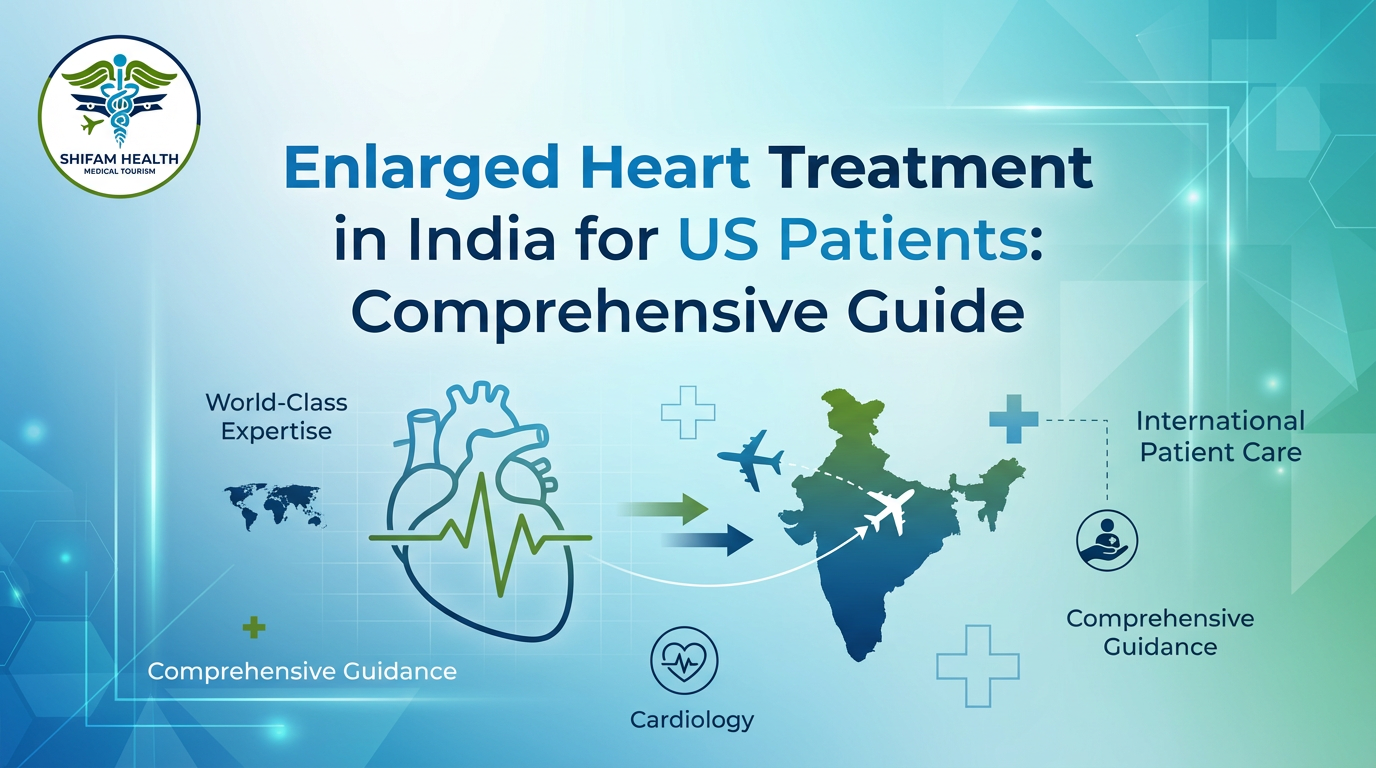
This is why an increasing number of Americans are exploring enlarged heart treatment in India for US patients. India has established itself as a leading destination for advanced cardiology and cardiac surgery, offering state-of-the-art hospitals, internationally trained heart specialists, and cutting-edge medical technology. Treatment costs are typically 60-70% lower than in the United States, and hospitals can often schedule procedures within days rather than weeks or months. For many patients, this combination of affordability, accessibility, and clinical excellence makes India a compelling option.
This comprehensive guide covers treatment options, cost comparisons, hospital infrastructure, safety standards, travel planning, and how US patients can responsibly explore cardiac care in India.
Why US Patients Seek Heart Treatment Outside America
High Treatment Costs
Cardiac care in the United States is notoriously expensive. Even with insurance, patients may face deductibles ranging from $5,000 to $15,000 or more. Procedures like valve replacement, bypass surgery, or device implantation can cost tens of thousands to hundreds of thousands of dollars.
Insurance Limitations
Many insurance plans have restricted networks, high co-pays for specialist care, or limited coverage for certain diagnostic tests and advanced procedures. Patients without insurance face even steeper challenges.
Wait Times for Non-Emergency Cases
While emergency cardiac care is readily available, elective procedures or follow-up interventions may involve scheduling delays, particularly with sought-after specialists or facilities.
Limited Access to Holistic Cardiac Programs
Comprehensive cardiac rehabilitation, nutritional counseling, and ongoing lifestyle management programs may not always be covered or easily accessible within standard insurance plans.
These factors drive many Americans to research cardiac treatment abroad from the US, seeking quality care that is both accessible and affordable.
India vs US Enlarged Heart Treatment Cost Comparison (USD)
Below are approximate cost comparisons. Actual expenses vary based on heart condition severity, procedure complexity, hospital choice, and individual treatment plans.
| TREATMENT TYPE | US COST | INDIA COST | SAVINGS |
|---|---|---|---|
| Cardiac Consultation & Diagnostics | $1,500 – $3,000 | $150 – $400 | Up to 85% |
| Heart Valve Replacement | $80,000 – $200,000 | $8,000 – $15,000 | Up to 92% |
| Coronary Angioplasty & Stenting | $30,000 – $75,000 | $3,500 – $7,000 | Up to 90% |
| Pacemaker Implantation | $25,000 – $50,000 | $4,000 – $8,000 | Up to 84% |
| Heart Transplant Surgery | $500,000 – $1,500,000 | $50,000 – $100,000 | Up to 93% |
This substantial cost difference is a primary reason patients search “India vs US heart treatment cost” when exploring international options.
Understanding Enlarged Heart (Cardiomegaly)
An enlarged heart is not a disease itself but rather a sign of an underlying condition affecting the heart’s structure or function. The heart may enlarge when it has to work harder than normal to pump blood effectively.
Common Causes
| CONDITION | DESCRIPTION |
|---|---|
| Dilated Cardiomyopathy | Heart chambers stretch and weaken, reducing pumping efficiency |
| Hypertrophic Cardiomyopathy | Heart muscle thickens abnormally, making pumping difficult |
| Heart Valve Disease | Damaged valves force the heart to work harder |
| Coronary Artery Disease | Blocked arteries reduce blood flow to heart muscle |
| High Blood Pressure | Chronic hypertension causes heart muscle to thicken |
| Arrhythmias | Irregular heart rhythms may lead to structural changes |
| Congenital Heart Defects | Birth abnormalities affecting heart structure |
Symptoms
- Shortness of breath, especially during activity or when lying down
- Fatigue and weakness
- Swelling in legs, ankles, or abdomen
- Irregular heartbeat or palpitations
- Chest discomfort or pressure
- Dizziness or fainting
Early diagnosis and treatment are essential to prevent progression to heart failure.
Enlarged Heart Treatment Options Available in India
India offers comprehensive cardiac care using the same protocols and technologies available in leading US medical centers.
Medical Management
Medication remains the first line of treatment for many patients with enlarged hearts.
Treatment may include:
- ACE inhibitors or ARBs to reduce blood pressure and ease heart workload
- Beta-blockers to slow heart rate and improve pumping efficiency
- Diuretics to reduce fluid buildup and swelling
- Anticoagulants to prevent blood clots
- Anti-arrhythmic medications to control irregular heartbeats
- Aldosterone antagonists for advanced heart failure
Medications are prescribed based on individual diagnosis, and dosages are carefully monitored.
Device Implantation
When medications alone are insufficient, cardiac devices may be recommended.
Common devices include:
- Pacemakers – regulate slow or irregular heartbeats
- Implantable Cardioverter Defibrillators (ICDs) – monitor heart rhythm and deliver shocks if dangerous arrhythmias occur
- Cardiac Resynchronization Therapy (CRT) – coordinates heart chamber contractions to improve pumping efficiency
- Left Ventricular Assist Devices (LVADs) – mechanical pumps that support heart function in severe heart failure
Device implantation procedures are performed by experienced electrophysiologists using minimally invasive techniques when possible.
Surgical Interventions
Surgery may be necessary to address underlying structural problems causing heart enlargement.
💡 Consult with Shifam Health’s cardiac surgery specialists to explore personalized surgical options.
Procedures include:
- Heart Valve Repair or Replacement – corrects damaged valves using mechanical or biological prosthetics
- Coronary Artery Bypass Grafting (CABG) – restores blood flow by bypassing blocked arteries
- Ventricular Restoration Surgery – reshapes enlarged heart chambers to improve function
- Heart Transplantation – replacement of a severely damaged heart with a healthy donor heart
Indian cardiac centers perform thousands of these procedures annually, building substantial clinical expertise.
Also Read : Heart Bypass Surgery Cost in India: Guide for International Patients
Minimally Invasive & Robotic Procedures
Advanced centers in India use robotic-assisted surgery and catheter-based techniques that reduce trauma, shorten recovery times, and minimize scarring.
Examples include:
- Transcatheter Aortic Valve Replacement (TAVR)
- Robotic mitral valve repair
- Percutaneous coronary interventions
Cardiac Rehabilitation
Comprehensive rehabilitation programs help patients recover strength, adopt heart-healthy habits, and reduce future cardiac risks.
Programs typically include:
- Supervised exercise training
- Nutritional counseling
- Stress management
- Education on medication adherence
- Lifestyle modification support
Cardiac rehabilitation is an integral component of long-term heart health management.
Advanced Technology & Expertise in India
India’s premier cardiac hospitals utilize:
- Hybrid Operating Rooms combining imaging and surgical capabilities
- 3D Echocardiography for detailed heart visualization
- Cardiac MRI and CT Angiography for precise diagnosis
- Electrophysiology Labs for complex arrhythmia treatment
- Multidisciplinary Heart Teams including cardiologists, cardiac surgeons, imaging specialists, and rehabilitation experts
This collaborative, technology-driven approach ensures treatment plans align with international best practices.
Leading Heart Hospitals in India
Several hospital networks have internationally recognized cardiology and cardiac surgery departments:
| HOSPITAL | SPECIALIZATION | ACCREDITATION |
|---|---|---|
| Apollo Hospitals | Comprehensive cardiac care, transplants | JCI, NABH |
| Fortis Escorts Heart Institute | Advanced heart surgeries, interventional cardiology | JCI, NABH |
| Medanta – The Medicity | Robotic surgery, pediatric cardiology | JCI, NABH |
| Narayana Health | High-volume cardiac procedures, affordability | NABH |
| Max Super Speciality Hospital | Heart failure management, device implantation | NABH, NABL |
| Manipal Hospitals | Comprehensive cardiology, rehabilitation | NABH |
These hospitals treat thousands of international patients annually and maintain dedicated international patient departments with English-speaking coordinators.
Why India Is a Strong Option for US Patients
India stands out because of:
- 60-70% cost savings compared to US private healthcare
- World-class infrastructure meeting international standards
- Experienced specialists, many trained in the US or Europe
- Shorter wait times for consultations and procedures
- English-speaking medical staff facilitating clear communication
- High treatment volumes building clinical expertise and outcomes
These factors make India an attractive choice for US patients exploring quality cardiac care abroad.
Post-Treatment Follow-Up After Returning to the US
Cardiac care requires ongoing management even after returning home.
Follow-up support includes:
- Prescription refills coordinated with Indian pharmacy or US providers
- Virtual consultations with Indian cardiologists via telemedicine
- Medical reports shared with US physicians for continuity of care
- Follow-up imaging and tests arranged locally
- Cardiac rehabilitation referrals in the US
Proper follow-up ensures treatment benefits are maintained long-term.
How Shifam Health Supports You
Shifam Health serves as your dedicated treatment facilitator, providing comprehensive support throughout your medical journey.
Services include: ✅ Hospital and cardiac specialist selection based on your specific condition
✅ Transparent cost estimates and payment planning
✅ Medical visa invitation letters and documentation assistance
✅ Flight booking and accommodation arrangements
✅ Airport pickup and local transportation
✅ Language interpretation and care coordination
✅ Post-treatment follow-up and telemedicine access
🌟 Trust Shifam Health to guide your cardiac care journey with expertise, compassion, and personalized attention. 📞 Schedule your free consultation today.
Frequently Asked Questions (FAQs)
Yes, treatment costs in India are typically 60-70% lower than in the United States.
Stay duration varies from 1-2 weeks for diagnostic evaluation and device implantation to 4-6 weeks for complex surgeries and recovery.
Yes, with proper hospital documentation and medical reports, the medical visa process is straightforward.
Yes, Indian hospitals provide comprehensive medical reports that US physicians can use for ongoing care.
Most US insurance plans do not cover international treatment, but costs are still significantly lower than US out-of-pocket expenses.
Conclusion
India has emerged as a premier global destination for cardiac care, offering US patients access to world-class treatment at a fraction of domestic costs. With advanced technology, experienced specialists, shorter waiting times, and comprehensive support services, India provides a practical and safe option for patients seeking high-quality enlarged heart treatment.
While international medical travel is not suitable for every patient, those who carefully plan and work with experienced facilitators like Shifam Health can access excellent cardiac care while achieving substantial cost savings.