



Home > Blog > Success Rate of Acute Myeloid Leukaemia Treatment in India: A Complete, Data-Driven Guide
Success Rate of Acute Myeloid Leukaemia Treatment in India: A Complete, Data-Driven Guide
Filters & Insights
Discover the success rate of acute myeloid leukemia treatment in India, including survival outcomes, treatment costs, hospital comparison.
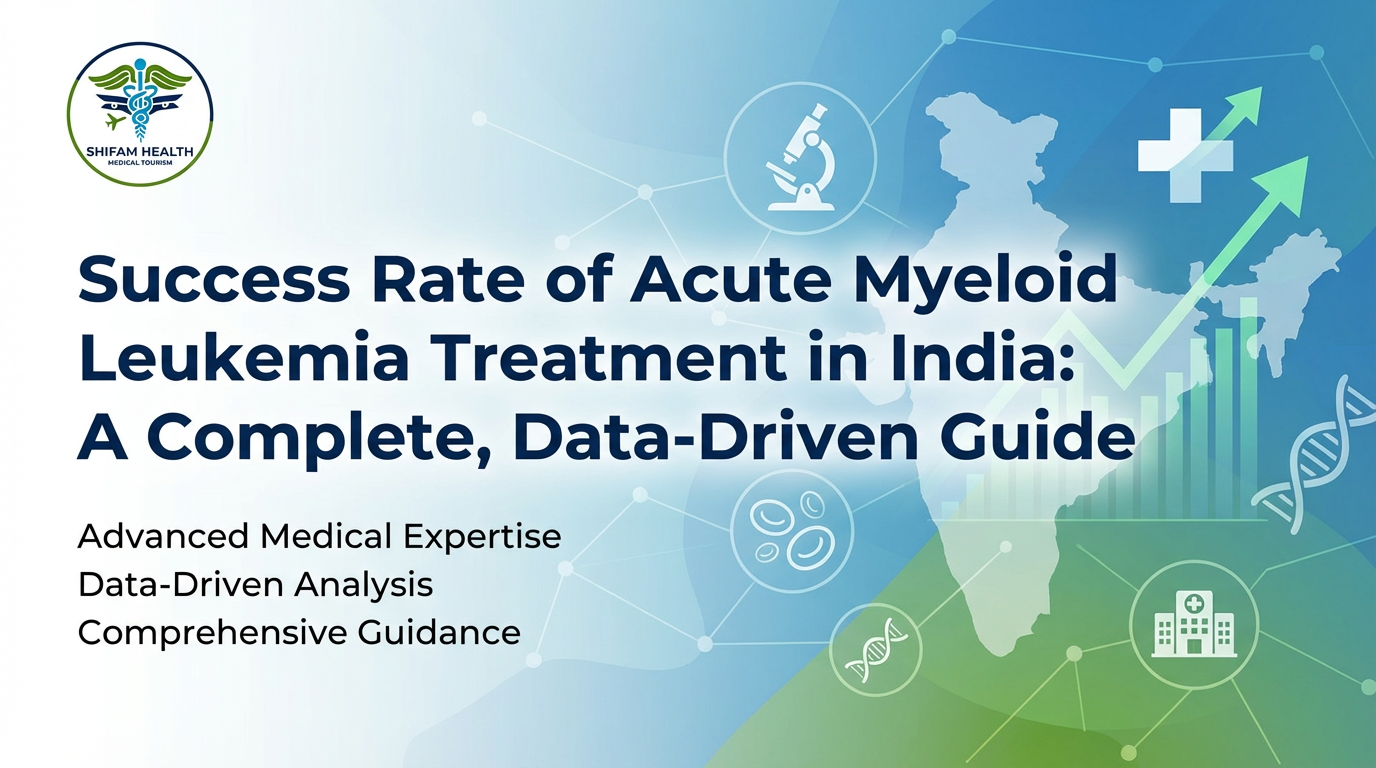
Acute Myeloid Leukaemia (AML) is a fast-progressing blood cancer that requires immediate, specialised care. Over the last decade, India has emerged as a trusted destination for AML treatment due to steadily improving survival rates, access to advanced therapies, and treatment costs that are significantly lower than those in Western countries.
Large tertiary cancer centres in India now report outcomes comparable to global benchmarks, especially for patients treated early and those eligible for bone marrow transplantation. This has positioned India as a preferred choice for both domestic and international AML patients.
This guide breaks down the success rate of acute myeloid leukaemia treatment in India, the clinical factors that influence outcomes, how costs compare globally, and why patients from the USA, UK, Australia, Canada and other countries choose India for AML care.
Table of Contents
ToggleUnderstanding Acute Myeloid Leukemia and Why Outcomes Depend on Early Care
AML develops when abnormal myeloid cells multiply rapidly in the bone marrow, crowding out healthy blood cells. Because of its aggressive nature, early diagnosis and risk-adapted treatment play a major role in survival.
India follows NCCN and ESMO-aligned protocols, using cytogenetic risk stratification and molecular profiling to tailor therapy from day one.
👉 With Shifam Health, patients receive guided treatment planning even before arriving in India.
Success Rate of Acute Myeloid Leukaemia Treatment in India
India’s AML outcomes now closely match global benchmarks, especially in high-volume tertiary cancer centers.
AML Treatment Success Rates by Age Group
| Patient Group | Complete Remission Rate | 5-Year Survival Rate |
|---|---|---|
| Children & Adolescents | 70–80% | 60–70% |
| Adults (18–60 years) | 65–75% | 45–55% |
| Elderly Patients (60+) | 40–55% | 20–30% |
These results are driven by early induction chemotherapy, structured consolidation protocols, access to stem cell transplantation, and increasing use of targeted agents.
What Factors Improve AML Survival Rates in India?
Several key elements contribute to the strong success rate of acute myeloid leukemia treatment in India:
1. Risk-Adapted Therapy
Indian centers routinely perform cytogenetics, FLT3, NPM1, and IDH mutation testing to personalize treatment.
2. Bone Marrow Transplant Expertise
India is now a global leader in allogeneic stem cell transplantation, with outcomes comparable to the US and Europe.
3. Infection Control Protocols
Advanced isolation units and antimicrobial stewardship significantly reduce treatment-related mortality.
AML Treatment Options Available in India
| Treatment Modality | Purpose |
|---|---|
| Induction Chemotherapy | Achieve remission |
| Consolidation Chemotherapy | Prevent relapse |
| Targeted Therapy | Mutation-specific control |
| Bone Marrow Transplant | Long-term cure in high-risk AML |
| Maintenance Therapy | Reduce recurrence |
Cost of Acute Myeloid Leukaemia Treatment in India vs Other Countries
Cost Comparison Table
| Country | AML Treatment Cost (USD) |
|---|---|
| India | 25,000 – 45,000 |
| USA | 180,000 – 300,000 |
| UK | 120,000 – 200,000 |
| Germany | 140,000 – 220,000 |
| Singapore | 90,000 – 150,000 |
India offers up to 80% cost savings without compromising clinical outcomes.
👉 Shifam Health provides transparent cost estimates before treatment begins.
Bone Marrow Transplant Success Rate for AML in India
| Transplant Type | Success Rate |
|---|---|
| Matched Sibling Donor | 65–75% |
| Matched Unrelated Donor | 55–65% |
| Haploidentical Transplant | 50–60% |
Indian transplant centers now perform haploidentical transplants routinely, expanding donor availability.
Why International Patients Choose India for AML Treatment
- Globally trained hematologists
- High-volume leukemia centers
- Affordable transplant programs
- English-speaking medical teams
- Dedicated international patient services
India treats thousands of AML patients from Africa, the Middle East, CIS countries, and Southeast Asia every year.
👉 Shifam Health manages visas, hospital coordination, and post-treatment follow-up.
Best Hospitals in India for AML Treatment
| Hospital Type | Key Strength |
|---|---|
| Government Cancer Institutes | High experience, low cost |
| Private Tertiary Hospitals | Advanced diagnostics & comfort |
| Dedicated BMT Centers | High transplant volumes |
India is home to some of the best hospitals in the world for Acute Myeloid Leukemia (AML) treatment, offering advanced oncology care, expert haematologists, and strong support for international patients. Hospitals like Tata Memorial Centre in Mumbai, Apollo Hospitals across major cities, Max Super Speciality Hospitals in Delhi and Gurgaon, and Fortis Memorial Research Institute in Gurugram are known for their dedicated leukemia units, modern chemotherapy protocols, bone marrow transplant facilities, and personalised patient care programs. These centers combine international standards of cancer treatment with highly skilled medical teams, multidisciplinary care, and supportive services that help patients and families navigate treatment with confidence and clarity.
Frequently Asked Questions (One-Liners)
Is AML curable in India?
Yes, many AML patients achieve long-term remission with chemotherapy and transplant.
How long does AML treatment take?
Initial treatment usually lasts 4–6 months, with follow-up therapy afterward.
Is bone marrow transplant safe in India?
Yes, Indian BMT centers follow global safety standards.
Can international patients stay long-term in India for AML care?
Yes, medical visas are extendable based on treatment needs.
Does age affect AML survival rates?
Yes, younger patients generally have better outcomes
Final Thoughts: Is India the Right Choice for AML Treatment?
The success rate of acute myeloid leukaemia treatment in India has improved dramatically due to precision diagnostics, advanced transplant programs, and strict adherence to global treatment protocols. When combined with affordability and experience, India stands out as a top destination for AML care worldwide.
🌍 Why Choose Shifam Health?
🩺 Expert-led hospital selection
✈️ End-to-end medical travel support
💬 Transparent costs and honest guidance
Your fight against AML deserves the right team. Shifam Health is here to guide you—every step of the way.


Popular Posts From Last Week
- July 20, 2026
- shifamhealth
Most people researching tonsillectomy cost in India encounter two problems quickly: the prices quoted on Indian insurance and…
- July 20, 2026
- shifamhealth
If you’re reading this because someone you love has started hearing voices, expressing beliefs that don’t match reality,…
- July 23, 2026
- shifamhealth
A Compassionate Starting Point If someone in your family has swung from weeks of racing energy, minimal sleep,…
- July 23, 2026
- shifamhealth
A Compassionate Starting Point If you’re here because your child’s teacher keeps mentioning “difficulty focusing,” or because homework…
- July 26, 2026
- shifamhealth
If you’ve been putting off a proper health screening because it felt expensive, complicated, or hard to schedule…
- July 24, 2026
- shifamhealth
If you’ve reached this page after one or more IVF cycles didn’t work, or after learning that both…
- July 19, 2026
- shifamhealth
Written by: Shifam Health Editorial Team Medically reviewed by: Consultant Reproductive Endocrinologist, Shifam Health Partner Network Published: July…
- July 22, 2026
- shifamhealth
When “No Sperm Count” Doesn’t Mean “No Options” Getting a semen analysis back that shows zero sperm is…
- July 23, 2026
- shifamhealth
Quick Summary What Is Keratoconus, and Why Does It Need Treatment? Keratoconus is a progressive eye condition in…
- July 21, 2026
- shifamhealth
Quick Summary What Is Premium Lens Cataract Surgery? Cataract surgery removes your eye’s clouded natural lens and replaces…
- July 21, 2026
- shifamhealth
How can international patients obtain a Medical Visa for Heart Surgery in India? International patients requiring heart surgery…
- July 24, 2026
- shifamhealth
Hip replacement surgery in India achieves pain relief in approximately 90–95% of appropriate candidates, with implant survivorship rates…