


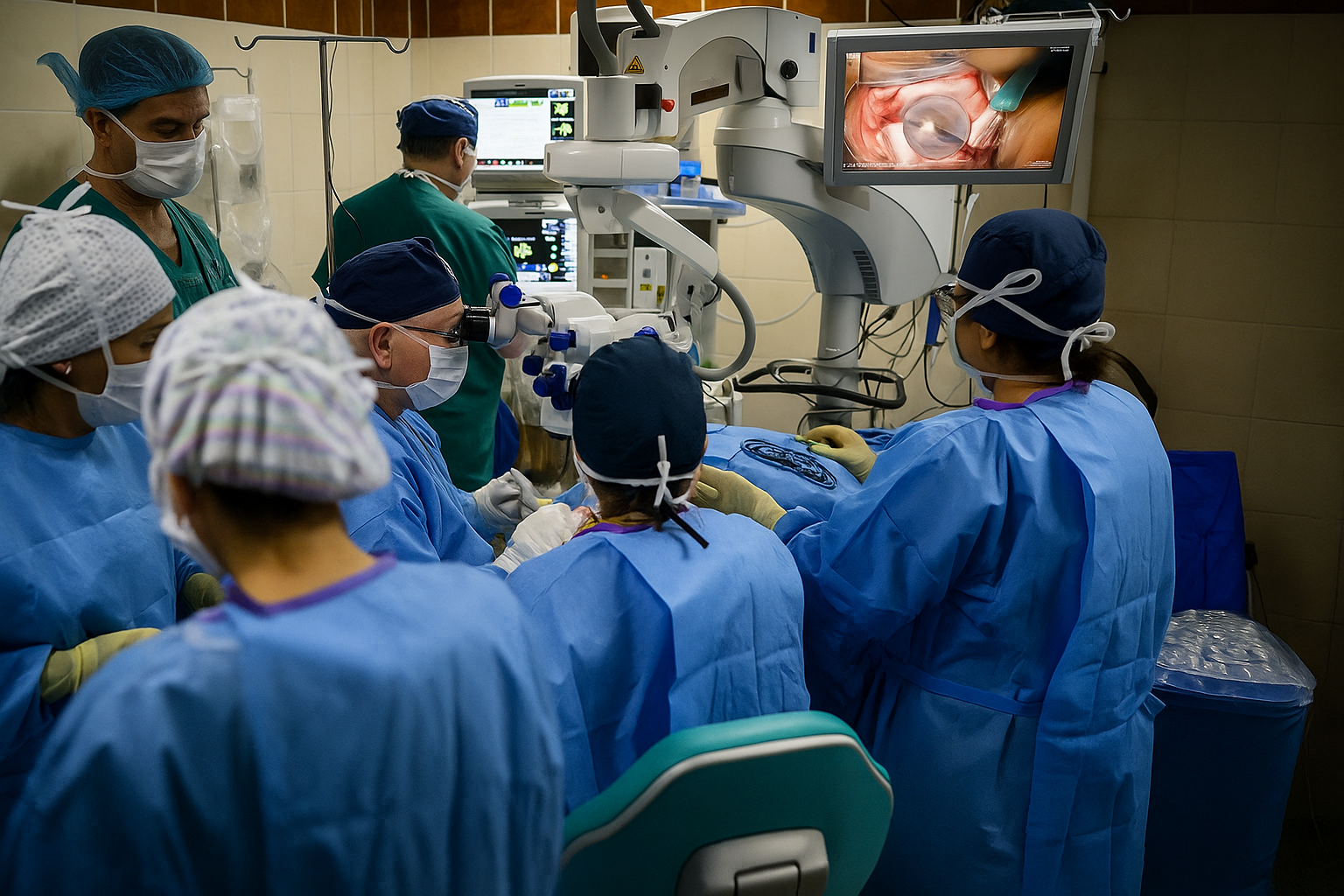
Cornea transplant surgery, also known as keratoplasty, is one of the most remarkable advances in modern ophthalmology, offering hope to patients suffering from severe vision loss caused by corneal damage. When the cornea becomes scarred, thin, or diseased, light can no longer pass through clearly leading to blurred or distorted vision that affects daily life. Through precise surgical techniques and the use of healthy donor tissue, keratoplasty can restore clarity, reduce pain, and significantly improve quality of vision. In 2026, advancements in partial-thickness and full-thickness transplant methods are making the procedure safer, faster, and more effective than ever before.
What is Cornea Transplant Surgery (Keratoplasty)?
A cornea transplant (keratoplasty) is a surgical procedure where a damaged or diseased cornea is replaced with a healthy donor cornea. This restores the cornea’s transparency, allowing light to properly reach the retina.
There are different types of keratoplasty procedures:
| Type of Cornea Transplant | Description | When It’s Used |
|---|---|---|
| Penetrating Keratoplasty (PK) | Full-thickness transplant – entire cornea replaced | Severe corneal damage or scarring |
| Lamellar Keratoplasty (LK) | Only the diseased front/middle layers are replaced | Partial corneal disease, trauma |
| Endothelial Keratoplasty (DSAEK, DMEK) | Only the innermost layer (endothelium) is replaced | Fuchs’ dystrophy, corneal swelling |
| Artificial Cornea (Keratoprosthesis) | Synthetic implant replaces cornea when donor tissue isn’t suitable | Rare cases with multiple graft failures |
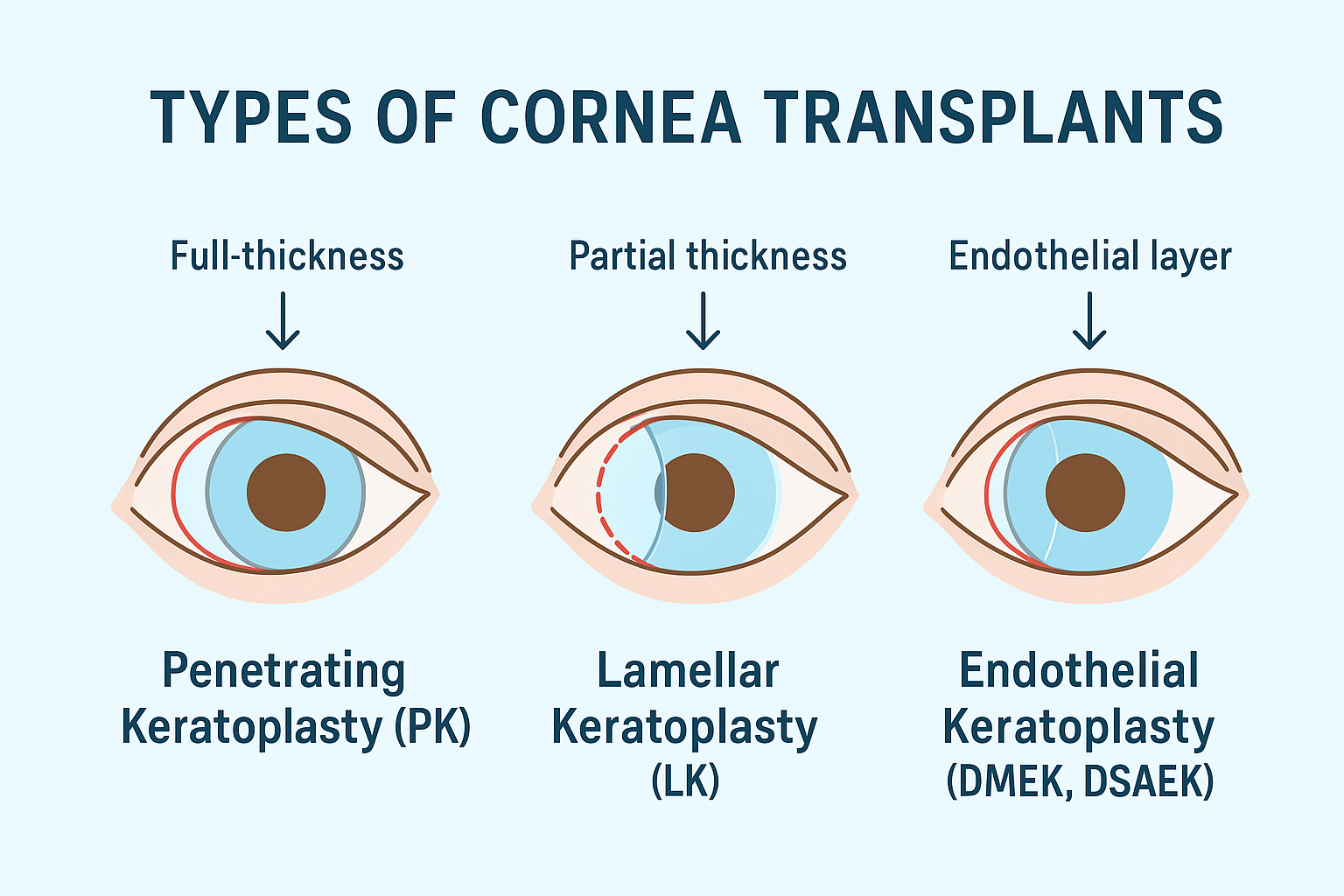
Types of Cornea Transplant Surgery – Full-thickness (PK), Partial-thickness (LK), and Endothelial Keratoplasty (DSAEK, DMEK). Each method is chosen based on the patient’s condition and severity of corneal damage.”
Conditions that Require Cornea Transplant
A corneal transplant is not always the first line of treatment. Doctors usually recommend it when other therapies, such as medications or corrective lenses, fail. Conditions requiring keratoplasty include:
- Keratoconus: Progressive thinning and bulging of the cornea.
- Corneal Scarring: Caused by injuries, infections, or ulcers.
- Fuchs’ Dystrophy: A hereditary condition where the inner corneal layer deteriorates.
- Corneal Swelling (Edema): Fluid buildup that clouds vision.
- Post-Surgical Complications: Vision loss after procedures like cataract surgery.
- Hereditary Corneal Diseases: Genetic conditions impairing corneal clarity.
The Cornea Transplant Procedure: Step by Step
A cornea transplant typically involves careful pre-surgery preparation, a precise surgical technique, and structured recovery.
1: Pre-operative Evaluation
- Comprehensive eye tests (vision, thickness, pressure).
- Matching with donor cornea from an eye bank.
- Assessment of general health and readiness for surgery.
2: The Surgery
- Performed under local or general anesthesia.
- Damaged cornea tissue is removed.
- Donor cornea is positioned and secured with ultra-fine sutures.
- Procedure duration: 1–2 hours.
3: Post-Surgery Hospital Stay
- Most patients stay 1–2 days for monitoring.
- Discharge with medications and follow-up instructions.
Cornea Transplant Success Rate
Corneal transplantation is one of the most successful organ transplant procedures worldwide.
Global vs. India Success Rates
- First-time, low-risk patients: 85–90% success rate.
- High-risk or repeat transplants: 60–75% success rate.
- Indian hospitals consistently match global benchmarks due to skilled surgeons, advanced techniques, and quality donor tissue.
Factors Influencing Success
- Patient’s age and health condition.
- Type of keratoplasty performed.
- Donor tissue quality and preservation.
- Patient compliance with post-op care.
Why India Stands Out
- State-of-the-art facilities at NABH and JCI-accredited hospitals.
- Surgeons trained internationally in DMEK & DSAEK.
- Affordable costs without compromising quality.
- Robust eye bank networks ensuring availability of donor corneas.
Recovery After Cornea Transplant
Healing after keratoplasty takes time, and patients must follow strict guidelines.
Immediate Post-op Care
- Use of antibiotic and steroid eye drops.
- Wearing an eye shield to protect the graft.
- Pain management with oral medications.
Recovery Timeline
| Timeline | Recovery Milestone |
|---|---|
| 1–2 weeks | Initial healing, reduced discomfort |
| 1–3 months | Vision gradually improves |
| 6–12 months | Stitches may be removed |
| 1–2 years | Full stabilization of vision |
📞Book your consultation with Shifam Health for Free and plan your medical journey to India today.
Do’s and Don’ts
✅ Attend all follow-ups.
✅ Wear protective glasses outdoors.
❌ Avoid rubbing or pressing the eye.
❌ No swimming, heavy lifting, or contact sports until cleared.
Possible Side Effects
- Temporary blurred vision.
- Redness or mild irritation.
- Sensitivity to light.
👉 With Shifam Health, patients receive structured follow-up schedules and multilingual care teams who coordinate with their surgeons even after they return home.
Risks and Complications
Although keratoplasty is safe, risks may include:
- Infection
- Corneal swelling or detachment
- Astigmatism (irregular vision)
- Graft rejection (occurs in 1 out of 5 patients)
Warning Signs of Rejection (The 4 R’s)
- Redness
- Reduced Vision
- Rash of Pain
- Reaction to Light (sensitivity)
Prompt medical attention can reverse rejection in most cases. If the graft fails, a repeat transplant may be required.
Cost of Cornea Transplant Surgery
One of the major reasons patients travel to India is affordability.
| Country | Average Cost (USD) |
|---|---|
| India | $2,500 – $4,000 |
| USA | $15,000 – $25,000 |
| UK | $12,000 – $18,000 |
| UAE/Turkey | $6,000 – $10,000 |
What’s Included in Shifam Health Packages
- Surgeon’s fee and hospital charges
- Donor cornea cost
- Medications and consumables
- In-patient stay
- Visa, travel, and accommodation support
Also Read: “Explore our detailed guide on Medical Visa& Treatment Packages in India.”
Why Choose Shifam Health for Cornea Transplant in India?
Shifam Health is more than just a facilitator it’s a trusted partner for international patients.
- Partnerships with top eye hospitals and world-renowned surgeons.
- Transparent pricing with no hidden costs.
- Quick access to donor corneas via established eye banks.
- End-to-end support: Visa, flights, accommodation, translator assistance.
- 24/7 dedicated patient care managers.
- Proven success stories from patients worldwide.
Conclusion
Cornea transplant surgery (keratoplasty) has transformed the lives of millions worldwide by restoring sight, reducing pain, and improving quality of life. With modern techniques such as PK, DSEK, and DMEK, success rates continue to rise, making it a safe and effective option for patients with advanced corneal disease. Recovery does require patience, careful follow-up, and strict adherence to medical advice but the long-term outcomes are often life-changing.
Frequently Asked Questions (FAQs)
How long does a cornea transplant last?
Most corneal grafts last 10–15 years, sometimes longer with proper care.
Can both eyes be transplanted?
Yes, but usually one eye is treated first and the other later if required.
Is the surgery painful?
The procedure itself is painless due to anesthesia. Some discomfort may be felt during recovery.
How soon can I return to work after keratoplasty?
Light work may be resumed within 2–3 weeks, but full recovery can take several months.
What is the lifespan of a donor cornea?
A successful graft can last over a decade. In case of rejection, repeat transplants are possible.
Cornea Transplant vs. LASIK – What’s the Difference?”
Cornea Transplant: For advanced corneal damage, scarring, or dystrophies.
LASIK: For correcting refractive errors like myopia, hyperopia, or astigmatism.
Learn more about LASIK treatment in India
| Take the First Step It costs Nothing Share your medical reports with Shifam Health and receive a free, personalized assessment within 24 hours. No commitment. No pressure. Just honest information to help you make the right decision for you and your family. www.shifamhealth.com | contact@shifamhealth.com | WhatsApp: +91 81785 95807 24/7 Support Available | Free Consultation | No Hidden Charges |