
When a doctor tells you or someone you love that the heart is beating dangerously out of rhythm, everything else stops. The fear is real. The urgency is real. And so is the question almost every family asks first: Where can we get the best treatment, and how much will it cost?
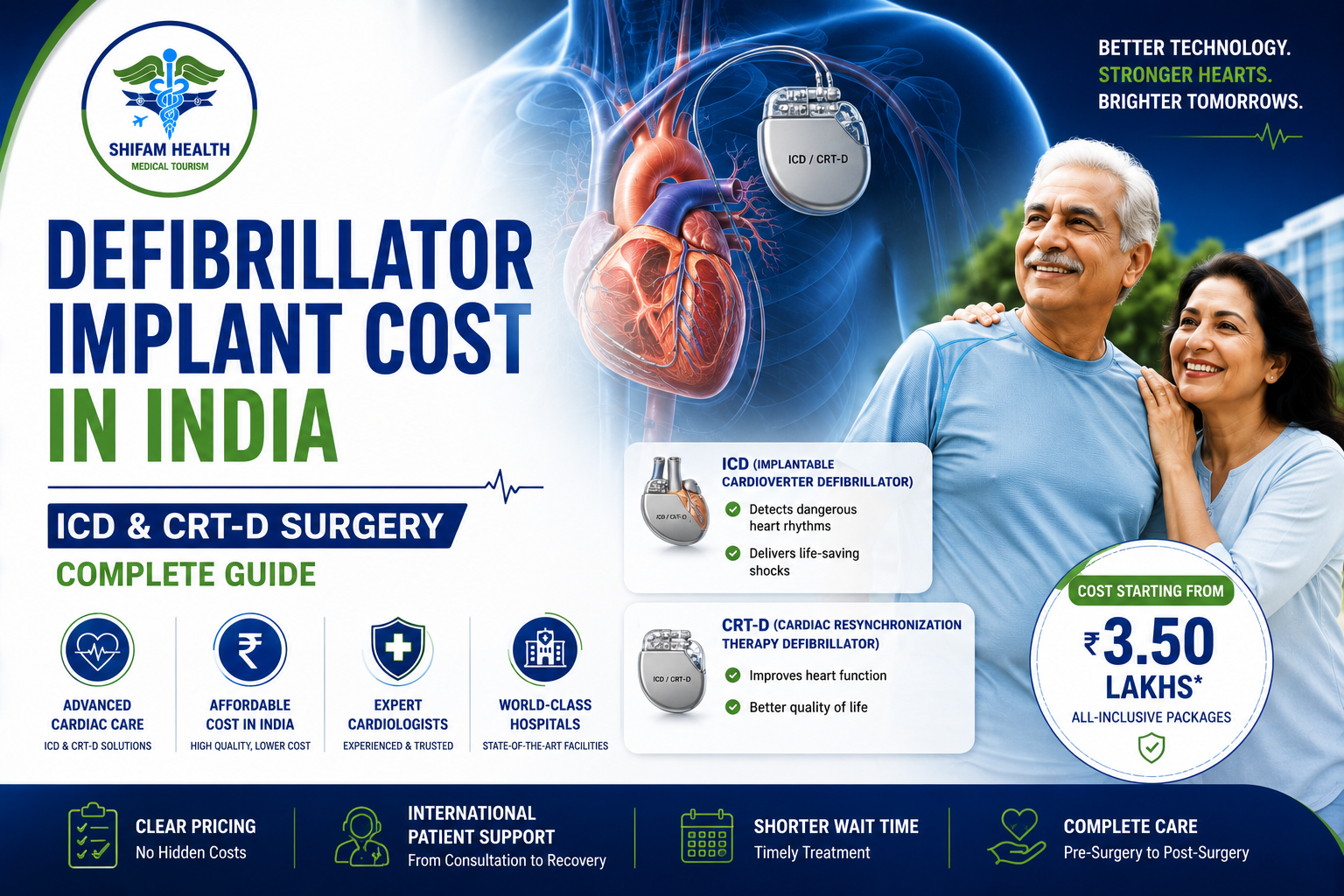
Defibrillator implant cost in India has become one of the most searched cardiac questions by international patients and for very good reason. Patients from Bangladesh, Nigeria, Kenya, Yemen, UAE, and even the UK and USA are increasingly choosing India for ICD and CRT-D surgery because India offers world-class electrophysiology expertise at a fraction of Western prices, with zero waiting time.
An ICD (Implantable Cardioverter Defibrillator) or CRT-D (Cardiac Resynchronization Therapy Defibrillator) is not a simple procedure. It is a life-saving intervention for patients at serious risk of sudden cardiac arrest or living with advanced heart failure. Done correctly, in the right facility, it can add years — sometimes decades — to a patient’s life.
This guide covers everything you need to know: what these devices do, who needs them, what the surgery involves, how much it costs in India, how India compares to other countries, and how you can access this treatment as an international patient.
What Is an ICD (Implantable Cardioverter Defibrillator)?
An ICD is a small, battery-powered device implanted under the skin near the collarbone. It continuously monitors your heart rhythm. When it detects a dangerously fast or irregular heartbeat known as ventricular tachycardia or ventricular fibrillation it delivers a precisely timed electric shock to restore a normal rhythm.
Think of it as a personal emergency system living inside your chest. It does not treat every heartbeat. It watches and waits, and only activates when truly necessary.
Modern ICDs can also function as pacemakers, delivering small electrical pulses to prevent the heart from beating too slowly. Many also have wireless connectivity that allows doctors to remotely monitor device performance — a feature especially useful for international patients after returning home.
Key facts about ICDs:
- Continuously monitors heart rhythm 24/7
- Delivers a shock within seconds of detecting a life-threatening arrhythmia
- Can also pace the heart if it beats too slowly
- Battery typically lasts 7–10 years
- Does not require open-heart surgery — implanted through a minimally invasive procedure
What Is a CRT-D Device?
A CRT-D (Cardiac Resynchronization Therapy Defibrillator) combines two functions: it resynchronizes the pumping chambers of the heart AND delivers defibrillation shocks when needed.
This device is designed specifically for patients with heart failure whose left and right ventricles are not contracting in sync. When the heart beats out of coordination, it pumps less efficiently. Over time, this weakens the heart further. CRT-D therapy corrects this timing problem, strengthening the heart’s pumping function while also protecting against life-threatening arrhythmias.
Unlike a standard ICD, a CRT-D uses three leads (wires): one in the right atrium, one in the right ventricle, and one placed on the left ventricle through a vein. This additional lead is what enables resynchronization.
Who benefits most from CRT-D:
- Patients with heart failure and ejection fraction below 35%
- Patients with left bundle branch block (a conduction abnormality)
- Patients already on optimized heart failure medications who still have symptoms
- Patients with both arrhythmia risk and reduced heart pumping function
ICD vs CRT-D vs Pacemaker – Key Differences

| Feature | Pacemaker | ICD | CRT-D |
|---|---|---|---|
| Primary Function | Prevents abnormally slow heart rates | Protects against sudden cardiac arrest | Resynchronizes heart function and protects against sudden cardiac arrest |
| Treats | Bradycardia (slow heart rhythm) | Ventricular tachycardia and ventricular fibrillation | Heart failure combined with serious arrhythmias |
| Delivers Shock? | No | Yes | Yes |
| Improves Heart Pumping? | No | No | Yes |
| Number of Leads | 1–2 Leads | 1–2 Leads | 3 Leads |
| Battery Life | 8–12 Years | 7–10 Years | 5–8 Years |
| Procedure Duration | 1–2 Hours | 1–2 Hours | 2–4 Hours |
| Hospital Stay | 1–2 Days | 1–3 Days | 2–4 Days |
| Recovery Time | 1–2 Weeks | 1–4 Weeks | 2–6 Weeks |
| Approximate Cost in India | ₹1.5–4 Lakh | ₹3–8 Lakh | ₹6–14 Lakh |
Device Selection Insight: A pacemaker is primarily used to correct slow heart rhythms, while an Implantable Cardioverter Defibrillator (ICD) is designed to prevent sudden cardiac arrest caused by life-threatening ventricular arrhythmias. A CRT-D device combines cardiac resynchronization therapy with defibrillation capabilities, making it particularly beneficial for selected patients with advanced heart failure and electrical conduction abnormalities.
Who Needs an ICD Implant?
ICD implantation is recommended when a patient has a significant risk of sudden cardiac death due to dangerous heart rhythms. Your cardiologist or electrophysiologist may recommend an ICD if you have:
- Survived a cardiac arrest — the highest-risk group, with strong evidence supporting ICD therapy
- Ventricular tachycardia (VT) — a fast, potentially dangerous rhythm originating in the lower chambers
- Ventricular fibrillation (VF) — a chaotic rhythm that stops the heart from pumping effectively
- Reduced ejection fraction below 35% — even without prior cardiac arrest, this level of weakness puts you at high risk
- Hypertrophic cardiomyopathy — a genetic heart muscle thickening condition that predisposes to sudden death
- Certain inherited arrhythmia conditions — including Long QT Syndrome, Brugada Syndrome, or CPVT
ICD is not appropriate for everyone with heart disease. Your electrophysiologist will review your complete cardiac history, echocardiogram, ECG, and risk profile before recommending this therapy.
Who Needs CRT-D Therapy?
CRT-D is specifically indicated when a patient has both heart failure and abnormal electrical conduction. The typical candidate has:
- Ejection fraction ≤ 35% — indicating significant systolic heart failure
- NYHA Class II–IV heart failure — meaning symptoms that limit daily activity despite medication
- Left bundle branch block (LBBB) with QRS duration ≥ 150ms on ECG
- Already on optimal medical therapy — including beta-blockers, ACE inhibitors, and diuretics
- Additional arrhythmia risk — making the defibrillation component medically necessary
Research consistently shows that properly selected CRT-D patients experience meaningful improvements in quality of life, exercise tolerance, reduced hospitalizations, and longer survival.
Symptoms That May Lead to ICD or CRT-D Recommendation
Not every patient has dramatic symptoms before needing a cardiac device. Some warning signs that prompt further cardiac evaluation include:
- Fainting or near-fainting episodes without obvious cause
- Palpitations — rapid, pounding, or fluttering heartbeats
- Dizziness or lightheadedness during physical activity
- Shortness of breath that has worsened over months
- Swelling in the legs, ankles, or feet (suggesting heart failure)
- Chest pain or pressure
- Family history of sudden cardiac death at a young age
If any of these apply to you or a loved one, a full cardiac evaluation — including ECG, echocardiogram, and possibly an electrophysiology study — is the right next step.
How ICD and CRT-D Devices Work

The ICD uses sensing leads to continuously read your heart’s electrical signals. Normal rhythms are ignored. When the device detects a dangerous rhythm, it responds in one of two ways:
- Anti-tachycardia pacing (ATP): A rapid burst of gentle pacing pulses that can terminate many ventricular tachycardias without a shock — painless and often unnoticed by the patient.
- High-energy shock: If ATP fails or the rhythm is ventricular fibrillation, the device delivers a 20–35 joule shock within 10–15 seconds of detection — fast enough to prevent cardiac arrest.
The CRT-D adds a third lead to the left ventricle. The device coordinates contractions of both ventricles precisely, typically within milliseconds of each other. This resynchronization can improve cardiac output by 10–15% in well-selected patients, which translates to less breathlessness, better exercise tolerance, and reduced hospitalizations.
The ICD Implant Procedure Explained
ICD implantation in India is a well-established minimally invasive procedure performed by experienced electrophysiologists in specialized cardiac catheterization labs.
Before surgery:
- Detailed pre-operative evaluation including ECG, echocardiogram, blood tests, and chest X-ray
- Review of all current medications, including blood thinners
- NPO (nothing by mouth) for 6–8 hours before the procedure
- Consent discussion covering risks, benefits, and alternatives
During the procedure:
- Patient is given local anesthesia with sedation — general anesthesia is rarely needed
- A small incision (4–5 cm) is made below the left collarbone
- One or two leads are guided through the subclavian vein into the right chambers of the heart under X-ray guidance (fluoroscopy)
- Lead positions are tested to confirm accurate placement and appropriate sensing/pacing thresholds
- The device generator is connected to the leads and placed in a pocket created under the skin
- The ICD is programmed to the patient’s specific needs
- Skin is closed with sutures or surgical glue
Procedure duration: Approximately 1–2 hours
Hospital stay: Typically 1–3 days
The CRT-D Surgery Procedure Explained
CRT-D implantation follows a similar approach but requires additional time and expertise to place the third lead on the left ventricle via the coronary sinus — a vein that runs along the back of the heart.
This additional lead placement is technically more challenging and requires experienced operators. In approximately 5–8% of cases, left ventricular lead placement may be difficult due to unfavorable anatomy. In these situations, surgical epicardial lead placement may be required.
Key differences from ICD implantation:
- Three leads instead of one or two
- Procedure duration: 2–4 hours
- Requires coronary sinus venography to identify optimal lead position
- Device programming is more complex and individualized
- Longer recovery due to more extensive lead work
Post-procedure:
- Overnight monitoring in cardiac ICU or high-dependency unit
- Device interrogation and programming check before discharge
- Chest X-ray to confirm lead positions
- Clear wound care and activity instructions provided
- Remote monitoring setup for international patients
Defibrillator Implant Cost in India – Full Breakdown
This is the section most international patients need most urgently. The honest answer is that total defibrillator implant cost in India varies based on the device type, device brand (imported vs. Indian), hospital category, and city.
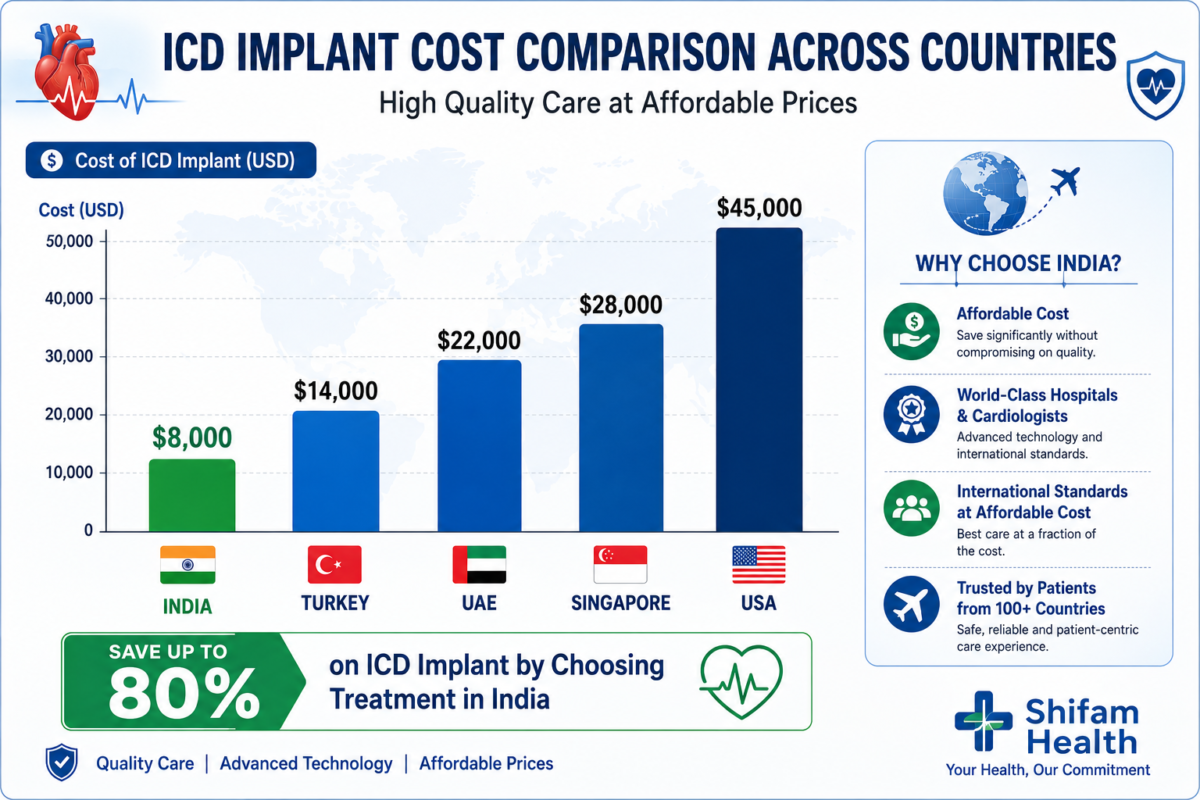
The table below provides realistic, current estimates for 2026:
ICD Implant Cost in India
| Device Type | Device Cost (Approx.) | Total Package (Hospital + ICU + Surgeon) |
|---|---|---|
| Single-Chamber ICD (Indian Device) | ₹2–3.5 Lakh | ₹3–5 Lakh |
| Single-Chamber ICD (Imported – Medtronic, Abbott, Boston Scientific) | ₹4–6 Lakh | ₹5–8 Lakh |
| Dual-Chamber ICD (Indian Device) | ₹3–4.5 Lakh | ₹4–6.5 Lakh |
| Dual-Chamber ICD (Imported) | ₹5–8 Lakh | ₹6–10 Lakh |
| Subcutaneous ICD (S-ICD, Imported) | ₹8–12 Lakh | ₹10–14 Lakh |
Cost Insight: The ICD device itself typically accounts for the largest portion of the total treatment cost. Imported devices from internationally recognized manufacturers generally cost more than Indian-made alternatives but may offer additional features, advanced monitoring capabilities, and broader model options. The final package cost usually includes the device, electrophysiologist fees, operating theatre charges, hospital stay, ICU monitoring (if required), and post-procedure evaluations.
CRT-D Implant Cost in India
| Device Type | Device Cost (Approx.) | Total Package (Hospital + ICU + Surgeon) |
|---|---|---|
| CRT-D (Indian Device) | ₹5–7 Lakh | ₹7–10 Lakh |
| CRT-D (Imported – Medtronic / Abbott) | ₹8–12 Lakh | ₹10–16 Lakh |
| CRT-D with MRI-Compatible Leads (Imported) | ₹10–14 Lakh | ₹12–18 Lakh |
Cost Insight: CRT-D systems are more expensive than standard pacemakers and conventional ICDs because they combine cardiac resynchronization therapy with defibrillation capabilities and require the placement of three leads. MRI-compatible CRT-D devices generally carry the highest cost but provide greater flexibility for future diagnostic imaging, which can be particularly valuable for patients with complex long-term medical conditions.
What Is Typically Included in Hospital Packages
| Component | Included in Package? |
|---|---|
| Cardiac Catheterization Laboratory Charges | ✓ Yes |
| Surgeon / Electrophysiologist Fees | ✓ Yes |
| Anesthesia Fees | ✓ Yes |
| ICU / HDU Monitoring (1–2 Nights) | ✓ Yes |
| Ward Stay (1–2 Additional Nights) | ✓ Yes |
| Device and Leads | ✓ Yes |
| Fluoroscopy and Imaging | ✓ Yes |
| Pre-Operative Investigations | Usually Included |
| Device Programming and Follow-Up | Usually 1 Follow-Up Included |
| International Patient Coordination Services | Varies by Hospital |
Package Insight: Most ICD and CRT-D implantation packages in India are comprehensive and include the device, operating room charges, specialist fees, hospitalization, and immediate post-procedure monitoring. However, package inclusions can vary between hospitals, particularly regarding international patient services, additional follow-up visits, accommodation support, and extended rehabilitation. Patients should always request a detailed written cost estimate before treatment.
In USD terms (for international patients):
- ICD implant (imported device): approximately USD 5,000–9,000
- CRT-D implant (imported device): approximately USD 8,000–16,000
Factors That Affect Your Total Cost
Several variables determine what you will ultimately pay:
1. Device brand and technology: Medtronic, Abbott (St. Jude Medical), and Boston Scientific are the three major international device manufacturers. Their devices carry higher costs than Indian-manufactured alternatives but offer the latest features including MRI compatibility, wireless remote monitoring, and extended battery life.
2. Single vs. dual chamber: Dual-chamber devices use two leads and are appropriate for patients who also need pacing. They cost more than single-chamber devices.
3. Hospital category: JCI-accredited hospitals and private tertiary cardiac centers in Delhi, Mumbai, and Chennai charge more than tier-2 city hospitals. However, the expertise and infrastructure are typically higher.
4. Pre-existing complications: Patients with prior cardiac surgery, complex anatomy, or comorbidities such as diabetes or kidney disease may require longer ICU stays, increasing total cost.
5. Electrophysiology study (EPS): Some patients require a diagnostic EPS before device implantation, adding ₹40,000–80,000 to the overall cost.
6. Remote monitoring setup: International patients benefit from remote monitoring devices that transmit data from the implant to the treating hospital. This typically costs ₹15,000–30,000 as an add-on.
India vs USA, UK, UAE, Turkey, Singapore – Cost Comparison
| Country | ICD Implant (Approx.) | CRT-D Implant (Approx.) | Wait Time |
|---|---|---|---|
| India | USD 5,000–9,000 | USD 8,000–16,000 | Immediate |
| USA | USD 50,000–100,000+ | USD 80,000–150,000+ | 2–6 weeks |
| UK (Private) | GBP 25,000–45,000 | GBP 40,000–70,000 | 4–12 weeks |
| UAE | USD 20,000–40,000 | USD 30,000–60,000 | 1–4 weeks |
| Turkey | USD 7,000–14,000 | USD 12,000–20,000 | Immediate |
| Singapore | USD 20,000–35,000 | USD 30,000–50,000 | 1–3 weeks |
| Thailand | USD 10,000–18,000 | USD 15,000–25,000 | Immediate |
India’s advantages go beyond cost savings. Indian cardiac centers — particularly at hospitals like Fortis Escorts, Apollo, Medanta, and AIIMS — perform among the highest volumes of ICD and CRT-D implantations in Asia. Volume matters significantly in electrophysiology outcomes.
Best Cardiac Hospitals for ICD & CRT-D in India
Top Cardiac Hospitals for ICD & CRT-D in India are the following hospitals have established electrophysiology programs, dedicated cardiac device implantation infrastructure, and experience treating international patients:
- Fortis Escorts Heart Institute, Delhi — one of India’s highest-volume cardiac centers with a dedicated arrhythmia and device program
- Medanta – The Medicity, Gurugram — JCI-accredited, internationally renowned electrophysiology department
- Max Super Speciality Hospital, Saket — advanced cardiac electrophysiology lab with remote monitoring capabilities
- Apollo Hospital, Delhi — extensive cardiac device experience, strong international patient department
- Sir Ganga Ram Hospital — experienced in complex CRT-D cases
Best Electrophysiologists in India
India has a generation of cardiologists and top doctors who trained at leading institutions in the USA, UK, and Europe before returning to build world-class practices. Key qualities to look for in an electrophysiologist include:
- Fellowship training in cardiac electrophysiology (not just general cardiology)
- Experience with complex CRT-D implantations
- High annual volume of device procedures
- Familiarity with remote monitoring technology
- Experience treating international patients
Ask specifically whether your treating physician is a cardiac electrophysiologist — a cardiologist with additional subspecialty training in heart rhythm disorders — rather than a general interventional cardiologist. For ICD and CRT-D work, this distinction matters.
Recovery After ICD or CRT-D Implant
Most patients are surprised by how manageable recovery is after cardiac device implantation.
Immediately after surgery (in hospital):
- Device is tested and programmed before discharge
- Arm on the implant side is kept in a sling for the first 24–48 hours
- Pain is typically mild, managed with oral pain medication
- Chest X-ray confirms correct lead position
First 2 weeks at home:
- No lifting of the implant-side arm above shoulder height
- Light walking encouraged from day 2
- Driving is restricted for 2–4 weeks in most countries
- Wound care: keep dry, check daily for redness or swelling
4–6 weeks:
- Most patients return to normal daily activities
- Follow-up device check confirms appropriate programming
- Remote monitoring system is activated for international patients
Long-term:
- Regular follow-up every 6–12 months
- Battery status checked at every visit
- Device replacement (generator change only, leads usually reused) when battery depletes — typically after 7–10 years
For CRT-D patients: Recovery may take slightly longer (4–8 weeks) due to the more complex three-lead system. Many patients notice improvement in breathlessness and exercise tolerance within 1–3 months as the heart responds to resynchronization therapy.
Risks and Complications
ICD and CRT-D implantation is generally safe, but as with any surgical procedure, risks exist. Being informed helps you have an honest conversation with your cardiologist.
Short-term risks (less than 1–2% in experienced centers):
- Bleeding at the implant site
- Infection — the most serious complication, requiring device removal in rare cases
- Pneumothorax (collapsed lung) from lead placement — occurs in less than 1% of cases
- Lead dislodgement — the lead shifts from its intended position, requiring repositioning
- Hematoma (blood collection under the skin)
Device-related risks over time:
- Inappropriate shocks — the device fires unnecessarily due to detecting non-dangerous rhythms (most common complication, now significantly reduced with modern programming)
- Lead fracture or insulation breach — rare, requires lead replacement
- Battery depletion — requires generator replacement surgery (simpler than the original procedure)
CRT-D specific risks:
- Left ventricular lead placement failure (5–8%) — may require epicardial lead as alternative
- Coronary sinus perforation — very rare
- Non-response to CRT (approximately 20–30% of patients do not show significant benefit, typically due to non-ideal patient selection or lead positioning)
At experienced Indian cardiac centers, complication rates for ICD and CRT-D implantation are comparable to international standards.
Battery Life and Device Maintenance

ICD battery life: 7–10 years depending on usage (how often it delivers therapy)
CRT-D battery life: 5–8 years — typically shorter because the device delivers continuous pacing therapy in addition to defibrillation backup
Generator replacement: When the battery approaches depletion, the device sends a warning signal detectable at routine follow-up. Generator replacement is a shorter, simpler procedure than the original implantation — the generator pocket is reopened, the old generator is disconnected, and the new one is connected to the existing leads. Hospital stay is typically overnight.
Remote monitoring: Modern ICD and CRT-D devices from Medtronic, Abbott, and Boston Scientific support wireless remote monitoring. A small bedside transmitter in the patient’s home sends device data automatically to the implanting center — including battery status, lead performance, arrhythmia detections, and delivered therapies. For international patients returning to their home country, this feature is extremely valuable as it allows the Indian center to continue monitoring the device remotely while local follow-up is arranged.
Lifestyle After Your Implant
Most patients with ICD or CRT-D implants live full, active lives. Some practical guidance:
Physical activity: Most activities are safe, including moderate exercise, travel, and normal work. Contact sports or high-impact activities may need to be discussed with your electrophysiologist.
Electromagnetic interference: Modern devices are well-shielded against common interference sources. Airport security scanners are generally safe (use the walk-through metal detector, not the handheld wand). MRI compatibility depends on the specific device — ask your doctor whether your device and leads are MRI-conditional.
Driving: Most countries require a period of restricted driving after ICD implantation (typically 3–6 months after a first implant or after a shock delivery). Your electrophysiologist will advise you based on your local regulations.
Medications: Device therapy does not replace medications. Most patients continue heart failure medications, antiarrhythmics, or other cardiac drugs alongside the device.
Emotional adjustment: Receiving an ICD or CRT-D is a significant life event. Some patients experience anxiety about receiving a shock. Brief psychological support or cardiac rehabilitation programs — available at major Indian hospitals — can be extremely helpful during adjustment.
Success Rate of ICD & CRT-D in India
ICD success rate: Greater than 98% procedural success rate at experienced Indian electrophysiology centers. Studies show ICD therapy reduces sudden cardiac death risk by 25–50% in high-risk patients compared to medication alone.
CRT-D response rate: Approximately 60–70% of appropriately selected CRT-D patients experience meaningful clinical improvement, including reduced breathlessness, improved exercise tolerance, reverse cardiac remodeling (the heart actually shrinks back toward normal size), and reduced heart failure hospitalizations.
Long-term outcomes: Indian cardiac centers report ICD and CRT-D outcomes comparable to published international data from USA and European trials, reflecting the quality and volume of experience available at top Indian hospitals.
Why International Patients Choose India for ICD & CRT-D Implantation
- Affordable Treatment: Save 60–80% compared to the USA and 40–60% compared to many Gulf countries.
- Minimal Waiting Time: Fast access to life-saving ICD and CRT-D procedures.
- Experienced Cardiac Teams: India’s leading heart centers perform thousands of device implantations every year.
- Latest Device Technology: Access to Medtronic, Abbott, Boston Scientific, and Biotronik devices, including MRI-compatible models.
- World-Class Hospitals: Advanced cardiac labs, imaging systems, and international-standard care.
- Comprehensive International Support: Assistance with medical visas, appointments, airport transfers, accommodation, interpreters, and follow-up care.
Medical Visa & Travel Support
Most international patients travel on an Indian Medical Visa (M-Visa). Required documents usually include:
- Valid passport
- Visa application form
- Passport-size photos
- Hospital invitation letter
- Medical reports
- Proof of funds
- Travel itinerary
Visa processing: Usually 3–10 working days.
How Shifam Health Helps

- Hospital and specialist selection
- Free medical report review
- Cost estimates before travel
- Medical visa invitation letter support
- Airport pickup and accommodation assistance
- Interpreter services
- Treatment coordination and family updates
- Remote device monitoring setup
- Post-treatment telemedicine follow-up
Frequently Asked Questions (FAQs)
How much does ICD implant cost in India?
ICD implant cost in India ranges from approximately ₹3 lakh to ₹10 lakh (USD 3,500–12,000) depending on whether an imported or Indian-manufactured device is used, the hospital category, and whether additional procedures such as electrophysiology study are required.
What is the difference between an ICD and a CRT-D?
An ICD monitors heart rhythm and delivers a shock if it detects a life-threatening arrhythmia. A CRT-D does everything an ICD does, plus it resynchronizes the heart’s pumping chambers to improve heart failure symptoms. CRT-D is recommended for patients who have both arrhythmia risk and a weakened, poorly coordinated heart.
Is ICD implant surgery safe?
Yes, at experienced cardiac centers. Procedural success rates exceed 98% in high-volume electrophysiology programs. Serious complications such as infection or lead dislodgement are rare (less than 1–2%) and are manageable when they occur.
How long does a defibrillator battery last?
ICD batteries typically last 7–10 years. CRT-D batteries usually last 5–8 years due to continuous pacing demands. Generator replacement is a straightforward outpatient procedure when the battery depletes.
Which hospital is best for ICD implant in India?
Leading options include Fortis Escorts Heart Institute (Delhi), Medanta – The Medicity (Gurugram), Apollo Hospitals (Delhi and Chennai), Max Super Speciality Hospital (Saket), and Asian Heart Institute (Mumbai). The best choice depends on your specific device requirements, surgeon preference, and budget.
Can international patients get an ICD or CRT-D implant in India?
Yes. India welcomes international patients for advanced cardiac device procedures, and major hospitals have dedicated international patient departments.
Is CRT-D better than medication alone for heart failure?
For eligible patients with advanced heart failure, CRT-D can improve symptoms, reduce hospitalizations, and increase survival compared to medication alone.
How long is recovery after ICD implantation?
Most patients are discharged within 1–3 days and return to normal activities within 4–6 weeks. International patients can usually travel home within 5–10 days.
Can I live a normal life with an ICD?
Yes. Most patients return to work, travel, exercise, and daily activities with only a few precautions.
What is the success rate of ICD implantation?
Leading Indian hospitals report procedural success rates above 98%, with excellent long-term outcomes.
Is remote monitoring available?
Yes. Modern ICD and CRT-D devices from Medtronic, Abbott, Boston Scientific, and Biotronik support remote monitoring.
Can I get a second opinion before treatment?
Yes. Shifam Health can arrange online consultations with experienced cardiac electrophysiologists before you travel.
Which device brands are available in India?
All major international brands, including Medtronic, Abbott, Boston Scientific, and Biotronik, are available.
Does CRT-D implantation require open-heart surgery?
No. It is a minimally invasive procedure performed through veins without opening the chest.
Conclusion
If you or someone you love has been told that an ICD or CRT-D implant is needed, it is natural to feel overwhelmed. These are serious devices recommended for serious heart conditions. But they are also some of the most life-saving technologies in modern cardiology — and in India, they are accessible, affordable, and performed to the highest international standards.
India’s cardiac electrophysiology centers offer the same devices, the same expertise, and comparable outcomes as the best cardiac centers in the USA and Europe — at a fraction of the cost, with no waiting time.
Patients from Bangladesh, Nigeria, Kenya, Yemen, UAE, and dozens of other countries have already trusted Indian hospitals with this life-changing procedure. You can too.
Shifam Health is here to help you take the first step. Share your medical reports with our cardiac team for a free evaluation. We will connect you with the right electrophysiologist, provide a transparent cost estimate, and guide you through every stage of the process — from your first inquiry to your first device follow-up back home.