


Home > Blog > Permanent Pacemaker Implant in India (2026): Cost, Types, Procedure, Risks and Recovery
Permanent Pacemaker Implant in India (2026): Cost, Types, Procedure, Risks and Recovery
Filters & Insights
Written By :
Medically Reviewed By :

Shifam Health Medical Team
Shifam Health - Medical Reviews Department
10+ Years Of Experience
Explore permanent pacemaker implant in India. Cost from $3,500, top hospitals, recovery tips & free consultation for international patients.
📅
Last updated: September 19, 2026
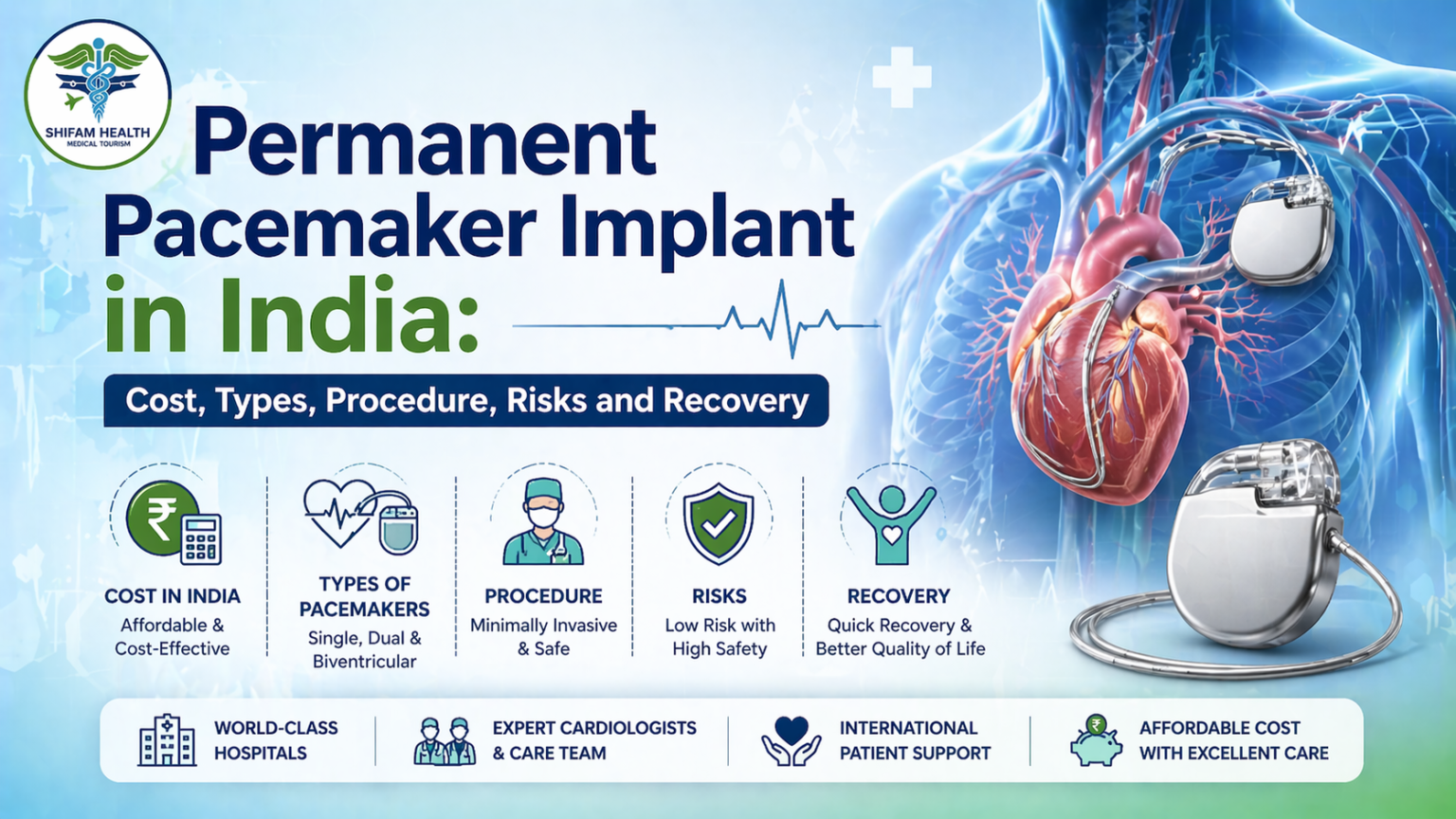
Your heart beats around 100,000 times every single day, and it relies on a precise electrical system to keep that rhythm steady and coordinated. When that electrical system breaks down, the heart may beat too slowly, too irregularly, or even pause altogether – a condition that can cause dizziness, fainting, extreme fatigue, and in severe cases, sudden cardiac arrest.
A permanent pacemaker is a small, battery-powered medical device implanted beneath the skin of the chest. It continuously monitors your heart’s rhythm and delivers gentle electrical impulses whenever the heart beats too slowly or skips a beat. For millions of patients worldwide, a pacemaker is not just a treatment – it is a lifeline that restores energy, independence, and quality of life.
India has become one of the world’s most sought-after destinations for permanent pacemaker implantation. With internationally accredited hospitals, highly experienced cardiac electrophysiologists, the latest pacemaker technology from leading global manufacturers, and costs that are 60 to 80 percent lower than in the USA or UK, India offers international patients an exceptional combination of quality and affordability. This complete 2026 guide covers everything you need to know before making your decision.
Table of Contents
ToggleQuick Summary
Who Needs It: Patients with bradycardia, heart block, sick sinus syndrome, or certain arrhythmias
Cost in India: USD 3,500 to USD 9,000 (approx. INR 29,000 to INR 75,000) depending on pacemaker type
vs USA / UK: USD 30,000 to USD 100,000 in the USA; GBP 15,000 to GBP 50,000 in the UK
Hospital Stay: 2 to 4 days
Full Recovery: 4 to 6 weeks
Procedure Duration: 1 to 2 hours
Waiting Time: None for international patients – procedure scheduled within days
What is a Permanent Pacemaker?
A permanent pacemaker is a small electronic device, roughly the size of a matchbox or a large coin, that is surgically implanted under the skin near the collarbone. It consists of two main components:
- The pulse generator: A sealed titanium casing containing a battery and the electronic circuitry that generates and controls electrical pulses
- Lead wires (electrodes): Thin, insulated wires that are threaded through a vein into one or more chambers of the heart, delivering the electrical impulse directly to the heart muscle
Modern pacemakers are sophisticated devices that work entirely on demand. They sense the heart’s own electrical activity and only fire when the heart’s natural rhythm falls below a set threshold – meaning the device rests silently when the heart is beating normally and activates precisely when needed.
Unlike a temporary pacemaker (used in emergency or short-term situations), a permanent pacemaker is designed to remain in the body indefinitely. The battery typically lasts 8 to 15 years, after which a simple generator replacement procedure replaces the unit while keeping the original lead wires in place.
Who Needs a Permanent Pacemaker? (Indications)
A permanent pacemaker is recommended when the heart’s electrical conduction system fails to maintain a safe and adequate heart rate. Your cardiologist may recommend pacemaker implantation if you have been diagnosed with any of the following conditions:
- Bradycardia: A persistently slow heart rate (below 60 beats per minute) that causes symptoms such as fatigue, dizziness, shortness of breath, or fainting
- Heart Block (AV Block): A disruption in the electrical signals travelling from the upper chambers (atria) to the lower chambers (ventricles) of the heart. This can range from first-degree (mild delay) to complete (third-degree) heart block, where signals are entirely blocked
- Sick Sinus Syndrome: The heart’s natural pacemaker (the sinoatrial node) fails to generate impulses reliably, causing alternating periods of slow and fast heartbeats
- Bundle Branch Block: A delay or blockage in one of the two branches of the heart’s electrical conduction system, affecting the timing of ventricular contractions
- Atrial Fibrillation with slow ventricular response: Where the ventricular rate becomes dangerously slow despite the chaotic atrial activity of AF
- Vasovagal syncope (selected cases): Recurrent unexplained fainting episodes due to an exaggerated reflex causing the heart to slow
- Post-cardiac surgery or ablation: Patients who develop heart block or bradycardia following open-heart surgery or ablation procedures
- Congenital heart defects: Certain structural heart conditions present from birth that affect the electrical system
Types of Pacemakers Available in India
India’s top cardiac hospitals offer the full range of pacemaker technologies from internationally recognised manufacturers including Medtronic, Abbott (St. Jude Medical), Boston Scientific, and Biotronik. The type of pacemaker recommended for you will depend on your specific heart condition, age, and lifestyle.
Pacemaker Types: Comparison Table
| Type | Chambers Paced | Best For | Approx. Cost (USD) |
|---|---|---|---|
| Single Chamber (VVI) | Right Ventricle only | Atrial fibrillation with slow rate; older patients | $3,500 – $5,500 |
| Dual Chamber (DDD) | Right Atrium + Right Ventricle | Heart block; sick sinus syndrome; most common | $4,500 – $7,500 |
| Biventricular / CRT-P | Both Ventricles + Atrium | Heart failure with desynchrony (LBBB) | $6,500 – $10,000 |
| CRT-D (with Defibrillator) | Both Ventricles + Atrium | Heart failure with risk of sudden cardiac death | $9,000 – $16,000 |
| Leadless Pacemaker (Micra) | Right Ventricle only | Patients needing single-chamber pacing; no leads | $7,000 – $12,000 |
| MRI-Compatible (MRI-Safe) | Single or Dual Chamber | Patients likely to need future MRI scans | $5,500 – $9,000 |
Rate-Responsive Pacemakers
Most modern pacemakers in India are rate-responsive, meaning they contain a motion or activity sensor that increases the pacing rate automatically when you are physically active – mimicking the heart’s natural response to exercise. This feature significantly improves exercise tolerance and quality of life.
Remote Monitoring Capable Pacemakers
Many of the latest pacemaker models implanted in India’s top hospitals are equipped with wireless remote monitoring capability. This allows your cardiac team to review your pacemaker’s data and your heart’s rhythm remotely via a small home transmitter – without you needing to visit the clinic for every check-up.
Pre-Procedure Evaluation: What to Expect
Before your pacemaker implantation, you will undergo a comprehensive evaluation to confirm the diagnosis, plan the procedure, and optimise your safety. The evaluation is carried out by a multidisciplinary team including your cardiologist, cardiac electrophysiologist, and anaesthesiologist.
Key Pre-Procedure Investigations Include:
- 12-Lead ECG: To document the nature of the heart rhythm abnormality
- 24 to 72-Hour Holter Monitoring: A portable ECG recorder worn continuously to capture intermittent rhythm disturbances
- Echocardiogram (Echo): Ultrasound assessment of heart structure and function to guide pacemaker type selection
- Chest X-Ray: To assess heart size and vascular anatomy
- Blood Tests: Complete blood count, kidney and liver function, coagulation profile, blood type and crossmatch
- Tilt Table Test (selected cases): For patients with suspected vasovagal syncope
- Electrophysiology Study (EP Study): In some cases, a specialised electrical study of the heart’s conduction system is performed to precisely map the problem before pacemaker implantation
The Pacemaker Implant Procedure: Step-by-Step
Permanent pacemaker implantation is typically performed under local anaesthesia with conscious sedation (you are awake but relaxed and comfortable) by a cardiac electrophysiologist in a cardiac catheterisation laboratory (cath lab).
- Preparation: The chest and shoulder area on the left side (or right, if preferred) is cleaned, shaved, and numbed with a local anaesthetic injection. An IV line is placed and you are connected to continuous ECG and blood pressure monitoring.
- Vein Access: The electrophysiologist makes a small incision (3 to 5 cm) just below the collarbone. The subclavian or cephalic vein is accessed to allow the lead wires to be threaded into the heart.
- Lead Placement: One or more lead wires are carefully guided through the vein and into the correct chamber(s) of the heart under live X-ray guidance (fluoroscopy). The leads are tested to confirm they sense the heart’s activity and deliver impulses effectively.
- Pocket Creation: A small pocket is created beneath the skin and the subcutaneous tissue near the collarbone to house the pulse generator.
- Generator Connection and Implantation: The lead wires are connected to the pulse generator, which is then placed securely into the pocket. The pacemaker is programmed to the appropriate settings for your condition.
- Wound Closure: The incision is closed with sutures or surgical staples. A sterile dressing is applied. The procedure is complete.
Total procedure duration: approximately 1 to 2 hours for a standard single or dual chamber pacemaker. Biventricular (CRT) devices may take 2 to 3 hours.
Risks and Complications
Permanent pacemaker implantation is one of the most commonly performed and well-established cardiac procedures worldwide. It is considered safe with a very low rate of major complications. However, as with any surgical procedure, some risks exist:
- Infection: Wound infection or, rarely, device pocket infection (managed with antibiotics or, in severe cases, device removal and replacement)
- Bleeding or haematoma: Localised bruising or blood collection at the pocket site
- Lead dislodgement: The lead wire moving out of position shortly after implantation, requiring repositioning
- Pneumothorax: A rare complication where air enters the space around the lung during vein access
- Venous thrombosis: Blood clot in the vein where the lead was inserted
- Device malfunction: Extremely rare with modern devices; managed with reprogramming or replacement
- Skin erosion: Rare long-term risk where the device works towards the skin surface
How India’s Top Hospitals Minimise These Risks:
- Dedicated cardiac cath labs with state-of-the-art fluoroscopy and 3D mapping equipment
- Experienced electrophysiologists who perform high volumes of pacemaker implantations annually
- Strict sterile technique and infection control protocols throughout the procedure
- Real-time monitoring in a fully equipped cardiac ICU immediately post-procedure
- Comprehensive antibiotic prophylaxis before and after the procedure
Recovery Timeline After Pacemaker Implantation
| Phase | Duration | What to Expect |
|---|---|---|
| Immediate Post-Procedure | 2 to 4 hours | Observed in recovery area; ECG monitoring; pacemaker function checked |
| Hospital Ward Stay | 1 to 3 days | Chest X-ray to confirm lead position; device interrogation; wound check; oral medications |
| Discharge from India | Day 3 to 5 | Cleared to travel home in most cases; full discharge summary and device card provided |
| Early Recovery (Home) | Weeks 1 to 4 | Avoid lifting arm above shoulder on implant side; keep wound dry; avoid strenuous activity |
| Full Activity Resume | 4 to 6 weeks | Return to normal daily activities; pacemaker clinic follow-up at 6 weeks and then annually |
Important Lifestyle Guidance After Pacemaker Implantation:
- Always carry your pacemaker ID card with you – it contains the device model, settings, and your cardiologist’s contact details
- Inform airport security staff that you have a pacemaker – modern devices are generally unaffected by airport scanners but staff should use a hand wand rather than placing a handheld detector directly over the device
- Avoid close or prolonged contact with strong magnetic or electrical fields such as MRI machines (unless you have an MRI-compatible device), arc welding equipment, or large industrial motors
- Routine household and office electrical appliances (mobile phones, microwave ovens, computers, televisions) are entirely safe to use
- Attend annual pacemaker clinic reviews so the device can be interrogated, battery life checked, and settings adjusted as your condition changes
- Report any symptoms such as dizziness, fainting, palpitations, or swelling at the implant site to your cardiologist promptly
Cost of Permanent Pacemaker Implantation in India (2026)
The total cost of pacemaker implantation in India depends primarily on the type of pacemaker device selected. Costs below are all-inclusive estimates for international patients and cover the device, procedure, hospital stay, and standard post-operative care.
Cost by Pacemaker Type
| Pacemaker Type | Cost (USD) | Cost (INR approx.) |
|---|---|---|
| Single Chamber Pacemaker (VVI) | $3,500 – $5,500 | ₹29,000 – ₹45,000 |
| Dual Chamber Pacemaker (DDD) | $4,500 – $7,500 | ₹37,000 – ₹62,000 |
| Rate-Responsive Pacemaker | $5,000 – $8,000 | ₹41,000 – ₹66,000 |
| MRI-Compatible (MRI-Safe) Pacemaker | $5,500 – $9,000 | ₹45,000 – ₹75,000 |
| Biventricular Pacemaker (CRT-P) | $7,000 – $12,000 | ₹58,000 – ₹99,000 |
| CRT-D (with Defibrillator) | $9,000 – $16,000 | ₹74,000 – ₹1,32,000 |
| Leadless Pacemaker (Micra) | $7,500 – $13,000 | ₹62,000 – ₹1,08,000 |
Itemized Cost Breakdown (Indicative – Dual Chamber Pacemaker)
| Cost Component | Estimated Cost (USD) |
|---|---|
| Pacemaker Device (Dual Chamber) | $2,500 – $4,500 |
| Electrophysiologist & Anaesthesiologist Fees | $600 – $1,200 |
| Cath Lab / Procedure Room Charges | $400 – $800 |
| Hospital Stay (2 to 3 nights) | $400 – $900 |
| Pre-Procedure Diagnostics (ECG, Echo, Holter) | $200 – $400 |
| Medications & Consumables | $100 – $300 |
| International Patient Coordination (Shifam Health) | Included |
| Total Estimate | $4,500 – $7,500 |
International Cost Comparison
| Country | Average Cost (USD) | Savings vs India |
|---|---|---|
| India | $3,500 – $9,000 | Reference |
| Turkey | $10,000 – $18,000 | Save approx. 50–60% |
| Thailand | $12,000 – $20,000 | Save approx. 55–65% |
| United Kingdom | £15,000 – £50,000 (~$19k–$63k) | Save approx. 75–85% |
| United States | $30,000 – $100,000+ | Save approx. 80–90% |
International patients can save 60 to 85 percent on permanent pacemaker implantation by choosing India, with no compromise on device quality, hospital standards, or surgical expertise.
Top Cardiac Hospitals in India for Pacemaker Implantation
Shifamhealth.com works with India’s most trusted and internationally accredited cardiac hospitals. Here are some of the leading centres for pacemaker implantation:
Apollo Hospitals (Delhi, Chennai, Hyderabad, Mumbai, Kolkata)
- JCI and NABH accredited across multiple locations
- Dedicated Heart Rhythm (Electrophysiology) departments with advanced 3D mapping and fluoroscopy systems
- High-volume pacemaker and CRT implantation programme with experienced electrophysiologists
- Comprehensive international patient services with multilingual support staff
Medanta – The Medicity (Gurugram, Delhi NCR)
- JCI accredited quaternary care hospital with one of India’s largest cardiac electrophysiology programmes
- Offers the full range of devices including leadless pacemakers, MRI-safe devices, and CRT systems
- Robotic-assisted and advanced 3D electrophysiology mapping available
- Dedicated international patient wing with visa assistance, accommodation booking, and interpreter services
Fortis Healthcare (Delhi, Noida, Mumbai, Bengaluru, Mohali)
- NABH and JCI accredited hospitals with state-of-the-art cardiac cath labs
- Experienced team of interventional cardiologists and electrophysiologists
- Comprehensive cardiac rehabilitation and remote pacemaker monitoring services
- Strong international patient department with end-to-end travel and treatment coordination
- JCI accredited hospital with a specialised cardiac electrophysiology unit
- High success rates in complex CRT and leadless pacemaker implantations
- Remote monitoring setup provided to international patients before discharge
Why Choose India for Permanent Pacemaker Implantation?
- Exceptional Cost Savings: The total cost is 60 to 85 percent lower than in the USA or UK, covering the same internationally approved pacemaker devices from manufacturers like Medtronic, Abbott, and Boston Scientific
- World-Class Cardiac Electrophysiologists: India’s leading electrophysiologists are trained in the USA, UK, and Europe, and many have authored research in peer-reviewed international cardiology journals
- Zero Waiting Time: While NHS patients in the UK may wait months for elective pacemaker implantation, international patients in India can have the procedure within days of arrival
- Latest Device Technology: All major international pacemaker brands are available in India, including leadless devices, MRI-safe pacemakers, and remote monitoring-enabled systems
- JCI and NABH Accredited Facilities: India’s top hospitals hold the same international accreditations as leading hospitals in the USA and Europe, ensuring global standards of safety and care
- Comprehensive International Patient Support: From airport pick-up and accommodation to visa letters, interpreter services, and insurance documentation – everything is arranged for you
- Transparent Pricing: No hidden costs. Shifamhealth.com provides a detailed written cost estimate before you travel, so you can plan with complete confidence
How Shifam Health Helps You Get the Best Pacemaker Care in India
At Shifam Health, we understand that travelling abroad for a cardiac procedure can feel overwhelming. That is why we have built a complete, end-to-end support system specifically designed for international patients. We do not just connect you with a hospital we are with you every step of the way.
Step 1: Free Initial Consultation and Medical Review
Share your medical reports, ECG, Holter results, and echo findings with our team through our website or WhatsApp. Our partner cardiac specialists will review your case and provide a personalized recommendation on the appropriate pacemaker type, the best hospital for your needs, and a transparent all-inclusive cost estimate completely free of charge.
Step 2: Hospital and Doctor Matching
Based on your condition, budget, and preferences, we match you with the most suitable JCI or NABH-accredited cardiac hospital and the right electrophysiologist. We work with all major cardiac centres across Delhi, Mumbai, Chennai, Hyderabad, and Bengaluru, giving you access to the very best expertise in India.
Step 3: Medical Visa Assistance
We prepare and provide the official hospital invitation letter required for your Indian Medical Visa (MED Visa) application. Our team guides you through the documentation process and answers all your queries regarding visa requirements for patients from the UK, USA, Central Asia, Africa, and the Middle East.
Step 4: Travel and Accommodation Coordination
We arrange your airport transfer, assist with hotel or hospital guesthouse bookings close to the hospital, and ensure you and your accompanying family members are comfortable and well-oriented from the moment you land. We cater to all budgets, from affordable guesthouses to premium serviced apartments.
Step 5: In-Hospital Care Coordination
Our dedicated patient coordinators liaise directly with the hospital team on your behalf scheduling appointments, arranging interpreter services where needed, attending pre-operative consultations with you, and ensuring there are no administrative delays in your care pathway.
Step 6: Post-Procedure Support and Follow-Up
Before you leave India, our team ensures you receive your complete discharge summary, a pacemaker ID card and device information booklet, a follow-up plan for pacemaker clinic reviews, and guidance on remote monitoring setup where applicable. We also connect you with a cardiologist in your home country for ongoing follow-up, and remain available for any questions after you return home.
Shifam Health is your trusted partner from diagnosis to discharge and beyond. We have helped patients from over 30 countries access world-class cardiac care in India. Contact us today for a free, no-obligation consultation.
Guide for International Patients: Planning Your Journey to India
Medical Visa for India
Patients travelling to India for a pacemaker implantation require an Indian Medical Visa (MED Visa). This visa permits the patient and up to two accompanying companions to travel to India for medical treatment. Shifamhealth.com provides the hospital invitation letter required as part of your visa application. Processing typically takes 3 to 7 working days through the Indian embassy or consulate in your country.
Best Cities for Cardiac Care in India
- New Delhi and Gurugram (NCR): Home to Medanta, Fortis, Apollo, and Artemis – ideal for patients from the Middle East, Central Asia, and Africa with excellent flight connections
- Chennai: Apollo’s flagship cardiac centre; strong connections from Southeast Asia and East Africa
- Mumbai: Multiple top-tier cardiac hospitals; well-connected international hub
- Hyderabad: Apollo and KIMS hospitals; growing medical tourism hub with direct flights from the Middle East
Language and Communication
English is the primary language of medical care at all major Indian hospitals. Doctors, nurses, and administrative staff communicate in English as a standard. Shifam Health provides dedicated Arabic, Russian, French, and Swahili-speaking coordinators for patients who require support in their native language.
Payment and Financial Planning
India’s top hospitals accept international bank transfers, credit and debit cards, and cash payments in USD, GBP, EUR, and AED. Shifam Health provides a detailed written quotation in your preferred currency before you travel. We can also assist with insurance pre-authorization and documentation for patients with applicable international health insurance.
Conclusion
A permanent pacemaker can transform the life of a patient struggling with a slow or irregular heartbeat restoring energy, eliminating fainting episodes, and enabling a full return to normal activities. India offers international patients the rare combination of world-class cardiac electrophysiology expertise, the latest pacemaker technology, JCI-accredited hospital facilities, and costs that are a fraction of those in the USA or UK – with no waiting time.
Whether you are from the UK, USA, Central Asia, Africa, or the Middle East, Shifamhealth.com makes the entire journey straightforward, safe, and fully supported from your first consultation to your safe return home with a fully functioning pacemaker and a complete medical care plan.
Your heart cannot wait. Let Shifam Health connect you with the right cardiac expert in India today.
Frequently Asked Questions (FAQs)
Is it major surgery?
No. Pacemaker implantation is a minimally invasive procedure performed under local anesthesia with light sedation. It involves a small incision near the collarbone, and most patients are able to sit up and walk within 24 hours.
How long does the battery last?
Pacemaker batteries typically last between 8 and 15 years, depending on usage. When the battery runs low, the generator can be replaced through a simple procedure while keeping the original leads in place.
Can I have an MRI scan?
Yes, in most cases. Modern pacemakers are often MRI-conditional, meaning MRI scans can be safely performed under specific conditions. It is important to confirm this before implantation.
Will I feel the pacemaker working?
No. Most patients do not feel the pacing activity. Instead, they notice improved energy levels, reduced symptoms, and better overall wellbeing.
Can I live a normal life?
Yes. Patients can return to normal activities including travel, work, and moderate exercise, based on their doctor’s advice. The device adjusts heart rate according to activity.
Do I need blood thinners?
Not usually, unless required for another condition like atrial fibrillation.
What is a leadless pacemaker?
Devices like Medtronic Micra are implanted directly into the heart without wires and are available for selected patients.
How do I get started?
Submit your reports online or via WhatsApp. Shifam Health provides a treatment plan and estimate within 24 hours.
| Take the First Step It Costs Nothing Share your medical reports with Shifam Health and receive a free, personalized assessment within 24 hours. No commitment. No pressure. Just honest information to help you make the right decision for you and your family. www.shifamhealth.com | contact@shifamhealth.com | WhatsApp: +91 81785 95807 24/7 Support Available | Free Consultation | No Hidden Charges |




Popular Posts From Last Week
- October 23, 2026
- shifamhealth
A fluttering chest, a sudden racing heartbeat or a skipped beat can be frightening, and it is hard…
- October 25, 2026
- shifamhealth
What is a ventricular septal defect? A ventricular septal defect (VSD) is an opening in the wall (septum)…
- October 22, 2026
- shifamhealth
A remote medical second opinion from India allows patients living in the USA, UK and other countries to…
- October 21, 2026
- shifamhealth
When you receive treatment estimates from two hospitals in India, do not compare only the final amounts. To…
- October 22, 2026
- shifamhealth
An itemized hospital quote in India should clearly explain the expected cost of treatment by separating major charges,…