



Medical Tourism in Singapore in 2026: Complete Guide for International Patients
Filters & Insights
Written By :
Medically Reviewed By :

Shifam Health Medical Team
Shifam Health - Medical Reviews Department
10+ Years Of Experience
Planning medical treatment in Singapore? Our complete 2026 guide covers top hospitals, treatment costs, visa requirements
📅
Last updated: May 13, 2026

If you are exploring medical treatment abroad and Singapore is on your list, you are already thinking in the right direction.
Singapore has earned its place as one of the world’s most respected medical destinations not just because of its advanced hospitals and highly trained doctors, but because of the entire experience it offers international patients. From the moment you arrive to the day you return home, Singapore delivers a level of care, safety, and precision that is genuinely difficult to match.
But there is a question many patients ask before committing: Is Singapore the right choice for me?
This guide answers that honestly. You will find everything you need treatment costs, top hospitals, visa rules, what to expect, and how to plan your trip all in one place, written for international patients who want clarity, not confusion.
Table of Contents
ToggleWhy Singapore Is a Global Leader in Medical Tourism
Singapore punches far above its weight for a country of its size. With a population of under six million, it has built one of the most sophisticated and trusted healthcare systems in the world and international patients have taken notice.
Every year, hundreds of thousands of foreign patients travel to Singapore for everything from complex cancer treatment to orthopedic surgery to fertility care. The reasons are consistent: world-class hospitals, internationally trained doctors, transparent pricing, and a country that takes both medicine and patient safety extremely seriously.
What truly sets Singapore apart from many other medical tourism destinations is the combination of quality and consistency. The standard of care is not just good at the top hospitals it is reliable across the system.
Key reasons international patients choose Singapore:
- Over 21 hospitals with Joint Commission International (JCI) accreditation
- Doctors frequently trained in the USA, UK, or Australia
- Multilingual medical staff (English, Mandarin, Tamil, Malay)
- Zero tolerance for corruption or medical malpractice
- Advanced diagnostic and surgical technology
- Stable, safe, and politically neutral country
- Strong infection control and hygiene standards
- Efficient appointment systems with minimal waiting
Singapore’s Healthcare Rankings
Before any patient travels thousands of miles for treatment, they want to know: Is this country’s healthcare system actually excellent, or just marketed well?
In Singapore’s case, the rankings speak for themselves.
| Organization | Singapore’s Ranking |
|---|---|
| World Health Organization (WHO) | 6th globally |
| Economist Intelligence Unit | 2nd for healthcare outcomes (166 countries) |
| Bloomberg Global Health Index | 4th healthiest nation (163 countries) |
| Medical Tourism Association | 2nd for medical tourism globally |
These are not minor achievements. Singapore consistently ranks among the very best, not because of marketing, but because of measurable health outcomes, infrastructure investment, and regulatory standards.
What Medical Treatments Are Available in Singapore?
Singapore offers the full spectrum of medical care, from routine diagnostics to highly specialized surgeries that may not be available in many countries.
Most commonly sought treatments by international patients:
- Oncology (Cancer Treatment): Chemotherapy, radiation, immunotherapy, targeted therapy, robotic cancer surgery
- Cardiology & Heart Surgery: Bypass surgery, valve replacement, angioplasty, TAVR
- Orthopedic Surgery: Knee replacement, hip replacement, spinal surgery, joint reconstruction
- Neurology & Neurosurgery: Brain tumor surgery, spine surgery, deep brain stimulation
- Fertility & IVF: IVF, ICSI, egg freezing, fertility preservation
- Bariatric Surgery: Sleeve gastrectomy, gastric bypass, metabolic surgery
- Cosmetic & Reconstructive Surgery: Rhinoplasty, breast augmentation, facial surgery
- Dental Treatment: Implants, full mouth rehabilitation, cosmetic dentistry
- Pediatric Care: Complex childhood conditions, congenital heart disease, pediatric oncology
- Eye Surgery: LASIK, cataract surgery, corneal transplant
- Health Screening & Diagnostics: Comprehensive executive health checks
Singapore particularly excels in cancer care, cardiac surgery, and neurology areas where patients often need not just good treatment, but the best treatment available.
Treatment Cost Comparison: Singapore vs USA and Other Countries
One of the most common concerns among international patients is cost. Singapore is not the cheapest medical destination in Asia — it is honest to say that. But compared to the USA, UK, or Australia, it offers significant savings while maintaining a standard of care that rivals those countries.
Treatment Cost Comparison Table
| Procedure | USA | Singapore | India |
|---|---|---|---|
| Heart Bypass Surgery | ~$150,000–$200,000 | ~$40,000–$60,000 | ~$5,000–$8,000 |
| Knee Replacement | ~$35,000–$50,000 | ~$15,000–$20,000 | ~$5,500–$8,000 |
| Hip Replacement | ~$40,000–$50,000 | ~$20,000–$30,000 | ~$5,000–$7,500 |
| Cancer Treatment (per cycle) | ~$30,000–$100,000+ | ~$10,000–$40,000 | ~$2,000–$10,000 |
| IVF (per cycle) | ~$15,000–$25,000 | ~$8,000–$15,000 | ~$2,500–$5,000 |
| LASIK Eye Surgery | ~$4,000–$6,000 | ~$2,000–$3,500 | ~$600–$1,200 |
Important note: Costs vary significantly based on hospital, surgeon, complexity of condition, and length of stay. These figures are general ranges and should be used for planning purposes only.
For patients from the Middle East, Africa, or South Asia, Singapore offers a compelling proposition: medical quality comparable to the West, but without the full Western price tag especially for complex conditions where the lowest-cost option may not be the safest.
Are Medical Procedures Expensive in Singapore?
This is relative, and the honest answer is: it depends on where you are comparing.
Compared to the United States, UK, Canada, or Australia. Singapore is significantly more affordable, often 50–70% less expensive for the same procedures.
Compared to India, Thailand, or Malaysia. Singapore is more expensive, sometimes two to four times the cost.
So why do patients still choose Singapore over cheaper alternatives?
For many, it comes down to a few factors:
Complexity of condition: Patients with rare diseases, cancer, or complicated cardiac conditions often feel more confident choosing Singapore’s depth of expertise and technology.
Risk tolerance: When the stakes are high, a brain tumor, a child’s heart surgery, many families prioritize the best possible outcome over cost savings.
Regulatory confidence: Singapore’s strict medical regulations mean accountability is real. Misdiagnosis or negligence has genuine consequences.
English fluency and communication: Every step of your care is communicated clearly in English, reducing misunderstandings during critical decisions.
Singapore is not the budget choice but for patients who need certainty alongside quality, the investment is often justified.
Best Hospitals in Singapore for International Patients
Singapore’s hospitals are modern, well-equipped, and staffed by physicians who have often trained at the world’s top medical institutions.
Thomson Medical Centre One of Singapore’s most respected private hospitals, Thomson Medical Centre is particularly renowned for women’s health, obstetrics, and pediatrics. It is the country’s largest provider of women’s and children’s healthcare services and has strong programs for fertility treatment and neonatal care.
Farrer Park Hospital A multispecialty medical centre with dedicated centres in Cancer Care, Dementia Services, and Cardiac Health. It also houses international clinics designed specifically for foreign patients, with multilingual coordinators and streamlined appointment systems.
Singapore General Hospital (SGH) The largest public hospital in Singapore and the first hospital in Asia to receive Magnet Recognition for nursing excellence from the American Nurses Credentialing Centre. SGH handles some of the most complex cases in the region and is a teaching hospital affiliated with Duke-NUS Medical School.
National University Hospital (NUH) Part of the National University Health System, NUH is the only public hospital in Singapore offering a comprehensive pediatric transplant program (kidney and liver) alongside adult transplantation for kidney, liver, and pancreas.
Changi General Hospital The first hospital in Singapore to receive JCI accreditation for both its Heart Failure Programme and Acute Myocardial Infarction Programme — a meaningful distinction for cardiac patients.
Mount Elizabeth Hospital (Parkway Pantai Group) One of the most popular choices among international patients, particularly from the Middle East, South Asia, and Indonesia. Known for oncology, cardiology, and orthopedics, with highly experienced private specialists and a dedicated international patient services center.
Gleneagles Hospital Part of the Parkway Pantai group, Gleneagles is another top choice for international patients seeking private specialist care, particularly for orthopedics, neurosurgery, and cancer treatment.
JCI Accreditation in Singapore
Joint Commission International (JCI) accreditation is the gold standard in global hospital quality assessment. It evaluates hospitals against internationally recognized standards for patient safety, clinical care, and administration.
Singapore has approximately 21 JCI-accredited hospitals one of the highest concentrations in Asia. This means when you choose a JCI-accredited hospital in Singapore, you are receiving care that has been independently verified to meet global quality benchmarks.
For international patients, JCI accreditation is one of the most reliable indicators that a hospital is trustworthy, safe, and accountable.
How to Choose the Right Hospital in Singapore
With so many excellent options, choosing can feel overwhelming. Here is a practical framework:
1. Match your condition to the hospital’s specialty Some hospitals excel in cardiac care, others in oncology or fertility. Research which hospitals have dedicated programs for your specific condition.
2. Check JCI accreditation Prioritize JCI-accredited facilities. This independently confirms quality and safety standards.
3. Evaluate the international patient department A strong international patient services team will manage your appointment, visa letter, medical records translation, accommodation, and discharge planning. This is critical for foreign patients.
4. Request cost estimates in writing Before committing, ask for a detailed cost estimate covering consultation, procedure, anesthesia, hospital stay, medications, and follow-up.
5. Read verified patient reviews Look for reviews from patients with your same condition, not just general satisfaction scores.
6. Consider travel logistics Singapore is a small, well-connected city-state. Most major hospitals are accessible by taxi, MRT, or private car. Factor in your mobility if you are recovering from surgery.
Top Doctors in Singapore
Singapore’s medical specialists are among the most experienced and internationally credentialed in Asia.
Dr. Yong Quek Wei: Interventional Cardiologist with over 35 years of experience in complex cardiac procedures.
Dr. Timothy Lee: Neurosurgeon with over 40 years of clinical and surgical experience, handling complex brain and spine conditions.
Assoc. Prof. Low Boon Yong: Orthopedic and Joint Replacement Surgeon with more than 50 years of practice, specializing in hip and knee reconstruction.
Prof. Tan Kok Chai: Senior consultant in Plastic and Hand Surgery with expertise in reconstructive and microsurgery.
Clin. Prof. Fock Kwong Ming: Medical Gastroenterologist with over four decades of experience, specializing in gastric cancer, GERD, and inflammatory bowel conditions.
Note: It is always advisable to verify doctor credentials, current practice status, and availability through the hospital’s official international patient department before finalizing your appointment.
Singapore Medical Visa and Travel Requirements
This is where many international patients have questions and the answers vary significantly by nationality.
Good news first: Many nationalities do not require a visa to enter Singapore for medical treatment.
No visa required for patients from:
- United States
- United Kingdom
- Australia
- Canada
- Most European Union countries
These patients can enter Singapore visa-free for up to 30–90 days depending on their passport.
Visa required for patients from:
Group 1: Electronic Visa (e-Visa, applied online): China, India, Russia, Ukraine, Turkmenistan, Georgia, Moldova, and several others.
Group 2: Full Visa Required: Most African nations (including Nigeria, Algeria, Egypt, Tunisia, Libya), and several Middle Eastern countries (Iran, Iraq, Saudi Arabia, Syria).
Standard documents required regardless of visa type:
- Valid passport (minimum 6 months validity)
- Confirmed return flight ticket
- Two passport-sized photographs
- Completed and signed visa application
- Letter from the Singapore hospital confirming treatment appointment
- Proof of sufficient funds for treatment and stay
- Evidence of ties to home country (employment letter, family documents)
Practical tip: Request an official invitation letter from your Singapore hospital as early as possible. This is often the key document that makes the visa application smooth and straightforward.
What If Your Treatment Takes Longer Than Expected?
This is a legitimate concern for any patient traveling internationally for complex treatment.
Singapore’s immigration system has provisions for this. Here is how it works:
Standard entry: Most visitors receive a 30-day entry permit on arrival.
If treatment requires longer stay: If your pre-surgery preparation, surgery, and recovery are expected to take more than 30 days, you should obtain an extended permit of up to 90 days from the Singapore Embassy or Consulate in your home country before traveling. This is best arranged once your hospital has confirmed the treatment timeline.
If treatment extends unexpectedly while you are already in Singapore: You can apply for an extension at the Immigration and Checkpoints Authority (ICA) in Singapore. Your hospital’s international patient coordinator can assist with the supporting documentation.
The system is transparent and manageable but plan ahead, because processing takes time.
Safety, Language, and Practical Travel Tips
Is Singapore safe for medical tourists?
Yes genuinely. Singapore consistently ranks among the safest countries in the world, second only to Iceland in some global safety indices. Crime rates are exceptionally low, neighborhoods are clean and well-maintained, and the political environment is stable.
For patients who are already anxious about traveling abroad for treatment, Singapore’s safety record is genuinely reassuring.
Language:
English is an official language in Singapore and is used universally in hospitals, clinics, pharmacies, and public services. You will not struggle to communicate at any stage of your medical journey.
Medical teams at major international hospitals also include staff who speak Arabic, Mandarin, Tamil, and other languages important for patients from the Middle East, China, and South Asia.
Practical tips for international patients:
- Book accommodation near your hospital — Singapore has many service apartments and hotels in close proximity to major medical centers
- Download the Grab app for reliable and affordable taxi service
- Bring copies of all your medical records, scans, and previous test results
- Carry sufficient travel insurance that covers medical treatment complications abroad
- Plan for at least one week post-surgery before flying, and always get clearance from your surgeon before boarding
Common Mistakes to Avoid
Not getting a written cost estimate before traveling Always request a comprehensive cost breakdown before booking flights and accommodation. Treatment costs can be higher than initial estimates if complications arise or if your stay extends.
Choosing a hospital based on price alone For complex conditions, the cheapest option is rarely the right one. Evaluate track record, specialist experience, and accreditation alongside cost.
Traveling without travel insurance International medical insurance is essential. Ensure your policy covers unexpected treatment, extended stays, and medical evacuation if needed.
Not involving your home doctor Your regular physician should be informed of your treatment plan. You will need follow-up care when you return home, and coordination between your Singapore specialists and home doctors is important.
Underestimating recovery time Some procedures require more recovery before long-haul travel is safe. Plan conservatively, your health is not worth the risk of flying too soon.
Conclusion
Singapore is not the right choice for every patient and a good guide should say that plainly.
If cost is your primary concern and you need a straightforward procedure, there are destinations in Asia that offer very good care at lower prices. India, in particular, offers exceptional quality at significantly lower cost for many treatments.
But if you are dealing with a complex condition, a high-stakes surgery, a rare disease, or you simply want the reassurance of a world-ranked healthcare system with 21 JCI-accredited hospitals, English-speaking specialists, and a safety record that rivals any country in the world. Singapore is a genuinely excellent choice.
The investment is real. The quality is real. And for many patients, the outcome justifies both.
Frequently Asked Questions
Do doctors in Singapore speak English?
Yes. English is the primary language of medicine and administration in Singapore. The vast majority of doctors and nurses communicate fluently in English, and many international hospitals have multilingual coordinators.
Is Singapore good for medical treatment?
Singapore is consistently ranked among the top healthcare systems in the world, with JCI-accredited hospitals, internationally trained specialists, and world-class infrastructure. For complex conditions, it is an excellent choice.
How many hospitals are JCI accredited in Singapore?
Approximately 21 hospitals across Singapore hold JCI accreditation, one of the highest concentrations in Asia.
Is Singapore expensive for medical treatment?
Compared to the USA, UK, or Australia. Singapore offers significant cost savings (often 50–70% less). Compared to India or Thailand, Singapore is more expensive. The trade-off is a level of quality and regulatory confidence that many patients consider worth the premium.
Does Singapore require a medical visa?
Visa requirements depend on nationality. Patients from the USA, UK, Canada, Australia, and many EU countries usually do not need a visa for short medical visits.
What is the main advantage of Singapore for treatment?
Singapore is known for advanced medical standards, experienced specialists, strong safety protocols, and excellent infection control.



Popular Posts From Last Week
- October 2, 2026
- shifamhealth
Spinal deformity is a broad category, not one disease — it describes abnormalities of spinal curvature, alignment, rotation,…
- October 1, 2026
- shifamhealth
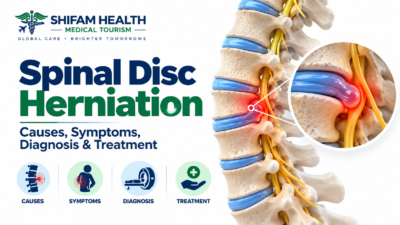
Spinal disc herniation occurs when the soft, gel-like center of an intervertebral disc pushes through a weakened or…