



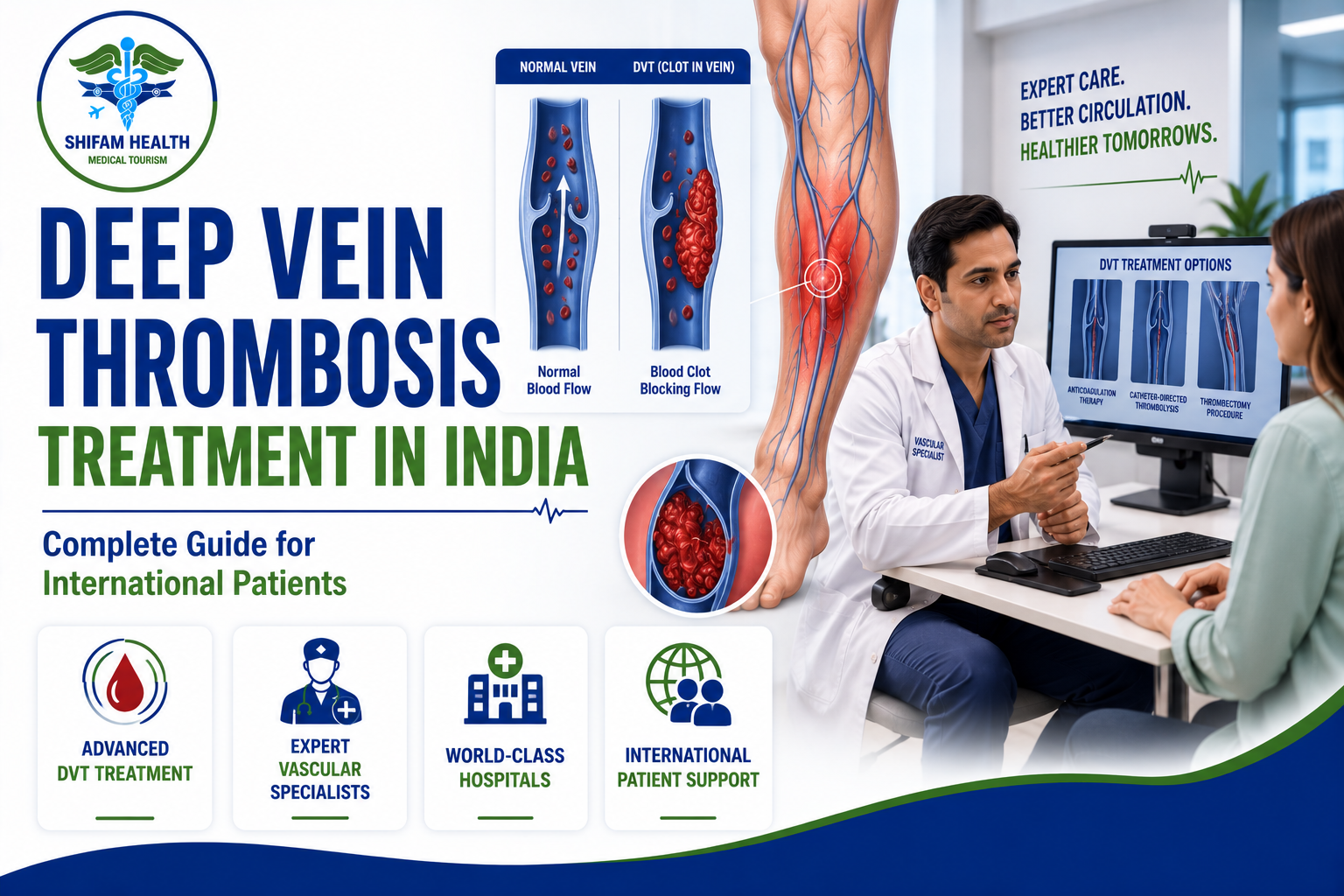
Deep Vein Thrombosis Treatment in India: Complete Guide for International Patients
Filters & Insights
Explore deep vein thrombosis treatment in India — medications, thrombolysis, surgery, costs, recovery timelines, and leading vascular specialists for international patients from Bangladesh, Middle East, Africa, UK, and USA.
Quick Answer for International Patients
Deep vein thrombosis (DVT) treatment in India includes anticoagulant medications, catheter-directed thrombolysis, mechanical thrombectomy, venous stenting, and IVC filter placement. India’s leading vascular centers offer world-class DVT care at 60–80% lower cost than the UK or USA. Treatment costs typically range from $500–$4,500 USD depending on the procedure. International patients receive full coordination support including medical visa, hospital arrangements, and follow-up care.
Introduction
Imagine you’ve just returned from a long flight. Over the next few days, one leg begins to swell. There’s a dull, persistent ache in your calf. You feel warmth and notice redness spreading across the skin. You dismiss it as muscle fatigue until the pain intensifies and your doctor reveals the truth: a blood clot has formed deep inside your vein.
This is how deep vein thrombosis arrives for thousands of patients worldwide quietly, deceptively, and with potentially devastating consequences if left untreated.
DVT is not just a painful condition. It is a medical emergency that can travel to your lungs and become fatal within hours. Early, expert treatment is not optional it is life-saving.
For international patients in Central Asia, Yemen, Nigeria, the UAE, and beyond, India has become one of the most trusted destinations for vascular care. World-class vascular surgeons, advanced minimally invasive procedures, affordable costs, and dedicated international patient services make India a strong choice for DVT treatment.
This guide answers every important question from what DVT actually is, to exactly what it costs and how to arrange treatment in India.
Table of Contents
ToggleWhat Is Deep Vein Thrombosis?
Deep vein thrombosis occurs when a blood clot medically called a thrombus forms inside a deep vein, most commonly in the leg. Unlike the superficial veins visible just under your skin, deep veins run through muscle tissue and carry a much larger volume of blood.
When a clot blocks or partially blocks these deep veins, blood cannot flow normally. This causes pressure to build, leading to swelling, pain, and a range of complications that can worsen rapidly without treatment.
Which Veins Are Most Commonly Affected?
| Vein | Location | Risk Level |
|---|---|---|
| Femoral Vein | Upper Thigh | High Risk — Large Deep Vein with Significant Embolism Potential |
| Popliteal Vein | Behind the Knee | High Risk — One of the Most Common Sites for Deep Vein Thrombosis (DVT) |
| Iliac Vein | Pelvis and Lower Abdomen | Very High Risk — Associated with Large Clots and Increased Risk of Pulmonary Embolism (PE) |
| Tibial Veins | Lower Leg | Moderate Risk — Smaller Clots May Extend into Larger Proximal Veins if Untreated |
| Subclavian Vein | Arm and Shoulder Region | Moderate Risk — More Common in Patients with Central Venous Catheters or Thoracic Outlet Compression |
Pelvic and thigh DVTs carry the highest risk because clots in these larger vessels are more likely to break free and travel to the lungs.
How Does a Blood Clot Form?
Blood clots form through a combination of three factors, collectively called Virchow’s Triad:
Sluggish blood flow: When blood moves too slowly, it begins to pool and clot. This happens during long periods of immobility, such as bed rest after surgery or a long international flight.
Damage to the vein wall: Injury to the inner lining of a blood vessel triggers the clotting process as the body attempts to repair itself.
Increased clotting tendency: Certain conditions, medications, or genetic factors make blood naturally more prone to clotting.
When all three factors are present together, the risk of DVT rises dramatically.
Why DVT Can Be Life-Threatening
Many patients assume DVT is simply a painful leg condition that will resolve on its own. This is one of the most dangerous misconceptions in medicine.
An untreated blood clot in the leg does not just stay there. It can break away from the vein wall, travel through the bloodstream, and lodge in the lungs, a condition called pulmonary embolism (PE). Pulmonary embolism is a medical emergency that kills within minutes if the clot is large enough.
The DVT to Pulmonary Embolism Pathway
A deep vein clot in the thigh or pelvis is particularly dangerous. These large clots can travel upward through the inferior vena cava directly into the right side of the heart and then into the pulmonary arteries. Once there, they block oxygen exchange — and the patient can collapse or die without immediate intervention.
Long-Term Complications of Untreated DVT
Even without pulmonary embolism, DVT causes serious long-term damage:
Post-thrombotic syndrome — Chronic leg pain, swelling, skin discoloration, and venous ulcers that develop because the clot damaged the vein valves permanently.
Chronic venous insufficiency — The legs can no longer return blood efficiently to the heart, causing ongoing swelling and heaviness.
Recurrent DVT — Once you have had one DVT, your risk of developing another increases significantly.
Warning Signs Requiring Emergency Care
If you or a family member experiences any of the following, seek emergency treatment immediately:
- Sudden shortness of breath
- Chest pain that worsens with breathing
- Rapid heartbeat with no clear cause
- Coughing up blood
- Sudden dizziness or fainting
- Severe leg pain combined with breathing difficulty
These symptoms may indicate pulmonary embolism, a life-threatening emergency.
Common Symptoms of DVT
DVT symptoms can be subtle or dramatic. Many patients have no symptoms at all, a condition called “silent DVT” which is why the condition is often diagnosed only after a complication occurs.
| Symptom | Description | Severity |
|---|---|---|
| Leg Swelling | One leg becomes noticeably larger or more swollen than the other, often developing suddenly. | Moderate to Severe |
| Calf Pain | Deep aching, tenderness, or cramping in the calf, which may worsen during walking or standing. | Moderate |
| Redness | Visible redness or discoloration along the affected vein pathway. | Mild to Moderate |
| Warmth | The affected leg feels noticeably warmer than the opposite leg due to inflammation around the clot. | Moderate |
| Heaviness | A sensation that the leg feels unusually heavy, tight, full, or weighted down. | Moderate |
| Visible Veins | Superficial veins may become more prominent as blood flow is redirected around the blockage. | Mild |
| Skin Discoloration | Bluish, purplish, or darker skin coloration caused by impaired venous blood flow. | Moderate to Severe |
Important: DVT most commonly affects one leg. If both legs are equally swollen, other conditions such as heart failure or kidney disease may be the cause.
What Causes Deep Vein Thrombosis?
Understanding your personal risk factors helps you and your doctor make better treatment decisions.
Primary Risk Factors
| Risk Factor | How It Increases DVT Risk |
|---|---|
| Prolonged Immobility | Long-haul flights, extended bed rest, hospitalization, paralysis, or prolonged sitting reduce blood flow and allow blood to pool in the deep veins of the legs. |
| Recent Surgery | Surgical trauma, anesthesia, inflammation, and temporary immobility combine to significantly increase the risk of clot formation. |
| Cancer | Many cancers release substances that increase blood clotting, while chemotherapy and central venous catheters can further elevate DVT risk. |
| Obesity | Excess body weight increases pressure within pelvic and leg veins, slowing venous return and promoting clot development. |
| Pregnancy | The growing uterus can compress pelvic veins, while natural pregnancy-related hormonal changes make blood more prone to clotting. |
| Oral Contraceptives | Estrogen-containing birth control medications increase clotting factor activity and raise the likelihood of venous thrombosis. |
| Smoking | Smoking damages blood vessel walls, promotes inflammation, and increases clotting tendencies within the circulation. |
| Dehydration | Reduced fluid levels can thicken the blood and slow circulation, creating conditions that favor clot formation. |
| Genetic Thrombophilia | Inherited conditions such as Factor V Leiden mutation and antiphospholipid syndrome increase the body’s tendency to form abnormal blood clots. |
| Previous DVT | Prior clotting episodes may damage vein valves and increase the likelihood of recurrent deep vein thrombosis. |
| Heart Failure | Reduced cardiac pumping efficiency slows blood circulation and contributes to venous blood pooling. |
| Varicose Veins | Damaged venous valves impair normal blood flow, increasing venous stasis and clotting risk in susceptible individuals. |
| Inflammatory Conditions | Diseases such as lupus, inflammatory bowel disease (IBD), and Behçet’s disease can trigger systemic inflammation that promotes blood clot formation. |
For international patients traveling long distances to India for treatment, the flight itself creates temporary DVT risk. Your treatment team in India will advise you on safe travel practices before and after treatment.
How DVT Is Diagnosed in India
India’s leading vascular centers use state-of-the-art diagnostic technology. An accurate diagnosis is the foundation of effective treatment doctors need to know the size, location, age, and extent of the clot before selecting the right treatment approach.
- Doppler Ultrasound
- First-line test for diagnosing DVT.
- Uses sound waves to assess blood flow in veins.
- Painless, non-invasive, and highly accurate.
- Best for detecting DVT in the legs.
- D-Dimer Blood Test
- Measures clot breakdown products in the blood.
- Helps rule out DVT when results are normal.
- Elevated levels require further imaging for confirmation.
- CT Venography
- Uses contrast dye and CT imaging to create detailed vein images.
- Useful for pelvic, abdominal, or complex DVT cases.
- Helps identify clot size and extent.
- MR Venography
- MRI-based imaging without radiation exposure.
- Ideal for complex vein thrombosis, pregnancy, or kidney impairment.
- Provides detailed images of deep veins and surrounding tissues.
- Echocardiography
- Assesses heart function when pulmonary embolism is suspected.
- Detects strain on the right side of the heart caused by blood clots.
Why Accurate Diagnosis Matters
Before starting treatment, specialists must determine the location, size, age, and severity of the clot. Advanced diagnostic tools help vascular specialists select the safest and most effective treatment plan for each patient.
Best Deep Vein ThrombBest Deep Vein Thrombosis (DVT) Treatment Options in India
Treatment depends on the clot’s size, location, severity, and your overall health.
1. Anticoagulant Medications (Blood Thinners)
The first-line treatment for most DVT cases. These medications prevent clot growth and reduce the risk of new clots.
- Heparin / LMWH (Enoxaparin): Fast-acting injectable treatment.
- Warfarin: Effective but requires regular blood monitoring.
- NOACs (Rivaroxaban, Apixaban): Modern oral medications with fewer monitoring requirements.
Treatment duration: Usually 3–6 months.
2. Catheter-Directed Thrombolysis (CDT)
A minimally invasive procedure that delivers clot-dissolving medication directly into the clot.
Best for: Large, recent, or severe DVTs.
3. Pharmacomechanical CDT (PCDT)
Combines clot-dissolving drugs with mechanical clot disruption, allowing faster treatment and shorter hospital stays.
4. Mechanical Thrombectomy
A catheter-based procedure that physically removes the clot.
Best for: Patients who cannot receive clot-dissolving medications or have extensive DVT.
5. Venous Stenting
A stent is placed to keep narrowed veins open and prevent future clot formation.
Often used for: May-Thurner syndrome or recurrent DVT.
6. IVC Filter Placement
A small filter placed in the inferior vena cava to prevent clots from reaching the lungs.
Used when: Blood thinners cannot be given or pulmonary embolism risk is high.
7. Surgical Thrombectomy
Open surgical clot removal, reserved for severe cases where limb function is threatened or minimally invasive treatments are unsuitable.
DVT Treatment Comparison
| Treatment | Best For | Procedure Type | Hospital Stay | Clot Removal Speed |
|---|---|---|---|---|
| Anticoagulants | Mild to moderate DVT and most newly diagnosed patients | Medical Treatment | Outpatient or 1–2 Days | Weeks to Months |
| CDT (Catheter-Directed Thrombolysis) | Extensive proximal DVT involving major veins | Minimally Invasive | 2–4 Days | 24–72 Hours |
| PCDT (Pharmacomechanical CDT) | Extensive DVT requiring faster clot removal | Minimally Invasive | 1–2 Days | 4–8 Hours |
| Mechanical Thrombectomy | Patients with high bleeding risk or unsuitable for thrombolytic drugs | Minimally Invasive | 1–3 Days | Within Hours |
| Venous Stenting | Residual vein narrowing or compression after clot removal | Minimally Invasive | 1–2 Days (Often Combined) | Performed Alongside CDT or Thrombectomy |
| IVC Filter | Patients unable to receive anticoagulant medication | Minimally Invasive | 1–2 Days | Does Not Remove Existing Clot |
| Surgical Thrombectomy | Limb-threatening DVT or severe venous obstruction | Open Surgery | 5–7 Days | Immediate Clot Removal |
Latest Minimally Invasive DVT Treatments in India
India’s top vascular centers have invested heavily in advanced endovascular technology that was previously only available in the United States and Western Europe.
Angiojet Rheolytic Thrombectomy: Uses high-pressure saline jets to break up and aspirate the clot simultaneously. Available at select centers in Delhi, Mumbai, and Chennai.
ClotTriever System: A newer mechanical thrombectomy device designed to remove large clots from deep veins in a single procedure without thrombolytics. Increasingly available in India’s major vascular centers.
Intravascular Ultrasound (IVUS): Used alongside CDT and stenting to provide real-time imaging from inside the vein, allowing more precise placement of stents and better assessment of residual clot.
Venous Balloon Angioplasty: Used alongside stenting to pre-dilate narrowed vein segments before stent deployment.
These technologies mean that patients traveling to India now have access to treatments equivalent to the most advanced vascular centers globally at a fraction of the cost.
Deep Vein Thrombosis Treatment Cost in India
Cost transparency is one of the most important factors for international patients. Below is a detailed cost breakdown for DVT treatment in India.
DVT Treatment Cost Breakdown
| Service | Cost (INR) | Cost (USD) | Cost (AED) | Cost (BDT) |
|---|---|---|---|---|
| Initial Specialist Consultation | ₹1,500–3,000 | $18–36 | AED 65–130 | BDT 2,000–4,000 |
| Doppler Ultrasound | ₹2,000–5,000 | $24–60 | AED 88–220 | BDT 2,700–6,700 |
| D-Dimer Blood Test | ₹500–1,200 | $6–14 | AED 22–51 | BDT 670–1,600 |
| CT Venography | ₹8,000–15,000 | $96–180 | AED 352–660 | BDT 10,700–20,000 |
| Anticoagulant Medications (Per Month) | ₹2,000–8,000 | $24–96 | AED 88–352 | BDT 2,700–10,700 |
| Catheter-Directed Thrombolysis (CDT) | ₹80,000–1,80,000 | $960–2,160 | AED 3,520–7,920 | BDT 107,000–240,000 |
| Mechanical Thrombectomy | ₹1,00,000–2,20,000 | $1,200–2,640 | AED 4,400–9,680 | BDT 134,000–294,000 |
| Venous Stenting | ₹1,20,000–2,80,000 | $1,440–3,360 | AED 5,280–12,320 | BDT 160,000–374,000 |
| IVC Filter Placement | ₹80,000–1,50,000 | $960–1,800 | AED 3,520–6,600 | BDT 107,000–200,000 |
| Hospitalization (Per Day) | ₹5,000–15,000 | $60–180 | AED 220–660 | BDT 6,700–20,000 |
Factors That Affect DVT Treatment Cost
Type of procedure: Anticoagulation medication alone is far less expensive than catheter-based intervention. Advanced techniques like PCDT with venous stenting are more costly but often more effective.
Hospital type: Private JCI-accredited hospitals charge more than standard private hospitals. Government hospitals charge less but may have longer waiting times.
City: Delhi and Mumbai tend to have slightly higher costs than Bangalore, Chennai, or Hyderabad.
Severity and complexity: Bilateral DVT, pelvic vein involvement, or concurrent pulmonary embolism increases total cost significantly.
Length of stay: Most minimally invasive procedures require 2–5 days. Surgical procedures may require 7–10 days.
Post-procedure medications: Anticoagulation therapy continues for 3–6 months after treatment. Monthly medication costs in India are significantly lower than in the UK or USA.
Why International Patients Choose India for DVT Treatment
Cost Comparison: India vs Other Countries
| Country | Catheter-Directed Thrombolysis (CDT) | Mechanical Thrombectomy | Venous Stenting |
|---|---|---|---|
| India | $960–$2,160 | $1,200–$2,640 | $1,440–$3,360 |
| United States | $15,000–$45,000 | $20,000–$55,000 | $25,000–$65,000 |
| United Kingdom | $12,000–$30,000 | $15,000–$40,000 | $18,000–$50,000 |
| United Arab Emirates (UAE) | $8,000–$18,000 | $10,000–$22,000 | $12,000–$28,000 |
| Turkey | $3,000–$7,000 | $4,000–$9,000 | $5,000–$11,000 |
India offers quality comparable to the USA and UK at 80–90% lower cost. Even compared to Turkey, India is 50–60% more affordable.
Why India for Vascular Treatment?
Deep vascular expertise: India has trained vascular surgeons with fellowships from the USA, UK, and Europe. Many have decades of experience with complex DVT and venous disease.
Advanced technology: Leading Indian hospitals use the same endovascular equipment found in top Western vascular centers including IVUS, advanced thrombectomy devices, and hybrid operating rooms.
No waiting lists: Patients in the UK may wait months for an elective vascular procedure. In India, most patients can begin treatment within 3–7 days of arrival.
Dedicated international patient departments: India’s major hospitals have dedicated international patient coordinators who speak Arabic, Bangla, French, and other languages relevant to Shifam Health’s patient base.
Medical tourism infrastructure: India has decades of experience managing international medical travelers, with streamlined visa processes, hospital-affiliated accommodation, and airport pickup services.
Recovery After DVT Treatment
Recovery depends on the treatment approach. Patients who receive medication-only treatment recover differently from those who undergo catheter-based procedures.
Recovery Timeline
| Phase | Timeframe | Key Activities |
|---|---|---|
| Immediate Post-Procedure | Days 1–3 | Rest, close monitoring for bleeding, assessment for clot recurrence, pain management, and early mobilization as advised by the vascular team. |
| Early Recovery | Days 3–14 | Gradual increase in walking, regular use of compression stockings, initiation or continuation of anticoagulant medications, and monitoring of symptoms. |
| Active Recovery | Weeks 2–6 | Progressive return to normal activities, leg elevation when resting, follow-up Doppler ultrasound evaluations, and continued adherence to prescribed medications. |
| Long-Term Management | Months 1–6+ | Continuation of anticoagulation therapy where indicated, lifestyle modification, weight management, smoking cessation, regular follow-up appointments, and long-term DVT prevention strategies. |
Compression Stockings
Medical-grade compression stockings are one of the most important tools in DVT recovery. They apply graduated pressure to the legs, improving venous return, reducing swelling, and significantly lowering the risk of post-thrombotic syndrome. Most patients require class II compression stockings (23–32 mmHg).
Your vascular specialist in India will measure you for the correct stockings before discharge.
Activity and Walking
Contrary to old advice, bed rest is no longer recommended for DVT patients. Controlled walking — even during anticoagulation — helps keep blood moving and reduces clot risk. Your doctor will guide you on safe activity levels.
Follow-Up Imaging
A repeat Doppler ultrasound is typically performed at 3 months to assess clot resolution and vein valve function. Your Indian vascular specialist can coordinate reports with your home country doctor for continuity of care.
Travel After DVT Treatment
Many international patients are concerned about flying home after DVT treatment. Your doctor will advise the minimum safe waiting period before flying — typically 2–4 weeks after successful treatment, combined with:
- Appropriate anticoagulation
- Compression stockings during the flight
- Hourly movement during the flight
- Adequate hydration
Can DVT Return?
Yes, DVT can recur. Understanding recurrence risk is essential for long-term management.
DVT Recurrence Rates
- After a provoked DVT (caused by surgery, travel, pregnancy): approximately 5–10% recurrence at 5 years
- After an unprovoked DVT (no clear cause): 25–30% recurrence at 5 years
- In patients with cancer: 15–25% annual recurrence
Prevention Strategies
Anticoagulation duration: Extended therapy beyond 6 months significantly reduces recurrence. Your doctor will weigh bleeding risk against clot recurrence risk.
Thrombophilia testing: If you are under 50 with no clear cause for DVT, blood tests can identify inherited clotting disorders that require lifelong management.
Lifestyle modifications:
- Maintain a healthy weight
- Stop smoking
- Stay active
- Stay hydrated on long journeys
- Wear compression stockings during flights exceeding 4 hours
- Avoid prolonged immobility
Traveling to India for DVT Treatment
For international patients, the journey from initial inquiry to completed treatment typically spans 2–4 weeks. Here is a practical guide.
Medical Visa for India
International patients require a medical visa (M-Visa) to seek treatment in India. Requirements include:
- Completed visa application form
- Valid passport (minimum 6 months validity)
- Hospital appointment or treatment letter from an Indian hospital
- Recent medical reports confirming the condition
- Bank statement showing sufficient funds
- Passport-sized photographs
Processing time is typically 3–7 working days. Emergency cases can sometimes be expedited.
A medical attendant visa (MED-ATTD) is available for one accompanying family member.
Shifam Health assists international patients with the complete visa documentation process including obtaining the required hospital invitation letter.
Recommended Length of Stay
| Treatment Type | Minimum Stay in India |
|---|---|
| Anticoagulation Initiation and Monitoring | 5–7 Days |
| Catheter-Directed Thrombolysis (CDT) | 7–10 Days |
| Pharmacomechanical Catheter-Directed Thrombolysis (PCDT) | 5–7 Days |
| Mechanical Thrombectomy | 5–8 Days |
| IVC Filter Placement | 4–6 Days |
| Venous Stenting (Combined Procedure) | 7–12 Days |
How Shifam Health Supports DVT Patients
From the moment you contact us, we guide you through every step:
- Free medical report review by a vascular specialist
- Transparent treatment cost estimate within 48 hours
- Hospital and doctor shortlisting based on your case
- Video consultation with a vascular surgeon before you travel
- Medical visa invitation letter from the hospital
- Airport pickup on arrival
- Accommodation near the hospital
- Language support and patient coordination throughout treatment
- Post-treatment reports shared with your home doctor
- Follow-up support after you return home
Conclusion: Your DVT Treatment Journey Starts Here
Deep vein thrombosis is serious, but it is highly treatable especially when caught early and managed by experienced vascular specialists using modern techniques.
India offers world-class DVT care that is accessible, affordable, and genuinely effective. Whether you need simple anticoagulation management, advanced catheter-directed thrombolysis, or complex venous stenting, India’s leading hospitals have the expertise and technology to deliver outstanding results.
You should not have to choose between quality and affordability. In India, you get both.
If you or a family member has been diagnosed with DVT or is experiencing symptoms, share your medical reports with us today. Our team will review your case, connect you with a specialist, and provide a clear treatment plan and cost estimate within 48 hours.
Frequently Asked Questions
Is DVT a serious condition?
Yes. If left untreated, DVT can lead to a life-threatening pulmonary embolism. Early treatment significantly reduces this risk.
How long does DVT treatment take?
Most patients require blood-thinning medication for 3–6 months. Advanced procedures may require a 3–7 day hospital stay.
Is surgery always required for DVT?
No. Most DVT cases are successfully treated with anticoagulant medications. Procedures are reserved for severe or extensive clots.
How much does DVT treatment cost in India?
Treatment costs range from USD 500–600 for medication-based care to USD 3,000–4,500 for advanced catheter-based procedures.
Can international patients get DVT treatment in India?
Yes. India’s leading hospitals offer advanced DVT treatment with dedicated international patient support services.
Can patients fly after DVT treatment?
Most patients can travel 2–4 weeks after treatment once the clot is stable and anticoagulation is established. Medical clearance is essential.
What is Post-Thrombotic Syndrome (PTS)?
PTS is a long-term complication causing leg swelling, pain, and skin changes after DVT. Early treatment helps reduce this risk.
How do doctors confirm DVT treatment success?
Follow-up Doppler ultrasound scans and symptom improvement are used to assess clot resolution and recovery.
What happens if DVT is not treated?
The clot may grow, damage veins permanently, or travel to the lungs, causing a potentially fatal pulmonary embolism.
Which hospitals are best for DVT treatment in India?
Leading hospitals include Apollo, Medanta, Fortis, Max, and Artemis, all offering advanced vascular and endovascular care.
Also Read
- Vascular Surgery in India | Complete Guide
- Peripheral Artery Disease Treatment India
- Varicose Vein Treatment Cost in India
- Medical Visa from Bangladesh to India
- Best Hospitals in India for International Patients
- Heart Bypass Surgery Cost in India


Popular Posts From Last Week
- September 21, 2026
- shifamhealth
Hearing “neurofibromatosis” attached to your own or your child’s diagnosis often raises a specific kind of confusion, because…
- September 20, 2026
- shifamhealth
Medically reviewed content · Published 2026 · Last reviewed September 2026 A limb deformity in a child is…
- September 24, 2026
- shifamhealth
Osteopenia means bone mineral density lower than the young-adult reference range but not low enough to meet the…
- September 25, 2026
- shifamhealth
Spina bifida is a group of neural tube defects caused by incomplete closure or development of the neural…
- September 19, 2026
- shifamhealth
Finding a purple or reddish patch on your skin that won’t fade, or hearing “Kaposi sarcoma” mentioned during…
- September 21, 2026
- shifamhealth
Medically reviewed content · Published 2026 · Last reviewed September 2026 Hip dysplasia describes a hip joint where…
- September 20, 2026
- shifamhealth
Still having pain after spine surgery — whether it never fully went away, or came back after a…
- September 22, 2026
- shifamhealth
Medically reviewed content · Published 2026 · Last reviewed September 2026 The meniscus is a C-shaped piece of…
- September 24, 2026
- shifamhealth
Osteoarthritis is a whole-joint disorder not simply cartilage “wearing out” involving changes to cartilage, the underlying bone, the…