




Varicocele Surgery Cost in India: Complete Guide for International Patients (2026)
Filters & Insights
Varicocele surgery in India costs USD 800–2,500. Learn about microsurgical repair, fertility benefits, recovery, top hospitals, & treatment options.
They had been trying for two years.
Every month brought the same quiet disappointment. Every fertility clinic visit produced more tests, more forms, and more uncertainty. Then finally, after a comprehensive male fertility evaluation, the answer emerged: varicocele.
The urologist explained that the veins inside the scrotum had become enlarged, affecting sperm production and quality. Surgery could potentially correct the problem. Sperm parameters might improve. Natural conception might become possible.
But the cost of microsurgical varicocelectomy at their local hospital was USD 12,000. Their insurance would not cover it. And the wait for a specialist appointment stretched to four months.
That is when they started researching India.
Within three weeks of their first inquiry, they were sitting across from a microsurgical urologist at a JCI-accredited hospital in India having paid a fraction of what the same procedure would have cost at home.
This guide is written for every couple in a similar situation. Whether you are dealing with scrotal pain, fertility concerns, or both, here is everything you need to know about varicocele surgery cost in India, what results to realistically expect, and how to plan your treatment as an international patient.
Table of Contents
ToggleQuick Reference: Varicocele Surgery in India at a Glance
| Question | Answer |
|---|---|
| What Is Varicocele? | Varicocele is an enlargement of the veins within the scrotum that can impair sperm production, testicular function, and male fertility. |
| Who Typically Needs Surgery? | Men experiencing infertility, persistent scrotal discomfort, testicular shrinkage, or abnormal semen analysis associated with varicocele. |
| Surgery Cost in India | USD 800 – USD 2,500 |
| Average Cost in the USA | USD 8,000 – USD 20,000 |
| Average Cost in the United Kingdom | GBP 5,000 – GBP 12,000 |
| Average Cost in the UAE | USD 4,000 – USD 9,000 |
| Most Recommended Technique | Microsurgical Varicocelectomy (Subinguinal Approach), widely regarded as the gold standard because of its high success rate and low recurrence risk. |
| Hospital Stay | Day-care procedure or 1-night hospital admission in most cases. |
| Recommended Stay in India | Approximately 5–10 days, including consultation, surgery, recovery, and post-operative review. |
| When Does Sperm Quality Improve? | Semen parameters are typically reassessed at 3 months and 6 months after surgery, as sperm production cycles require time to respond. |
Clinical Insight: Varicocele is one of the most common surgically correctable causes of male infertility. Microsurgical varicocelectomy offers excellent outcomes with low complication and recurrence rates. Improvements in sperm count, motility, and morphology generally become noticeable within several months after successful treatment.
What Is a Varicocele?
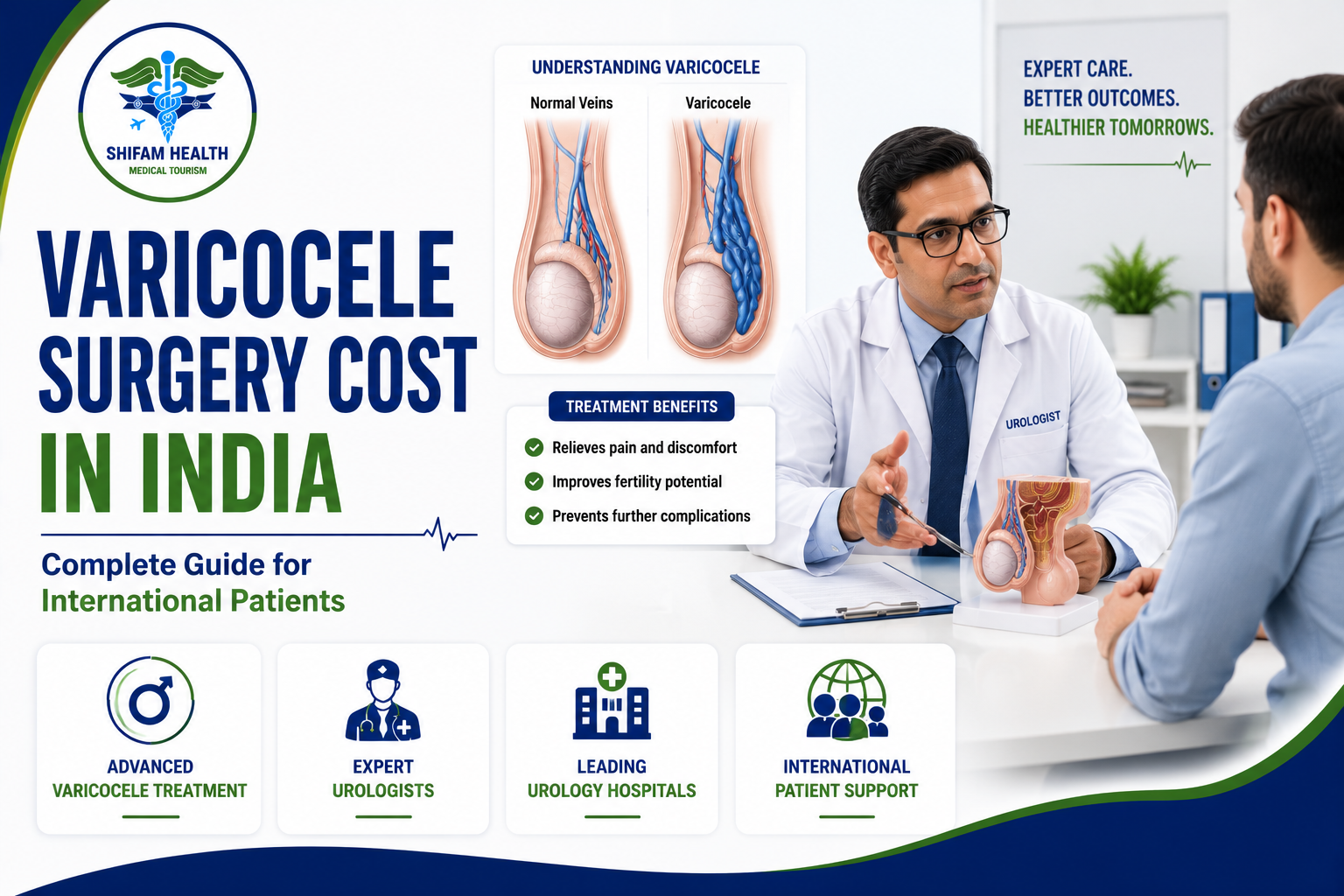
The best way to understand a varicocele is to think of it as varicose veins but located inside the scrotum rather than in the legs.
Inside the scrotum, a network of veins called the pampiniform plexus drains blood from the testicles back toward the heart. When the valves inside these veins stop working properly, blood pools and the veins become enlarged and twisted. This is a varicocele.
The pooling of blood raises the temperature inside the scrotum. The testicles require a temperature slightly below body temperature to produce healthy sperm typically about 2–3 degrees Celsius cooler than core body temperature. When scrotal temperature rises due to blood pooling, sperm production and quality can be negatively affected.
Left-sided varicocele is significantly more common than right-sided. This is because the left testicular vein drains at a near right-angle into the renal vein, creating greater resistance to blood flow. The right testicular vein drains more directly into the inferior vena cava at a more favourable angle.
Right-sided varicocele occurring in isolation is less common and warrants further investigation, as it can occasionally indicate an abdominal mass obstructing venous drainage.
Bilateral varicocele affecting both sides occurs in a meaningful percentage of men and may require surgical correction on both sides, depending on clinical findings and semen analysis results.
How Common Is Varicocele?
Varicocele is one of the most common urological conditions in adult men. It is found in a notable proportion of men in the general population, and the rate is considerably higher among men presenting to fertility clinics.
Among couples experiencing secondary infertility difficulty conceiving a second child after having conceived naturally before varicocele is found at an even higher rate, suggesting it can develop or worsen progressively over time.
Varicocele affects men across a wide age range, from adolescents through middle age. Most cases are diagnosed in men between the ages of 15 and 35, with peak discovery during fertility evaluations.
The condition is often called a “silent” problem because many men have a varicocele and either do not notice symptoms or attribute dull scrotal discomfort to other causes, only discovering the varicocele when infertility prompts investigation.
Signs and Symptoms: What Does Varicocele Feel Like?
Varicocele presents differently across individuals. Some men have significant symptoms; others have none at all and discover the condition only through fertility testing.
| Symptom | Description |
|---|---|
| Dull Aching Scrotal Pain | A persistent low-level discomfort often described as heaviness, pressure, or a dragging sensation within the scrotum. |
| Pain That Worsens by the End of the Day | Discomfort typically increases after prolonged standing, walking, exercise, or other physical activities. |
| Visible or Palpable Veins | Enlarged veins may be visible or felt above the testicle, often producing the classic “bag of worms” sensation on examination. |
| Testicular Asymmetry | The affected testicle may appear smaller or feel reduced in size compared with the opposite side. |
| Abnormal Semen Analysis | Reduced sperm count, poor motility, or abnormal sperm morphology may be detected during fertility evaluation. |
| No Symptoms | Many varicoceles produce no noticeable symptoms and are discovered incidentally during a routine physical examination or fertility workup. |
Clinical Insight: Varicoceles often develop gradually and may remain asymptomatic for years. While some men experience scrotal discomfort or fertility-related concerns, others are diagnosed only during infertility investigations or routine medical examinations. Persistent pain, testicular size changes, or abnormal semen parameters should prompt evaluation by a urologist or male fertility specialist.
A clinical grade is assigned to varicoceles based on examination findings:
Grade 1: Not visible or palpable at rest; only detected by ultrasound or during Valsalva manoeuvre (bearing down)
Grade 2: Palpable without visual detection, not visible
And Grade 3: Visibly detectable without any special manoeuvre
Higher clinical grades are generally associated with more significant effects on testicular function, though even grade 1 varicoceles can affect sperm parameters in some men.
How Does Varicocele Affect Male Fertility?
This is the question that matters most to the majority of men who seek varicocele treatment.
The mechanism through which varicocele impairs fertility is primarily through elevated scrotal temperature. However, the effects are more complex than temperature alone.
Sperm Count (Concentration): Elevated scrotal temperature disrupts the process of sperm production (spermatogenesis) in the testicle. This can reduce the total number of sperm produced, sometimes significantly.
Sperm Motility: Sperm from men with varicocele often show reduced forward progression — the ability to swim forward effectively. This is critical for natural fertilisation, as sperm must navigate the female reproductive tract.
Sperm Morphology: The percentage of sperm with normal shape and structure may be reduced. Abnormal morphology affects the sperm’s ability to penetrate and fertilise an egg.
Sperm DNA Fragmentation: This is a particularly important and underappreciated effect. Varicocele is associated with increased oxidative stress, which causes damage to the genetic material within sperm. High DNA fragmentation reduces natural conception rates and also affects outcomes with assisted reproduction techniques like IVF and ICSI. Varicocele surgery has been shown in multiple studies to reduce DNA fragmentation levels.
Testosterone Production: The testicle is responsible for producing testosterone as well as sperm. Prolonged varicocele can impair Leydig cell function the cells that produce testosterone leading to reduced testosterone levels in some men. Surgery can improve testosterone production in these cases.
Testicular Volume: In younger patients particularly, a significant varicocele can cause the affected testicle to grow more slowly or even shrink over time. Surgical correction in adolescents and young adults is sometimes recommended specifically to protect testicular volume.
When Is Varicocele Surgery Recommended?
Not every varicocele requires surgery. The decision to operate is based on a combination of clinical findings and patient circumstances.
Surgery is typically recommended when:
A clinically detectable varicocele is present (Grade 2 or 3, or Grade 1 confirmed by ultrasound) AND at least one of the following applies:
- Abnormal semen analysis (reduced count, motility, or morphology)
- The couple has documented infertility with no identified female factor
- Significant scrotal pain affecting quality of life that has not responded to conservative management
- Testicular growth discrepancy in adolescents or young men
- Abnormal hormone levels (testosterone or FSH) associated with testicular dysfunction
Surgery is generally not recommended when:
- Semen analysis is completely normal
- The couple has not yet tried to conceive
- Varicocele is subclinical (only detectable by ultrasound, not by clinical examination)
- The female partner has a significant reproductive issue that would require IVF regardless
The decision is individual. A good urologist will review your specific semen analysis, ultrasound findings, hormone levels, and fertility goals before making a recommendation.
Types of Varicocele Surgery Available in India
| Technique | Approach | Anaesthesia | Hospital Stay | Recurrence Risk | Fertility Outcomes |
|---|---|---|---|---|---|
| Microsurgical Varicocelectomy | Subinguinal (Groin) | Local, Spinal, or General Anaesthesia | Day-Case Procedure | Very Low | Best Documented Outcomes |
| Laparoscopic Varicocelectomy | Abdominal (Keyhole Surgery) | General Anaesthesia | 1 Night | Low | Good |
| Open High Ligation (Palomo Technique) | Abdominal Incision | General Anaesthesia | 1–2 Nights | Higher Than Microsurgical Approach | Adequate |
| Percutaneous Embolisation | Radiological Procedure (No Surgical Incision) | Sedation | Day-Case Procedure | Moderate | Good for Pain Relief; Variable Fertility Outcomes |
Types of Varicocele Surgery
Microsurgical Varicocelectomy (Gold Standard)
The most effective and widely recommended treatment for varicocele. Using an operating microscope, the surgeon precisely ties off enlarged veins while preserving arteries, lymphatics, and the vas deferens.
Benefits:
- Lowest recurrence rate
- Lowest risk of hydrocele
- Best fertility outcomes
- Preserves testicular blood supply
- Day-care procedure with quick recovery
Laparoscopic Varicocelectomy
Performed through small abdominal incisions using a camera and surgical instruments. Often preferred for treating varicoceles on both sides simultaneously.
Open High Ligation
An older surgical technique performed through an abdominal incision. Less commonly used today due to higher recurrence and complication rates.
Percutaneous Embolization
A non-surgical procedure where a catheter is used to block abnormal veins. Suitable for selected patients or recurrent cases, though fertility outcomes may be less predictable than microsurgery.
Why Microsurgical Varicocelectomy Is Preferred
Microsurgical varicocelectomy offers the best balance of safety, effectiveness, and fertility improvement. High magnification allows surgeons to identify and preserve critical structures while treating all abnormal veins, resulting in superior outcomes and lower complication rates. Many leading fertility and urology centers in India routinely perform this advanced technique for international patients seeking fertility treatment.
Varicocele Surgery Cost in India
Detailed Cost Breakdown
| Procedure Type | India Cost (USD) | Includes |
|---|---|---|
| Unilateral Microsurgical Varicocelectomy | USD 900 – 1,600 | Surgery, anaesthesia, routine medications, and typically a 1-night hospital stay. |
| Bilateral Microsurgical Varicocelectomy | USD 1,400 – 2,500 | Treatment of both sides, surgeon fees, anaesthesia, hospitalization, and standard post-operative care. |
| Unilateral Laparoscopic Varicocelectomy | USD 1,000 – 1,800 | Laparoscopic surgery, anaesthesia, operating theatre charges, and a 1-night stay. |
| Bilateral Laparoscopic Varicocelectomy | USD 1,500 – 2,500 | Bilateral repair, anaesthesia, hospital stay, and standard surgical consumables. |
| Percutaneous Embolisation | USD 800 – 1,500 | Interventional radiology procedure, sedation, imaging guidance, and day-care treatment. |
| Revision Varicocelectomy | USD 1,200 – 2,200 | Repeat surgery for recurrent varicocele, specialist surgical care, anaesthesia, and hospitalization. |
What Is Typically Included
- Hospital admission and room charges
- Surgeon and assistant surgeon fees
- Anaesthesiologist fee
- Operation theatre charges
- Standard post-operative medications
- Nursing care during admission
- Pre-discharge instructions and follow-up plan
What to Budget Additionally
- Pre-operative investigations: semen analysis, scrotal ultrasound Doppler, hormone panel approximately USD 100–200
- Accommodation in India: budget to mid-range options near hospitals start from USD 30–70 per night
- Return flights: variable by origin country
- Meals and local transport
- Travel insurance
Factors That Affect the Total Cost
Type of surgery: Microsurgical procedures require operating microscopes and specialised surgical sets. The technique is more complex but its outcomes justify the investment.
Unilateral vs bilateral: Treating both sides adds to operative time and resource use.
Hospital category: JCI-accredited tertiary care hospitals have higher facility costs than smaller private hospitals, but offer advanced infrastructure and international patient services.
Surgeon experience: Senior microsurgical urologists at major centres command higher fees. For fertility-focused surgery, this is generally a worthwhile consideration.
City: Costs in Delhi, Mumbai, and Bangalore vary slightly. Delhi and Chennai often offer competitive pricing without compromising quality at top-tier institutions.
Cost Comparison: India vs Other Countries
| Country | Unilateral Varicocelectomy Cost | Bilateral Varicocelectomy Cost |
|---|---|---|
| India | USD 900 – 1,600 | USD 1,400 – 2,500 |
| United States | USD 8,000 – 15,000 | USD 12,000 – 20,000 |
| United Kingdom | GBP 5,000 – 10,000 | GBP 8,000 – 14,000 |
| United Arab Emirates (UAE) | USD 4,000 – 8,000 | USD 6,000 – 12,000 |
| Saudi Arabia | USD 3,500 – 7,000 | USD 5,500 – 10,000 |
| Singapore | USD 5,000 – 10,000 | USD 7,500 – 14,000 |
| Turkey | USD 2,000 – 4,000 | USD 3,000 – 6,000 |
| Thailand | USD 2,500 – 4,500 | USD 3,500 – 7,000 |
Potential savings by choosing India vs USA: USD 7,000 – 18,000 per procedure
The cost difference is not a reflection of lower quality. It reflects fundamentally different healthcare pricing structures, lower operational costs, and government-supported medical tourism infrastructure. The surgical techniques, equipment, and specialist training are equivalent to international standards at accredited centres.
Many international patients find that the total cost of treatment in India including flights, accommodation, and surgery is still substantially less than the surgery cost alone in their home country.
What to Look for When Choosing a Hospital and Surgeon in India
Rather than providing a ranked list of hospitals that can change over time, here is what genuinely matters when evaluating options.
Surgeon-specific considerations:
- Dedicated training and experience in microsurgical varicocelectomy
- High surgical volume for this specific procedure
- Association with a fertility programme (many leading urologists work closely with IVF specialists)
- Published outcomes or fellowship training at internationally recognised institutions
Hospital-level considerations:
- Availability of an operating microscope for the subinguinal approach
- Dedicated urology and andrology (male reproductive medicine) department
- Semen analysis laboratory on-site or nearby for pre- and post-operative testing
- International patient department with English-speaking coordinators
- JCI or NABH accreditation
Fertility-focused considerations:
- Access to sperm DNA fragmentation testing, not just basic semen analysis
- Collaboration between urologist and reproductive endocrinologist
- Clear pathway for couples who may need IVF after surgery if natural conception does not occur
India’s leading hospitals including Apollo Hospitals, Fortis, Medanta, Max Healthcare, Manipal Hospitals, and Kokilaben Dhirubhai Ambani Hospital have dedicated andrology and microsurgical urology capabilities. Shifam Health matches international patients with the appropriate specialist based on their specific case profile rather than applying a one-size-fits-all recommendation.
What Results to Expect After Varicocele Surgery
This is the most important section for men making this decision, and it deserves an honest, balanced explanation.
Fertility outcomes vary by individual. The research evidence consistently shows that microsurgical varicocelectomy improves semen parameters in a significant proportion of men, but outcomes depend on age, duration of varicocele, severity, pre-operative sperm parameters, and female partner factors.
Sperm count: Many men see meaningful improvement in sperm concentration after successful surgery. Improvement typically becomes measurable at the 3-month mark and continues up to 12 months post-operatively, as the full cycle of sperm production takes approximately 72 days.
Sperm motility: Progressive motility the most functionally important parameter for natural conception often shows significant improvement following surgery.
Sperm morphology: Improvements in normal morphology percentage are frequently observed, though morphology tends to be the slowest parameter to improve.
DNA fragmentation: Multiple studies have documented meaningful reductions in sperm DNA fragmentation following varicocelectomy, particularly when fragmentation was elevated pre-operatively. This is clinically significant both for natural conception and assisted reproduction outcomes.
Testosterone: In men with low testosterone associated with varicocele, surgery can result in measurable increases in serum testosterone levels. This effect is particularly relevant for men with bilateral varicoceles.
Pain relief: For men with scrotal discomfort, the large majority experience significant improvement or complete resolution after surgery.
What surgery does not guarantee: Surgery cannot guarantee pregnancy. It creates better biological conditions for conception. Whether pregnancy occurs depends on the full clinical picture including the partner’s reproductive health, the man’s age, the baseline severity of sperm damage, and how much the varicocele had already affected the testicle before treatment.
Recovery Timeline After Varicocele Surgery
| Timeframe | What to Expect |
|---|---|
| Day of Surgery | Most procedures are performed as a day-case or with a single overnight admission. Local, spinal, or general anaesthesia may be used depending on the technique. Most patients can walk on the same day and return to their hotel or home shortly after discharge. |
| Days 1–3 | Mild scrotal discomfort, swelling, or bruising is common and usually well controlled with routine pain medication. Gentle walking is encouraged to promote circulation and recovery. |
| Week 1 | Scrotal support garments are typically worn continuously. Heavy lifting, strenuous exercise, cycling, and activities that increase abdominal pressure should be avoided. |
| Week 2 | Most patients can return to office-based or desk work. Driving may resume once comfort allows, typically between days 7 and 10. |
| Week 4 | Physical activities such as gym workouts, jogging, and manual labour can often be restarted following surgeon approval during follow-up evaluation. |
| Week 6 | Normal sexual activity is usually fully resumed, and the majority of patients report minimal or no residual discomfort. |
| Month 3 | The first post-operative semen analysis is typically performed to evaluate improvements in sperm count, motility, and morphology. |
| Month 6 | A second semen analysis is commonly recommended to assess the full fertility response and discuss future conception planning with the fertility specialist. |
| Month 12 | Final assessment of reproductive outcomes. For couples who have not achieved natural conception, additional fertility options such as IUI or IVF may be discussed. |
Recovery Insight: Recovery after varicocelectomy is generally straightforward, with most men returning to normal daily activities within 1–2 weeks. While pain relief may occur within weeks, fertility improvements take longer because sperm production cycles typically require 3–6 months to show measurable changes. Regular semen analysis follow-up is essential to evaluate treatment success and guide future family-planning decisions.
Varicocele Surgery vs IVF: How Should Couples Decide?
This is one of the most common questions couples face after a varicocele diagnosis, and the honest answer is nuanced.
| Factor | Varicocele Surgery | IVF / ICSI |
|---|---|---|
| Cost (India) | USD 900 – 2,500 | USD 2,000 – 4,500 Per Cycle |
| Timeline to Potential Pregnancy | Typically 6–12 months as sperm quality gradually improves after surgery. | Usually 3–6 months per treatment cycle, depending on preparation and outcomes. |
| Invasiveness | Minor surgical procedure performed on the male partner. | Requires ovarian stimulation injections, egg retrieval, laboratory fertilization, and embryo transfer for the female partner. |
| Addresses the Underlying Problem? | Yes. Treats the varicocele and improves the testicular environment. | No. Bypasses the fertility problem rather than correcting it. |
| Long-Term Fertility Improvement | Yes. Improvements in sperm count, motility, and quality can persist long term. | No lasting improvement to natural sperm production or fertility potential. |
| Pregnancy Method | May enable natural conception without assisted reproduction. | Requires IVF or ICSI treatment for each attempt at conception. |
| Best Suited For | Men with clinically significant, treatable varicocele and a female partner with normal or near-normal fertility. | Severe male-factor infertility, female-factor infertility, advanced maternal age, or situations requiring rapid conception. |
| DNA Fragmentation | Often improves sperm DNA fragmentation levels and may enhance future fertility outcomes. | High sperm DNA fragmentation can negatively affect IVF/ICSI success rates if not addressed. |
| Future IVF Success | May improve IVF/ICSI outcomes if assisted reproduction is eventually required. | Success depends on existing sperm quality and female reproductive factors. |
Surgery vs IVF: Which Should Come First?
Varicocele Surgery First:
If the female partner is under 35 with no major fertility issues and the male partner has a clinically significant varicocele with abnormal semen analysis, surgery is usually recommended first. It treats the underlying cause, costs less than IVF, and may allow natural conception.
IVF/ICSI First:
IVF or ICSI may be the better option when the female partner is over 35, time is limited, severe male infertility is present, or the female partner has fertility issues that require IVF regardless of varicocele treatment.
Important Consideration:
Even when IVF is planned, treating a varicocele first may improve sperm quality and reduce DNA fragmentation, potentially increasing embryo quality, implantation rates, and overall IVF success.
Expert Evaluation Matters:
The best approach is often a joint consultation with a microsurgical urologist and fertility specialist. Leading fertility centers in India offer this multidisciplinary evaluation, which can be arranged remotely through Shifam Health before travel.
Risks and Complications: What You Should Know
Hydrocele Formation: Fluid accumulation around the testicle is the most common post-operative complication. With microsurgical technique and careful lymphatic preservation, rates are substantially lower than with non-microsurgical approaches. Small hydroceles often resolve spontaneously; larger ones occasionally require a minor aspiration or drainage procedure.
Varicocele Recurrence: The varicocele can recur if not all venous channels were fully addressed. Microsurgical technique with complete vein mapping under magnification significantly reduces this risk compared to older approaches.
Testicular Artery Injury: In rare cases, the testicular artery can be inadvertently damaged, potentially affecting blood supply to the testicle. This risk is dramatically reduced by the use of the operating microscope, which allows clear identification and preservation of arterial structures.
Infection: Wound infection is uncommon. Prophylactic antibiotics are administered, and the incision is small and well-healed in most cases within 1–2 weeks.
Persistent Scrotal Pain: The majority of men with pre-operative scrotal pain experience improvement. A small percentage may have persistent or altered discomfort post-operatively.
No Sperm Improvement: Surgery improves sperm parameters in a significant proportion of men, but not universally. Pre-operative factors including the severity and duration of the varicocele, testicular function, and age all influence outcome. A thorough pre-operative assessment helps set realistic expectations.
International Patient Journey with Shifam Health
- Share Your Reports
Send your semen analysis results, scrotal ultrasound Doppler report, hormone panel (FSH, LH, testosterone), and any previous fertility investigation notes. WhatsApp or email works. Our team reviews and forwards to the appropriate microsurgical urologist within 24 hours.
- Video Consultation
A video appointment is arranged with the urologist. The doctor reviews your case, recommends the appropriate surgical approach, explains what results are realistic in your situation, and answers every question you have. No travel to India is needed before this stage.
- Personalized Cost Estimate
You receive a detailed, itemized cost estimate that covers all hospital charges, surgeon fees, investigations, and any additional relevant costs for your specific case.
- Medical Visa Assistance
Shifam Health provides the hospital visa invitation letter required for a medical visa application. We guide you through the documentation requirements specific to your country’s Indian embassy or consulate.
- Travel Coordination
Guidance on flights, accommodation near the hospital, and airport transfer arrangements. Most patients stay 7–10 days total for microsurgical varicocelectomy.
- Arrival and Pre-Operative Workup
On arrival, you are seen in the outpatient clinic. If any investigations have not been completed before travel, they are conducted in India within 1–2 days. Surgery is typically scheduled within 2–4 days of arrival.
- Surgery and Recovery in India
Day-case or overnight admission. Full post-operative instructions provided. The surgeon reviews you before discharge and provides a complete medical summary and follow-up plan.
- Return Home
Most patients return home 5–7 days after surgery. Fitness-to-fly documentation and operative records for your local doctor are included.
- Remote Follow-Up
Shifam Health facilitates ongoing remote communication with the surgical team for semen analysis result reviews at 3 and 6 months, any questions during recovery, and fertility planning discussions. If IVF becomes the next step, we can coordinate fertility consultations in India as a next visit or with your local fertility clinic using the Indian surgeon’s records.
Why International Patients Choose India for Varicocele Surgery
Microsurgical expertise with high volume: India’s major urology centres perform large numbers of microsurgical varicocelectomies annually. Surgeon volume directly correlates with outcomes in reconstructive microsurgery.
Fertility-integrated approach: Leading centres offer coordinated care between the urologist and reproductive endocrinologist. Couples are managed as a unit, not as two separate patients with separate doctors who never communicate.
Cost that makes treatment accessible: For many couples from the Middle East, Africa, and South Asia, the cost of fertility treatment in their home country or in Western healthcare systems makes treatment financially out of reach. India makes specialist-level microsurgical care genuinely accessible.
Short waiting times: Appointments and surgery can typically be scheduled within 2–4 weeks. Contrast this with 4–12 month waits in public health systems in the UK, Australia, or Canada.
English-speaking teams: Senior urologists at international patient hospitals communicate fluently in English. Arabic-speaking coordinators are available at major centres for patients from the Middle East.
No diagnostic surprises: India’s hospitals can conduct a complete pre-operative workup semen analysis, Doppler ultrasound, hormone panel, sperm DNA fragmentation testing within a single day or two of arrival, often at costs significantly lower than in the patient’s home country.
Why Shifam Health
Choosing a hospital abroad is not something most people have done before. The uncertainty about where to go, which surgeon to trust, how to manage the logistics, and what happens if something goes wrong these are all legitimate concerns.
Shifam Health works specifically with international patients navigating medical travel to India. We are not a booking platform. We are a coordination and guidance service that manages the entire process on your behalf.
For varicocele cases specifically, we match patients with urologists based on surgical volume, microsurgical training, fertility orientation, and importantly the surgeon’s track record with patients in your clinical situation. We do not direct all patients to the same hospital regardless of their case.
We are transparent about costs from the beginning, including what is and is not covered, so there are no unexpected bills after arrival. And we provide honest guidance about realistic outcomes and are not in the business of making promises that medicine cannot keep.
For couples, we also facilitate coordinated consultations with both the urologist and a reproductive endocrinologist when this is relevant helping couples arrive in India with a full understanding of their options, not just a surgery booking.
Frequently Asked Questions About Varicocele Surgery in India
How much does varicocele surgery cost in India?
Microsurgical varicocelectomy typically costs USD 900–1,600 for one side and USD 1,400–2,500 for bilateral surgery. This is significantly lower than costs in the USA or UK.
Can varicocele surgery improve fertility?
Yes. Varicocele repair can improve sperm count, motility, and overall sperm quality in many men. Results are usually evaluated 3–6 months after surgery.
What is microsurgical varicocelectomy?
It is the gold-standard technique for varicocele treatment. Using a high-powered operating microscope, surgeons precisely seal abnormal veins while preserving important structures, reducing recurrence and complications.
How long does recovery take?
Most patients return to normal daily activities within 1–3 days, desk work within 7–10 days, and full physical activity within 4–6 weeks.
Can I travel home after surgery?
Yes. International patients can usually fly home 5–7 days after surgery, following their surgeon’s approval.
Can varicocele return after surgery?
Recurrence is possible but uncommon after microsurgical varicocelectomy due to the precision of the procedure.
Does surgery guarantee pregnancy?
No. Surgery improves fertility potential, but pregnancy depends on multiple factors involving both partners.
Is surgery better than IVF?
For many men with a significant varicocele and abnormal semen analysis, surgery is often recommended first because it treats the underlying cause and may allow natural conception.
What tests are needed before surgery?
Common tests include semen analysis, scrotal Doppler ultrasound, and hormone testing (FSH, LH, and testosterone).
Can surgery help with pain?
Yes. Most men with varicocele-related scrotal pain experience significant relief after surgery.
How long should international patients stay in India?
A stay of 7–10 days is usually sufficient for consultation, surgery, recovery, and follow-up before returning home.
Getting Started
You do not need to have everything figured out before reaching out.
If you have a semen analysis, a scrotal ultrasound, or simply a diagnosis of varicocele that is enough to start a conversation with a specialist who can tell you clearly whether surgery is right for you, what results are realistic, and what the complete process would involve.
Share your reports with our team via WhatsApp or email. We review and forward to the appropriate specialist within 24 hours.
Request a video consultation with the urologist. You can ask every question on your list before committing to anything.
Receive a personalized cost estimate with full transparency what is included, what is not, and what the total budget for your trip should be.
There is no pressure and no obligation. Just honest, expert guidance for an important decision.


Popular Posts From Last Week
- September 21, 2026
- shifamhealth
Hearing “neurofibromatosis” attached to your own or your child’s diagnosis often raises a specific kind of confusion, because…
- September 20, 2026
- shifamhealth
Medically reviewed content · Published 2026 · Last reviewed September 2026 A limb deformity in a child is…
- September 24, 2026
- shifamhealth
Osteopenia means bone mineral density lower than the young-adult reference range but not low enough to meet the…
- September 25, 2026
- shifamhealth
Spina bifida is a group of neural tube defects caused by incomplete closure or development of the neural…
- September 19, 2026
- shifamhealth
Finding a purple or reddish patch on your skin that won’t fade, or hearing “Kaposi sarcoma” mentioned during…
- September 21, 2026
- shifamhealth
Medically reviewed content · Published 2026 · Last reviewed September 2026 Hip dysplasia describes a hip joint where…
- September 20, 2026
- shifamhealth
Still having pain after spine surgery — whether it never fully went away, or came back after a…
- September 22, 2026
- shifamhealth
Medically reviewed content · Published 2026 · Last reviewed September 2026 The meniscus is a C-shaped piece of…
- September 24, 2026
- shifamhealth
Osteoarthritis is a whole-joint disorder not simply cartilage “wearing out” involving changes to cartilage, the underlying bone, the…