



Home > Blog > Beyond the Scalpel: How Stereotactic Radiosurgery Offers Hope for Inoperable Brain Tumors
Beyond the Scalpel: How Stereotactic Radiosurgery Offers Hope for Inoperable Brain Tumors
Filters & Insights
Written By :
Medically Reviewed By :

Shifam Health Medical Team
Shifam Health - Medical Reviews Department
10+ Years Of Experience
Discover how stereotactic radiosurgery offers a non-invasive solution for inoperable brain tumors. Learn about them.
📅
Last updated: May 8, 2026

When neurosurgeons utter the words “inoperable brain tumor,” patients often feel a wave of despair. Traditional brain surgery carries significant risks, especially when tumors nestle near critical structures, sit deep within brain tissue, or affect elderly or medically fragile patients. Fortunately, medical science has evolved beyond conventional surgery to offer new hope through stereotactic radiosurgery (SRS).
This groundbreaking technology represents a paradigm shift in neuro-oncology. SRS delivers highly focused radiation beams to target brain abnormalities with sub-millimeter precision while sparing surrounding healthy tissue. It has revolutionized treatment for conditions once considered untreatable, offering new possibilities where traditional surgery poses too great a risk.
Table of Contents
ToggleUnderstanding Stereotactic Radiosurgery: What Exactly Is It?
The Precision Medicine of Radiation Therapy
Despite its name, stereotactic radiosurgery involves no actual incision. Rather, it’s an advanced form of radiation therapy that uses sophisticated 3D targeting to deliver concentrated radiation doses to specific brain areas. The term “stereotactic” refers to the precise spatial localization that enables this remarkable accuracy.
Think of SRS as the difference between watering a garden with a sprinkler system versus using a targeted hose nozzle to reach a single plant. Traditional radiation therapy treats larger areas with lower doses over multiple sessions, while SRS delivers an intense, focused dose in typically one to five sessions directly to the tumor.
Primary SRS Systems
Gamma Knife: Uses 192-201 cobalt-60 sources arranged in a helmet-like configuration to converge radiation beams with extreme precision. Ideal for smaller tumors and functional disorders.
CyberKnife: Features a compact linear accelerator mounted on a robotic arm that moves around the patient’s head, adjusting for minor movements in real-time.
Linear Accelerator-Based Systems: Modified conventional radiation machines that deliver highly focused beams from multiple angles.
Related Read: Gamma Knife Surgery for Epilepsy and Brain Disorders in India
When Surgery Isn’t an Option: Conditions Treated with SRS
Complex Tumor Locations
Neurosurgeons consider tumors “inoperable” when their removal would likely cause significant neurological damage. SRS effectively treats:
- Pituitary tumors nestled near the optic nerves
- Acoustic neuromas embedded in the cranial nerves
- Brainstem lesions where even millimeter-scale damage could be catastrophic
- Tumors in eloquent areas controlling speech, movement, or sensory functions
Patient-Specific Considerations
Medical factors often make conventional surgery too risky:
- Advanced age and associated anesthesia risks
- Poor overall health or compromised immune function
- Coagulation disorders that increase bleeding risk
- Multiple medical conditions that compound surgical risks
Recurrent and Residual Tumors
SRS effectively manages tumors that have regrown after conventional treatment or were partially removed during previous surgery, offering a non-invasive alternative to repeat operations.
Related Read: CyberKnife Radiosurgery for Brain Tumors in India: A Non-Invasive Revolution in Precision Treatment
The Treatment Journey: What Patients Can Expect
Comprehensive Pre-Treatment Planning
The SRS process begins with meticulous preparation:
- Imaging: High-resolution MRI and CT scans create detailed 3D maps of the tumor and surrounding brain structures.
- Frame Placement: For some systems, a lightweight head frame is attached to ensure absolute stability during treatment. Other systems use mask-based immobilization.
- Dose Planning: Radiation oncologists, neurosurgeons, and physicists collaborate to determine the optimal radiation dose and delivery angles.
The Treatment Experience
On procedure day, patients encounter a surprisingly straightforward process:
- No general anesthesia – patients remain awake throughout
- Pain-free application of the head frame or mask
- Precise positioning on the treatment couch
- Typically single session lasting 30-90 minutes
- Immediate recovery without surgical incisions or wounds
Post-Treatment Recovery and Follow-up
The recovery contrast with conventional surgery is dramatic:
- Same-day discharge for most patients
- Quick return to normal activities, often within 24-48 hours
- Gradual tumor response over weeks to months
- Regular imaging to monitor treatment effectiveness
Advantages Over Traditional Treatment Approaches
Non-Invasive Precision
SRS eliminates surgical risks including infection, bleeding, and anesthesia complications. The precision protects critical brain functions, with most patients experiencing no cognitive changes.
Preserved Quality of Life
Patients maintain their daily routines with minimal disruption. The brief recovery period means less time away from work and family responsibilities compared to conventional surgery.
Effective Tumor Control
Clinical studies demonstrate tumor control rates of 85-95% for most benign tumors and 70-90% for metastatic lesions. The focused radiation causes tumor cells to lose their ability to reproduce, leading to gradual shrinkage over time.
Cost-Effective Care
SRS typically costs less than conventional brain surgery when considering the reduced hospitalization, faster recovery, and quicker return to productive activity.
Success Stories: Real-World Impact
Case Study 1: The Delicate Location
A 52-year-old teacher with a meningioma near her brain’s speech center faced potential aphasia with conventional surgery. After Gamma Knife treatment, she maintained full language function while achieving complete tumor control, continuing her teaching career without interruption.
Case Study 2: The Medically Complex Patient
A 78-year-old with multiple health conditions developed a metastatic brain tumor. His cardiologist deemed him too high-risk for conventional surgery. CyberKnife treatment successfully controlled his tumor without compromising his overall health.
Case Study 3: The Deep-Seated Challenge
A 45-year-old engineer had a recurrent pituitary tumor that extended into the cavernous sinus, making surgical removal extremely dangerous. SRS targeted the residual tumor effectively, preserving his vision and hormonal function.
Combining SRS with Other Treatments
Enhanced Comprehensive Care
SRS rarely exists in isolation. It integrates seamlessly with other treatment modalities:
- Pre-surgical SRS to shrink tumors before partial resection
- Post-surgical SRS to treat residual tumor cells
- With systemic therapies for metastatic disease
- Alongside conventional radiation for comprehensive treatment
Evolving Applications
Research continues to expand SRS applications, including:
- Multiple metastases treatment in a single session
- Functional disorders like trigeminal neuralgia
- Recurrent gliomas after initial treatment
- Pediatric brain tumors where preserving developing brain tissue is crucial
Addressing Common Concerns and Questions
Safety Profile and Side Effects
While significantly safer than conventional brain surgery, SRS does carry potential temporary side effects:
- Fatigue for several days post-treatment
- Mild scalp discomfort at frame pin sites (if used)
- Temporary swelling that usually responds to medication
- Rare long-term effects in carefully selected patients
Treatment Limitations
SRS works best for well-defined tumors under 3-4 centimeters. Larger tumors may require alternative approaches or staged SRS treatments.
Realistic Expectations
Patients should understand that tumor response occurs gradually over months rather than immediately. Regular follow-up imaging monitors this progression.
The Future of Stereotactic Radiosurgery
Technological Advancements
Emerging innovations continue to refine SRS:
- Enhanced real-time imaging for even greater accuracy
- Integrated PET/MRI for improved target definition
- Adaptive planning systems that adjust during treatment
- Hypofractionated approaches spreading doses over few sessions for larger targets
Expanding Applications
Ongoing research explores SRS for:
- Spinal tumors with similar precision principles
- Prostate cancer and other extracranial targets
- Epilepsy focus ablation for seizure control
- Parkinson’s disease and movement disorders
Conclusion
Stereotactic radiosurgery has transformed neuro-oncology, offering hope and effective treatment where once there was none. For patients with inoperable brain tumors, this technology represents more than just a medical procedure. It represents renewed possibility, preserved quality of life, and a future unconstrained by what traditional surgery cannot safely address.
As technology advances and experience grows, SRS continues to push the boundaries of what’s possible in brain tumor care. For the countless patients who hear the words “inoperable brain tumor,” stereotactic radiosurgery offers a powerful alternative proving that sometimes, the most profound healing comes not from cutting, but from precisely targeted energy that respects the delicate complexity of the human brain.
Frequently Asked Questions (FAQs)
How does SRS differ from traditional radiation therapy?
SRS delivers higher radiation doses with extreme precision in fewer sessions, while conventional radiation uses broader fields with lower daily doses over several weeks.
Is stereotactic radiosurgery truly surgery?
No, the term “surgery” refers to the precision similar to surgical accuracy, not to any actual cutting or incision.
What’s the success rate for SRS treatment?
Success varies by tumor type, but control rates typically range from 70-95% for most benign and metastatic brain tumors.
How soon will I know if the treatment worked?
Tumor response appears gradually on follow-up MRI scans over several months as the treated tissue slowly shrinks.
Can SRS treat multiple brain tumors simultaneously?
Yes, modern SRS systems can effectively target multiple lesions in a single session.
What happens if SRS doesn’t fully eliminate my tumor?
Additional SRS sessions or alternative treatments like conventional radiation or chemotherapy remain available options.
| Take the First Step It costs Nothing Share your medical reports with Shifam Health and receive a free, personalized assessment within 24 hours. No commitment. No pressure. Just honest information to help you make the right decision for you and your family. www.shifamhealth.com | contact@shifamhealth.com | WhatsApp: +91 81785 95807 24/7 Support Available | Free Consultation | No Hidden Charges |



Popular Posts From Last Week
- October 2, 2026
- shifamhealth
Spinal deformity is a broad category, not one disease — it describes abnormalities of spinal curvature, alignment, rotation,…
- October 1, 2026
- shifamhealth
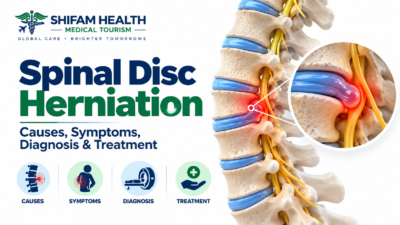
Spinal disc herniation occurs when the soft, gel-like center of an intervertebral disc pushes through a weakened or…