



Proton therapy is rapidly redefining cancer care by offering pinpoint accuracy that targets tumors while sparing healthy tissues making treatments safer and more effective. Once limited to a few advanced nations, this cutting-edge technology is now increasingly accessible in India, positioning the country as a global hub for high-quality yet affordable cancer care. With world-class infrastructure, skilled oncologists, and significantly lower costs compared to Western countries, India is emerging as a promising destination for patients seeking advanced treatment without financial strain.
Globally recognized as a cutting-edge treatment, proton therapy studies show fewer acute side effects, reduced hospitalizations, and cancer control comparable to conventional radiation. While traditionally concentrated in North America, Europe, and Japan, India has rapidly emerged as a proton therapy leader, with expanding centrs, internationally trained specialists, and a cost-effective healthcare system. With government support, private innovation, and growing international demand, India offers world-class proton therapy at a fraction (often 70-90% less) of costs found in the US, UK, or Middle East, without compromising quality or comfort.
This blog will explore why proton therapy is the future of cancer treatment, India’s growing infrastructure, international cost comparisons, and how Shifam Health guides global patients through this advanced option with transparency and care.
What is Proton Therapy? How Does It Work?
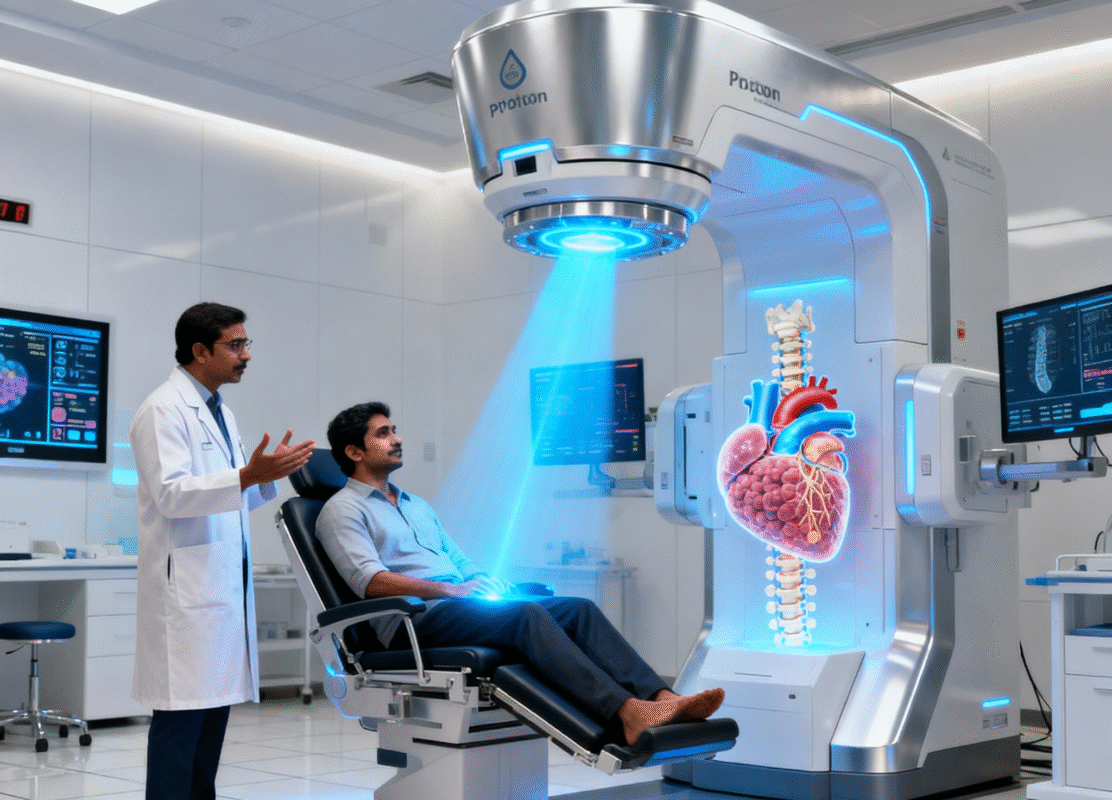
- Proton therapy is a highly precise form of radiation that targets tumors while sparing surrounding healthy tissue.
- Its unique Bragg Peak effect makes it ideal for treating brain, head & neck, pediatric, prostate, spine, and eye cancers.
- It is superior for tumors near sensitive organs and for re-irradiation situations.
- About 15–20% of radiotherapy-eligible patients may benefit from protons.
The Rise of Proton Therapy in India
- India’s first proton therapy center opened in 2019 at Apollo Proton Cancer Centre, Chennai.
- Leading providers: Tata Memorial Centre/ACTREC Mumbai, Apollo Chennai, Fortis Gurgaon, Max Delhi, Manipal Bangalore, BLK-Max New Delhi, Medanta Gurgaon, Kokilaben Mumbai.
- India’s proton therapy market is projected to grow at over 10% CAGR, reaching $45M+ by 2032.
- Indian hospitals follow global protocols (JCI/NABH) and treat both local and international patients.
Why India? International Cost Comparison
| Country | Average Proton Therapy Cost (USD) |
|---|---|
| India | $12,000 – $36,000 |
| Turkey | $20,000 – $40,000 |
| UAE | $27,000 – $37,000 |
| Thailand | $32,000 – $42,000 |
| UK | $120,000 – $180,000 |
| USA | $150,000 – $200,000 |
India delivers world-class results at 70–90% lower cost than the US or UK.
City-wise Proton Therapy Pricing in India
| City | Typical Cost (INR) | Typical Cost (USD) |
|---|---|---|
| Chennai | ₹2,000,000 – 3,000,000 | $26,700 – $40,000 |
| Mumbai | ₹2,500,000 – 3,500,000 | $33,300 – $46,700 |
| Delhi | ₹2,500,000 – 3,500,000 | $33,300 – $46,700 |
| Bangalore | ₹2,500,000 – 3,500,000 | $33,300 – $46,700 |
| Pune | ₹2,500,000 – 3,500,000 | $33,300 – $46,700 |
Who Benefits Most from Proton Therapy?
Proton therapy is an advanced form of radiation treatment that offers significant benefits over conventional radiation, especially for certain groups of patients and cancer types. Understanding who benefits most can help guide patients and referring physicians to the right treatment choices.
Pediatric (Children’s) Cancers
Children’s growing tissues are exceptionally sensitive to radiation damage, which can lead to long-term developmental issues and secondary cancers. Proton therapy’s precision minimizes radiation exposure to healthy, developing organs and tissues. This reduces side effects such as growth retardation, hormonal imbalances, and cognitive decline, making proton therapy the preferred option for pediatric brain tumors, sarcomas, and other childhood cancers.
Tumors in Critical and Sensitive Locations
Proton therapy is especially suited for treating tumors located near vital organs or complex anatomical regions:
- Brain and Head & Neck Tumors: Protects surrounding brain tissue and critical nervous system components.
- Prostate Cancer: Minimizes radiation to the bladder and rectum, reducing urinary and bowel side effects.
- Spine and Spinal Cord Tumors: Spares the spinal cord and adjacent healthy vertebrae.
- Eye Tumors: Allows safe delivery of high-dose radiation with minimal damage to the retina and optic nerve.
Cancers Near Vital Organs: Why Proton Therapy is a Game Changer
Patients with tumors located adjacent to vital organs such as the heart, lungs, optic nerves, spinal cord, and other critical structures face unique challenges in cancer treatment. Conventional radiation therapies often expose these sensitive organs to unintended radiation, which can lead to significant side effects, long-term organ damage, and reduced quality of life. Proton therapy, with its remarkable precision and physical properties, offers a transformative solution for these patients.
Precision Targeting Protecting Vital Organs
One of the most significant advantages of proton therapy lies in its ability to deliver targeted radiation doses confined almost exclusively to the tumor, sparing healthy tissues and nearby vital organs. This is primarily due to the proton beam’s physical characteristic known as the Bragg Peak, which allows the radiation energy to peak precisely at the tumor depth and then sharply drop off, unlike traditional X-ray beams that continue beyond the tumor and affect surrounding healthy structures.
This sub-milimeter precision in targeting dramatically reduces the exposure and damage to organs such as:
- Heart: For cancers near the chest (e.g., breast, lung, esophageal), proton therapy minimizes heart exposure, lowering risks of late cardiac toxicity, which is linked to life-threatening conditions such as cardiomyopathy and coronary artery disease.
- Lungs: Proton therapy reduces radiation pneumonitis and preserves lung function, crucial for patients with thoracic tumors who may already have compromised respiratory status.
- Optic Nerves and Eye: Tumors around the optic apparatus benefit from precise dose delivery, protecting vision and lowering the risk of blindness or neuropathy.
- Spinal Cord: By sparing the spinal cord from excessive radiation, proton therapy helps prevent myelopathy, paralysis, or neurological deficits.
- Other Organs at Risk: In gastrointestinal, head & neck, pelvic, or brain tumors, proton therapy avoids unnecessary radiation to kidneys, bowel, liver, bladder, and other sensitive tissues.
Clinical Benefits: Lower Side Effects and Better Quality of Life
By protecting vital organs, proton therapy reduces both acute and chronic side effects, which translates into:
- Lower incidences of radiation-induced organ inflammation and fibrosis.
- Reduced fatigue, nausea, swallowing difficulties, and skin reactions.
- Preservation of organ function critical to survival and quality of life.
- Decreased risk of secondary cancers due to less radiation scatter.
For example, patients with lung cancer treated with proton therapy experience less esophagitis and pneumonitis. Breast cancer patients, especially with tumors on the left side near the heart, benefit from proton therapy’s cardiac sparing effect, making it safer for those with pre-existing heart conditions.
Ideal for Complex and Recurrent Cases
When tumors are intimately linked with vital organs, surgery may be too risky or impossible, and conventional radiation may carry unacceptable toxicity. Proton therapy frequently stands out as the only viable radiotherapeutic option that can deliver curative doses safely.
Furthermore, in cases of recurrent cancer requiring re-irradiation, proton therapy’s ability to minimize cumulative radiation dosing to healthy tissues offers hope for patients who cannot undergo further traditional radiation without severe side effects.
Key Studies and Evidence
- Studies on head and neck cancers demonstrate proton therapy’s superior organ-at-risk sparing compared to intensity-modulated radiation therapy (IMRT), resulting in less xerostomia (dry mouth) and improved swallowing.
- In pediatric brain tumors, proton therapy reduces exposure to the developing brain and hypothalamic-pituitary axis, preserving cognitive function and hormonal balance.
- Clinical trials in lung and esophageal cancers reveal reduced cardiopulmonary complications and hospitalization rates.
Patient Experience
Patients often report a significantly better treatment experience, with minimal disruption to daily life and faster recovery periods, allowing them to maintain better physical and mental health during their cancer journey.
Re-irradiation in Recurring Cancers
In cancer patients requiring additional radiation treatment due to recurrence, proton therapy offers a safer option. Its ability to focus the energy precisely while limiting cumulative radiation exposure helps avoid severe toxicity, which is a major concern with repeated conventional radiation.
Patients Seeking Fewer Side Effects and Faster Recovery
The reduced collateral damage from proton therapy translates into fewer side effects like nausea, fatigue, dysphagia, and mucositis. This supports quicker recovery times, better quality of life during and after treatment, and often allows patients to maintain daily activities and work more effectively.
Proton Therapy vs. Conventional Radiation
This table compares key aspects of proton therapy against traditional photon (X-ray) radiation therapy to illustrate the clinical and patient-focused differences clearly:
| Factor | Proton Therapy | Conventional Radiation |
|---|---|---|
| Precision | Sub-millimeter, localized energy peak | Broader dose distribution, exit dose beyond tumor |
| Side Effects | Fewer, less severe | More frequent and potentially severe |
| Pediatric Safety | Excellent — spares developing organs | Often problematic — higher risks to growth and development |
| Re-irradiation Safety | Safer option for repeat treatments | Usually higher risk of toxicity |
| Average Cost (India) | Higher but affordable compared globally | Lower cost but less precision |
| Long-term Outcomes | Equivalent or improved tumor control | Standard, effective |
Scientific Evidence
Recent studies, including a JAMA Oncology review comparing proton and photon therapies in over 1,400 adults with various cancers, found:
- Proton therapy patients had a two-thirds reduction in severe side effects requiring hospitalization compared to traditional radiation while achieving similar cancer control and survival rates.
- Proton therapy significantly lowered the decline in patient performance scores during treatment, indicating better tolerance.
- These findings underscore proton therapy’s superior safety profile without compromising efficacy.
While proton therapy is more expensive upfront, the reduction in hospitalizations and side effects can translate to overall better health economics, particularly for complex cases or combined chemoradiotherapy
Top Hospitals for Proton Therapy in India
India houses some of the most advanced proton therapy centers servicing both domestic and international patients:
- Apollo Proton Cancer Centre, Chennai: The country’s first dedicated proton therapy facility, internationally accredited and recognized for multidisciplinary care.
- Tata Memorial Centre/ACTREC, Mumbai: India’s reputed public cancer research institute with a cutting-edge proton therapy program.
- Fortis Memorial Research Institute, Gurgaon
- Max Healthcare, Delhi
- Manipal Hospital, Bangalore
- BLK-Max Super Speciality Hospital, New Delhi
- Medanta Medicity, Gurgaon
- Kokilaben Dhirubhai Ambani Hospital, Mumbai
These centers are equipped with the latest proton accelerator technology, staffed by internationally trained radiation oncologists, medical physicists, and support teams that specialize in complex oncology cases
India’s Proton Therapy Market in Numbers
Tens of thousands of patients from around the world seek proton therapy in India annually, attracted by advanced care paired with high affordability.
The proton therapy market in India is expected to surpass $45 million by 2032, supported by rapid facility growth and increased patient inflow.
How Shifam Health Makes It Easy
- Free Eligibility Check & Second Opinion: Personalized analysis by India’s leading proton therapy experts.
- Fast, Priority Bookings at India’s best state-of-the-art centers.
- Complete Support: Assistance with medical visa, travel, accommodation, and local logistics.
- Transparent All-Inclusive Pricing: No hidden costs or surprises.
- Care Coordination & Long-term Follow-up: Dedicated team providing global patient support before, during, and after treatment.
Conclusion
Proton therapy in India represents the perfect blend of innovation, expertise, and affordability. As more hospitals adopt this advanced technology, patients from around the world can access safer, precise, and cost-effective cancer treatment making India a key player in the future of global oncology care.
Frequently Asked Questions (FAQ)
Q: Who is eligible for proton therapy?
A: Both children and adults with localized, difficult-to-treat, or recurrent cancers can benefit.
Q: Is proton therapy covered by insurance?
A: Some international and Indian insurance plans cover it. Shifam Health provides claims assistance.
Q: What is the typical duration of proton therapy?
A: Treatment courses typically last 2 to 6 weeks based on cancer type and stage.
Q: How to start proton therapy in India?
A: Contact Shifam Health for a free treatment assessment and personalized plan.
| Take the First Step It costs Nothing Share your medical reports with Shifam Health and receive a free, personalized assessment within 24 hours. No commitment. No pressure. Just honest information to help you make the right decision for you and your family. www.shifamhealth.com | contact@shifamhealth.com | WhatsApp: +91 81785 95807 24/7 Support Available | Free Consultation | No Hidden Charges |