



Home > Blog > Digital Health Records and Your Privacy in India: Your Simple Guide to Rights and Safety
Digital Health Records and Your Privacy in India: Your Simple Guide to Rights and Safety
Filters & Insights
Written By :
Medically Reviewed By :

Shifam Health Medical Team
Shifam Health - Medical Reviews Department
10+ Years Of Experience
Understanding digital health records in India? Learn about ABDM, your patient privacy rights, and how to safeguard your medical data.
📅
Last updated: May 4, 2026
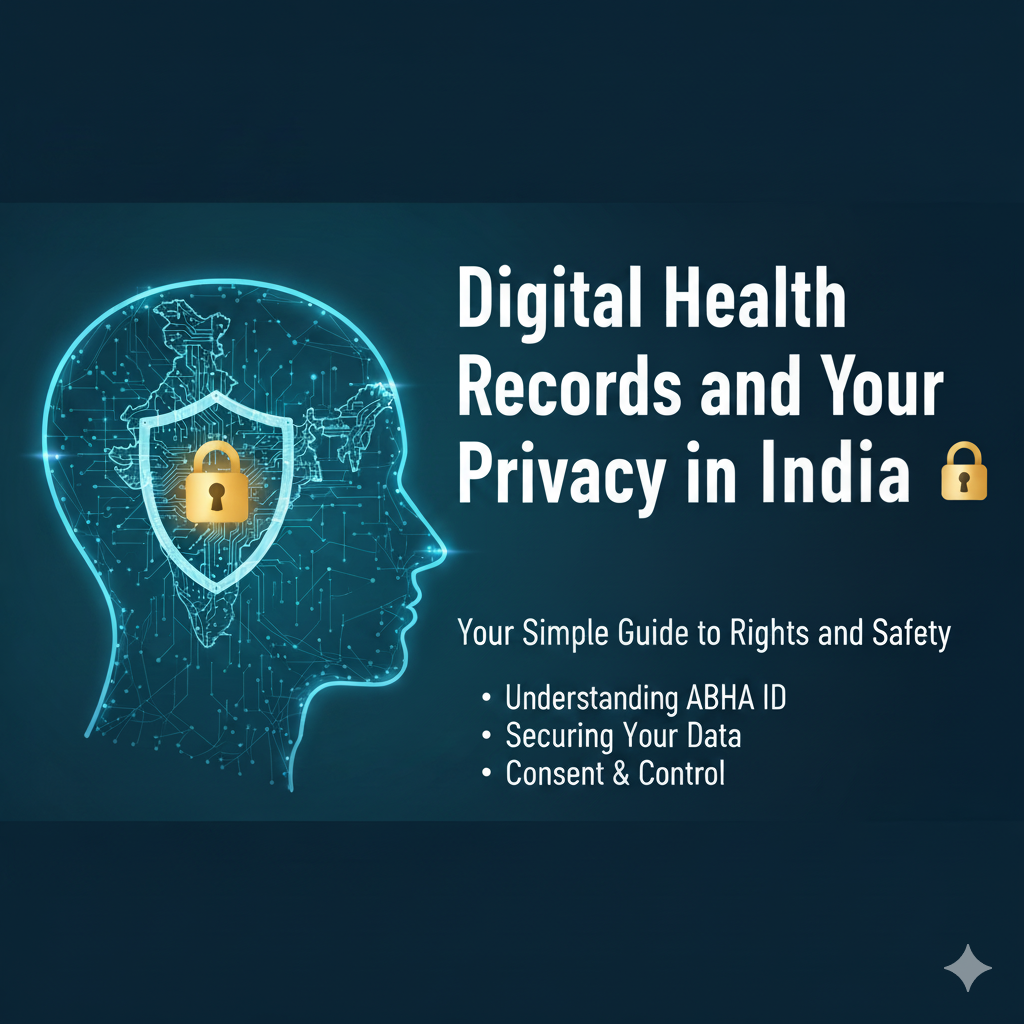
In an era where healthcare is becoming increasingly digital, your medical history is no longer confined to paper files locked in cabinets it lives in secure databases, accessible at the click of a button. While digital health records in India promise convenience, faster diagnosis, and better continuity of care, they also raise important questions about privacy, consent, and data security. Understanding your rights is no longer optional but it is essential. This guide unpacks how your health data is protected, who can access it, and how you can take control of your personal information with confidence.
Table of Contents
ToggleUnderstanding India’s Digital Health Ecosystem: The Ayushman Bharat Digital Mission (ABDM)
To understand digital health records in India, we must first look at the framework designed to make them work together the Ayushman Bharat Digital Mission (ABDM), which people originally knew as the National Digital Health Mission (NDHM).
So, what exactly is ABDM?
The government launched ABDM nationally in September 2021. Its primary goal is to create an integrated digital health infrastructure for India. Importantly, the mission does not aim to create a single central database of everyone’s health records. Instead, it wants to establish a system where different healthcare providers (like hospitals, labs, clinics) can securely share information only with your consent.
The key building blocks of ABDM are:
- Ayushman Bharat Health Account (ABHA Number): This is a unique 14-digit number that identifies you in the healthcare ecosystem. It lets you link all your health records to a single identifier. Think of it as a key to your digital health locker.
- ABHA Address: This is a simple username you create for yourself (like
name@abdm). You can use this address to access and share your health records easily without telling everyone your ABHA number. - Health Information Providers (HIPs): These are entities like hospitals, clinics, and diagnostic labs that create your health data. For example, they generate doctor’s prescriptions, lab reports, and discharge summaries.
- Health Information Users (HIUs): These are entities (like another hospital or a doctor) that, with your clear consent, can access your health records from the HIPs.
Crucially, the system works on the principle of “consent-based data sharing.” This means your data does not move around automatically. A healthcare provider can only access it when you, the patient, explicitly grant permission for a specific purpose and a limited time.
Also Read: Best Countries for Disc Replacement Surgery for International Patients (2026 Global Guide)
Your Health Data, Your Rights: The Legal and Ethical Framework
In India, the Health Data Management Policy (HDMP) under ABDM primarily guides the protection of digital health data. This policy builds on the principles of the Digital Personal Data Protection Act, 2023 (DPDPA). Knowing your rights under these frameworks is the first step to protecting your privacy.
1. The Right to Informed Consent
This right is the cornerstone of data privacy. Before any entity can access your digital health records, they must ask for your consent. Furthermore, this consent must be:
- Clear and Specific: You should know exactly what data they are requesting, why they need it, and for how long.
- In a Language You Understand: The consent request should appear in clear, simple language, and often in your local tongue.
- Easy to Revoke: You have the right to take back your consent at any time. After you revoke it, the organization must delete your data.
2. The Right to Access and Correction
You have the full right to access your own digital health records. You can view your linked records through various Personal Health Record (PHR) applications. Additionally, if you find any mistakes, you have the right to ask the healthcare provider who created that data to correct it.
3. The Right to Data Portability
The ABDM framework specifically gives you control over your data. For instance, you can choose to share your records from one hospital with a specialist in another city seamlessly. This ensures your care continues without any problems.
4. The Right to Privacy and Confidentiality
Your healthcare provider is ethically and legally bound to keep your health information confidential. Similarly, the HDMP requires strong security safeguards to prevent anyone from accessing, changing, or sharing your data without permission.
5. The Right to Grievance Redressal
If you believe someone has violated your privacy, you have the right to file a complaint. The ABDM ecosystem has a clear system for grievance redressal. Typically, you should first approach the healthcare provider. If they do not resolve the issue, you can escalate it to the relevant authorities under the DPDPA.
What to Ask Your Healthcare Provider: A Patient’s Checklist
The next time you visit a hospital or clinic that is part of the digital ecosystem, do not hesitate to ask questions. Being proactive is the key to safeguarding your privacy.
- On Registration: “Are you registered with the Ayushman Bharat Digital Mission (ABDM)?”
- On ABHA: “Is creating an ABHA number mandatory for treatment here?” (Remember: It is voluntary. No one can deny you essential treatment for not having an ABHA number).
- On Data Usage: “How will you store and protect my digital health records?”
- On Consent: “Who in this hospital can access my records? Will you use my data for other purposes, like research or marketing? If so, how will you ask for my consent?”
- On Sharing: “If you need to share my records with another doctor or my insurance company, how will you ask for my permission?”
- On Breach Protocol: “What is your plan if a data security breach happens?”
A reputable and trustworthy healthcare provider will always be transparent about their data practices.
How to Safeguard Your Digital Health Data: Practical Steps for Every Indian
While the system has strong security design, you must also take personal responsibility. Here are some simple, effective steps you can take to become a privacy-aware patient:
1. Create and Use Your ABHA Number Wisely
Getting an ABHA number is your first step into the digital health world. You can create it for free through the government’s ABHA app, a participating hospital’s PHR app, or at an ABDM-enrolled health facility. However, remember that it is a powerful identifier, so you must keep it safe.
2. Be Extremely Cautious with Consent
When you receive a consent request on your phone (via SMS or an app), read it carefully. Always check:
- Who is asking for the data? (Is it the doctor you are currently seeing?)
- What data are they asking for? (Is it only the relevant records, or is it too much?)
- For how long is the access granted? It is best to grant access for the shortest period necessary (e.g., for a single consultation).
3. Use a Strong ABHA Address and Password
Choose an ABHA Address that is not easy for others to guess. Moreover, if you use a PHR app, protect it with a strong, unique password. You should also enable two-factor authentication if the app offers it.
4. Regularly Review Your Consent Logs
Many PHR apps allow you to see a history of who accessed your data and when. Therefore, make it a habit to review this log every few months to check for any activity that you do not recognize.
5. Be Wary of Phishing Attempts
Never share your ABHA number, OTPs, or passwords with anyone who calls you or sends you an email. Keep in mind, legitimate healthcare providers will never ask for this sensitive information through unsecured channels.
6. Understand the Limits of Anonymized Data
While your explicit consent is needed for sharing identified data, healthcare authorities may use anonymized data (data that no one can trace back to you) for public health research and policy making. This practice is vital for improving the nation’s health and is generally acceptable under the law.
Also Read: Double Valve Replacement Surgery in India (2026): Cost, Types, Risks & Recovery
The Road Ahead: Balancing Innovation and Privacy
The digital transformation of India’s healthcare is an ongoing journey. Naturally, challenges remain. We need to ensure digital literacy for all, build strong cybersecurity infrastructure across every health centre, and create widespread awareness about data privacy rights.
Nevertheless, the foundation that ABDM has laid is strong and privacy-centric. The mission recognizes a fundamental truth: for digital health to succeed, it must first earn the trust of every Indian citizen.
Conclusion
Digital health records are transforming India’s healthcare landscape, but true progress lies in balancing innovation with trust. By staying informed and vigilant, you can ensure that your data remains both useful and secure.
| Take the First Step It costs Nothing Share your medical reports with Shifam Health and receive a free, personalized assessment within 24 hours. No commitment. No pressure. Just honest information to help you make the right decision for you and your family. www.shifamhealth.com | contact@shifamhealth.com | WhatsApp: +91 81785 95807 24/7 Support Available | Free Consultation | No Hidden Charges |




Popular Posts From Last Week
- October 2, 2026
- shifamhealth
Spinal deformity is a broad category, not one disease — it describes abnormalities of spinal curvature, alignment, rotation,…
- October 1, 2026
- shifamhealth
Spinal disc herniation occurs when the soft, gel-like center of an intervertebral disc pushes through a weakened or…