



When your heart isn’t beating the way it should, every decision matters. For hundreds of thousands of patients across Bangladesh, Africa, the Middle East, and Central Asia, that decision increasingly leads to one destination.
India has quietly become one of the world’s most trusted destinations for cardiac care, including pacemaker implantation. And one of the most common questions patients and their families ask when researching this journey is a straightforward one: How much does a pacemaker cost in India?
The pacemaker implant cost in India typically ranges from USD 3,000 to USD 9,000, depending on the type of device, the hospital, and the patient’s specific cardiac condition. That’s a fraction of what the same procedure costs in the United States, United Kingdom, or the UAE where total expenses can easily reach USD 25,000 to USD 60,000.
But the story is about more than cost savings. India’s top cardiac hospitals combine advanced technology, world-trained cardiologists, JCI and NABH accreditation, and internationally oriented patient support that makes the journey from inquiry to recovery as smooth as possible.
This guide walks you through everything from pacemaker types and costs, to hospitals, doctors, recovery, and how to plan your medical travel to India.
What is a Pacemaker?
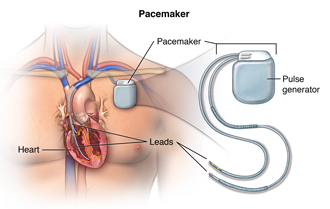
A pacemaker is a small battery-powered electronic device implanted under the skin near the chest to help regulate abnormal heart rhythms. It monitors the heart’s electrical activity and sends gentle electrical impulses when the heartbeat becomes too slow or irregular. The device consists of a pulse generator and thin wires called leads that connect to the heart. Modern pacemakers are compact, durable, and many are MRI-compatible, allowing patients to safely undergo MRI scans after implantation.
Why is a Pacemaker Needed?
Doctors recommend pacemakers when the heart beats too slowly, irregularly, or cannot maintain proper blood flow with medication alone. The device helps maintain a stable heartbeat and supports normal circulation.
Common conditions requiring a pacemaker include bradycardia, heart block, sick sinus syndrome, atrial fibrillation with slow heart rate, fainting caused by arrhythmia, and certain cases of heart failure requiring biventricular pacing.
Symptoms That May Require Pacemaker Implantation
If you or a family member experiences any of the following, a cardiologist evaluation is important:
- Frequent fainting or near-fainting spells
- Extreme fatigue or weakness with no clear cause
- Shortness of breath even at rest or with minimal activity
- Chest discomfort or palpitations
- Dizziness or lightheadedness
- Confusion in older patients (often caused by reduced blood flow to the brain)
These symptoms do not automatically mean a pacemaker is needed — but they are signals that warrant a thorough cardiac evaluation, including Holter monitoring, echocardiogram, and ECG.
Types of Pacemakers Available in India
India’s leading cardiac hospitals offer the full range of modern pacemaker technologies. Understanding the differences helps patients and families make more informed decisions.
| Pacemaker Type | Description | Who it is For |
|---|---|---|
| Single Chamber Pacemaker | One lead placed in the right ventricle or right atrium | Patients with simple bradycardia or specific arrhythmias |
| Dual Chamber Pacemaker | Two leads — one in the right atrium and one in the right ventricle | Patients requiring coordinated pacing between both chambers |
| Biventricular Pacemaker (CRT) | Three leads coordinating both ventricles for improved pumping | Patients with heart failure and ventricular dyssynchrony |
| Rate-Responsive Pacemaker | Automatically adjusts pacing rate based on activity level | Active patients and those who walk or exercise regularly |
| MRI-Compatible (MRI-Conditional) Pacemaker | Specially designed to remain safe during MRI scans | Patients likely to require MRI imaging in the future |
| Leadless Pacemaker | Miniaturized device implanted directly into the heart without leads | Selected patients where conventional leads are unsuitable |
Your cardiologist will recommend the most suitable type based on your heart rhythm abnormality, overall cardiac function, age, and activity level.
Complete Cost Breakdown Table
| Cost Component | Estimated Range (USD) |
|---|---|
| Pacemaker Device Cost | USD 1,500 – USD 6,000 |
| Surgeon’s Fee | USD 500 – USD 1,200 |
| Hospital Admission (1–3 Nights) | USD 300 – USD 800 |
| Anaesthesia Charges | USD 200 – USD 400 |
| ICU / Monitoring Charges | USD 300 – USD 600 |
| Pre-procedure Diagnostics (ECG, Echo, Holter) | USD 150 – USD 400 |
| Post-procedure Medications | USD 100 – USD 250 |
| Total Estimated Cost | USD 3,000 – USD 9,000 |
Note: Costs vary depending on the type of pacemaker selected, the hospital tier (private/corporate), and city. Delhi, Mumbai, and Chennai tend to have slightly higher costs than Tier-2 cities, though quality at top hospitals is comparable.
Single Chamber vs Dual Chamber vs Biventricular Pacemaker Cost
| Pacemaker Type | Estimated Total Cost in India (USD) | Hospital Stay | Battery Life |
|---|---|---|---|
| Single Chamber Pacemaker | USD 3,000 – USD 5,000 | 1–2 nights | 7–12 years |
| Dual Chamber Pacemaker | USD 4,500 – USD 7,000 | 2–3 nights | 6–10 years |
| Biventricular Pacemaker (CRT-P) | USD 6,000 – USD 12,000 | 3–5 nights | 5–8 years |
| MRI-Compatible Pacemaker | USD 5,000 – USD 9,000 | 2–3 nights | 8–12 years |
| Leadless Pacemaker | USD 7,000 – USD 14,000 | 1–2 nights | 10–12 years |
Dual chamber pacemakers are among the most commonly recommended for patients with complete heart block and sick sinus syndrome, as they offer more physiologically natural pacing.
Also read:
Congestive Heart Failure Treatment in India: World-Class Care at Accessible Costs
MRI-Compatible Pacemaker Cost in India
Standard pacemakers historically prevented patients from having MRI scans — a significant limitation given MRI is often needed for cancer detection, neurological assessment, and musculoskeletal conditions.
MRI-compatible (also called MRI-conditional) pacemakers resolve this problem. In India, these devices are widely available at top cardiac centers.
The cost of an MRI-compatible pacemaker in India ranges from USD 5,000 to USD 9,000, including the device and procedure. The additional cost over a standard pacemaker is typically USD 800 to USD 2,000 depending on the brand and model.
For patients who are younger, or who have existing conditions that might require future MRI scans, cardiologists in India frequently recommend this option. Brands such as Medtronic, Abbott (St. Jude Medical), Boston Scientific, and Biotronik are commonly used in Indian cardiac centers.
What Factors Affect the Cost of Pacemaker Surgery in India?
Patients often find that quoted costs vary between hospitals. Here is why:
1. Type of Pacemaker Device The device itself is the single largest cost variable. A basic single chamber pacemaker costs significantly less than a biventricular CRT device or a leadless pacemaker.
2. Device Brand and Technology International brands (Medtronic, Abbott, Boston Scientific) cost more than domestically manufactured alternatives, but offer advanced features including remote monitoring and longer battery life.
3. Hospital Category Premium JCI-accredited hospitals in metro cities charge more than regional hospitals. However, for complex cases, the expertise and infrastructure at top centers often justifies the difference.
4. City Delhi, Mumbai, and Chennai tend to have higher hospital charges than cities like Ahmedabad, Hyderabad, or Coimbatore.
5. Surgeon’s Experience Senior electrophysiologists with extensive international exposure may charge higher fees, but this often reflects significantly higher procedural precision.
6. Pre-Existing Conditions Patients with diabetes, renal impairment, or other comorbidities may require additional investigations, longer monitoring, or modified anaesthesia — adding to overall cost.
7. Room Category International patients often choose private rooms with attendant facilities, which add to the accommodation cost.
Pacemaker Cost Comparison: India vs USA, UK, UAE & Other Countries
One of the most compelling reasons international patients choose India is the dramatic cost difference compared to other countries.
| Country | Estimated Total Pacemaker Cost (USD) |
|---|---|
| USA | USD 25,000 – USD 60,000 |
| UK (Private) | USD 18,000 – USD 35,000 |
| UAE | USD 15,000 – USD 28,000 |
| Singapore | USD 12,000 – USD 22,000 |
| Thailand | USD 8,000 – USD 14,000 |
| Turkey | USD 6,000 – USD 11,000 |
| India | USD 3,000 – USD 9,000 |
India consistently offers pacemaker implantation at 60–80% lower cost than Western countries and 30–50% lower than neighboring medical tourism destinations — without compromising on technology or clinical outcomes.
The cost advantage comes from lower operational costs, favorable currency exchange rates, competitive surgeon fees, and a high volume of cardiac procedures performed annually in Indian hospitals — which also translates to greater procedural expertise.
Best Hospitals for Pacemaker Surgery in India
India’s top cardiac hospitals combine advanced electrophysiology labs, experienced surgical teams, and comprehensive international patient support.
| Hospital | Location | Accreditation | Notable Strength |
|---|---|---|---|
| Fortis Escorts Heart Institute | New Delhi | JCI, NABH | Dedicated cardiac center with high-volume pacemaker implants |
| Medanta – The Medicity | Gurugram, Delhi NCR | JCI, NABH | Comprehensive cardiac care with advanced electrophysiology lab |
| Apollo Hospitals | Delhi, Chennai, Mumbai | JCI, NABH | Large international patient department with full cardiac services |
| Max Super Speciality Hospital (Saket) | New Delhi | JCI, NABH | Strong electrophysiology and pacing team |
| Artemis Hospital | Gurugram | JCI, NABH | Advanced interventional cardiology and cardiac rhythm management |
| Asian Heart Institute | Mumbai | JCI, NABH | Specialized cardiac-only hospital with advanced EP services |
| Gleneagles Global Health City | Chennai | JCI, NABH | Strong cardiac and multi-specialty support services |
All hospitals listed above have dedicated international patient departments, offer pacemaker implantation using advanced devices, and have significant experience treating patients from Africa, the Middle East, and Bangladesh.
Best Cardiologists for Pacemaker Implantation in India
Pacemaker implantation is performed by interventional cardiologists or cardiac electrophysiologists, specialists in heart rhythm disorders. India has a strong pool of such specialists, many of whom have trained at leading institutions in the USA, UK, and Europe.
When selecting a cardiologist for pacemaker surgery, patients should look for:
- Board certification in cardiology and electrophysiology
- Experience with the specific pacemaker type recommended
- Volume of pacemaker procedures performed annually
- Availability for post-procedure follow-up, including remote consultation
- International patient experience
Notable senior cardiologists at top Indian centers with expertise in pacemaker implantation include Dr. T.S. Kler and Dr. Ashok Seth at Fortis Escorts Heart Institute, and senior electrophysiologists at Medanta, Apollo, and Asian Heart Institute. Shifam Health can help match you to the right specialist based on your diagnosis and requirements.
Why International Patients Trust India for Cardiac Care
India’s position as a global cardiac care destination is built on several foundations:
World-Class Technology India’s leading cardiac hospitals use the same pacemaker devices and monitoring technology as hospitals in the USA and Europe. Medtronic, Abbott, Boston Scientific, and Biotronik devices are routinely available.
Highly Experienced Cardiologists Many of India’s senior cardiologists completed subspecialty training at prestigious institutions in the United States, United Kingdom, and Europe before returning to India. Their clinical competence is internationally comparable.
JCI and NABH Accreditation Joint Commission International (JCI) accreditation — the global gold standard for hospital quality is held by numerous Indian hospitals. NABH accreditation sets rigorous domestic standards. Both signal credible quality control.
Dramatically Lower Cost At 60–80% lower cost than Western countries, patients can access equivalent clinical care while saving significantly funds that often make the difference between receiving treatment or delaying it.
English-Speaking Environment India’s medical community communicates primarily in English, removing a significant barrier that patients face in countries like Turkey, Korea, or Thailand.
No Waiting Lists Unlike NHS in the UK or public systems in parts of Africa, India’s private cardiac hospitals offer rapid access procedures can typically be scheduled within days of arrival.
How Shifam Health Supports International Cardiac Patients
Shifam Health provides complete end-to-end support for international patients traveling to India for pacemaker surgery and other cardiac treatments. Our team helps simplify every stage of the medical journey so patients and families can focus entirely on treatment and recovery.
Our Services Include:
- Hospital selection based on your cardiac condition and budget
- Medical report evaluation and specialist second opinions
- Hospital invitation letters for Indian Medical Visa (M-Visa) applications
- Guidance with visa documentation and expedited processing support
- Teleconsultation with experienced cardiologists before travel
- Flight planning and fitness-to-fly coordination for cardiac patients
- Airport pickup and local transportation assistance
- Hotel and guest house arrangements near the hospital
- Language interpreter support including Arabic, Bangla, French, and more
- Assistance with halal meals and patient-specific needs
- Coordination of appointments, surgery scheduling, and hospital admission
- Post-discharge teleconsultation and long-term follow-up support
Shifam Health works closely with leading Indian cardiac hospitals to ensure international patients receive smooth, safe, and well-coordinated treatment experiences from arrival to recovery.
Conclusion
A pacemaker doesn’t just regulate your heartbeat, it gives you your life back. If you or a loved one has been diagnosed with a cardiac arrhythmia requiring pacemaker implantation, India offers a genuinely compelling combination of clinical excellence, advanced technology, and cost transparency that is difficult to match anywhere else in the world.
At USD 3,000 to USD 9,000 for the complete procedure, international patients can access the same pacemaker devices used in the USA and Europe, implanted by world-trained cardiologists, in accredited hospitals and return home with their heart beating properly, and their savings largely intact.
The journey may feel daunting from a distance. But thousands of patients from Bangladesh, Nigeria, Kenya, Yemen, the UAE, and beyond have walked this path successfully. The infrastructure, the support, and the expertise are firmly in place.
FAQs About Pacemaker Surgery in India
How much does a pacemaker cost in India?
Pacemaker surgery in India usually costs between USD 3,000–9,000 depending on the device type and hospital.
What does the package include?
Most packages include the pacemaker device, surgery, hospital stay, diagnostics, ICU monitoring, and medications.
Is pacemaker surgery safe in India?
Yes. Leading cardiac hospitals report success rates above 98% with international-standard safety protocols.
Which hospitals are best for pacemaker surgery?
Top hospitals include Fortis Escorts Heart Institute, Medanta, Apollo Hospitals, and Max Super Speciality Hospital.
How long does a pacemaker last?
Most pacemakers last 7–12 years before the battery generator needs replacement.
Can international patients get treatment in India?
Yes. Indian cardiac hospitals regularly treat international patients and provide visa and coordinator support.
Can I fly after pacemaker surgery?
Most patients can safely fly home within 3–5 days if recovery is stable.
How do I choose the right hospital?
Shifam Health helps international patients choose trusted JCI and NABH-accredited hospitals with experienced cardiac electrophysiologists and dedicated international patient support services.
- Medical Tourism in India – Complete Guide
- Medical Visa for India – Step-by-Step Guide
- Heart Valve Treatment in India
- Best Pediatric Hospitals in India
- Heart Transplant Cost in India
- Cost of Angioplasty Treatment in India
- Cancer Treatment Cost in India
- Best Cardiologists in India
- Neurosurgery Cost in India
- Top 10 Hospitals in Delhi