



Imagine waking up tomorrow and seeing the world clearly no glasses on the bedside table, no contact lens case in your pocket, no morning blur. For millions of people living with myopia or astigmatism, this feels like a distant dream. But it doesn’t have to be.
SMILE eye surgery one of the most advanced, minimally invasive laser vision correction procedures available today is making that dream a reality for patients across the world. And India has quietly become one of the most trusted destinations to get it done.
If you’ve been researching SMILE eye surgery cost in India, you’ve come to the right place. India offers world-class ophthalmic technology at a fraction of what it costs in the UK, USA, or the Middle East. Hospitals in Delhi, Mumbai, Chennai, and Hyderabad are equipped with the same VisuMax laser systems used at top clinics in Europe with highly experienced surgeons who have performed thousands of procedures.
This complete guide covers everything what SMILE surgery is, who qualifies, how the procedure works, a full cost breakdown, top hospitals, recovery expectations, and practical guidance for international patients.
What Is SMILE Eye Surgery?

SMILE (Small Incision Lenticule Extraction) is an advanced, minimally invasive laser vision correction procedure used to treat myopia (nearsightedness) and astigmatism. Unlike LASIK, SMILE does not require a large corneal flap. Instead, surgeons remove a small lens-shaped tissue (lenticule) through a tiny 2–4 mm incision, helping reshape the cornea and improve vision.
How Does SMILE Work?
A femtosecond laser creates and removes a small lenticule inside the cornea through a tiny incision. The procedure takes about 10–15 minutes per eye, requires no stitches, and offers rapid visual recovery.
Benefits of SMILE
- Less invasive than LASIK
- Smaller incision and faster healing
- Lower risk of dry eyes
- No corneal flap complications
- Ideal for athletes and active individuals
Who Is a Good Candidate?
SMILE may be suitable for patients who:
- Are 18 years or older
- Have a stable vision prescription
- Have myopia and/or astigmatism
- Have adequate corneal thickness
- Do not have active eye disease
- Prefer a flap-free laser vision correction procedure
A detailed eye evaluation is required to determine eligibility.
Conditions Treated with SMILE Surgery
| Condition | SMILE Eligible |
|---|---|
| Myopia (Nearsightedness) | Yes — Up to -10.00 D |
| Astigmatism | Yes — Up to -5.00 D |
| Myopic Astigmatism | Yes |
| Hyperopia (Farsightedness) | Not Approved — LASIK or PRK May Be Required |
| Presbyopia | Not Suitable |
SMILE vs LASIK vs PRK — Detailed Comparison

This is one of the most common questions patients ask before committing to vision correction surgery.
| Feature | SMILE | LASIK | PRK |
|---|---|---|---|
| Flap Required | No | Yes | No |
| Incision Size | 2–4 mm | 20 mm | No Incision |
| Dry Eye Risk | Very Low | Moderate | Low |
| Thin Cornea Suitability | Better | Limited | Moderate |
| Recovery Speed | Fast (24–48 hrs) | Very Fast | Slower (1–2 Weeks) |
| Discomfort | Minimal | Minimal | Moderate |
| Night Vision Side Effects | Low | Moderate | Moderate |
| Suitable for Contact Sports | Yes (No Flap) | Limited | Yes |
| FDA / CE Approved | Yes | Yes | Yes |
| Cost in India | Higher | Moderate | Lowest |
| Technology | Femtosecond Laser Only | Femtosecond + Excimer Laser | Excimer Laser Only |
Clinical verdict: SMILE offers the best biomechanical corneal stability and the lowest dry-eye risk. For patients with mild to moderate myopia and active lifestyles, it is often the preferred choice.
Benefits of SMILE Eye Surgery
- Flapless procedure — eliminates risks associated with flap dislodgement or trauma
- Reduced dry eye — fewer corneal nerves are disrupted
- Single laser — simplifies the procedure and reduces energy exposure
- Faster stabilization — corneal integrity is better preserved
- Suitable for dry eyes — often recommended when LASIK is not
- High precision — femtosecond accuracy to within microns
- Good night vision outcomes — high-order aberration management
- Long-lasting results — vision correction is permanent in the majority of cases
Risks and Limitations of SMILE Surgery
Like any surgical procedure, SMILE carries potential risks. These are generally rare but patients should be informed:
- Undercorrection or overcorrection — small residual prescription may remain
- Temporary dry eyes — usually resolves within weeks to months
- Halos or starbursts — typically temporary, especially at night
- Infection — extremely rare with sterile surgical conditions
- Epithelial ingrowth — rare complication at incision site
- Enhancement needed — a small percentage (~1–3%) may need retreatment
SMILE is not suitable for hyperopia (long-sightedness) or presbyopia (reading difficulty after 40).
Step-by-Step SMILE Eye Surgery Procedure
Day Before:
- Stop wearing contact lenses (soft lenses: 1 week; rigid lenses: 2–3 weeks)
- Avoid eye makeup and perfumes
- Arrange transport — you cannot drive after surgery
On Surgery Day:
- Numbing eye drops are applied — no injections
- The eye is gently held open with a speculum
- The VisuMax femtosecond laser docks onto the eye (low suction)
- Laser creates the lenticule and micro-incision (approximately 25–30 seconds per eye)
- Surgeon removes the lenticule through the incision
- Eye drops applied; eye shield placed
- Patient rests for 30 minutes and is discharged
Total time in clinic: 2–3 hours (including preparation)
Laser time per eye: 25–30 seconds
Surgeon operative time per eye: approximately 10–15 minutes
Recovery After SMILE Eye Surgery
Most patients are pleasantly surprised by how smooth the recovery is.
SMILE Eye Surgery Recovery Timeline
| Timeframe | Expected Experience |
|---|---|
| First 4–6 Hours | Mild watering, slight blurring of vision, and temporary sensitivity to light are common. |
| 24 Hours | Vision becomes noticeably clearer, and most patients can see well for daily activities. |
| 48–72 Hours | Most patients can comfortably return to office work, reading, and routine screen use. |
| 1 Week | Vision is generally stable, and most normal activities can be resumed. |
| 2–4 Weeks | Night vision continues to improve, while halos and glare gradually fade. |
| 3 Months | Final visual outcome is typically achieved and confirmed during follow-up evaluation. |
Post-Operative Instructions
- Use prescribed antibiotic and anti-inflammatory eye drops
- Avoid rubbing eyes for at least 2 weeks
- Avoid swimming and contact sports for 4 weeks
- Wear sunglasses outdoors for 2–4 weeks
- Avoid dusty or smoky environments
- Attend all follow-up visits
SMILE Eye Surgery Cost in India
This is the section most patients come looking for — and we’ll be thorough.
SMILE eye surgery cost in India ranges from approximately ₹60,000 to ₹1,20,000 per eye, depending on the city, hospital, technology used, and surgeon’s experience.
For international patients, the all-inclusive cost for both eyes typically falls between USD 1,000 and USD 2,500 — still significantly lower than most Western countries.
Cost Breakdown — SMILE Eye Surgery in India
| Cost Component | Price Range (INR) |
|---|---|
| Pre-operative Eye Evaluation | ₹2,000 – ₹5,000 |
| SMILE Surgery (Per Eye) | ₹60,000 – ₹1,20,000 |
| SMILE Surgery (Both Eyes) | ₹1,10,000 – ₹2,20,000 |
| Post-operative Medications | ₹1,500 – ₹3,000 |
| Follow-up Consultations | ₹500 – ₹2,000 per Visit |
| Estimated Total (Both Eyes) | ₹1,15,000 – ₹2,30,000 |
SMILE Surgery Cost by Indian City
| City | Cost Per Eye (INR) | Cost Both Eyes (INR) |
|---|---|---|
| Delhi | ₹70,000 – ₹1,20,000 | ₹1,30,000 – ₹2,20,000 |
| Mumbai | ₹75,000 – ₹1,20,000 | ₹1,40,000 – ₹2,20,000 |
| Chennai | ₹60,000 – ₹1,00,000 | ₹1,10,000 – ₹1,90,000 |
| Hyderabad | ₹65,000 – ₹1,05,000 | ₹1,20,000 – ₹2,00,000 |
| Bengaluru | ₹65,000 – ₹1,10,000 | ₹1,20,000 – ₹2,10,000 |
| Kolkata | ₹60,000 – ₹95,000 | ₹1,10,000 – ₹1,80,000 |
SMILE Surgery Cost by Hospital Type
| Hospital Type | Cost Per Eye (INR) | Notes |
|---|---|---|
| Premium Private Chain | ₹90,000 – ₹1,20,000 | Typically offers ZEISS VisuMax technology, comprehensive diagnostics, advanced patient care, and international patient services. |
| Mid-Tier Private Hospital | ₹65,000 – ₹90,000 | Good-quality equipment, experienced refractive surgeons, and competitive pricing. |
| Government Eye Hospital | ₹25,000 – ₹45,000 | Lowest cost option but may involve longer waiting periods and limited support for international patients. |
| Standalone Eye Clinic | ₹60,000 – ₹80,000 | Cost-effective option; however, technology, infrastructure, and surgeon experience can vary significantly between clinics. |
International Cost Comparison — SMILE Eye Surgery
| Country | Average Cost (Both Eyes, USD) | India Savings |
|---|---|---|
| USA | USD 4,000 – USD 6,500 | Save 60–75% |
| UK | USD 3,500 – USD 5,500 | Save 55–70% |
| UAE | USD 3,000 – USD 5,000 | Save 50–65% |
| Turkey | USD 1,500 – USD 2,500 | Comparable |
| Thailand | USD 1,800 – USD 3,000 | Save 20–40% |
| India | USD 1,000 – USD 2,500 | — |
India offers comparable or superior clinical outcomes at the lowest cost in the category — particularly when the quality of technology, surgeon training, and post-operative support is factored in.
What Is Included in a SMILE Surgery Package?
Premium hospitals in India offer comprehensive packages that typically include:
✔ Pre-operative eye mapping and corneal topography
✔ Wavefront and pachymetry analysis
✔ Surgeon consultation
✔ SMILE surgery (both eyes)
✔ Theatre charges
✔ Anesthetic eye drops and sedation if needed
✔ Post-operative eye drops (1–2 weeks)
✔ Follow-up consultations at 1 day, 1 week, 1 month, 3 months
✔ Emergency contact number
✔ Airport transfer (some hospitals for international patients)
Success Rate of SMILE Eye Surgery in India
SMILE eye surgery has a strong evidence base built over 15+ years of global clinical data.
Key outcomes:
- Over 95–98% of patients achieve 20/20 vision or better
- More than 90% of patients no longer need glasses or contact lenses for daily activities
- Patient satisfaction rates exceed 95% in most published studies
- Retreatment rate is approximately 1–3%
Best Hospitals for SMILE Eye Surgery in India
1. Apollo Hospitals
- JCI-accredited multi-specialty hospital network
- Advanced ZEISS SMILE technology
- Experienced refractive surgeons
- Dedicated international patient services
2. Medanta
- Premium eye care and refractive surgery services
- Modern diagnostic and laser platforms
- Strong international patient support
- Comprehensive pre- and post-operative care
3. Centre for Sight
- One of India’s largest eye care networks
- Specializes in SMILE, LASIK, and Contoura Vision
- Experienced refractive surgery team
- Multiple locations across India
4. L V Prasad Eye Institute
- Internationally recognized eye care institution
- Advanced corneal and refractive surgery expertise
- Strong research and clinical outcomes
- Comprehensive patient care
5. Dr. Agarwals Eye Hospital
- Large network of specialized eye hospitals
- High-volume SMILE and laser vision correction procedures
- Advanced technology and experienced surgeons
- International patient assistance
6. Narayana Nethralaya
- Advanced refractive surgery center
- State-of-the-art ZEISS laser platforms
- Strong reputation in ophthalmology
- International patient support services
7. Max Super Speciality Hospital
- Well-established medical tourism services
- Modern eye care department
- Experienced refractive surgeons
- Advanced diagnostic and surgical infrastructure
Top Ophthalmologists for SMILE Surgery in India
India’s refractive surgery specialists are often fellowship-trained internationally and have performed thousands of SMILE procedures. When choosing a surgeon, look for:
- Fellowship training in corneal and refractive surgery
- Number of SMILE procedures performed (ideally 500+)
- Access to ZEISS VisuMax technology
- International patient experience
- Published research or clinical presentations
Ask your hospital coordinator to share your surgeon’s profile and experience before confirming your treatment plan.
Why International Patients Choose India for SMILE Eye Surgery
India has become a preferred destination for laser vision correction among medical tourists for several compelling reasons.
Cost Advantage
SMILE surgery in India costs 60–75% less than in the USA or UK — without compromising on technology or surgical skill. The VisuMax ZEISS laser used in India is the same machine used in London or New York.
Technology Parity
India’s leading eye hospitals use the latest generation VisuMax 800 and VisuMax 500 femtosecond laser systems — the global gold standard for SMILE.
Surgeon Experience
Indian ophthalmologists often have extensive training in the USA, UK, Germany, or Australia. Many are members of international bodies including the American Academy of Ophthalmology (AAO) and the Asia-Pacific Academy of Ophthalmology (APAO).
Short Treatment Period
The entire SMILE journey — pre-operative evaluation, surgery, and initial follow-up can be completed in 4–7 days. This makes it practical for international patients to travel specifically for the procedure.
English Language
All major hospitals operate comfortably in English, and staff are experienced in supporting international patients from Bangladesh, the Middle East, Africa, Southeast Asia, and Central Asia.
Accreditation
Hospitals like Medanta, LV Prasad, and Apollo carry JCI, NABH, or NABL accreditations international standards that validate clinical quality and patient safety.
Medical Visa and International Patient Support
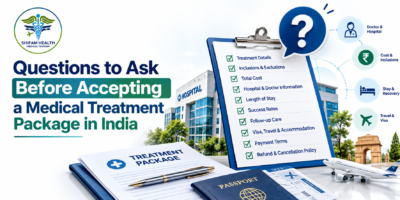
International patients travelling to India for SMILE eye surgery will need a Medical Visa (M Visa).
How to Obtain a Medical Visa for India
- Get a letter from the Indian hospital confirming your appointment
- Apply at the Indian Embassy or Consulate in your country
- Submit supporting documents including medical records and financial proof
- Processing time is typically 3–7 working days (standard) or 1–2 days (urgent)
What Shifam Health Provides for International Patients
Shifam Health handles the complete patient journey:
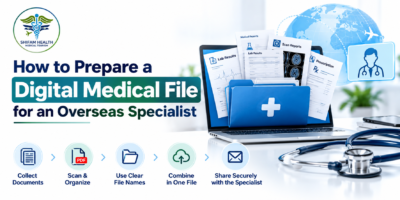
- Medical report evaluation send us your reports and we review them before travel
- Hospital and surgeon selection matched to your prescription, corneal parameters, and budget
- Pre-travel teleconsultation video call with the eye specialist
- Visa invitation letter from the hospital
- Airport pickup and hotel coordination
- In-hospital accompaniment and translation support
- Post-treatment follow-up remote monitoring after you return home
How long should international patients stay in India? Most SMILE surgery patients need to stay in India for 5–7 days allowing 1–2 days pre-operative evaluation, surgery day, and 2–3 follow-up visits.
Side Effects After SMILE Eye Surgery
Side effects are generally mild and temporary:
| Side Effect | Duration | Management |
|---|---|---|
| Temporary Blurring | 24–48 Hours | Rest the eyes and use prescribed postoperative eye drops as directed. |
| Light Sensitivity | 1–3 Days | Wear sunglasses outdoors and avoid excessive bright light exposure. |
| Mild Discomfort | 4–8 Hours | Avoid rubbing the eyes and continue prescribed lubricating and medicated drops. |
| Dry Eyes | 2–8 Weeks | Use lubricating/artificial tear drops regularly as recommended by your surgeon. |
| Halos or Glare at Night | 2–6 Weeks | Usually resolves spontaneously as the eyes heal and vision stabilizes. |
| Fluctuating Vision | 2–4 Weeks | A normal part of the healing process; vision gradually becomes more stable over time. |
Serious complications (infection, significant vision loss) are extremely rare occurring in less than 0.1% of cases at experienced centers.
Can Eye Power Return After SMILE Surgery?
A common concern. Here’s the honest answer:
SMILE surgery permanently removes tissue this correction does not reverse. However, in a small percentage of patients (under 5%), vision may regress slightly over years. This is more common in patients with high prescriptions.
Factors that can cause vision changes after SMILE:
- Age-related refractive changes (especially if prescription was not stable before surgery)
- Natural progression of myopia in young patients
- Hormonal changes (pregnancy)
For most patients, SMILE provides permanent, lifelong vision correction.
Conclusion
Permanent vision freedom is within reach and India makes it accessible.
SMILE eye surgery in India combines advanced femtosecond laser technology, experienced ophthalmic surgeons, internationally accredited hospitals, and costs that are a fraction of what patients would pay in the USA, UK, or UAE. Whether you are from Bangladesh, Nigeria, Kenya, Yemen, or anywhere in the world, India offers a credible, safe, and genuinely affordable path to clear vision.
The most important step is getting a proper evaluation to confirm you’re a suitable candidate. Everything else hospital selection, travel planning, visa support, and post-operative care can be coordinated for you.
Ready to find out if you qualify for SMILE surgery in India? Share your latest eye prescription and eye reports with Shifam Health. Our ophthalmology team will evaluate your eligibility, recommend the right hospital and surgeon, and help you plan your entire treatment journey at no consultation cost.
FAQ About SMILE Eye Surgery Cost and Procedure in India
How much does SMILE eye surgery cost in India?
SMILE surgery in India typically costs ₹1.1–2.2 lakh (USD 1,000–2,500) for both eyes.
Is SMILE better than LASIK?
Both are highly effective, but SMILE is often preferred for patients with dry eyes, thin corneas, or active lifestyles because it is flap-free and minimally invasive.
Is SMILE surgery painful?
No. Numbing eye drops are used, and most patients experience only mild discomfort for a few hours after surgery.
How long does recovery take?
Most patients notice clear vision within 24–48 hours and return to work within 2–3 days. Full visual stabilization takes about 4–6 weeks.
Can international patients get SMILE surgery in India?
Yes. Many leading eye hospitals provide visa assistance, travel support, and international patient services.
Which hospitals are best for SMILE surgery?
Top centers include Apollo, Medanta, L V Prasad Eye Institute, Centre for Sight, and Narayana Nethralaya.
What is the success rate of SMILE?
More than 95–98% of patients achieve excellent vision outcomes, with very high patient satisfaction rates.
Will I still need glasses after SMILE?
Most patients become free from distance glasses, although reading glasses may still be needed later in life due to aging.
How long should international patients stay in India?
A stay of 5–7 days is usually sufficient for evaluation, surgery, and follow-up.
How can Shifam Health help?
Shifam Health assists with hospital selection, treatment planning, medical visas, travel arrangements, and complete patient support throughout your SMILE surgery journey.