


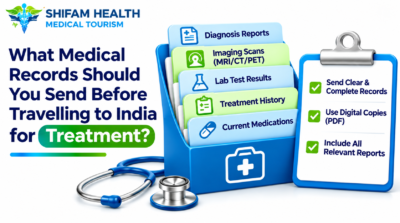
What Medical Records Should You Send Before Travelling to India for Treatment?
Filters & Insights
Written By :
Medically Reviewed By :

Shifam Health Medical Team
Shifam Health - Medical Reviews Department
10+ Years Of Experience
Prepare the right medical records before travelling to India. Learn which reports, scans, prescriptions and summaries specialists,
📅
Last updated: November 28, 2026

If you are considering medical treatment in India, sending the right medical records before traveling can help the hospital understand your medical history and assess your case. Specialists may need to review previous diagnoses, laboratory results, imaging studies, pathology reports, prescriptions, and details of treatments you have already received.
A well-organized medical file can make the initial review more useful and help the hospital identify whether additional information or investigations may be needed. It may also help the treating team discuss possible treatment approaches and prepare a preliminary estimate, where appropriate.
However, sending medical records does not replace a physical examination or guarantee a final diagnosis or treatment plan. The treating specialist determines whether the available information is sufficient and whether further assessment is necessary.
This guide explains which medical records US patients should prepare before contacting an Indian hospital, how to organize imaging and pathology files, what formats to use, and how to share personal health information carefully.
Table of Contents
TogglePrepare a One-Page Patient Summary
Begin with a short patient summary that gives the specialist an overview of the medical condition. This document should make it easier to understand the patient’s history without having to search through dozens of separate reports.
A one-page summary is particularly useful when the patient has received treatment from multiple doctors or hospitals.
What to include in the patient summary
Include the following information where relevant:
- Patient details: Full name, date of birth, sex, country of residence, and preferred contact information.
- Current diagnosis: The diagnosis given by the treating doctor, including the date and relevant details.
- Main symptoms: Symptoms, when they started, how they have changed, and any significant recent developments.
- Medical history: Relevant chronic conditions, previous illnesses, allergies, and major medical events.
- Previous procedures: Details of surgeries, biopsies, or other important procedures, including dates.
- Previous treatment: Medicines, chemotherapy, radiation therapy, rehabilitation, or other treatments already received.
- Current medications: Medicine names, doses, and frequency.
- Relevant family history: Family medical history when it may be relevant to the condition.
- Reason for seeking treatment in India: Whether the patient wants a second opinion, further evaluation, treatment options, or a procedure.
Do not present an unconfirmed diagnosis as a final diagnosis. If doctors have provided different opinions, mention that clearly and include the relevant reports.
For a practical format, see how to prepare a one-page patient summary for an Indian hospital.
Include a clear treatment timeline
A short timeline can help the specialist understand how the condition has progressed.
| Date or Period | Information to Include |
|---|---|
| Initial Diagnosis | When the condition was first identified and by whom |
| Investigations | Important scans, blood tests, biopsies, or other diagnostic procedures |
| Previous Treatment | Treatment received and the approximate dates |
| Response to Treatment | Improvement, stability, recurrence, or progression as documented by the treating doctor |
| Recent Assessment | Latest consultation, test results, or medical recommendation |
Use actual dates where possible. If you do not remember an exact date, provide an approximate month or year and label it accordingly.
Imaging Reports and Scan Files
Imaging records can be important when a specialist needs to assess a condition before recommending further evaluation or treatment. Depending on the medical problem, the hospital may request both the written imaging report and the original scan images.
Sending only the report may not always provide enough information for a detailed review. The specialist may need to examine the actual images, compare scans taken at different times, or request additional imaging.
Which imaging records should you send?
Prepare the imaging records relevant to the condition, such as:
- MRI reports and images
- CT scan reports and images
- X-ray reports and images
- Ultrasound reports and images
- PET-CT reports and images
- Mammography reports and images
- Echocardiography reports, where relevant
- Other specialized imaging requested by the treating specialist
You do not necessarily need to send every scan you have ever received. Prioritize recent investigations and earlier scans that show important changes in the condition or response to treatment.
Send the original images when requested
Hospitals may request imaging in DICOM format, which is commonly used for medical imaging. DICOM files can contain image data and associated information that helps compatible medical imaging systems display and review the study.
Ask the imaging center or hospital in the United States for the complete study if the receiving Indian hospital requests original images.
Check that:
- The complete study has been exported, not just selected screenshots.
- The patient’s identifying details are correct.
- The scan date and body region are identifiable.
- The written radiology report is included.
- Previous scans are labeled by date to make comparison easier.
- The receiving hospital confirms that it can access the files.
A photograph of a scan displayed on a computer screen is not a substitute for the original imaging study when the specialist needs diagnostic-quality images.
For more guidance on transferring large scan files, see how to share large MRI and CT files with an Indian hospital. Confirm the hospital’s preferred transfer method before uploading large files.
Pathology Reports, Biopsy Results, and Laboratory Records
Pathology and laboratory records can be especially important for patients seeking cancer care, investigating an unclear diagnosis, or requesting a specialist opinion after a previous procedure.
The exact records required depend on the condition and the type of review being requested.
Pathology and biopsy documents
If the patient has undergone a biopsy or surgery, collect relevant documents such as:
- Original pathology report
- Histopathology report
- Cytology report, if applicable
- Immunohistochemistry (IHC) report, where performed
- Molecular or genetic test reports, where relevant
- Biopsy or surgical procedure notes
- Relevant supplementary pathology reports
For some cases, the specialist may request pathology slides or tissue blocks for a review. A written pathology report alone may not be sufficient for every type of second opinion.
Organizing pathology slides and tissue blocks
If physical pathology material is requested, ask the receiving hospital for its exact requirements before arranging shipment.
Confirm:
- Whether glass slides, paraffin blocks, or both are required
- Which specimens and dates are needed
- Whether additional stains or tests may be requested
- The accepted packaging and shipping procedure
- Any documentation or authorization required by the original laboratory
- The correct department and recipient for delivery
Do not send original slides or tissue blocks without confirming the receiving facility’s instructions. These materials may be difficult to replace, and international shipping may involve handling and documentation requirements.
Laboratory test reports
Prepare relevant blood and laboratory reports, including:
- Complete blood count (CBC)
- Kidney function tests
- Liver function tests
- Blood glucose or HbA1c, where relevant
- Thyroid function tests, where relevant
- Tumor markers, if ordered by the treating doctor
- Coagulation studies, where relevant
- Infection-related test results, where relevant
Include the test date and laboratory reference ranges if they appear on the report. Results from different dates can help the specialist understand changes over time.
For patients seeking a cancer-related review, the cancer second opinion service information can be a useful starting point for understanding the coordination process.
Medication List, Allergies, and Previous Treatment Details
A complete medication list is important because medicines can affect treatment planning, anesthesia assessment, surgery, and other clinical decisions.
Do not rely only on medicine names remembered by the patient. Check the original prescription, pharmacy label, or current medication record.
What the medication list should contain
| Information | What to Provide |
|---|---|
| Medicine Name | Brand name and generic name, if available |
| Strength | For example, the strength printed on the prescription |
| Dose | Amount taken each time |
| Frequency | How often the medicine is taken |
| Start Date | When the patient began taking it, if known |
| Reason for Use | The condition or symptom it is prescribed for |
| Current Status | Whether the patient is still taking it |
| Prescribing Doctor | Name or specialty, if available |
Include prescription medicines, over-the-counter products, vitamins, herbal products, and supplements.
Allergies and previous reactions
Clearly mention any known allergies or adverse reactions, including reactions to:
- Medicines
- Anesthesia
- Contrast agents used in imaging
- Latex
- Food or other substances, where medically relevant
Describe the reaction if known. For example, distinguish a mild rash from breathing difficulty or another serious reaction. Do not label an uncertain reaction as a confirmed allergy; explain what happened and when.
Previous treatment records
Depending on the condition, the hospital may also need:
- Previous surgery notes
- Discharge summaries
- Chemotherapy treatment records
- Radiation therapy details
- Dialysis records
- Physiotherapy or rehabilitation reports
- Previous treatment plans
- Records of complications or hospital readmissions
The CDC advises medical travelers to bring copies of relevant medical records and a medication list, including medicine names and dosages. See its medical tourism guidance for travelers.
File Formats, Translations, and Document Organization
Even complete medical records can be difficult to review if they are poorly named, incomplete, or saved in incompatible formats. Organize the files before sending them to the hospital.
Recommended file formats
Use formats that preserve the original information and can be opened by the receiving hospital.
| Record Type | Common Format or Form |
|---|---|
| Consultation Notes | |
| Laboratory Reports | |
| Pathology Reports | |
| Imaging Reports | |
| Imaging Studies | DICOM, when requested |
| Prescriptions | PDF or clear image |
| Discharge Summaries | |
| Patient Summary | |
| Medication List | PDF or spreadsheet, if accepted |
Do not convert medical imaging into ordinary image files unless the hospital specifically requests them. Conversion can remove information needed for a proper imaging review.
Use clear file names
Avoid names such as scan1, report-final, or new-document. Instead, use descriptive file names that identify the record and date.
Examples:
Patient_Summary_2026-11-24.pdfMRI_Brain_Report_2026-10-12.pdfCT_Chest_Images_2026-09-18Pathology_Report_2026-08-05.pdfMedication_List_2026-11-24.pdf
Use the actual examination or document date rather than the date you downloaded the file. Do not alter the original report or remove information from the source document.
Arrange records in folders
A simple folder structure can make the medical file easier to navigate:
- Patient Summary
- Consultation Notes
- Imaging Reports
- Imaging Files
- Pathology and Biopsy
- Laboratory Reports
- Prescriptions and Medication List
- Surgery and Discharge Records
- Previous Treatment Records
If the hospital has a preferred upload system or file naming convention, follow its instructions.
Do medical records need to be translated into English?
If your records are already in English, a separate translation may not be necessary. If they are in another language, ask the receiving hospital whether it requires an English translation before specialist review.
For translated documents:
- Use a qualified medical translator when needed.
- Preserve medical terminology, units, dates, and test values.
- Keep the original-language document.
- Submit the translation alongside the original.
- Clearly identify which version is the translation.
Avoid translating medical terms yourself if their meaning is uncertain. An inaccurate translation can change the meaning of a diagnosis, test result, or treatment history.
Protect Your Medical Information When Sharing Records
Medical records contain sensitive personal information. They may include the patient’s name, date of birth, contact details, diagnosis, test results, and other private health information.
Before sharing documents with a hospital or coordination service, confirm who will receive them and how they will be used.
Practical privacy precautions
- Confirm the identity and contact details of the receiving hospital or authorized coordinator.
- Use the hospital’s official patient portal or an approved secure file-sharing method where available.
- Confirm the correct email address or upload destination before sending.
- Avoid sharing medical files through public links or open-access folders.
- Use access restrictions or password protection where supported and agreed upon by the recipient.
- Send only records relevant to the requested medical review.
- Avoid posting reports in public forums or social media groups.
- Keep a copy of the documents you have shared.
- Ask how long the receiving organization will retain the files and who may access them.
US patients can review the Department of Health and Human Services’ guidance on accessing and protecting medical records under HIPAA. HIPAA obligations apply to covered entities and business associates under the law; patients should not assume that every organization or overseas recipient is subject to the same requirements.
For additional information about transferring medical information, see the HHS guidance on sending copies of health information electronically.
Keep digital and printed copies
Maintain a complete digital copy of the medical file and carry important records in an organized printed folder when traveling. Digital copies can help with communication and access, while printed documents may be useful during hospital registration or consultations.
See how to keep digital and printed copies of medical travel documents for additional preparation guidance.
Medical Records Submission Checklist Before Travelling to India
Before sending your documents, use this checklist to identify missing information.
| Document | What to Check |
|---|---|
| Patient Summary | Diagnosis, symptoms, medical history, and reason for consultation |
| Consultation Notes | Relevant specialist assessments and recommendations |
| Imaging Reports | Recent and relevant written reports |
| Imaging Files | Original DICOM studies, if requested |
| Pathology Reports | Biopsy, histopathology, IHC, and other relevant results |
| Pathology Material | Slides or tissue blocks, only if requested |
| Laboratory Reports | Relevant blood tests and other investigations |
| Medication List | Names, doses, frequency, and current status |
| Allergy Information | Known allergies and previous reactions |
| Previous Treatment Records | Surgery, chemotherapy, radiation, or other treatment details |
| Discharge Summaries | Previous hospital admissions and procedures |
| Translations | English translations where requested |
| File Organization | Clear names, dates, and folder structure |
| Privacy | Confirmed recipient and agreed transfer method |
Before pressing send
Check that:
- The documents belong to the correct patient.
- Names and dates are consistent across the records.
- The latest relevant reports are included.
- Pages are readable and complete.
- Imaging files open correctly, if possible.
- Passwords or access instructions have been shared through the agreed method.
- The receiving hospital has confirmed the preferred file format and transfer method.
After submitting the records, ask the hospital to confirm receipt. If the specialist needs additional reports, request a clear list rather than sending unrelated documents.
What Happens After You Send Your Medical Records?
Once the documents are received, the hospital may review them and decide whether the information is sufficient for an initial specialist opinion.
Depending on the case, the hospital may:
- Request missing reports or additional medical history.
- Ask for original imaging files.
- Request pathology slides or tissue blocks.
- Arrange an online consultation, if available.
- Recommend additional investigations.
- Provide a preliminary treatment recommendation or estimate, where appropriate.
- Explain whether an in-person assessment is needed before confirming a treatment plan.
The time required for review varies by specialty, hospital workflow, and case complexity. Sending complete records may reduce avoidable delays, but it does not guarantee a particular response time or treatment recommendation.
If you need an online consultation before traveling, review telemedicine and pre-travel diagnostic coordination and confirm the available arrangements with the hospital.
How Shifam Health Can Help Organize Medical Records for Hospital Review
Preparing a medical file for an overseas hospital can involve collecting reports from different doctors, arranging imaging files, identifying missing documents, and coordinating communication with the receiving facility.
Shifam Health helps international patients coordinate administrative communication with hospitals in India. Depending on the case and service availability, this may include:
- Helping organize the medical records shared by the patient
- Coordinating submission of relevant documents to the hospital
- Communicating requests for missing reports or additional information
- Coordinating specialist consultation requests where available
- Requesting preliminary treatment opinions and written estimates from hospitals
- Supporting medical travel planning and related arrangements
The hospital’s qualified medical professionals are responsible for reviewing records, determining whether additional tests are needed, and making clinical recommendations. Shifam Health does not independently diagnose conditions or decide which treatment a patient should receive.
Patients can learn more about the services offered by Shifam Health or request an initial consultation to discuss the coordination process.
Frequently Asked Questions
Should I send all my medical records before travelling to India?
Send records relevant to your current condition, including recent consultations, investigations, imaging, pathology reports, prescriptions, and previous treatment details. The hospital can advise whether additional records are needed.
Are scan reports enough, or should I send the actual images?
The written report may be sufficient for some initial discussions, but specialists may need the original imaging files, often in DICOM format, for a detailed review. Confirm the hospital’s requirements.
Do I need to send original pathology slides?
Not in every case. The hospital may request slides or tissue blocks for a pathology review. Confirm the exact material and shipping instructions before sending anything.
Should medical records be translated into English?
If the records are in another language, ask the receiving hospital whether an English translation is required. Keep the original documents and provide the translation alongside them.
Can I send medical records through email?
This depends on the hospital’s accepted process and file-size limits. Confirm the official email address or secure upload method before sharing sensitive information.
How recent should my medical reports be?
There is no single validity period for every report. Send the latest relevant records and include earlier reports when they help show the progression of the condition or response to treatment. The specialist can advise whether repeat tests are necessary.
Conclusion
Preparing medical records before traveling to India is an important step for US patients considering treatment abroad. A clear patient summary, relevant consultation notes, imaging reports and original scan files, pathology documents, laboratory results, medication details, and previous treatment records can help the receiving hospital understand the case.
The most useful medical file is not necessarily the largest one. It is the one that contains relevant, accurate, readable, and well-organized information. Label documents clearly, arrange them by category and date, and confirm whether the hospital needs original imaging files, pathology slides, tissue blocks, or translated reports.
Protect your personal health information when sharing documents. Verify the recipient, use an agreed transfer method, and keep your own digital and printed copies. After submission, confirm that the hospital has received the files and ask whether anything else is required for specialist review.
Most importantly, remember that an initial review of medical records is not the same as a complete clinical assessment. The treating specialist may need additional tests, an examination, or a consultation before confirming a diagnosis or recommending treatment. Preparing your records carefully can make the process of seeking a specialist opinion in India more organized and help you plan the next steps with better information.




Popular Posts From Last Week
- November 28, 2026
- Razi Khan
Learn which medical records and documents you should share before travelling to India for medical treatment. This guide…
- November 26, 2026
- Razi Khan
Learn how international patients and their families can document treatment decisions, organize questions for doctors, track hospital discussions,…
- November 25, 2026
- Razi Khan
A practical guide for international patients preparing to choose a hospital in India. Learn how to check hospital…
- November 22, 2026
- Razi Khan
A practical guide for international patients on understanding different hospital treatment recommendations, organizing medical records, and requesting a…
- November 21, 2026
- Razi Khan
A practical guide for international patients on confirming medical equipment, procedure availability, specialist schedules, and hospital facilities in…
- November 25, 2026
- Razi Khan
A practical guide for international patients on asking hospitals in India about infection prevention, hygiene, sterilization, accreditation, and…
- November 26, 2026
- Razi Khan
Planning medical treatment in India involves hospital charges as well as travel and daily living expenses for accompanying…
- November 24, 2026
- Razi Khan
Learn how to organize digital and printed medical travel documents before treatment in India. This guide covers medical…
- November 24, 2026
- Razi Khan
Learn how to prepare a personal emergency contact sheet before traveling to India for medical treatment. This practical…
- November 25, 2026
- Razi Khan
A practical guide for international patients arranging follow-up care after treatment in India. Learn how to identify a…
- November 22, 2026
- Razi Khan
A practical guide for international patients planning their journey home after major surgery in India. Learn about medical…
- November 22, 2026
- Razi Khan
Learn how to prepare a clear one-page patient summary before contacting an Indian hospital. This guide covers medical…