



Home > Blog > Bow Legs (Genu Varum) in Children: Causes, Symptoms, Diagnosis and Treatment (2026 Guide)
Bow Legs (Genu Varum) in Children: Causes, Symptoms, Diagnosis and Treatment (2026 Guide)
Filters & Insights
Learn about bow legs (genu varum) in children, including causes, symptoms, diagnosis, natural correction, and treatment options.

Medically reviewed content · Published 2026 · Last reviewed September 2026
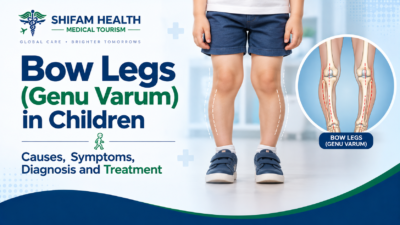
Bow legs medically called genu varum — describe an outward curve of the legs, where the knees stay apart even when the ankles are held together. In babies and toddlers, this is almost always physiologic genu varum, a completely normal, expected stage of leg development that resolves on its own, usually by around age 2–3, without any treatment. A smaller number of children have pathological bow legs — caused by a condition like Blount’s disease, rickets, a growth-plate injury, or a skeletal disorder — that does not correct on its own and needs evaluation.
Genu varum is a description of how the legs are aligned, not a diagnosis in itself; the cause, the child’s age, whether the bowing is symmetric, and whether it’s improving or worsening over time are what actually determine whether it’s normal or needs attention.
This guide focuses specifically on helping parents understand that distinction. For a broader look at other types of childhood limb alignment differences (knock knees, intoeing, limb-length differences), see our general guide to limb deformities in children. If your child’s bowing looks like it may specifically be Blount’s disease — persistent, worsening, or one-sided — our dedicated Blount’s disease guide covers that diagnosis, its staging, and treatment in full clinical depth. This is general medical education, not a diagnosis, and does not replace an in-person evaluation of your specific child.
Table of Contents
ToggleNormal Developmental Leg Alignment
Children’s leg alignment doesn’t develop in a straight line toward “normal” — it moves through predictable, well-documented phases that would look unusual in an adult but are entirely expected in a growing child:
- Birth to about age 2: Most babies and toddlers have some degree of bow legs, reflecting the folded position of the legs before birth. This is normal, not a deformity.
- Roughly ages 2–4: Alignment typically swings the other way, and many children develop mild knock knees (genu valgum), often most noticeable around age 3–4 — also a normal phase.
- Age 6–7 onward: Alignment gradually settles toward the adult pattern, which for most people includes a small, permanent degree of mild valgus.
Because individual children move through this sequence at somewhat different paces, precise age cutoffs shouldn’t be treated as strict pass/fail thresholds — what matters more is the overall pattern described in the table below.
When Are Bow Legs Normal?
Features that are more consistent with ordinary physiologic bowing: it’s roughly symmetric between the two legs, it’s gradually improving rather than staying the same or worsening, the child is otherwise healthy with normal growth, there’s no pain, limping, or functional difficulty, and the pattern fits the typical developmental sequence above (present in infancy and toddlerhood, improving by age 2–3). A young child with symmetric, improving, painless bowing that fits this description generally needs nothing more than routine pediatric follow-up.
When Are Bow Legs Not Normal?
Features that warrant a closer look from a pediatric orthopedic specialist: persistent or worsening bowing rather than improving, clear asymmetry between the two legs (one more bowed than the other), significant severity, an abnormal gait, pain, limping, short stature or other signs of disproportionate growth, a history of trauma or a previous growth-plate injury to the affected leg, or bowing that’s still present or worsening well beyond the age when physiologic bowing typically starts resolving. None of these findings alone confirms a specific diagnosis — they’re the pattern that indicates an evaluation is worthwhile, as opposed to continued reassurance based on appearance.
Urgent warning signs
Seek prompt or urgent medical assessment — not a routine scheduled visit — for a sudden inability to walk, severe pain following an injury, fever combined with bone or joint pain, new weakness or loss of sensation, or a rapidly progressive deformity. These call for the same day or urgent evaluation rather than waiting.
Can Bow Legs Correct Themselves
For the majority of children — those with ordinary physiologic genu varum in infancy and toddlerhood — yes, bow legs typically improve and resolve on their own as the child grows, generally by around age 2–3, without treatment. This is not true for every cause of bowing, though: bowing caused by Blount’s disease, rickets or other metabolic bone disease, an established growth-plate injury, or a skeletal dysplasia does not reliably self-correct, and in some of these cases (particularly Blount’s disease) waiting without evaluation allows the underlying problem to progress further. The honest, complete answer is genuinely “it depends on the cause” — which is exactly why persistent or worsening bowing, specifically past the age when physiologic bowing should be improving, deserves a specialist look rather than an assumption either way.
Causes of Bow Legs
| Cause | How Common | Key Distinguishing Pattern |
|---|---|---|
| Physiologic Genu Varum (Normal Development) | By far the most common cause in young children | Symmetric, improving with age, no other findings |
| Blount’s Disease (Tibia Vara) | Uncommon | Persists or worsens past toddlerhood, may be asymmetric; specific growth-plate changes on X-ray |
| Rickets / Metabolic Bone Disease | Uncommon | Softened, widened growth plates on X-ray; abnormal blood calcium/phosphate/vitamin D |
| Skeletal Dysplasia | Rare | Disproportionate growth, findings at multiple skeletal sites |
| Growth-Plate Injury or Old Fracture (Post-Traumatic) | Uncommon | Clear history of prior injury to the affected leg |
| Neuromuscular Conditions | Uncommon | Muscle imbalance affecting alignment, often with other neurological findings |
Symptoms
Physiologic bow legs are typically painless, symptom-free, and don’t limit activity — this is itself a reassuring sign. Pathological bowing, by contrast, may be associated with an abnormal gait (including a visible outward knee shift while walking, called a lateral thrust), limping, knee discomfort with activity (more common in older children), fatigue, progressive worsening in appearance, a visible limb-length difference if one leg is more affected than the other, and activity or sports limitations. Pain is not required for a pathological cause to be present — early Blount’s disease in particular can progress with little or no discomfort, which is why the pattern of the bowing itself (persistence, asymmetry, progression), not the presence of pain, is what should prompt evaluation.
How Bow Legs Are Diagnosed
Diagnosis starts with history (when bowing was first noticed, whether it’s improving or worsening, one leg or both, walking age, growth pattern, family history, and any prior injury) and a physical examination assessing standing alignment, gait, limb-length comparison, and overall growth and proportions. Many children with ordinary physiologic bow legs don’t need any testing beyond this clinical assessment — imaging and blood work are reserved for situations where the pattern doesn’t fit typical physiologic bowing.
When X-rays are used
Not every child with bow legs needs an X-ray. When imaging is appropriate — because bowing is persistent past the expected age, asymmetric, severe, or otherwise atypical — standing (weight-bearing) X-rays of the legs are the standard tool, assessing alignment, the growth plates, and bone shape.
Specific measurements your specialist may reference (such as the tibiofemoral angle or the metaphyseal-diaphyseal angle used specifically in evaluating for Blount’s disease) are precise clinical tools for tracking a child’s alignment over time — they’re explained in full in our Blount’s disease guide, since that’s the context where they matter most; no single measurement is used as a stand-alone diagnosis independent of the clinical picture.
When blood tests are used
Blood testing isn’t routine for ordinary bow legs — it’s specifically considered when rickets or another metabolic bone condition is suspected based on the clinical picture or X-ray findings, checking calcium, phosphate, and vitamin D levels among other markers.
MRI and CT
These are reserved for specific situations — MRI when more detailed assessment of the growth plate or cartilage is needed, or the diagnosis remains unclear after X-ray; CT selectively for complex rotational deformity assessment or surgical planning, with attention to minimizing a child’s radiation exposure. Neither is a routine part of evaluating ordinary childhood bow legs.
Treatment: Matched to Cause, Not Appearance
The goal of evaluation is to identify whether pathological deformity is actually present and treat that appropriately — not to make every child’s legs look perfectly straight. Treatment depends entirely on the underlying cause, the child’s age and growth remaining, severity, and whether the bowing is progressing.
Observation
For physiologic genu varum — the large majority of cases — observation is the correct, complete management, not a placeholder for doing nothing. It means routine pediatric follow-up and reassessment if anything changes, not scheduled imaging or intervention for a condition that’s expected to resolve on its own.
Physiotherapy and exercise
Physiotherapy can support strength, gait, and general function, but it cannot mechanically straighten a bowed bone caused by a growth-plate or bony deformity — this is worth stating plainly, since exercise programs are sometimes marketed to parents as a fix for bow legs in a way the evidence doesn’t support.
Braces and orthotics
Braces are not needed for physiologic bow legs — bracing a condition that would resolve on its own doesn’t speed up that resolution. Bracing does have a genuine, evidence-supported role specifically for early infantile Blount’s disease in younger children (generally under age 3), where research has shown it can meaningfully reduce the degree of deformity — but this is diagnosis- and age-specific, not a general treatment for “bow legs,” and shouldn’t be started without a confirmed diagnosis and specialist guidance. Don’t use or purchase a corrective brace based on how a child’s legs look, without a professional assessment first.
Vitamins and supplements
Vitamin D deficiency is a genuine, treatable cause of rickets-related bowing, and correcting a diagnosed deficiency is appropriate medical treatment in that specific situation. But vitamin supplementation is not a general treatment for bow legs — it won’t speed up the resolution of ordinary physiologic bowing (which isn’t caused by a deficiency in the first place), and once bony deformity has become structurally established from rickets, correcting the underlying vitamin or mineral deficiency doesn’t automatically or immediately reverse it — some children need both metabolic treatment and, separately, orthopedic follow-up for residual deformity. Supplementation should follow an actual diagnosis, not be tried as a precaution.
When treatment beyond observation is needed
For confirmed pathological bowing that’s significant or progressive — most often Blount’s disease, or bowing left over from an old growth-plate injury — options range from guided growth (a minimally invasive technique using the child’s own remaining growth to gradually correct the deformity, appropriate only while significant growth remains) to osteotomy (surgically cutting and directly realigning the bone, used when deformity is more advanced or growth remaining is insufficient for guided growth to work). Both are real surgical procedures with genuine risks and recovery periods, not routine or minor interventions — our Blount’s disease and general limb deformities guides cover the specifics, including recurrence risk, in full detail. Most children with bow legs never reach this stage of the discussion at all — the majority have physiologic bowing that resolves with observation alone.
Long-Term Consequences
Persistent, significant, uncorrected pathological bowing can, over time, alter how forces load across the knee, potentially contributing to abnormal gait, knee discomfort, and — in some longer-term studies of untreated or inadequately corrected disease — an increased likelihood of joint degeneration later in life. It would not be accurate to say bow legs always cause arthritis; ordinary physiologic bowing that resolves in early childhood carries no such long-term risk, and even pathological bowing’s long-term impact depends heavily on severity, how it’s managed, and individual factors — this isn’t a uniform outcome.
Prevention
Physiologic bow legs, being a normal developmental stage, aren’t something to prevent — there’s nothing to fix in the first place. For pathological causes, some factors are modifiable: adequate nutrition can prevent nutritional rickets specifically, and prompt attention to any suspected growth-plate injury reduces the risk of malunion-related deformity. Many causes, including Blount’s disease and genetic/skeletal conditions, are not preventable, and this is not the result of anything a parent did or didn’t do.
Bow Legs Treatment in India: Cost
Because the overwhelming majority of childhood bow legs are physiologic and need no treatment beyond routine follow-up, “treatment cost” is only relevant to the smaller group of children with a confirmed pathological cause. Cost figures here overlap directly with those covered in our companion guides, since this is the same underlying diagnostic and procedure market:
| Component | Approximate Cost |
|---|---|
| Pediatric Orthopedic Consultation | $30–$150 |
| Standing X-ray, Where Indicated | $30–$100 |
| Blood Testing, If Rickets Is Suspected | $30–$100 |
| Guided Growth Surgery, If a Pathological Cause Requiring It Is Confirmed | Roughly $1,200–$2,200 based on currently published India figures |
| Osteotomy, If Needed | Roughly $1,400–$2,200 based on currently published India figures |
As with our other pediatric orthopedic guides, request a written, itemized quote for any recommended treatment based on your child’s specific diagnosis — a general figure won’t meaningfully represent the cost for a specific case, and, again, most children evaluated for bow legs won’t need any procedure at all.
The International Patient Journey
- Share your child’s medical history and, where available, existing X-rays
- Pediatric orthopedic specialist reviews the case remotely
- Confirm whether the bowing is physiologic or has features suggesting a pathological cause
- If pathological, determine the specific diagnosis and appropriate next steps
- Receive guidance on whether in-person evaluation or treatment is actually warranted
- If treatment is recommended, proceed with visa, travel, and treatment coordination as outlined in our companion guides
Many children evaluated through this process are confirmed to have ordinary physiologic bowing needing no treatment at all — this is a legitimate, common, and good outcome, not a wasted consultation.
Questions for Your Pediatric Orthopedic Specialist
- Are my child’s bow legs normal for their age?
- Is the bowing symmetric, and is it improving or getting worse?
- Does my child need an X-ray or blood tests right now, or is observation appropriate?
- Could this be Blount’s disease, rickets, or another specific cause?
- If it is pathological, how much growth does my child have left, and what does that mean for treatment options?
- What would make you want to see my child again sooner than a routine follow-up?
How Shifam Health Helps International Families
Shifam Health is a medical tourism facilitator, not a hospital or treating medical provider — we don’t diagnose or treat your child’s bow legs. What we do is help international families get their child’s case in front of an appropriate pediatric orthopedic specialist: collecting and sharing medical records and any existing imaging, coordinating appointments and hospital logistics if evaluation or treatment is needed, helping obtain a written cost estimate, assisting with medical visa documentation, and arranging accommodation and support if travel is warranted. We don’t guarantee a particular diagnosis or treatment outcome — many children we help connect with a specialist turn out to need nothing beyond reassurance and routine follow-up, and that’s a genuinely good result.
If you’re wondering whether your child’s bow legs need to be looked at, share what you’re seeing — and any existing photos or records — with our team on WhatsApp or through a quick inquiry form. There’s no obligation, and we typically respond within 24 hours.
Frequently Asked Questions
What are bow legs?
Bow legs (genu varum) occur when the legs curve outward, leaving a gap between the knees when the ankles are together.
Are bow legs normal in babies?
Yes. Mild bowing is common in infants and usually reflects normal leg development.
At what age do bow legs improve?
Physiologic bowing typically improves naturally by around age 2–3.
When should bow legs be concerning?
Persistent, worsening, or asymmetric bowing, especially with pain or limping, should be evaluated by a specialist.
Can vitamin D deficiency cause bow legs?
Yes. Vitamin D deficiency can cause rickets, which may lead to bone deformities. However, most normal childhood bowing is not caused by vitamin D deficiency.
Can obesity cause bow legs?
Higher body weight is associated with an increased risk of pathological bowing, particularly Blount’s disease, but it is not the sole cause.
How is Blount’s disease different?
Blount’s disease is a growth-related disorder causing progressive bowing. Worsening, persistent, or asymmetric deformity requires orthopedic assessment.
Do braces correct bow legs?
Not for normal physiologic bowing. Bracing may help selected young children with confirmed infantile Blount’s disease.
Can exercises straighten bow legs?
No. Exercise can improve strength and function but cannot mechanically correct a structural bone deformity.
When is surgery necessary?
Surgery is considered only for significant, progressive, or persistent pathological deformity. Most physiologic bow legs require no surgery.
Can bow legs cause arthritis later?
Significant, untreated pathological bowing may increase the risk of joint wear over time, although this is not inevitable.
Conclusion
Most children with bow legs have a normal, temporary stage of development that will resolve on its own — and understanding that is often the single most useful thing this guide can offer an anxious parent. A smaller number have a genuine underlying condition, most often Blount’s disease or, less commonly, rickets, that does need evaluation and, often, treatment.
The pattern — symmetry, whether it’s improving, age, and any accompanying symptoms — tells you far more than how “bad” the bowing looks, and a pediatric orthopedic evaluation, not this guide or any other, is what will actually answer the question for your specific child.
This article is for general medical education for parents and caregivers and does not replace individualized assessment by a qualified pediatrician or pediatric orthopedic specialist. It is not a diagnosis and should not be used to decide for or against evaluation or treatment for any individual child.

Popular Posts From Last Week
- September 10, 2026
- shifamhealth
Medically reviewed content · Published 2026 · Last reviewed August 2026 Blount’s disease, also called tibia vara, is…
- September 15, 2026
- shifamhealth
Medically reviewed content · Published 2026 · Last reviewed September 2026 Bow legs medically called genu varum —…
- September 14, 2026
- shifamhealth
Medically reviewed content · Published 2026 · Last reviewed September 2026 A “broken ankle” is the common term…
- September 13, 2026
- shifamhealth
Carpal tunnel syndrome (CTS) is compression of the median nerve as it passes through the carpal tunnel —…
- September 9, 2026
- shifamhealth
A cervical herniated disc occurs when the soft inner material of a disc in the neck pushes through…
- September 13, 2026
- shifamhealth
If a lumbar MRI report mentions “kissing spinous processes” or “Baastrup’s disease,” it’s worth pausing before assuming this…
- September 10, 2026
- shifamhealth
Chronic back pain is one of the most common reasons people seek medical care, and also one of…
- September 11, 2026
- shifamhealth
Myelopathy means dysfunction of the spinal cord itself — not a single disease, but a syndrome that can…
- September 9, 2026
- shifamhealth
Medically reviewed content · Published 2026 · Last reviewed September 2026 Disc degeneration seen on an MRI does…
- September 14, 2026
- shifamhealth
Scoliosis is a three-dimensional spinal deformity — sideways curvature combined with rotation — and it is genuinely not…
- September 12, 2026
- shifamhealth
Medically reviewed content · Published 2026 · Last reviewed September 2026 Discitis is inflammation or infection involving an…
- September 12, 2026
- shifamhealth
A femoral hernia occurs when tissue often part of the bowel or fatty tissue — pushes through the…