



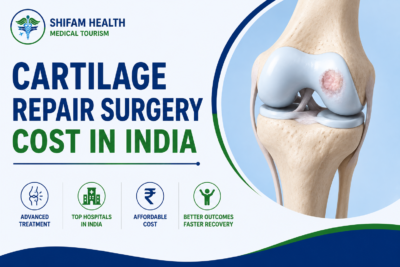
Cartilage Repair Surgery Cost in India (2026)
Filters & Insights
Cartilage repair surgery in India costs $2,500–$9,000 depending on the procedure. Compare microfracture, MACI, OATS and allograft options.

How Much Does Cartilage Repair Surgery Cost in India?
Cartilage repair surgery in India typically costs between $2,500 and $9,000 USD for international patients, depending on the procedure type, joint involved, defect size, hospital tier, and rehabilitation program. Microfracture surgery sits at the lower end of this range. Advanced cell-based procedures like MACI (Matrix-Induced Autologous Chondrocyte Implantation) sit significantly higher. These figures are estimates for planning purposes — your actual quote will depend on your MRI findings, surgeon assessment, and chosen hospital. Always request a written cost breakdown from your medical coordinator before traveling.
Quick Cost Reference Table
| Procedure | Estimated Cost (USD) | Hospital Stay | Rehabilitation |
|---|---|---|---|
| Microfracture Surgery | $2,500–$4,000 | 1–2 days | 4–6 months |
| OATS / Mosaicplasty | $3,500–$5,500 | 2–3 days | 6–9 months |
| Autologous Chondrocyte Implantation (ACI) | $5,000–$7,500 | 3–4 days | 12–18 months |
| Matrix-Induced Autologous Chondrocyte Implantation (MACI) | $6,000–$9,000 | 3–5 days | 12–18 months |
| Osteochondral Allograft | $4,500–$7,000 | 2–4 days | 9–12 months |
| Arthroscopic Cartilage Debridement | $2,000–$3,500 | Day surgery | 6–12 weeks |
Important: These are all-inclusive estimates covering surgery, anaesthesia, implants or cell-therapy costs, standard diagnostics, medicines, and a basic physiotherapy block. They do not include international flights, accommodation between sessions, or visa fees. Request an itemised quote specific to your MRI report.
Table of Contents
ToggleWhat Is Cartilage Repair Surgery?
Articular cartilage is the smooth, white tissue covering the ends of bones inside your joints. It allows bones to glide past each other with minimal friction. Unlike most body tissues, articular cartilage has almost no blood supply of its own, which means it cannot heal itself in any meaningful way once damaged. A small crack or defect in cartilage does not fill in and repair — it stays, enlarges over time, and if left untreated, eventually strips the underlying bone bare. That is the beginning of osteoarthritis.
Cartilage repair surgery is a family of procedures designed to address this problem before it becomes irreversible. The core goal is joint preservation — treating the cartilage defect now so you can keep your natural joint for as long as possible and delay or avoid joint replacement surgery entirely.
This is not the same as treating osteoarthritis that is already widespread across a joint. Cartilage repair works best for focal defects discrete, contained areas of cartilage damage — rather than generalized cartilage loss. This distinction matters enormously for whether you are actually a candidate.
Who Is a Candidate for Cartilage Repair Surgery?
Cartilage repair surgery is not appropriate for everyone with knee, hip, or ankle pain. Surgeons evaluate candidacy carefully, because operating on the wrong patient produces poor results regardless of technique.
You may be a good candidate if:
- You have a focal, contained cartilage defect (typically Grade III or IV on the ICRS scale)
- You are under 50–55 years old with otherwise healthy surrounding cartilage
- The opposite side of the joint (the “kissing” surface) is not significantly damaged
- Your knee alignment is reasonably normal (severe malalignment must be corrected first)
- You are committed to a long, structured rehabilitation program
- You want to preserve your natural joint rather than move directly to replacement
You are likely not a suitable candidate if:
- You have widespread, generalised osteoarthritis across the joint
- You have significant malalignment that has not been corrected
- You are older with multiple joint compartments affected
- You have a very large defect that exceeds what available techniques can reliably address
- You are unwilling or unable to comply with 6–18 months of structured rehabilitation
A good surgeon will tell you honestly which category you fall into. Be wary of any centre that offers cartilage repair surgery to every patient who asks without a thorough MRI review and clinical examination.
Types of Cartilage Repair Procedures in India
Microfracture Surgery
A minimally invasive arthroscopic procedure that stimulates new cartilage growth by creating tiny holes in the bone. Best for small cartilage defects and offers a cost-effective treatment option.
OATS (Osteochondral Autograft Transfer)
Healthy cartilage and bone are transferred from another part of the knee to the damaged area. Ideal for medium-sized defects in younger, active patients.
ACI / MACI
A two-stage procedure where your own cartilage cells are grown in a lab and implanted back into the joint. Best for large cartilage defects and patients seeking long-term joint preservation.
Osteochondral Allograft
Uses donor cartilage and bone to repair large or complex defects, especially when previous cartilage surgery has failed.
Arthroscopic Debridement
Removes loose or damaged cartilage to relieve pain and improve movement. It eases symptoms but does not regenerate cartilage.
What’s Usually Included in the Cost?
Most international packages include:
- Surgeon’s and anesthesia fees
- Operating theatre charges
- Hospital stay
- Standard pre-operative tests
- Medicines during hospitalization
- Inpatient physiotherapy
- Discharge summary
Usually not included: MRI, additional procedures (ACL/meniscus repair), hotel stay, flights, visa, travel insurance, and extended rehabilitation.
Factors Affecting Cartilage Repair Cost
- Length of rehabilitation, especially if physiotherapy is continued in India before returning home
- Procedure type (Microfracture is the least expensive; MACI is the most costly)
- Size and location of the cartilage defect
- Hospital category and city
- Surgeon’s expertise in cartilage restoration
- Additional procedures such as ligament or meniscus repair
Cartilage Repair vs Knee Replacement: Which Is Right for You?
This is the most important decision question for patients considering cartilage surgery, and the answer depends almost entirely on the extent of joint damage and patient age and activity goals.
| Factor | Cartilage Repair | Total Knee Replacement |
|---|---|---|
| Ideal Patient Age | Typically under 50–55 years | Usually over 55–60 years |
| Type of Damage | Focal, contained cartilage defect | Advanced osteoarthritis affecting multiple compartments |
| Goal | Preserve the natural knee joint | Replace damaged joint surfaces |
| Recovery Time | 6–18 months | 3–6 months |
| Activity After Surgery | Potential return to high-impact sports | Moderate activity; high-impact sports are discouraged |
| Durability | Varies by technique and defect size | Implants typically last 15–25 years |
| If It Fails | May require revision cartilage surgery or knee replacement | Revision knee replacement is more complex |
| Cost in India | $2,500–$9,000 | $4,000–$8,000 |
The honest answer: If you have widespread osteoarthritis across your knee and are over 60, cartilage repair is unlikely to help you. If you are 35 with a discrete traumatic cartilage defect and otherwise healthy joint cartilage, knee replacement is premature and cartilage repair is the right first conversation. A surgeon who tells every young patient with knee pain that they need cartilage repair, and every older patient that they need replacement, without a thorough assessment, is not serving you well.
Cartilage Repair vs Stem Cell Therapy vs PRP: An Honest Comparison
Regenerative therapies particularly stem cell injections and platelet-rich plasma (PRP) — are heavily marketed in medical tourism. You will encounter them. Here is a realistic summary of where the evidence currently stands.
PRP (Platelet-Rich Plasma): Involves concentrating growth factors from your own blood and injecting them into the joint. Evidence suggests PRP may reduce pain and improve function in early osteoarthritis and may support healing after cartilage surgery. It is not a substitute for structural cartilage repair in significant focal defects. It works best as an adjunct to surgery, not a replacement for it.
Stem Cell Injections: The evidence for injected stem cells producing meaningful cartilage regeneration in focal defects remains limited and inconsistent in published clinical research as of 2026. Stem cell therapy for cartilage has genuine biological rationale and active research, but the marketing substantially outpaces what is currently proven in peer-reviewed literature. Do not choose an injectable stem cell program over established surgical repair based on promotional content alone.
Surgical Cartilage Repair (Microfracture, MACI, OATS): Has the longest evidence base, with published outcomes data spanning 10–20 years for established techniques. Results vary by technique, patient, and defect — but the evidence for structural repair is substantially stronger than for current injection-based regenerative approaches.
The practical guidance: For a confirmed focal cartilage defect on MRI, established surgical techniques are the appropriate first discussion. PRP may have a role as an adjunct. Injectable stem cells should not be your primary treatment unless you are participating in a properly registered clinical trial.
India vs Other Countries: Cost Comparison
| Country | Estimated Cost | Approx. Wait Time | Notes |
|---|---|---|---|
| India | $2,500–$9,000 | Days to 2 weeks | Comprehensive cartilage restoration options at leading orthopedic centres. |
| USA | $15,000–$45,000+ | Varies; insurance-dependent | High costs, with insurance often essential for local patients. |
| UK | £8,000–£25,000 (Private) | 6–18 months (NHS) | Private treatment is faster, while NHS waits can be lengthy for elective procedures. |
| Germany | €10,000–€30,000 | 2–6 weeks | High-quality orthopedic care, though language may be a consideration. |
| Turkey | $4,000–$10,000 | 1–2 weeks | Expanding sports medicine and medical tourism services. |
| Thailand | $5,000–$12,000 | 1–2 weeks | Widely available at major hospitals in Bangkok. |
| UAE | $8,000–$20,000 | 1–3 weeks | Modern facilities with convenient access for Gulf-region patients. |
India’s cost advantage is real and consistent for cartilage procedures. The differential from USA pricing is typically 70–85%. The quality differential at India’s top orthopedic centres which use the same MACI cell-culture technology, the same arthroscopic equipment, and surgeons with international fellowship training — is significantly smaller than the cost differential suggests. The practical caveat: not every hospital in India offering “cartilage surgery” has the same capability. You need to verify surgical experience and cell-culture laboratory access specifically.
Choosing a Hospital and Surgeon for Cartilage Repair in India
The most important thing you can do is verify that your chosen surgeon and hospital actually perform cartilage restoration procedures regularly — not just arthroscopic surgery generally.
What to ask before booking:
Ask the hospital or coordinator specifically:
- How many cartilage restoration procedures does this surgeon perform per year?
- Does the hospital have access to a licensed cell-culture laboratory for MACI (if that’s your procedure)?
- Is there a dedicated sports medicine and rehabilitation program, not just a general physiotherapy service?
- What is the surgeon’s fellowship training? Where was it completed?
- Can you provide MRI-reviewed treatment recommendations before I travel?
Hospitals that have strong orthopedic and sports medicine reputations in India including certain Apollo, Fortis, Medanta, and specialty orthopedic centres in Delhi, Mumbai, Chennai, and Bangalore — do have surgeons performing advanced cartilage restoration. However, availability and case volume vary by individual surgeon, not just by hospital brand name. Always confirm the specific surgeon’s experience, not just the hospital’s general reputation.
The Surgical Procedure: What Actually Happens
Pre-operative phase: You will arrive in India 1–2 days before your scheduled surgery. Your surgical team will review your MRI scans (ideally sent in advance so the treatment plan is confirmed before you travel), conduct a clinical examination, and perform standard pre-operative blood tests. If you are having MACI, the first stage is the cartilage biopsy — a short arthroscopic procedure to harvest your chondrocyte cells. You will then wait 4–6 weeks in India or return home while the cells are cultured before returning for the implantation.
The surgery: For microfracture or OATS, you will have a single surgical episode under general or regional anaesthesia. The surgeon accesses the joint arthroscopically, prepares the defect site, and performs the repair. Operating time varies from 45 minutes for straightforward microfracture to 2–3 hours for complex OATS or allograft cases.
Immediately post-operatively: You will wake in recovery with your leg in a controlled-motion device or splint depending on the procedure and joint. Pain is managed with a combination of medications. Most patients begin passive range-of-motion exercises the day after surgery.
Recovery Timeline: What to Realistically Expect
Recovery from cartilage repair surgery is longer than most patients anticipate, and this is the most common source of patient disappointment when expectations are not set correctly upfront. The biological process of cartilage integration and maturation takes time that cannot be rushed.
Week 1–2: You will be non-weight-bearing or partial-weight-bearing on crutches, depending on the procedure and joint. Pain and swelling are significant. Focus is on reducing swelling, maintaining range of motion, and preventing muscle atrophy.
Weeks 3–6: Gradual progression toward full weight bearing. Swelling decreases. Physiotherapy intensifies. You are rebuilding quadriceps and hip strength. Most international patients who stayed in India for physiotherapy return home around this point.
Months 2–3: Walking normally without crutches for most patients. Stationary cycling and swimming may begin. No running. Cartilage is still integrating and immature — subjective improvement can be deceptive at this stage.
Months 4–6: Progressive strengthening and proprioception training. Light jogging may begin for some patients around month 5–6 depending on surgeon guidance and procedure type.
Months 6–12: Gradual return to sport-specific training. High-impact activities typically not cleared until 9–12 months minimum for most procedures.
Months 12–18 (MACI/ACI): Full return to competitive sport after MACI typically requires 12–18 months. Do not be pressured by training schedules or employer timelines into returning too early. Premature loading of an immature cartilage graft significantly increases the risk of graft failure.
Risks and Complications: What You Need to Know
No surgical procedure is without risk, and cartilage repair surgery has specific complications that you should understand before consenting to treatment.
Incomplete healing or graft failure: The repaired cartilage does not integrate successfully. This is the most significant risk of cartilage repair procedures and is more common with larger defects, older patients, and non-compliance with rehabilitation. For microfracture specifically, the fibrocartilage that forms can degrade within 2–5 years under high joint loads.
Persistent pain: Some patients continue to experience pain after cartilage repair, even if the repair itself is technically successful. Pain is not the only marker of cartilage quality.
Joint stiffness: Inadequate early mobilisation or excessive scar tissue formation can restrict range of motion. This is why physiotherapy in the early weeks is not optional.
Infection: As with any surgical procedure, joint infection (septic arthritis) is a risk, though the rate is low at competent facilities.
Donor site problems (OATS/Mosaicplasty): The site where cartilage was harvested from your own knee can develop persistent pain or its own cartilage defect over time.
Progression to osteoarthritis: Cartilage repair slows this process but does not always prevent it. Your surgeon should be honest with you that a successful cartilage repair procedure may extend the life of your natural joint significantly — but cannot guarantee you will never need a replacement.
Need for revision: Failed primary cartilage repair can be revised, but options narrow with each procedure. Revision surgery is more complex and more expensive.
Planning Your Treatment in India as an International Patient
- Send your MRI and medical history in advance
Do not travel without a confirmed treatment plan. Share your recent MRI (within the last 12 months) and clinical history with the coordinator and ask for a surgeon’s written opinion before booking flights.
- Get an itemised cost estimate
Request a written quote that specifies exactly what is and is not included. For MACI, confirm the cell-culture laboratory cost is included in the total.
- Plan your travel timeline accurately
For microfracture or OATS, plan for 3–4 weeks minimum (surgery + initial physiotherapy). For MACI, plan for two trips or an extended stay of 8–12 weeks across both stages.
- Medical visa
India’s medical visa (e-Medical Visa or regular Medical Visa) is required for international patients coming specifically for treatment. It allows multiple entries and permits one accompanying attendant visa. Processing time is typically 3–7 business days online. Apply after receiving your confirmed treatment plan and hospital appointment letter.
- Accommodation
Most major hospitals have tie-ups with nearby serviced apartments or hotels that are suitable for post-operative recovery — accessible rooms, proximity to the hospital for physiotherapy, dietary catering. Ask your coordinator specifically about post-operative accommodation, not just standard hotel recommendations.
- Follow-up after returning home
Ensure you leave India with a full written discharge summary, your post-operative physiotherapy protocol in English, and your surgeon’s contact details for remote follow-up. Good Indian hospitals accustomed to international patients will provide WhatsApp or telemedicine follow-up.
Rehabilitation: The Part That Determines Your Outcome
Here is something most cartilage repair content does not tell you clearly: your surgeon determines whether the procedure is technically successful; your physiotherapist and your own compliance determine whether your outcome is clinically successful. These are not the same thing.
A structurally successful cartilage repair in a patient who rushes back to activity at four months will fail clinically. A technically straightforward microfracture in a patient who completes 12 months of disciplined rehabilitation will outperform a technically superior MACI in a patient who ignores their program.
The key rehabilitation phases:
- Phase 1 (0–6 weeks): Protect the repair, control swelling, maintain mobility, prevent muscle loss
- Phase 2 (6–12 weeks): Controlled weight bearing, progressive strengthening
- Phase 3 (3–6 months): Functional strength, neuromuscular control, proprioception
- Phase 4 (6–12+ months): Sport-specific loading, return-to-sport testing
International patients should plan for a minimum of 3–4 weeks of physiotherapy in India after surgery if they are returning to a country where similar rehabilitation access is limited or expensive. Discuss this with your medical coordinator before booking.
Frequently Asked Questions
How much does cartilage repair surgery cost in India?
International patients typically pay USD 2,500–9,000, depending on the procedure. Microfracture is the most affordable, while MACI is the most expensive.
What is the best cartilage repair procedure?
It depends on the defect size. Microfracture suits small defects, OATS is ideal for medium defects, and MACI is preferred for larger cartilage injuries.
How long is the recovery after cartilage repair?
Recovery ranges from 6–18 months, depending on the procedure and rehabilitation. Returning to sports requires patience and structured physiotherapy.
Can I fly home after cartilage repair surgery?
Most patients can travel 10–14 days after Microfracture or OATS. MACI patients may need a longer stay based on their treatment plan.
Is MACI available in India?
Yes. Selected advanced orthopedic hospitals in India offer MACI, but availability should be confirmed before travel.
Will cartilage repair permanently cure knee pain?
Not always. The procedure can significantly reduce pain, improve function, and delay arthritis, but long-term results vary by patient and defect severity.
Am I a candidate for cartilage repair surgery?
Patients with a focal Grade III or IV cartilage defect confirmed on MRI are often suitable candidates after specialist evaluation.
What happens if cartilage repair fails?
Options may include revision cartilage surgery, MACI, OATS, or eventually knee replacement, depending on the condition of the joint.
How long should international patients stay in India?
Plan to stay 3–4 weeks after Microfracture or OATS. MACI patients may require a longer stay or two separate visits.
Is a Medical Visa required for cartilage repair surgery?
Yes. International patients generally require an Indian Medical Visa (e-Medical Visa) for planned treatment.
How can I get a personalized treatment cost?
Share your MRI, diagnosis, and medical reports with Shifam Health to receive an itemized cost estimate and arrange a free specialist consultation before traveling
Recent Posts


Quick Inquiry Form
Popular Posts From Last Week
- July 13, 2026
- shifamhealth
Written by: Shifam Health Content Team | Medically reviewed by: Endocrine Surgery Advisory Panel, Shifam Health | Published:…
- July 13, 2026
- shifamhealth
Stapedectomy surgery in India typically costs $900 to $3,500 (roughly ₹75,000 to ₹2,90,000) for international patients, depending on…
- July 14, 2026
- shifamhealth
Parotid gland tumor surgery (parotidectomy) in India typically costs $1,500 to $5,000 for international patients, depending on whether…
- July 9, 2026
- shifamhealth
When the small intestine can no longer absorb enough nutrients to sustain life, the standard fallback is intravenous…
- July 10, 2026
- shifamhealth
Kidney stones can cause severe pain, blood in the urine, recurrent infections, and even kidney damage if left…
- July 11, 2026
- Areen Fatima
HIPEC surgery cost in India typically ranges from USD 8,000 to 18,000 for a complete international-patient package —…
- July 10, 2026
- shifamhealth
If you or a family member has just been told there’s a bulge, an aneurysm in the aorta,…
- July 9, 2026
- shifamhealth
Scar revision surgery can meaningfully improve but not completely erase the appearance and function of most scars. In…
- July 14, 2026
- shifamhealth
How much does an IVC filter cost in India? Published pricing from Indian hospitals ranges widely — roughly…
- July 15, 2026
- shifamhealth
How Much Does Cartilage Repair Surgery Cost in India? Cartilage repair surgery in India typically costs between $2,500…
- July 10, 2026
- shifamhealth
Recovery is one of the biggest concerns for anyone considering weight loss surgery. Questions like “How long will…
- July 9, 2026
- shifamhealth
Hearing that a knee replacement has failed can be frustrating, especially after expecting years of pain-free movement. Whether…