


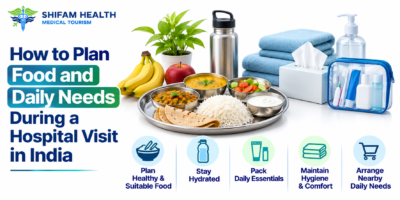
How to Plan Food and Daily Needs During a Hospital Visit in India
Filters & Insights
Written By :
Medically Reviewed By :

Shifam Health Medical Team
Shifam Health - Medical Reviews Department
10+ Years Of Experience
Plan food, drinking water and daily essentials during a hospital stay in India with practical tips for international patients.
📅
Last updated: November 3, 2026

Travelling to another country for medical treatment involves more than booking a hospital appointment and arranging accommodation. Patients and their families also need to think about everyday things: What will the patient eat? Can the hospital provide meals according to their dietary requirements? Where can a companion get food? Are drinking water, laundry, toiletries and other essentials easily available?
These questions may seem small when compared with the treatment itself, but they can make a significant difference to the comfort and convenience of an extended hospital visit.
For international patients visiting India, planning these arrangements in advance can help avoid unnecessary stress. Food preferences, religious or cultural requirements, allergies, medical dietary restrictions and the patient’s ability to eat independently should all be considered.
This guide explains how to plan meals and daily necessities during a hospital visit in India, what to confirm with the hospital, what to carry and how a family member or companion can organise practical arrangements.
An important point: A patient’s diet during treatment or recovery should follow the treating doctor’s or qualified dietitian’s advice. A familiar food preference should never override a prescribed medical diet.
Table of Contents
ToggleUnderstand the Patient’s Food and Dietary Requirements
Before arranging meals, understand what the patient can safely eat and drink. The right diet depends on the patient’s medical condition, treatment, medications and recovery stage.
For example:
- A patient recovering from surgery may have temporary restrictions on solid food or may need meals introduced gradually.
- A person with diabetes may need a meal plan that considers carbohydrate intake and medication timing.
- Patients with kidney disease may require individualised advice about salt, potassium, phosphorus, protein or fluid intake.
- Some cardiac patients may be advised to limit salt or follow other dietary recommendations.
- Patients receiving cancer treatment may experience nausea, appetite changes, mouth sores or difficulty swallowing.
- A patient with food allergies or intolerances needs those restrictions communicated clearly to the hospital and food provider.
Do not assume that a general healthy diet is suitable for every patient. Even familiar foods can be unsuitable in certain medical situations.
Prepare a simple dietary information sheet
Before travelling, write down the patient’s food requirements in a format that can be shared with the hospital.
Include:
- Food allergies and intolerances.
- Foods the patient avoids for religious, cultural or personal reasons.
- Any doctor-prescribed dietary restrictions.
- Whether the patient follows a vegetarian, vegan or other specific diet.
- Difficulty chewing or swallowing.
- Foods that cause nausea or digestive discomfort.
- Any prescribed fluid restriction.
- Whether the patient needs assistance with eating.
If the patient has a written diet chart or nutrition advice from their current doctor, carry a copy. The Indian treating team should review it and decide whether any changes are required.
Ask the Hospital About Patient Meals Before Arrival
Many hospitals have dietary departments, patient meal services or arrangements for ordering food. However, the available options, charges and procedures differ between hospitals.
Do not assume that every hospital offers the same menu or can accommodate every dietary requirement.
Contact the hospital’s international patient department or admission team and ask the following questions.
Questions about patient food
- Are meals included in the selected room or treatment package?
- Does the hospital provide vegetarian and non-vegetarian options?
- Can the kitchen accommodate specific allergies or dietary restrictions?
- Are low-salt, diabetic-friendly or other therapeutic diets available when prescribed?
- Can meals be adjusted for cultural or religious preferences?
- Is there a process for requesting a special diet?
- Can a family member bring food from outside?
- Are there restrictions on outside food in the ward or ICU?
- Can meals be provided at specific times if the patient has medication-related meal schedules?
- Who should the family contact if the patient cannot tolerate the food being served?
If the patient is likely to need a special diet, share the requirements before admission rather than waiting until the first meal.
Confirm whether the patient can eat independently
Some patients may need assistance because of weakness, limited mobility, post-operative restrictions or swallowing difficulties.
Ask whether nursing staff can assist with meals and whether a family member or attendant is expected to help. If the patient has swallowing difficulties, inform the clinical team before offering food or drinks. The team may need to assess swallowing safety and recommend an appropriate food texture or feeding method.
Plan Food for the Patient’s Companion
The patient’s companion also needs regular meals. This is particularly important when a family member is staying at the hospital for several days or weeks.
A companion may spend long hours attending appointments, waiting for test results or supporting the patient during admission. Irregular meals can make an already demanding experience more difficult.
Consider these arrangements:
Hospital cafeteria: Ask whether the hospital has a cafeteria or food court, its operating hours and available meal options.
Nearby restaurants: Identify a few restaurants close to the hospital. Check their opening hours, menu, delivery availability and suitability for the companion’s food preferences.
Food delivery: Confirm whether food delivery services can reach the hospital and whether the hospital permits delivery to the main entrance, reception or designated collection area.
Accommodation with a kitchen: For longer stays, a serviced apartment or accommodation with basic cooking facilities may offer more flexibility. Check whether cooking is permitted and whether utensils and refrigeration are available.
Packed snacks: Keep a small supply of suitable, non-perishable snacks for long hospital visits, subject to the hospital’s rules and the companion’s own dietary needs.
For more information about choosing a suitable place to stay, read our guide to affordable accommodation for medical tourists in India.
Check Food Safety and Drinking Water Arrangements
Food safety deserves particular attention during medical travel. A stomach infection, vomiting or diarrhoea can disrupt appointments and may be especially concerning for someone recovering from surgery or receiving treatment.
The World Health Organization recommends five basic food-safety practices: keeping clean, separating raw and cooked foods, cooking thoroughly, maintaining safe food temperatures and using safe water and raw materials.
For practical guidance, see the WHO’s Five Keys to Safer Food.
Practical food-safety precautions
- Prefer freshly prepared food from a reliable source.
- Choose food that is properly cooked and served hot.
- Avoid raw or undercooked meat, seafood and eggs.
- Be cautious with cut fruit, uncooked salads and food that has been left uncovered.
- Avoid food that has been sitting at room temperature for an extended period.
- Wash hands before eating.
- Use clean utensils and containers.
- Check packaging and expiry dates on packaged food.
- Follow the treating team’s advice if the patient has a weakened immune system or specific infection-related precautions.
The US Centers for Disease Control and Prevention provides additional guidance on food and drink safety while travelling.
Drinking water
Ask the hospital which drinking water arrangements are available for patients and companions. Use water from a source the hospital confirms is safe.
If using bottled water, check that the bottle is factory-sealed before opening. Avoid ice or drinks prepared with water of uncertain quality.
The CDC’s India travel health guidance also provides advice about food and drinking water precautions.
Patients with fluid restrictions should follow the treating doctor’s instructions about the permitted quantity and type of fluids. Do not encourage extra water intake without checking first.
Organise Daily Essentials for the Hospital Visit
A hospital visit can involve several days of admission, outpatient appointments or a longer recovery period. Carrying a few useful essentials can make the experience more comfortable.
The exact requirements depend on the hospital, the patient’s condition and the expected length of stay.
Personal hygiene and toiletries
Consider carrying:
- Toothbrush and toothpaste.
- Mild soap or body wash.
- Shampoo and comb.
- Moisturiser and lip balm.
- Tissues and personal hygiene products.
- Hand sanitiser.
- A small towel, if permitted.
- Any personal hygiene items the patient regularly uses.
Hospitals may provide some toiletries, but the range and quantity can vary. Confirm what is supplied before packing.
Clothing and comfort
Pack comfortable, loose-fitting clothes that are easy to change. Depending on the patient’s condition, front-opening clothing may be more practical than garments that need to be pulled over the head.
Useful items may include:
- Comfortable nightwear.
- Undergarments.
- Socks and non-slip footwear, if permitted.
- A light shawl or sweater.
- A change of clothes for the companion.
- A small laundry bag.
Ask the hospital whether patients are required to wear hospital gowns during particular stages of treatment or recovery.
Medication and medical supplies
Carry the patient’s current medication list and prescribed medicines in their original packaging, together with prescriptions where available.
Do not independently stop, replace or restart medicines because of travel or admission. The hospital team should review the medication list and explain which medicines the patient should continue.
If the patient uses equipment such as a hearing aid, spectacles, dentures, a walking aid or a medical device, inform the hospital in advance and ask whether any special arrangements are needed.
Useful items for a companion
A companion may find these items helpful:
- Mobile phone and charger.
- Power bank, subject to hospital rules.
- Notebook and pen.
- Copies of important documents.
- Comfortable clothing.
- Personal medicines.
- Water bottle, if permitted.
- Small amount of local currency.
- Basic toiletries.
For more detailed preparation, read what caregivers should prepare before travelling for treatment.
Arrange Accommodation and Laundry for Longer Stays
A patient’s admission may last longer than initially expected. Some patients also need to remain near the hospital after discharge for follow-up appointments or recovery monitoring.
Before selecting accommodation, consider:
- Distance from the hospital.
- Availability of meals or a kitchen.
- Access to drinking water.
- Laundry facilities.
- Lift access and wheelchair accessibility.
- Availability of an accompanying person’s bed.
- Proximity to pharmacies and grocery stores.
- Transport options for follow-up visits.
- Cancellation and extension policies.
If the patient has limited mobility, ask whether the accommodation has step-free access, suitable bathroom facilities and enough space for any mobility equipment.
For help with transport arrangements, see how to arrange accessible transport for patients in India.
Laundry arrangements
For a short hospital visit, carrying enough clothing may be sufficient. For a longer stay, check whether the hospital or nearby accommodation offers laundry services.
Ask about:
- Laundry charges.
- Collection and delivery timings.
- Whether urgent washing is possible.
- Whether the accommodation has a washing machine.
- Whether the patient’s clothing needs any special handling.
If the patient has an infection-control precaution or specific clinical requirements, follow the hospital’s instructions for handling clothing and personal items.
Step-by-Step Process to Plan Food and Daily Needs
A little preparation before departure can make daily arrangements easier.
Step 1: Understand the treatment schedule
Ask the hospital about the expected admission period, appointment schedule and whether the patient will be required to fast before any procedure or investigation.
Step 2: Confirm dietary requirements
Prepare a written list of allergies, restrictions and food preferences. Share it with the hospital’s admission or dietary department.
Step 3: Confirm hospital meal facilities
Ask about patient meals, companion food, special diets, cafeteria timings and outside-food rules.
Step 4: Select suitable accommodation
Choose accommodation based on the patient’s mobility, expected stay, meal requirements and distance from the hospital.
Step 5: Prepare an essentials checklist
Pack toiletries, comfortable clothes, prescribed medicines, medical documents and useful items for the companion.
Step 6: Identify nearby daily-needs facilities
Find a pharmacy, grocery store, laundry service and food outlet close to the hospital or accommodation. Confirm their operating hours rather than relying only on online listings.
Step 7: Keep emergency contacts accessible
Save the hospital’s admission desk, international patient department and relevant treating team contact details. Ask whom to contact if the patient develops a new symptom or cannot tolerate food or fluids.
Documents and Questions to Prepare
You do not need a large collection of paperwork for ordinary daily arrangements. However, a few documents and written details can help the hospital and family coordinate more effectively.
Documents to keep accessible
- Passport and visa copies.
- Hospital appointment or admission confirmation.
- Medical reports and investigation results.
- Current prescription and medication list.
- Known allergies and dietary restrictions.
- Doctor’s written dietary instructions, if available.
- Emergency contact details.
- Accommodation booking confirmation.
If you are still organising the patient’s medical records, our guide on how to prepare a digital medical file for an overseas specialist explains how to arrange reports and documents for easier review.
Questions to ask before arrival
Common Mistakes and Practical Tips
Mistake 1: Assuming the hospital provides every type of food
Hospitals may offer standard meals but may not be able to prepare every regional or specialised dish. Confirm the available options before admission.
Mistake 2: Bringing homemade food without checking hospital rules
Some hospitals restrict outside food, particularly in intensive care units or areas with infection-control requirements. Always ask first.
Mistake 3: Ignoring medical dietary restrictions
A patient’s usual diet may need to change during treatment. Do not arrange meals based only on personal preference; follow the clinical team’s advice.
Mistake 4: Forgetting the companion’s needs
The companion may spend most of the day at the hospital. Plan meals, rest periods, laundry and personal essentials for them too.
Mistake 5: Depending on one food outlet
Hospital cafeterias and nearby restaurants may have limited operating hours. Identify alternative options, especially if appointments or procedures run late.
Mistake 6: Carrying too many unnecessary items
Check what the hospital and accommodation already provide. Pack practical essentials rather than bringing bulky items that may not be needed.
Mistake 7: Not planning for a longer stay
Treatment schedules can change depending on medical assessment and recovery. Ask about accommodation extension policies and how to arrange additional daily supplies if the stay is extended.
11. When to Contact the Hospital or Specialist
Contact the hospital’s international patient department or treating team before arrival if:
- The patient has a serious food allergy.
- A specialised or medically prescribed diet is required.
- The patient has difficulty swallowing or eating independently.
- The patient needs feeding assistance.
- The patient has a fluid restriction.
- The patient requires special food preparation because of treatment or immune-related precautions.
- The patient uses medical equipment that may affect accommodation or daily arrangements.
- The companion needs to stay with the patient during admission.
- The patient has mobility limitations that affect access to food, toilets or accommodation.
If the patient develops new symptoms such as persistent vomiting, diarrhoea, difficulty swallowing or an inability to eat or drink, inform the clinical team promptly. Do not try to manage a potentially serious problem through food changes alone.
How Shifam Health Can Help
Planning medical travel involves several arrangements beyond the hospital appointment. Shifam Health assists international patients and their families with treatment-related coordination and practical travel planning in India.
Depending on the patient’s requirements, our coordination support can include:
- Hospital and doctor consultation coordination.
- Assistance with sharing medical reports for specialist review.
- Guidance on hospital admission and appointment arrangements.
- Medical visa invitation letter coordination and general visa guidance.
- Accommodation arrangement support.
- Airport pickup and local transport coordination.
- Medical escort coordination where required.
- Translation and interpretation support.
- Post-treatment follow-up coordination.
If you are planning treatment in India and would like help organising the practical arrangements, contact Shifam Health with the patient’s country, treatment requirement and expected travel period. We can help you understand the coordination steps and the information needed before travel.
Conclusion
Food and daily necessities may not be the first things families think about when planning treatment abroad, but they are an important part of a comfortable and organised hospital visit.
Before travelling to India, confirm the hospital’s meal arrangements, communicate allergies and medical dietary restrictions, plan food for the companion and identify nearby facilities for everyday requirements. Carry essential personal items and keep the treating team’s instructions accessible.
Most importantly, remember that dietary decisions during treatment should be guided by the patient’s medical team. With practical preparation and clear communication, patients and families can spend less time worrying about everyday arrangements and more time focusing on treatment and recovery.
Frequently Asked Questions
Do Indian hospitals provide food for international patients?
Many hospitals provide patient meals, but the menu, charges and dietary options vary. Confirm the arrangements with the hospital before admission.
Can international patients request vegetarian or special meals?
Some hospitals can accommodate vegetarian and other dietary preferences. Medically prescribed diets and allergy-related requirements should be discussed with the hospital in advance.
Can family members bring homemade food to the hospital?
This depends on hospital policy and the patient’s ward or clinical condition. Ask the admission team before bringing outside food.
Should patients carry food from their home country?
A small quantity of suitable packaged food may be useful, but check airline customs rules, storage requirements and the hospital’s food policy. Do not carry food that conflicts with the patient’s prescribed diet.
What should a companion arrange during a long hospital stay?
Plan meals, accommodation, laundry, transport, personal medicines and rest arrangements. Keep the hospital’s contact details accessible.
Can the patient eat restaurant food after discharge?
That depends on the treatment, recovery stage and doctor’s advice. Ask the treating team before changing the patient’s diet.


Popular Posts From Last Week
- October 31, 2026
- shifamhealth
A practical guide for international patients planning treatment in India. Learn how to confirm ICU facilities, emergency response,…
- October 31, 2026
- shifamhealth
A practical guide for international patients planning treatment in India. Learn how to check whether a hospital treats…
- October 31, 2026
- shifamhealth
A practical guide for international patients explaining how to confirm a treating doctor’s availability, consultation dates, surgery schedules,…
- November 1, 2026
- shifamhealth
A practical guide for international patients planning treatment in India when more than one specialist is needed. Learn…
- October 28, 2026
- shifamhealth
Preparing for a virtual consultation with an Indian specialist? Learn what happens before, during and after the appointment,…
- October 30, 2026
- Razi Khan
Learn how international patients can compare hospitals in India beyond the headline treatment price. Discover how to assess…
- October 28, 2026
- Areen Fatima
Learn how to prepare for a video consultation about treatment in India. Discover which medical reports to organise,…
- October 29, 2026
- shifamhealth
Learn how international patients can request a written treatment plan before travelling to India. Discover which medical details…
- November 3, 2026
- Shifam Health
Planning a hospital visit in India involves more than treatment and accommodation. International patients and their companions also…
- October 29, 2026
- shifamhealth
Learn how to compare two medical treatment recommendations before travelling to India. Understand how to assess clinical reasoning,…
- October 29, 2026
- shifamhealth
Learn what to do when your diagnosis is unclear and how an Indian specialist review may help. Discover…
- October 30, 2026
- shifamhealth
Learn how international patients can verify a doctor’s qualifications before travelling to India. Discover how to check medical…