


When someone you care about needs medical treatment in another country, travelling with them is a responsibility that goes beyond booking flights and packing a suitcase. You may be the person helping them communicate with doctors, organise medical reports, manage appointments, understand instructions and feel more comfortable in an unfamiliar place.
For international patients travelling to India, a caregiver or family companion can play an important role throughout the medical journey. This may be especially important when the patient is older, has limited mobility, is undergoing major surgery or needs assistance with everyday activities.
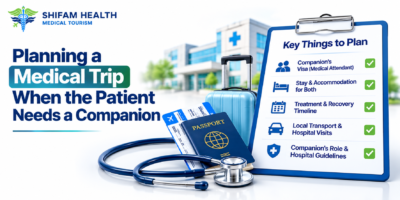
However, caregivers also need to prepare. You may have to arrange your own visa, organise the patient’s medical documents, understand hospital policies, plan accommodation and remain available during treatment and recovery.
A little preparation before departure can prevent confusion when you are already managing a demanding situation.
This guide provides a practical caregiver checklist for medical travel to India, covering documents, visa arrangements, hospital coordination, accommodation, personal essentials and responsibilities during the patient’s treatment.
Understand Your Role Before Travelling
Before making arrangements, understand what the patient may need from you. The responsibilities of a caregiver can vary significantly depending on the patient’s age, diagnosis, mobility and proposed treatment.
For some patients, the caregiver mainly helps with communication, travel and hospital appointments. Others may need daily assistance during recovery.
You may be expected to:
- Accompany the patient during airport transfers and hospital visits.
- Keep medical reports and prescriptions organised.
- Help the patient communicate questions to the hospital.
- Maintain a record of appointments and instructions.
- Coordinate accommodation, meals and local transport.
- Assist with daily activities when appropriate.
- Help arrange follow-up appointments.
- Communicate practical concerns to the hospital team.
It is important to distinguish between personal assistance and clinical care. A family member can provide emotional and practical support, but should not be expected to perform nursing procedures or make medical decisions without appropriate qualifications.
If the patient needs professional nursing or a trained caregiver, discuss this with the treating hospital before travelling.
For older patients, our guide on geriatric medical travel and caregiver support in India explains some of the additional arrangements that may be needed.
Step-by-Step: What Caregivers Should Prepare Before Departure
Step 1: Understand the Patient’s Medical Condition and Treatment Plan
Start by understanding why the patient is travelling and what treatment or consultation is expected.
You do not need to become an expert in the patient’s diagnosis. However, you should know the basic information required to coordinate the journey.

Ask the patient or treating doctor about:
- The confirmed or suspected diagnosis.
- The specialist or department involved.
- The proposed treatment or procedure.
- Existing medical conditions.
- Current medications and known allergies.
- Mobility limitations or special assistance requirements.
- Whether the patient needs an attendant during hospital admission.
- The estimated duration of treatment and recovery.
If the treatment plan is still under review, avoid making assumptions about the final procedure or length of stay.
You can read how to request a written treatment plan before travelling to India to understand what information should be obtained from the hospital before departure.
Step 2: Organise the Patient’s Medical Documents
Medical documents are among the most important things a caregiver should prepare.
A doctor in India may need to review previous investigations, treatment history and prescriptions before recommending the next steps.
Prepare a folder containing:
- Recent medical reports.
- Diagnosis summary.
- Blood test and laboratory results.
- MRI, CT, PET-CT, ultrasound or X-ray reports, where applicable.
- Previous operation notes and discharge summaries.
- Pathology or biopsy reports, if relevant.
- Current medication list.
- Allergy information.
- Previous specialist recommendations.
Keep the documents in chronological order and use clear file names.
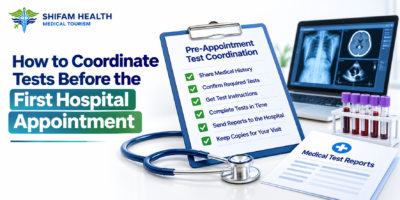
For imaging, ask the hospital whether it needs the original DICOM files rather than only the written radiology report.
These guides can help you organise the records:
- How to Prepare a Digital Medical File for an Overseas Specialist
- How to Share Large MRI and CT Files with an Indian Hospital
- How International Patients Can Organise Pathology Slides for Review in India
Keep one digital copy accessible to the caregiver and patient. Carry essential original documents when the hospital or authorities require them.
Step 3: Check the Caregiver’s Visa Requirements
Visa preparation should not be left until the last moment.
India has a Medical Attendant Visa category for eligible individuals accompanying patients travelling for medical treatment. However, eligibility, permitted attendant numbers, documentation and validity depend on the applicable government rules and the applicant’s nationality.
Before applying, check:
- Whether the caregiver qualifies for a Medical Attendant Visa.
- Whether the patient’s Medical Visa application is required first.
- Whether the hospital must provide an invitation or supporting letter.
- Whether proof of relationship is required.
- Whether the caregiver needs a separate application.
- Whether the visa validity covers the expected treatment and recovery period.
Do not assume that every relative automatically qualifies for a Medical Attendant Visa.
Read Shifam Health’s dedicated guide on Medical Attendant Visa for India. You can also review how to apply for an Indian Medical Visa online and the Indian Medical Visa 2026 guide.
For official requirements, use the Indian Visa Online portal and check the instructions issued by the relevant Indian embassy or consulate.
Step 4: Prepare the Caregiver’s Own Travel Documents
Caregivers sometimes focus so much on the patient’s paperwork that they forget to organise their own documents.

Prepare a separate folder containing:
- Valid passport.
- Applicable visa and supporting documents.
- Visa application confirmation, where relevant.
- Flight tickets and travel itinerary.
- Accommodation confirmation.
- Patient’s hospital invitation or appointment details.
- Emergency contact information.
- Copies of important patient documents.
- Travel insurance documents, if applicable.
Keep both printed and digital copies where practical.
The caregiver should also have access to the patient’s hospital contact details and know whom to contact if the two travellers become separated.
Step 5: Confirm the Hospital’s Attendant Policy
Not every hospital follows the same rules for patient attendants.
Before travelling, contact the hospital and ask:
- Can the caregiver accompany the patient during consultations?
- Is an attendant allowed inside the inpatient room?
- Are there restrictions on the number of attendants?
- Is a separate attendant pass required?
- Are additional charges applicable?
- Can the caregiver stay overnight?
- Are there facilities for attendants?
- What arrangements are available if the patient needs assistance after surgery?
Do not assume that a companion can remain with the patient at all times. Intensive care units, procedure areas and other hospital departments may have specific access restrictions.
If the patient is visiting more than one specialist, confirm whether the caregiver can accompany them to each appointment.
Our guide on questions to ask an international patient coordinator in India can help you prepare for these discussions.
Step 6: Arrange Suitable Accommodation
Accommodation should be selected according to the patient’s needs, not only the caregiver’s budget or preference.
For a patient recovering from surgery or experiencing mobility difficulties, a property with stairs, a distant bathroom or difficult access may create unnecessary problems.

Before booking, check:
- Distance from the hospital.
- Lift availability.
- Wheelchair accessibility.
- Bathroom facilities.
- Room size and sleeping arrangements.
- Availability of an extra bed.
- Meal arrangements.
- Laundry facilities.
- Transport availability.
- Cancellation and extension policies.
If the patient is expected to remain in India after discharge, ask whether the accommodation is suitable for recovery.
You can explore affordable accommodation for medical tourists in India for guidance on this part of the journey.
Also confirm whether the patient will need professional nursing or caregiving support after leaving the hospital. Ordinary accommodation and family assistance may not be sufficient for every recovery situation.
Step 7: Plan Airport Assistance and Local Transport
A caregiver should consider how the patient will move between the airport, accommodation and hospital.
If the patient has difficulty walking, is using a wheelchair or is recovering from a procedure, ordinary transport may not be suitable.
Confirm:
- Whether wheelchair assistance is required at the airport.
- Whether the airline needs advance notification.
- Whether the patient can sit comfortably in a standard vehicle.
- Whether a wheelchair-accessible vehicle is necessary.
- Whether the caregiver can accompany the patient during transfers.
- How follow-up hospital visits will be managed.
For patients who need medical supervision during transport, ask the treating hospital whether a medical ambulance or other specialised transfer is appropriate.
Do not assume that a standard airport pickup is suitable for a patient with significant medical or mobility needs.
Step 8: Prepare a Medication and Personal Care Checklist
Caregivers should know which medications the patient currently takes and how they are prescribed.
Prepare:
- A current medication list.
- Generic and brand names, where available.
- Dosage and frequency.
- Known drug allergies.
- Details of any medication that needs special storage.
- Relevant prescriptions.
- Medical devices or supplies the patient regularly uses.
Carry medicines in their original packaging where possible and check the applicable airline, customs and destination-country rules, especially for controlled or restricted medicines.
Never change a dose, stop medication or give additional medicine without instructions from the treating doctor.
Also consider the patient’s everyday requirements:
- Comfortable clothing.
- Suitable footwear.
- Walking aids, if used.
- Personal hygiene products.
- Glasses or hearing aids.
- Mobility equipment.
- Essential medical devices and their accessories.
The caregiver should ask the hospital whether any equipment will be available locally or needs to be brought from home.
Step 9: Prepare for Communication and Language Support
Medical travel can become difficult when the patient or caregiver cannot comfortably communicate with hospital staff.
Before travelling, identify the language in which the patient can understand medical explanations and ask questions.
If language support is needed, arrange a suitable interpreter in advance.
A caregiver may help with everyday communication, but complex medical discussions should be interpreted accurately. Avoid relying on informal translation for consent forms, medication instructions or important clinical decisions when a qualified interpreter is available.
Keep a written list of important information, including:
- Patient’s full name and passport details.
- Diagnosis and medical history.
- Current medications and allergies.
- Hospital appointment details.
- Emergency contact numbers.
- Questions for the treating doctor.
The caregiver should also know how to contact the hospital or coordination team if an appointment changes or an urgent practical issue arises.
Step 10: Understand the Recovery and Follow-Up Arrangements
The caregiver’s responsibilities may continue after the patient is discharged.
Depending on the procedure, the patient may need help with mobility, wound care arrangements, medication collection, physiotherapy and follow-up appointments.

Before discharge, ask the hospital:
- What assistance will the patient need?
- Are dressing changes required?
- Is physiotherapy recommended?
- Does the patient need a follow-up examination?
- Are there any restrictions on daily activities?
- When will the doctor assess fitness to fly?
- What symptoms require urgent medical attention?
- Can follow-up consultations be arranged online after returning home?
Hospital discharge does not automatically mean the patient is ready for international travel.
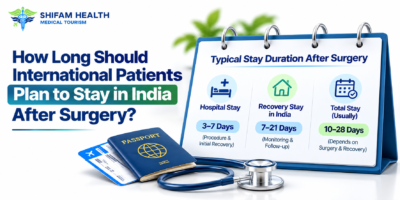
Read how long international patients should plan to stay in India after surgery and telemedicine follow-up care in Indian medical tourism to understand how recovery and follow-up arrangements can be planned.
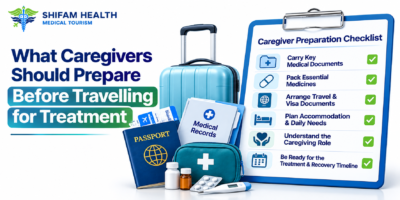
Complete Caregiver Checklist Before Travelling to India
Use this checklist to review the essential arrangements before departure.
Medical preparation
- Understand the patient’s diagnosis and proposed treatment.
- Collect recent medical reports and prescriptions.
- Organise imaging and pathology records, where relevant.
- Prepare a current medication and allergy list.
- Confirm the specialist consultation or admission details.
- Understand the expected hospital and recovery arrangements.
Visa and travel documents
- Check the patient’s visa requirements.
- Check the caregiver’s visa eligibility.
- Prepare the caregiver’s passport and supporting documents.
- Obtain the hospital invitation or appointment letter, where required.
- Keep printed and digital copies of essential documents.
- Confirm flight and accommodation details.
Hospital and accommodation
- Confirm the hospital’s attendant policy.
- Ask about overnight attendant facilities.
- Arrange accommodation suitable for the patient’s mobility.
- Confirm airport pickup and local transport.
- Check wheelchair or special assistance requirements.
- Ask about professional nursing or caregiver support if needed.
Personal and communication preparation
- Pack essential medicines and personal care items.
- Arrange language interpretation if required.
- Save hospital and emergency contact numbers.
- Prepare questions for the treating doctor.
- Keep funds available for unexpected expenses.
- Plan for possible changes to the treatment or return schedule.
Common Mistakes Caregivers Should Avoid
Travelling Without Understanding the Treatment Plan
A caregiver should know the purpose of the trip and the expected hospital process. Without this information, it can be difficult to organise appointments, accommodation and recovery arrangements.
Assuming the Medical Attendant Visa Is Automatic
Visa eligibility is determined by the applicable rules and authorities. Check the requirements before booking travel.
Carrying Incomplete Medical Records
Missing reports, prescriptions or previous discharge summaries can delay the specialist’s assessment. Organise the patient’s medical history before departure.
Booking Unsuitable Accommodation
A property that is far from the hospital or difficult to access may create additional challenges, particularly after surgery.
Not Preparing for an Extended Stay
Treatment dates and recovery periods can change. Keep some flexibility in accommodation, finances and return travel.
Taking Responsibility for Clinical Decisions
Caregivers can help patients understand instructions and communicate concerns, but treatment decisions must remain with the qualified medical team.
Ignoring Their Own Health and Rest
Caregiving can be tiring. Make sure you have enough time to rest, eat properly and manage your own essential needs. A caregiver who is exhausted may find it harder to support the patient consistently.
When Should Caregivers Contact the Hospital or Medical Coordinator?
Contact the hospital or medical coordination team before departure if:
- You are unsure about the patient’s treatment schedule.
- The patient needs wheelchair or mobility assistance.
- You need clarification about the Medical Attendant Visa.
- You want to confirm whether you can stay with the patient in the hospital.
- The patient needs accessible accommodation.
- You require airport pickup or specialised transport.
- You need professional nursing or caregiving support.
- You require language interpretation.
- You need to plan for a longer postoperative stay.
- You are unsure about follow-up arrangements after discharge.
If the patient’s condition is unstable or worsening, seek advice from a local medical professional before arranging international travel. Travel planning should not delay urgent medical attention.
How Shifam Health Can Support Patients and Their Caregivers
For international patients, arranging treatment abroad involves several practical steps. Caregivers often have to manage many of these arrangements while also supporting the patient.
Shifam Health helps coordinate communication and practical arrangements between international patients and hospitals in India.
Depending on the patient’s requirements, our support may include:
- Coordinating medical reports for hospital review.
- Arranging specialist consultation and appointment requests.
- Helping obtain preliminary hospital estimates and invitation letters.
- Providing guidance on Medical Visa and Medical Attendant Visa documentation.
- Coordinating airport pickup and accommodation arrangements.
- Helping arrange medical escort services where required.
- Coordinating language interpretation support.
- Assisting with hospital communication and post-treatment follow-up coordination.
The hospital and treating doctors remain responsible for clinical decisions, medical care, admission, discharge and recovery instructions. Visa approval is determined by the relevant authorities.
If you are travelling to India with a family member or patient who needs assistance, you can learn more about medical travel in India with Shifam Health or contact our team to discuss the patient’s requirements and the arrangements needed for both travellers.
Conclusion: Prepare Yourself So You Can Focus on the Patient
Travelling with someone for medical treatment is a meaningful responsibility. You may be helping them through an unfamiliar healthcare system, supporting them during difficult appointments and managing everyday arrangements while they focus on recovery.
The best way to make this journey manageable is to prepare before departure. Organise the medical documents, check visa requirements, confirm hospital attendant policies, arrange suitable accommodation and understand what the patient may need after treatment.
Do not overlook your own travel documents, finances, communication needs and rest. A well-prepared caregiver is better placed to support the patient without unnecessary confusion or last-minute pressure.
Remember: your role is to provide practical and emotional support, while the treating medical team remains responsible for clinical care.
With the right preparation and coordination, both the patient and caregiver can approach medical travel to India with greater confidence and clarity.
Frequently Asked Questions
Does a patient travelling to India for treatment need a caregiver?
Not every patient needs one. However, older patients, people with limited mobility and those undergoing major treatment may benefit from a companion. The treating doctor can advise whether additional assistance is necessary.
Can a family member apply for a Medical Attendant Visa in India?
Eligible family members or other qualifying attendants may apply, subject to current visa rules. Check the official requirements and relevant Indian mission instructions before applying.
Can a caregiver stay with the patient in the hospital?
This depends on the hospital’s attendant policy, room category and clinical requirements. Confirm overnight stay arrangements and any additional charges before travelling.
Should caregivers carry the patient’s medical reports?
Yes. Carry organised copies of relevant medical reports, prescriptions, investigation results and discharge summaries. The hospital may also request original imaging files or other documents.
Does a caregiver need medical training?
Not necessarily for personal and practical support. However, if the patient needs nursing procedures or clinical assistance, a qualified healthcare professional may be required.
Can a caregiver help the patient after discharge?
Yes. A caregiver may assist with daily activities, transport and appointments, depending on the patient’s needs. Clinical tasks should be handled by appropriately qualified healthcare professionals.