

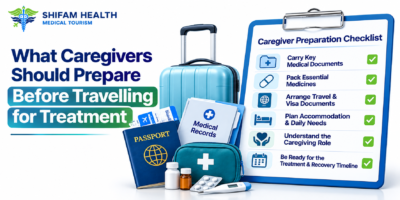


When a patient travels to India for medical treatment, having a companion can make the journey easier to manage. A family member, spouse, friend or designated attendant may help with travel arrangements, communication, hospital visits and everyday needs during recovery.
For patients undergoing major surgery, travelling with an existing medical condition or requiring assistance with mobility, a companion may be particularly important. However, travelling together requires preparation. The companion may need separate travel documents, visa arrangements, accommodation, local transport and a clear understanding of their responsibilities.
If you are planning medical travel to India with a companion, it is important to organise both the patient’s treatment journey and the companion’s travel arrangements before departure.
This guide explains how to plan a medical trip when the patient needs someone to accompany them, what documents to prepare, which questions to ask the hospital and how to avoid common problems.

Why Might a Patient Need a Companion During Medical Travel?
Not every patient requires an attendant. The need depends on the patient’s medical condition, age, mobility, treatment and ability to manage daily activities independently.
A companion may be helpful in the following situations:
Older Patients
Older patients may need assistance with airport navigation, hospital registration, communication, medication schedules and everyday activities.
Patients Undergoing Major Surgery
Patients travelling for procedures such as knee replacement, hip replacement or major cardiac surgery may need help with movement, transport and daily activities during recovery.
And Patients With Limited Mobility
A patient who uses a wheelchair, walking aid or other mobility support may benefit from a companion who can assist during airport transfers, hospital visits and accommodation arrangements.
Patients Who Need Language Support
A companion who understands the patient’s preferred language may help with communication. However, medical discussions should be interpreted accurately. A qualified medical interpreter may be necessary when the patient or companion cannot fully understand the language used by the healthcare team.
Patients Travelling for Long or Complex Treatment
Some patients need several consultations, investigations, treatment sessions or follow-up appointments. A companion can help organise documents, keep track of appointments and communicate practical concerns to the coordination team.
Important: A companion provides practical and personal support. They do not replace qualified medical professionals, nurses or trained caregivers when clinical assistance is required.
Step-by-Step Process for Planning a Medical Trip With a Companion
Step 1: Confirm Whether the Patient Needs a Companion
Begin by discussing the travel plan with the treating doctor or the specialist reviewing the patient’s medical records.
Consider:
- Can the patient travel independently?
- Does the patient need assistance walking or using a wheelchair?
- Will the patient require help with daily activities?
- Is the patient expected to undergo major surgery?
- Will someone need to stay with the patient after discharge?
- Does the patient have any communication or cognitive difficulties?
- Is a medically trained attendant necessary?
The answer may differ between the journey to India, the hospital stay and the recovery period.
For example, a patient may be independent before surgery but require assistance after the procedure. Ask the hospital what level of support may be needed during each stage.
Step 2: Choose the Right Companion
The companion should be someone who can manage the practical responsibilities of the trip and remain available throughout the expected stay.
Before deciding, consider whether the person:
- Can travel for the required duration.
- Is physically able to assist the patient, if needed.
- Can communicate with the patient and coordinate practical matters.
- Can manage documents, appointments and travel details.
- Is comfortable staying near a hospital.
- Can arrange leave from work or family responsibilities.
- Has the financial resources to cover their own travel and living expenses.
If the patient requires medical assistance, do not assume that a family member can provide all necessary care. Ask the hospital whether a professional caregiver, nurse or medical attendant is needed.
Step 3: Check the Companion’s Visa Requirements
Visa arrangements are an important part of international medical travel.
India has a Medical Visa category for eligible patients and a Medical Attendant Visa category for eligible companions. The number of attendants permitted, eligibility, validity and documentation requirements depend on the applicable rules and the applicant’s nationality.
Before applying, check:
- Whether the companion qualifies for a Medical Attendant Visa.
- Whether the patient has the appropriate Medical Visa.
- Whether the hospital needs to issue supporting documentation.
- Whether the companion must submit a separate application.
- Whether the visa validity covers the expected stay.
- Whether any additional documents are required by the relevant Indian mission.
Use the official Indian Visa Online portal and check the instructions of the relevant Indian embassy or consulate.
Do not assume that every relative automatically qualifies for a Medical Attendant Visa. A person travelling for a different purpose may need to apply under a different visa category.
Step 4: Collect the Patient’s and Companion’s Documents
Keep the documents organised separately so that both travellers can access what they need.
Patient’s documents
- Valid passport.
- Applicable visa documents.
- Medical reports and diagnosis summary.
- Prescriptions and medication details.
- Hospital appointment or invitation letter.
- Previous discharge summaries and operation records, where relevant.
- Flight and accommodation details.
Companion’s documents
- Valid passport.
- Applicable visa and supporting documents.
- Medical Attendant Visa documentation, if eligible.
- Relationship or other supporting documents, if required.
- Flight and accommodation details.
- Emergency contact information.
- Copies of the patient’s essential medical and hospital documents.

Keep digital copies of important documents in a secure location and carry essential originals where required.
For more guidance, read how to prepare a digital medical file for an overseas specialist.
Step 5: Coordinate the Hospital Appointment for Both Travellers
Before departure, confirm the patient’s consultation or admission details with the hospital.
Ask the hospital:
- Can the companion attend the initial consultation?
- Is the companion permitted to stay with the patient in the room?
- Are there restrictions on the number of attendants?
- Does the hospital provide attendant accommodation?
- Are there separate charges for an attendant?
- What identification documents are required for hospital registration?
- Can the companion receive updates if the patient is unable to communicate?
Hospital policies differ. Permission to accompany a patient during consultations or stay in an inpatient room should be confirmed directly with the hospital.
If several specialists are involved, ask whether the consultations can be coordinated around the patient’s and companion’s schedule. Our guide on planning a medical trip when more than one specialist is needed explains how to organise multiple appointments.
Step 6: Arrange Accommodation Suitable for Both
Accommodation should meet the needs of the patient and companion, particularly if the patient may have limited mobility after treatment.
Before booking, check:
- Distance from the hospital.
- Lift or wheelchair access.
- Availability of accessible bathrooms.
- Room arrangements for two people.
- Whether an extra bed is available.
- Kitchen or meal facilities, if required.
- Availability of local transport.
- Cancellation and extension policies.
If the patient is expected to remain in India after hospital discharge, ask whether the accommodation is suitable for postoperative recovery.
A companion should also have enough space and facilities to rest. Supporting a patient throughout a medical trip can be physically and emotionally demanding.
Step 7: Plan Airport Transfers and Local Transport
Airport transfers should account for the patient’s condition and the amount of assistance required.
Confirm:
- Whether the patient needs wheelchair assistance at the airport.
- Whether the airline requires advance notification of mobility assistance.
- Whether a standard vehicle is suitable or an accessible vehicle is needed.
- Whether the companion can travel with the patient during transfers.
- Whether transport is required for hospital visits and follow-up appointments.
- Whether special arrangements are needed after surgery.
Do not assume that a regular airport taxi will be suitable for a patient who has difficulty sitting, walking or entering a vehicle.
For patients with specific medical transport needs, ask the hospital or treating doctor what type of transfer is appropriate.

Step 8: Plan the Companion’s Responsibilities During Treatment
The companion should understand what they may need to manage during the patient’s stay.
Practical responsibilities can include:
- Keeping copies of medical documents.
- Helping the patient attend appointments.
- Communicating practical concerns to the hospital team.
- Maintaining a record of appointments and instructions.
- Helping arrange meals and transport.
- Supporting the patient with everyday activities.
- Coordinating accommodation and travel changes.
- Helping organise discharge documents and follow-up appointments.
The companion should not independently change medication, provide medical treatment or make clinical decisions on behalf of the patient.
For medical instructions, the treating doctor or qualified healthcare professional should remain the primary source of guidance.
Step 9: Plan for the Period After Hospital Discharge
A companion’s role may become even more important after surgery.
Depending on the procedure, the patient may need help with:
- Walking and movement.
- Dressing and bathing.
- Attending physiotherapy.
- Collecting medication.
- Travelling to follow-up appointments.
- Managing meals and daily routines.
Before discharge, ask the hospital whether the patient can safely stay in regular accommodation or needs professional nursing or caregiver support.
Also confirm when the patient may be fit to travel home. Hospital discharge does not automatically mean that the patient is ready for an international flight.
Our guide on how long international patients should plan to stay in India after surgery explains why the recovery period and travel clearance need to be considered separately.

What Should the Companion Prepare Before Travelling?
The companion should prepare for the journey just as carefully as the patient.
Essential Travel Checklist
- Passport and applicable visa.
- Flight tickets and travel itinerary.
- Accommodation confirmation.
- Hospital address and appointment details.
- Patient’s medical summary and emergency contacts.
- Copies of important prescriptions.
- Contact details of the hospital and coordination team.
- Sufficient funds for personal expenses and unexpected changes.
- Mobile phone, charger and suitable connectivity.
- Appropriate clothing and personal essentials.
Questions the Companion Should Ask the Hospital
- Can I accompany the patient during consultations?
- Can I stay in the patient’s hospital room?
- Are there additional charges for an attendant?
- Is a separate attendant pass or identification required?
- What support will the hospital provide after surgery?
- Will the patient need a professional caregiver after discharge?
- Can I receive updates if the patient is unable to communicate?
- Who should I contact in an emergency?
- What documents will I need when the patient is discharged?
- What arrangements are required before the patient can travel home?
Common Mistakes to Avoid When Travelling With a Patient
Applying for the Companion’s Visa Too Late
The companion’s visa should be considered alongside the patient’s application. Delays or missing supporting documents can affect the travel schedule.
Assuming Every Relative Can Stay in the Hospital
Hospitals have different rules for attendants, room occupancy and visiting hours. Confirm the arrangements before arrival.
Choosing a Companion Without Considering Their Availability
A companion who can travel only for a few days may not be able to support the patient throughout treatment and recovery.
Underestimating Accommodation Requirements
A room that is suitable before surgery may not be suitable after an operation. Consider accessibility, space, bathroom facilities and distance from the hospital.
Assuming a Companion Can Provide Medical Care
A family member or friend can provide personal support, but they may not have the training required for wound care, injections, medication administration or other clinical tasks.
Booking the Return Journey Too Early
The patient’s recovery may take longer than expected. Keep the return journey flexible and follow the treating doctor’s advice about fitness to fly.
Not Preparing for the Companion’s Own Needs
The companion also needs food, rest, communication facilities and enough funds for the stay. Planning these details can make the entire experience more manageable.
When Should You Contact the Hospital or Medical Coordinator?
Contact the hospital or your medical coordination team before travelling if:
- The patient cannot travel independently.
- The patient needs wheelchair or mobility assistance.
- You are unsure which visa category applies to the companion.
- The patient is expected to undergo major surgery.
- You need to confirm hospital attendant policies.
- You require accessible accommodation.
- You need airport pickup or special transport.
- The patient may need professional nursing or caregiver support.
- You need to plan a longer stay after discharge.
- The companion has questions about hospital communication or follow-up.
If the patient has an unstable or worsening medical condition, consult a local doctor before arranging international travel. A companion does not replace a medical assessment of whether the patient is fit to travel.
How Shifam Health Can Help Coordinate a Medical Trip With a Companion
Travelling for medical treatment involves arrangements for both the patient and the person accompanying them. Shifam Health helps international patients coordinate practical arrangements with hospitals in India.
Depending on the patient’s requirements, our support may include:
- Coordinating medical reports and hospital communication.
- Arranging specialist consultation and appointment requests.
- Helping obtain hospital estimates and invitation letters.
- Providing guidance on Medical Visa and Medical Attendant Visa documentation.
- Coordinating airport pickup and accommodation arrangements.
- Helping organise medical escort services where required.
- Arranging language interpretation support.
- Assisting with post-treatment communication and follow-up coordination.
The treating hospital remains responsible for medical care, clinical decisions, admission policies and discharge instructions. Visa approval is determined by the relevant Indian authorities.
If you are planning treatment in India and need to travel with a family member or attendant, share the patient’s medical reports and basic travel requirements with Shifam Health. Our team can help coordinate the initial hospital communication and practical arrangements for both travellers.
Conclusion: Plan the Journey Around the Patient’s Support Needs
Travelling with a companion can make medical treatment in India easier to organise, particularly when the patient is older, has limited mobility or is expected to undergo major surgery. However, the arrangements should be planned carefully before departure.
Confirm whether the patient needs a personal companion or professional medical assistance. Check the applicable visa requirements, prepare both travellers’ documents, understand the hospital’s attendant policy and arrange suitable accommodation and transport.
Most importantly, plan for the patient’s needs after discharge. The companion may be required to provide practical support during recovery, but clinical care and fitness-to-fly decisions must remain with qualified medical professionals.
A well-prepared companion is not simply another traveller; they are an important part of the patient’s practical support system throughout the medical journey.
Shifam Health can help coordinate hospital communication, appointments, visa documentation guidance, accommodation, airport pickup and other practical arrangements for international patients and their companions.
Frequently Asked Questions
Can a family member accompany a patient travelling to India for treatment?
Yes. A family member may accompany the patient, subject to applicable visa requirements and hospital policies. Check the appropriate visa category before applying.
What is a Medical Attendant Visa in India?
It is a visa category for eligible individuals accompanying a patient travelling to India for medical treatment. Eligibility and permitted attendant numbers depend on current government rules.
Can the companion stay in the hospital room?
This depends on the hospital, room category, patient condition and attendant policy. Confirm availability and any additional charges before travelling.
Does the companion need separate travel documents?
Yes. The companion needs their own valid passport and the appropriate visa or travel authorisation, along with any supporting documents required by the authorities.
Can a family member provide medical care after surgery?
A family member can provide personal assistance, but clinical tasks should be performed by appropriately qualified healthcare professionals. Ask the treating team whether a nurse or professional caregiver is needed.