



Liver Transplant Success Rate in India – Everything Patients Need to Know (2026)
Filters & Insights
Written By :
Medically Reviewed By :

Shifam Health Medical Team
Shifam Health - Medical Reviews Department
10+ Years Of Experience
Learn about liver transplant success rates in India, top hospitals, survival rates, recovery, and what international patients should know before treatment.
📅
Last updated: May 19, 2026
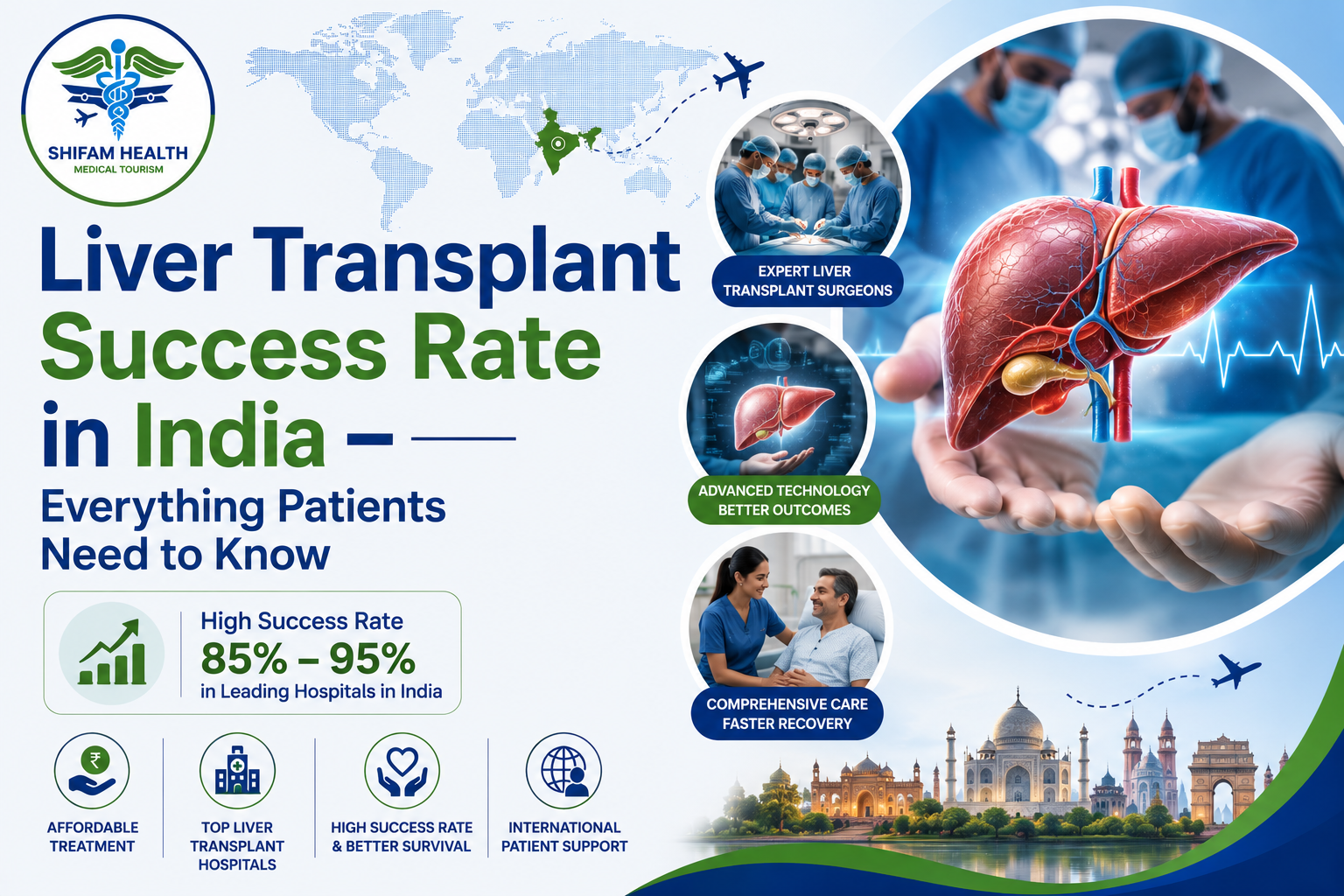
When a family receives news of liver failure, the world stops. Questions flood in — Is there a treatment? What are the chances? Where is the best place to go? For thousands of international patients every year, the answer increasingly points to one destination: India.
India has quietly become one of the world’s most trusted destinations for liver transplantation. Top hospitals in Delhi, Mumbai, Chennai, and Hyderabad now perform liver transplants with success rates comparable to the United States and the United Kingdom — at a fraction of the cost and with dramatically shorter waiting times. The liver transplant success rate in India for adult living donor transplants now exceeds 90% at the one-year mark in leading accredited centers. Pediatric liver transplant outcomes are similarly impressive, with many hospitals reporting outstanding long-term survival rates.
This guide helps international patients and families understand liver transplant success rates, treatment quality, and what to expect when choosing India for liver transplantation.
Table of Contents
ToggleWhat Is a Liver Transplant?
A liver transplant is a surgical procedure in which a diseased or failing liver is replaced with a healthy liver — either from a living donor or a deceased donor. The liver is one of the few organs that can regenerate, which makes living donor transplants possible. A donor can give a portion of their liver, and both the donor’s remaining liver and the transplanted portion will grow back to near-normal size within a few months.
Liver transplantation is considered one of the most technically complex surgical procedures in medicine. It requires a highly experienced surgical team, a dedicated transplant ICU, and advanced post-operative care infrastructure. India now has all of these in abundance.
When Is a Liver Transplant Needed?
Not every liver condition requires transplantation. Doctors recommend a liver transplant only when the liver has deteriorated beyond the point of recovery through medication or other interventions.
Common conditions that may lead to a liver transplant include:
- Cirrhosis (scarring of the liver) caused by alcohol, hepatitis B, hepatitis C, or non-alcoholic fatty liver disease
- Acute liver failure (sudden loss of liver function, sometimes caused by drug toxicity or viral hepatitis)
- Primary liver cancer (hepatocellular carcinoma) within transplant criteria
- Biliary atresia (a common reason for pediatric liver transplants)
- Wilson’s disease, autoimmune hepatitis, and other metabolic disorders
- Primary biliary cholangitis (PBC) and Primary sclerosing cholangitis (PSC)
- End-stage liver disease with a MELD score typically above 15–20
If your doctor has recommended a transplant evaluation, it means the liver disease has reached a stage where transplantation offers the best chance of survival and quality of life.
Liver Transplant Success Rate in India
This is often the first and most important question families ask. The reassuring answer is this: India’s leading liver transplant centers report success rates that rival the best hospitals in the world.
Overall success rates at India’s top hospitals:
| Metric | Rate at Leading Indian Hospitals |
|---|---|
| 1-Year Patient Survival Rate | 88% – 95% |
| 3-Year Patient Survival Rate | 80% – 90% |
| 5-Year Patient Survival Rate | 75% – 85% |
| Graft (Transplanted Liver) Survival at 1 Year | 85% – 93% |
| Living Donor Mortality Risk | Less than 0.5% |
These figures reflect outcomes at accredited transplant centers with high surgical volumes. The results improve further when the transplant is performed at the right stage of disease — not too early, and not too late.
One critical point: success rates are not just about the surgery itself. They reflect the quality of post-operative care, immunosuppression management, infection control, and long-term follow-up. India’s best transplant centers excel in all of these areas.
1-Year, 5-Year & Long-Term Survival Rates
Understanding survival rates is important — but so is understanding what they mean in practical terms.
Short-Term Survival (First Year)
The first year after transplant is the most critical. During this period, the risk of organ rejection and infection is highest. At India’s top hospitals, 1-year survival rates range from 88% to 95%, which is consistent with outcomes reported by leading US and European centers.
Medium-Term Survival (3 to 5 Years)
By the third year, most transplant recipients have stabilized on immunosuppression medications and have returned to active lives. 5-year survival rates in India’s best centers range from 75% to 85%.
Long-Term Survival (10+ Years)
Many liver transplant recipients live 20, 30, or even more years after transplantation. Long-term outcomes depend significantly on lifestyle, medication adherence, and regular monitoring. Patients who follow up consistently with their transplant team — which is easier today with telemedicine — can expect excellent long-term quality of life.
Survival Rate Comparison by Transplant Type:
| Metric | Rate at Leading Indian Hospitals |
|---|---|
| 1-Year Patient Survival Rate | 88% – 95% |
| 3-Year Patient Survival Rate | 80% – 90% |
| 5-Year Patient Survival Rate | 75% – 85% |
| Graft (Transplanted Liver) Survival at 1 Year | 85% – 93% |
| Living Donor Mortality Risk | Less than 0.5% |
Living Donor vs Deceased Donor Liver Transplant
India primarily performs living donor liver transplants (LDLT), and this is one of the major advantages for international patients.
In countries like the USA and the UK, patients often wait years on deceased donor waiting lists. In India, if a compatible living donor is available (typically a family member), the transplant can be arranged within weeks rather than years.
Living Donor Liver Transplant (LDLT) — Key Facts:
- The donor gives approximately 60–70% of their liver (the right lobe) for adult recipients
- For pediatric recipients, a smaller portion (left lateral segment) is used
- Both donor and recipient livers regenerate to near-full size within 6–12 weeks
- Donor risk is very low at experienced centers (less than 0.5% mortality)
- Outcomes for LDLT at Indian hospitals are excellent — often better than deceased donor transplants in terms of graft quality
Deceased Donor Liver Transplant (DDLT) — Key Facts:
- Performed when a brain-dead donor’s liver is available
- Waiting times in India are shorter than in Western countries
- Outcomes are slightly lower than LDLT but still excellent
- India’s cadaveric transplant program has grown significantly in recent years
Which Is Better?
For most international patients, living donor transplant is the preferred route — it eliminates waiting time, allows for scheduling, and generally produces slightly better outcomes due to the use of a healthy, non-marginal graft.
Adult vs Pediatric Liver Transplant Success Rates
Adult Liver Transplant in India
An Adult liver transplant is the most common procedure. India performs thousands of adult liver transplants annually, with growing volumes at centers in Delhi, Mumbai, Chennai, and Hyderabad. Adults typically receive the right lobe of the donor’s liver.
Adult liver transplant success rates in India:
- 1-year survival: 88% – 94%
- 5-year survival: 76% – 84%
Pediatric Liver Transplant in India
India has emerged as a global leader in pediatric liver transplantation, particularly for children with biliary atresia, Wilson’s disease, and metabolic liver disorders. Several Indian hospitals have dedicated pediatric transplant programs with outcomes comparable to the best children’s hospitals in the world.
Pediatric liver transplant success rates in India:
- 1-year survival: 88% – 96%
- 5-year survival: 80% – 88%
Children benefit particularly from living donor transplants, as a parent or close relative can donate a smaller portion of their liver. Pediatric transplant teams in India include specialized pediatric hepatologists, anesthesiologists, and intensive care specialists.
Also Read:- Top 10 Reasons Why India is the Preferred Destination for Pediatric Liver Transplant
Factors That Influence Liver Transplant Success
Understanding what affects your loved one’s chances of success allows you to make better decisions and prepare more effectively.
Pre-Transplant Factors:
- MELD score at time of transplant — lower MELD at transplant time generally improves outcomes
- Primary diagnosis — biliary disorders often have better outcomes than alcoholic liver disease with active use
- Patient’s age and overall health
- Presence of kidney dysfunction or infection at time of transplant
- Nutritional status
Surgical Factors:
- Surgeon experience and transplant volume — hospitals performing more than 100 transplants per year consistently show better outcomes
- Operating time and ischemic time (time the liver spends without blood supply)
- Graft quality (in deceased donor transplants)
Post-Transplant Factors:
- Medication adherence (immunosuppressants must be taken lifelong)
- Infection prevention and monitoring
- Regular follow-up with the transplant team
- Lifestyle choices — abstinence from alcohol, healthy diet, and physical rehabilitation
- Early detection and treatment of rejection episodes
The single most important predictor of good outcomes is choosing a high-volume, experienced transplant center with a dedicated multidisciplinary team. India’s top hospitals meet this standard fully
Explore:- Essential Checklist to Prepare for A Liver Transplant in India
Best Liver Transplant Hospitals in India
India’s leading liver transplant hospitals are accredited by the National Accreditation Board for Hospitals (NABH) and many hold Joint Commission International (JCI) accreditation — the gold standard for international hospital quality.
Top hospitals for liver transplant in India:
| Hospital | City | Key Strength |
|---|---|---|
| Medanta – The Medicity | Gurugram (Delhi NCR) | Highest transplant volume with a world-class liver unit |
| Indraprastha Apollo Hospital | New Delhi | JCI accredited with an experienced liver transplant team |
| Fortis Escorts Liver Institute | New Delhi | Dedicated liver transplant and hepatobiliary center |
| Max Super Speciality Hospital, Saket | New Delhi | Advanced hepatology services with specialized transplant ICU |
| Global Hospital | Mumbai | High pediatric liver transplant success rates |
| Kokilaben Dhirubhai Ambani Hospital | Mumbai | Advanced multidisciplinary transplant care |
| Apollo Hospitals | Chennai | JCI accredited with a strong pediatric transplant program |
| Gleneagles Global Health City | Chennai | Internationally accredited with a dedicated liver transplant unit |
| AIG Hospitals | Hyderabad | Specialized GI and liver transplant center |
| Manipal Hospital | Bangalore | Growing transplant volume with an experienced surgical team |
What to look for when choosing a hospital:
- Annual transplant volume (more than 100 per year is preferred)
- Dedicated liver transplant ICU
- 24-hour transplant surgeon availability
- International patient services department
- Multidisciplinary team (hepatologist, transplant surgeon, intensivist, nephrologist, cardiologist)
- Post-transplant care and telemedicine follow-up
Best Liver Transplant Surgeons in India
India has produced world-class liver transplant surgeons, many of whom trained at leading centers in the USA, UK, and Europe before returning to build India’s transplant programs.
Qualities that define a top liver transplant surgeon in India:
- Trained at internationally recognized transplant centers
- Performs more than 50–100 transplants annually
- Experience with both living and deceased donor procedures
- Expertise in adult and pediatric transplantation
- Published research in transplant medicine
When consulting Shifam Health, we can help you identify the most suitable surgeon for your specific diagnosis and assist with arranging a video consultation before you travel.
Technologies Improving Transplant Outcomes in India
India’s top transplant hospitals invest heavily in technology that improves surgical precision and patient safety.
Key technologies and advances:
- Machine perfusion systems — keep donor livers viable longer, improving graft quality
- Intraoperative ultrasound — real-time guidance during complex vascular anastomosis
- Advanced laparoscopic donor hepatectomy — minimally invasive donor surgery reducing recovery time
- Real-time ICU monitoring — continuous vital sign and organ function tracking
- Next-generation immunosuppression protocols — reducing rejection while minimizing side effects
- Telemedicine follow-up systems — enabling international patients to receive specialist follow-up remotely
These technological investments contribute directly to India’s improving transplant survival statistics
Liver Transplant Recovery Process
Recovery from liver transplantation follows a predictable but individual path. Understanding it helps families plan and prepare realistically.
Typical Recovery Timeline:
| Stage | Timeframe | Key Activities |
|---|---|---|
| ICU Stay | 5–10 days | Organ function monitoring and ventilator weaning |
| Hospital Stay | 2–4 weeks total | Wound care, immunosuppression initiation, and infection prevention |
| Early Recovery in India | 4–6 weeks post-discharge | Daily blood tests, clinic visits, and medication adjustment |
| Return to Home Country | 6–8 weeks post-transplant | Travel clearance from transplant team and telemedicine follow-up begins |
| Full Recovery | 3–6 months | Gradual return to normal activities with continued medication |
| Long-Term Monitoring | Lifelong | Annual or biannual follow-up with a local hepatologist |
Why we recommend staying in India for at least 6 weeks post-transplant:
The first 4–6 weeks after discharge are the highest-risk period for rejection and infection. Daily blood work, liver function tests, and close monitoring by the transplant team are essential. India’s hospitals have dedicated post-transplant outpatient programs for international patients during this period.
Life After Liver Transplant
The majority of liver transplant recipients report a dramatically improved quality of life compared to their pre-transplant condition.
What life after transplant looks like:
- Most patients return to work or normal daily activities within 3–6 months
- Many patients report feeling better than they have in years
- Immunosuppressive medications must be taken lifelong — but modern protocols have minimal side effects for most patients
- Regular monitoring (blood tests, liver ultrasound) continues long-term
- Alcohol must be completely avoided
- A healthy diet and physical activity support long-term graft function
- Pregnancy is possible for female recipients after consultation with the transplant team (usually 2+ years post-transplant)
Liver transplantation is not the end of a journey — it is the beginning of a healthier life.
Risks and Complications
Honesty matters in medical decision-making. While India’s hospitals achieve excellent outcomes, liver transplantation carries inherent risks that patients must understand.
Common risks and complications:
- Acute rejection — the immune system attempts to reject the new liver (manageable with medications in most cases)
- Infection — due to immunosuppression, patients are more vulnerable to bacterial, viral, and fungal infections
- Biliary complications — bile duct leaks or strictures (occur in 10–15% of cases, usually treatable)
- Vascular complications — rare blood vessel problems that may require intervention
- Kidney dysfunction — immunosuppressants can affect kidney function in some patients
- Recurrence of primary disease — hepatitis B, C, or liver cancer can recur (preventable with appropriate therapy)
These risks are significantly reduced when:
- The transplant is performed at a high-volume center
- Post-transplant monitoring is rigorous
- Patients adhere to their immunosuppression regimen
- Early warning signs are recognized and treated promptly
How India Became a Global Liver Transplant Hub
India’s rise as a liver transplant destination is the result of deliberate investment over two decades. Several factors explain this development.
High surgical volumes: Unlike Western countries where transplants are distributed across hundreds of hospitals, India concentrates transplants at specialized centers. This concentration creates surgical expertise that directly improves outcomes.
Cost-effective infrastructure: India offers world-class surgical care at significantly lower cost — allowing hospitals to invest in the latest technology while keeping procedures affordable.
Living donor availability: Indian law allows living related-donor liver transplants, which provides an advantage over Western countries where deceased donor waiting lists dominate.
Internationally trained surgeons: Many of India’s leading transplant surgeons received advanced fellowship training at the Mayo Clinic, Cleveland Clinic, King’s College London, and other global centers.
Regulatory framework: The Transplantation of Human Organs and Tissues Act (THOTA) provides a legal, ethical framework that governs transplantation in India, ensuring donor welfare and transplant transparency.
International patient infrastructure: Leading hospitals have dedicated international patient departments with multilingual staff, visa assistance, and accommodation support.
Country Comparison — Liver Transplant:
| Country | Approx. Cost (USD) | 1-Year Survival | Average Wait Time | International Patient Access |
|---|---|---|---|---|
| India | $25,000 – $50,000 | 88% – 95% | Weeks (LDLT) | Excellent |
| USA | $300,000 – $500,000 | 90% – 96% | 1–3 years (DDLT) | Limited |
| UK | $200,000+ | 90% – 94% | 1–2 years (NHS) | Very limited |
| Turkey | $40,000 – $80,000 | 85% – 90% | Weeks (LDLT) | Good |
| UAE | $80,000 – $150,000 | 85% – 90% | Months | Moderate |
| Singapore | $100,000 – $200,000 | 88% – 93% | Months | Good |
India’s core advantages over competing countries:
- Cost — 80–90% less than USA, 60–70% less than UK, 30–40% less than Turkey and Singapore
- Wait time — living donor transplants can be performed within weeks
- Surgical expertise — comparable to the best global centers
- International accessibility — English widely spoken, dedicated international patient support
- Telemedicine follow-up — allows patients to return home earlier
Explore:
Top 10 Cheapest Countries for Liver Transplant: Cost Comparison & Care Quality
Why International Patients Choose India
Beyond statistics, international patients and families choose India for deeply practical reasons.
Language: English is widely spoken across India’s leading hospitals. Many hospitals also provide Arabic, French, Swahili, and Bengali interpreters.
No racial or national bias: India welcomes patients from all countries without discrimination.
Spiritual and dietary sensitivity: Indian hospitals understand the dietary and religious needs of Muslim, Christian, Hindu, and Buddhist patients.
Family-centered care: Indian healthcare culture is family-oriented. Hospitals accommodate family members during the patient’s stay and involve them in care decisions.
Telemedicine continuity: After returning home, patients can continue follow-up with their Indian transplant team via video consultation — often for years.
Transparent pricing: Reputable facilitators like Shifam Health provide transparent cost estimates upfront, preventing surprise billing.
Medical Visa Process for Liver Transplant in India
International patients require a Medical Visa (M-Visa) to receive treatment in India.
Documents typically required:
- Passport (valid for at least 6 months)
- Medical reports confirming the diagnosis requiring transplant
- Hospital invitation or appointment letter from the Indian hospital
- Proof of financial means to cover treatment
- Recent passport-sized photographs
Medical Attendant Visa:
Family members accompanying the patient can apply for a Medical Attendant Visa (MX-Visa), which allows them to accompany the patient during treatment.
Processing time: Typically 3–7 working days from the Indian consulate or embassy in your country.
Shifam Health assists with: obtaining the hospital invitation letter, compiling the visa document package, and providing guidance on the application process for your specific country.
For more Details refer to this guide:
How to get Medical Visa for India: A Complete Guide (2026)
International Patient Support at Shifam Health
Shifam Health specializes in supporting international patients through every step of the liver transplant journey from the first inquiry to long-term follow-up after you return home.
Our support includes:
- Free initial medical evaluation and second opinion coordination
- Hospital and surgeon matching based on your diagnosis and budget
- Video consultation with the transplant team before travel
- Medical visa invitation letter and application guidance
- Airport pickup and accommodation arrangements
- Daily coordination during hospital stay
- Interpreter services where needed
- Post-discharge monitoring support in India
- Telemedicine follow-up coordination after you return home
Getting in touch costs nothing. If you or a family member has been advised to consider liver transplantation, contact Shifam Health today to receive a free assessment and a cost estimate from India’s top transplant centers.
Conclusion
Liver transplantation is one of the most life-changing medical procedures a person can undergo. When facing liver failure, the choice of where to receive treatment and which team to trust, may be the most important decision a family ever makes.
India’s top liver transplant centers offer something rare in medicine: globally competitive outcomes at a fraction of the cost, combined with accessible living donor programs, short waiting times, and exceptional post-transplant care.
If your family is considering liver transplantation, you deserve honest information, expert guidance, and compassionate support from a team that understands international patients.
Shifam Health is here to help you every step of the way from understanding your options and obtaining a second opinion, to selecting the right hospital and surgeon, arranging your medical visa, and ensuring you have support from the moment you land in India to the day you return home.
Frequently Asked Questions (FAQ)
What is the liver transplant success rate in India?
India’s leading liver transplant hospitals report 1-year patient survival rates of 88% to 95%, comparable to the best transplant centers in the USA and UK. Five-year survival rates range from 75% to 85% at top accredited hospitals.
Is liver transplant safe in India?
Yes. India’s accredited liver transplant centers have strong safety records with outcomes comparable to Western countries. Living donor mortality risk is less than 0.5% at experienced centers.
How long can a patient live after liver transplant in India?
Many patients live 20–30 years or more after liver transplantation. Long-term survival depends on medication adherence, lifestyle choices, and regular medical follow-up.
What is the recovery time after liver transplant in India?
Most patients spend 2–4 weeks in hospital followed by 4–6 weeks of recovery in India before receiving clearance to travel home. Full recovery takes 3–6 months.
Is India good for pediatric liver transplant?
India has advanced pediatric liver transplant programs with survival rates comparable to leading children’s hospitals worldwide.
What is the cost of liver transplant in India?
The cost ranges from $25,000 to $50,000 USD depending on the type of transplant, hospital, and complexity of the case.
How successful are living donor liver transplants in India?
Living donor liver transplants in India achieve 1-year survival rates of 90–95% at leading centers. The procedure is safe for donors, with mortality risk below 0.5% at high-volume hospitals.
How long does the liver transplant surgery take?
Adult liver transplant surgery typically takes 6–12 hours. Pediatric transplants may take 5–8 hours. Duration depends on surgical complexity and donor anatomy.
What medications will I need after liver transplant?
Patients need lifelong immunosuppressive medications to prevent rejection, with monthly costs in India typically ranging from USD 200–500.
How do I know if my family member is a suitable donor?
Doctors evaluate donors through blood group matching, liver assessment, and health screening, while Shifam Health coordinates the process with the hospital.
What happens if the liver is rejected?
Doctors usually control mild rejection with medication adjustments, while severe cases may need stronger treatment or, rarely, retransplantation.
Suggested Internal Links


Popular Posts From Last Week
- October 27, 2026
- Razi Khan
Imagine you have decided to seek a specialist’s opinion from another country. You have laboratory reports, prescriptions, scan…
- October 23, 2026
- shifamhealth
A fluttering chest, a sudden racing heartbeat or a skipped beat can be frightening, and it is hard…
- October 27, 2026
- Razi Khan
Receiving a medical treatment package from a hospital can feel like a major step forward. You have a…
- October 26, 2026
- Razi Khan
Learn how to send large MRI and CT files to an Indian hospital for specialist review. This guide…
- October 25, 2026
- shifamhealth
What is a ventricular septal defect? A ventricular septal defect (VSD) is an opening in the wall (septum)…
- October 22, 2026
- shifamhealth
A remote medical second opinion from India allows patients living in the USA, UK and other countries to…
- October 21, 2026
- shifamhealth
When you receive treatment estimates from two hospitals in India, do not compare only the final amounts. To…
- October 22, 2026
- shifamhealth
An itemized hospital quote in India should clearly explain the expected cost of treatment by separating major charges,…