


Home > Blog > Medical Visa vs Tourist Visa for India (2026): Which Visa Do U.S. Patients Need for Surgery?
Medical Visa vs Tourist Visa for India (2026): Which Visa Do U.S. Patients Need for Surgery?
Filters & Insights
Written By :
Medically Reviewed By :

Shifam Health Medical Team
Shifam Health - Medical Reviews Department
10+ Years Of Experience
Learn whether U.S. patients need a medical visa or tourist visa for surgery in India. Compare eligibility, documents, benefits, & application steps.
📅
Last updated: July 25, 2026

Reviewed by the Shifam Health International Patient Coordination Team | Published July 2026 | Last reviewed July 2026
Quick Answer
- If you’re traveling to India to receive treatment, consultation, or surgery, you need a Medical Visa — not a Tourist Visa. This applies regardless of how minor the procedure is or how short your trip is.
- A Tourist Visa cannot legally be used for hospital admission or treatment in India. Hospitals routinely ask for visa proof before admission, and using the wrong visa risks denied boarding, denied entry, or refused treatment.
- There are two Medical Visa routes: the e-Medical Visa (online, fast, available to citizens of most eligible countries) and the regular/paper Medical (M) Visa (through an Indian mission, required for a smaller number of nationalities and for stays beyond what the e-Visa allows).
- Family members or caregivers need their own separate visa — a Medical Attendant Visa (e-Medical Attendant or MX, depending on route) — even if traveling on the same flight as the patient.
- Shifam Health coordinates the correct visa pathway for your nationality and treatment type as part of hospital placement, so this decision isn’t left to guesswork.
Why This Confusion Happens
A tourist visa is the visa most people have used before, it’s often faster to research, and critically it technically lets you enter India. That’s exactly why it causes problems: the visa will scan as valid at check-in and immigration, but it does not authorize the actual purpose of your trip. The mismatch usually surfaces at the worst possible moment hospital admission, or immigration questioning on arrival — not before.
This guide exists to settle the question completely, with the specific scenarios where people get this wrong.
Table of Contents
ToggleMedical Visa vs. Tourist Visa: Comparison
| Comparison | Medical Visa (e-Medical / M-Visa) | Tourist Visa (e-Tourist) |
|---|---|---|
| Purpose | Medical consultation, diagnostic evaluation, surgery, or treatment at a recognized Indian hospital. | Tourism, sightseeing, visiting family or friends, and other permitted non-medical activities. |
| Hospital Admission | Yes. This is the appropriate visa category for planned medical treatment. | Generally not appropriate for planned hospital admission or medical treatment. Hospitals commonly request proof of the correct medical visa before elective treatment. |
| Core Required Document | Hospital invitation or medical letter describing the diagnosis, proposed treatment, and expected dates of care. | No medical documentation is normally required. |
| Typical Validity (e-Medical) | Usually 60 days from the first arrival, with triple entry, subject to current Government of India regulations. | Validity varies by visa category (for example, 30 days, 1 year, or longer), with different entry conditions. |
| Extension | May be considered through the FRRO/e-FRRO on medical grounds, subject to approval. | Generally not extendable for the purpose of receiving medical treatment. |
| Companion / Family Visa | Up to 2 Medical Attendant Visas may be issued for eligible accompanying family members. | No equivalent attendant category. Family members must obtain an appropriate visa based on their travel purpose. |
| Who Uses the Paper (M) Visa? | Patients from countries that are not eligible for the e-Medical Visa, or where embassy-issued medical visas are required due to nationality or treatment circumstances. | Not applicable. |
| Risk of Using the Wrong Visa | This is the correct visa category for planned medical treatment in India. | Using a tourist visa for planned treatment may result in hospital admission difficulties and immigration-related issues. Always follow the latest Government of India visa requirements before travelling. |
Note on the two Medical Visa routes: Not everyone applies for the e-Medical Visa online. Depending on your nationality, you may be required to apply for a regular (paper) Medical Visa in person or through an authorized visa application centre. This distinction matters — if you’re not eligible for the e-Visa route, don’t assume the whole Medical Visa process doesn’t apply to you; it means you use the other pathway, not that you can substitute a tourist visa.
Decision Tree: Which Visa Do I Need?
Start here: What is the primary purpose of your trip to India?
- “I am going for a consultation, diagnostic test, or treatment/surgery at an Indian hospital.” → You need a Medical Visa. Confirm with your hospital whether you’re eligible for the e-Medical route or need the paper M-Visa based on your nationality.
- “I am accompanying someone who is receiving treatment.” → You need a Medical Attendant Visa, linked to the patient’s Medical Visa. This is a separate application — your own passport, your own approval.
- “I am going purely for sightseeing, and might get a minor unrelated check-up while there.” → A Tourist Visa may be appropriate, but any planned treatment, however minor, should not be arranged under a Tourist Visa. If treatment is planned in advance, apply for the Medical Visa instead.
- “I’m already in India on a Tourist Visa and unexpectedly need treatment.” → This is a different, narrower situation — see the emergency scenario below. It is not the same as planning treatment in advance on a Tourist Visa.
Real-World Scenarios
Scenario 1: Arriving with a Tourist Visa and a Confirmed Surgery Date
A patient has a passport, a booked flight, a hotel reservation, and a confirmed surgery date at an Indian hospital — but only holds a Tourist Visa.
What can happen: Airlines and immigration increasingly cross-check the stated purpose of travel against visa type, particularly with AI-assisted document checks introduced in 2026. At minimum, the hospital will likely refuse admission for a planned procedure without the correct visa on file — hospitals require this for their own compliance, not as a formality. In the worst case, this can mean denied boarding at the origin airport or complications at Indian immigration.
What to do instead: Apply for the Medical Visa before booking anything non-refundable. If you’re already mid-process and realize the mismatch, contact your hospital’s international patient office immediately — this needs to be corrected before travel, not after arrival.
Scenario 2: Patient Needs Chemotherapy
Cancer treatment typically involves multiple hospital visits over weeks or months, not a single admission. This makes the Medical Visa’s multi-entry structure and extension provisions directly relevant — a single-entry or short-validity visa would not support the actual treatment timeline. Confirm your treatment protocol’s expected duration with your oncology team before applying, so the visa application reflects a realistic timeline from the start.
Scenario 3: Patient Needs Heart Surgery
Cardiac procedures typically involve pre-operative testing, the procedure itself, and a defined recovery period before discharge is medically appropriate. A Medical Visa supports this full window; a Tourist Visa does not, and hospitals will generally decline to schedule a cardiac procedure without visa confirmation on file first.
Scenario 4: Patient Coming for IVF
IVF treatment often requires more than one visit — an initial consultation and testing phase, followed by the treatment cycle itself, sometimes with a gap between them. The Medical Visa’s triple-entry structure (for e-Medical) is specifically useful here, since it supports return visits within the same visa validity rather than requiring a fresh application each time.
Scenario 5: Patient Bringing a Spouse
Each accompanying person needs their own Medical Attendant Visa application — their own passport, their own documents, their own approval. A spouse cannot travel “under” the patient’s visa. Up to two attendants can typically be linked to one patient’s Medical Visa, but each is a separate case.
Scenario 6: Patient Requires Follow-Up Visits
If your treatment plan includes a return trip for follow-up (common after transplant surgery, staged procedures, or certain cancer treatments), discuss this with your hospital before your first visit. Whether a single Medical Visa can cover both visits, or whether a fresh application is needed, depends on the visa’s remaining validity and entry count — this is worth confirming in writing rather than assuming.
Step-by-Step: How to Apply for the Correct Visa
- Confirm your treating hospital in India and get your treatment plan in writing.
- Request the hospital invitation letter — this is mandatory for any Medical Visa application and is usually the actual bottleneck in the timeline, not the visa form itself.
- Check your nationality’s eligibility for the e-Medical Visa route versus the paper M-Visa route.
- Gather supporting documents: passport (6+ months validity, blank pages), recent photo meeting current specifications, medical reports, proof of funds, hospital letter.
- Submit the application — online via the official Government of India e-Visa portal for e-Medical, or through the relevant Indian mission/visa application centre for the paper route.
- Apply for Attendant Visas separately for anyone accompanying you, once your application is in progress or approved.
- Confirm registration requirements — foreign nationals on longer-validity Medical Visas may need to register with the local FRRO within a set window after arrival; check whether this applies to your specific visa.
Travel Day Checklist
Before you fly
- Correct visa approved and printed (not just the application confirmation)
- Hospital invitation letter — physical and digital copy
- Passport valid 6+ months, with required blank pages
- Medical reports and prescriptions, digital and physical
- Proof of accommodation and return/onward flight
At check-in and immigration
- Keep visa, passport, and hospital letter together and accessible — not buried in checked luggage
- Be prepared to state the purpose of travel consistently with your visa type if asked
- Attendants should carry their own full document set, separate from the patient’s
On arrival at the hospital
- Present visa and hospital letter at admission — this is standard, not a sign of a problem
- Confirm registration requirements with the hospital’s international patient team if your visa validity requires it
Common Mistakes
- Applying for a Tourist Visa because it “looks simpler.” It’s not a shortcut — it’s the wrong document for the purpose.
- Assuming a spouse or family member is covered under the patient’s visa. They are not; each attendant needs their own application.
- Booking non-refundable flights before visa approval. Visa timelines can shift; protect your booking flexibility until it’s confirmed.
- Not checking whether your nationality uses the e-Medical route or the paper route. These have different processes, and assuming the wrong one causes delays.
- Treating the hospital invitation letter as a formality. It’s the actual critical-path document — get your hospital and treatment plan confirmed early, not the visa form.
- Fixing a return date before your medical team confirms discharge readiness, particularly for cardiac, oncology, or transplant care where recovery timelines are genuinely variable.
Myths vs. Facts
| Myth | Fact |
|---|---|
| “A tourist visa is fine for a quick or minor procedure.” | Planned medical treatment in India generally requires the appropriate Medical Visa or e-Medical Visa, regardless of how minor or short the procedure may be. |
| “My spouse can travel on my visa since we’re going together.” | Each accompanying family member normally requires a separate Medical Attendant Visa (where eligible) or another appropriate visa issued in their own name. |
| “The medical visa takes much longer, so I’ll travel on a tourist visa and sort it out later.” | Once the required hospital invitation letter is available, the e-Medical Visa process is often completed within a similar timeframe. Arriving on the wrong visa can create unnecessary complications with hospital admission or immigration authorities. |
| “If I’m already in India on another visa and become sick, I must leave the country and apply again.” | Foreign nationals who develop an unexpected medical condition while already in India may have options depending on their circumstances. Requirements vary, so patients should seek guidance from their treating hospital and the local FRRO/e-FRRO. |
| “Everyone applies for an Indian Medical Visa in the same way.” | Application procedures vary by nationality and eligibility. Some travelers can apply online for an e-Medical Visa, while others must apply through an Indian Embassy, High Commission, or authorized Visa Application Centre. |
Frequently Asked Questions
Can I use a Tourist Visa for surgery in India?
No. Any planned treatment or hospital admission requires a Medical Visa, regardless of the procedure’s complexity or your length of stay.
What’s the difference between the e-Medical Visa and the regular Medical (M) Visa?
The e-Medical Visa is an online application available to citizens of most eligible countries, typically valid 60 days with triple entry. The regular/paper M-Visa is processed through an Indian mission or visa centre, required for nationalities not covered by the e-Visa system or for longer treatment timelines.
Will the airline check my visa type before I board?
Airlines and immigration authorities can and do cross-check stated travel purpose against visa category, and this scrutiny has increased with 2026’s AI-assisted verification tools. Traveling with a mismatched visa carries real risk, not just theoretical risk.
Can a hospital admit me for treatment if I only have a Tourist Visa?
Generally no — recognized hospitals require the correct visa documentation before admission as part of their own compliance requirements, not as an optional formality.
Can my visa be converted from Tourist to Medical after I’ve already arrived in India?
There are limited provisions for foreigners already in India who fall ill unexpectedly, but this is a distinct emergency process — it is not a routine way to bypass applying for the correct visa when treatment is planned in advance.
How many attendants can accompany a patient?
Typically up to two, each requiring their own separate Medical Attendant Visa application and approval.
Does my spouse need their own visa, or can they travel under mine?
They need their own Medical Attendant Visa application — visas are individual, not shared, even for immediate family.
Can children accompany the patient?
Yes, but each individual — including minors — generally needs their own passport and their own visa application; requirements for minors typically include additional documents such as parental consent.
What is the hospital invitation letter, and why do I need it before applying?
It’s an official letter from your treating Indian hospital confirming your admission or treatment plan. It’s a mandatory supporting document for the Medical Visa application, and in practice it’s usually the step that determines your actual timeline.
Can the Medical Visa be extended if my treatment takes longer than expected?
Extensions are possible in many cases, generally through the local FRRO office, assessed case by case based on medical justification.
Is the Medical Visa the same for all nationalities?
No — eligibility for the online e-Medical route varies by nationality, and some applicants must use the paper Medical Visa process instead.
What documents does a Medical Attendant need that a patient doesn’t?
A declaration linking them to the patient, along with copies of the patient’s hospital letter and relevant documents, in addition to their own standard visa documents.
Can I use a Medical Visa for cosmetic or dental treatment?
This depends on the specific procedure and hospital documentation — some cosmetic or dental treatments not tied to a medical necessity may not qualify in the same way as medically necessary procedures. Confirm with your hospital before applying.
Is there an emergency Medical Visa process?
Provisions exist for genuine medical emergencies, but the specific process and eligibility should be confirmed directly with the nearest Indian mission or your hospital coordinator, as this differs from standard planned-treatment applications.
Where can I check the current, official visa rules directly?
The Government of India’s official e-Visa portal (indianvisaonline.gov.in) and your nearest Indian consulate or high commission are the authoritative sources — rules and fees can change without notice, so cross-check before finalizing plans, even against guides like this one.
Talk to Shifam Health Before You Apply
Getting the visa pathway right for your specific nationality, treatment type, and travel companions — is the first real decision point in your treatment journey, not a paperwork afterthought. Our international patient team confirms this alongside your hospital placement, so you’re applying for the right visa the first time.
[Get Your Free Visa & Treatment Planning Consultation →]
Relatable Reads:
- How to Apply for Indian Medical Visa Online
- Medical Visa Processing Time India
- Medical Visa Extension India
- Kidney Transplant Cost in India
- Best Kidney Transplant Hospitals in India
- Living Donor Kidney Transplant in India
- Medical Tourism in India: Complete Guide
- Medical Visa from Bangladesh to India
- Medical Visa from Nigeria to India


Popular Posts From Last Week
- October 27, 2026
- Razi Khan
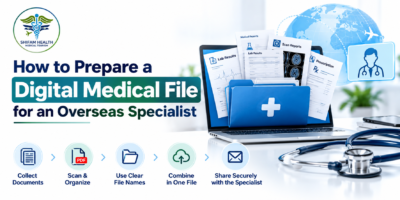
Imagine you have decided to seek a specialist’s opinion from another country. You have laboratory reports, prescriptions, scan…
- October 23, 2026
- shifamhealth
A fluttering chest, a sudden racing heartbeat or a skipped beat can be frightening, and it is hard…
- October 27, 2026
- Razi Khan
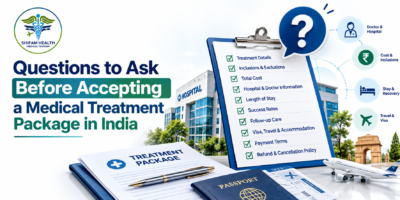
Receiving a medical treatment package from a hospital can feel like a major step forward. You have a…
- October 26, 2026
- Razi Khan
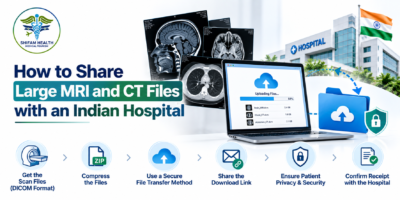
Learn how to send large MRI and CT files to an Indian hospital for specialist review. This guide…
- October 25, 2026
- shifamhealth
What is a ventricular septal defect? A ventricular septal defect (VSD) is an opening in the wall (septum)…
- October 22, 2026
- shifamhealth
A remote medical second opinion from India allows patients living in the USA, UK and other countries to…
- October 21, 2026
- shifamhealth
When you receive treatment estimates from two hospitals in India, do not compare only the final amounts. To…
- October 22, 2026
- shifamhealth
An itemized hospital quote in India should clearly explain the expected cost of treatment by separating major charges,…