



Break Free from Chronic Pain: Your Complete Guide to Spinal Cord Stimulation in India
Filters & Insights
Suffering from chronic pain? Discover advanced Spinal Cord Stimulation (SCS) treatment in India. Get world-class care at 70% lower cost.
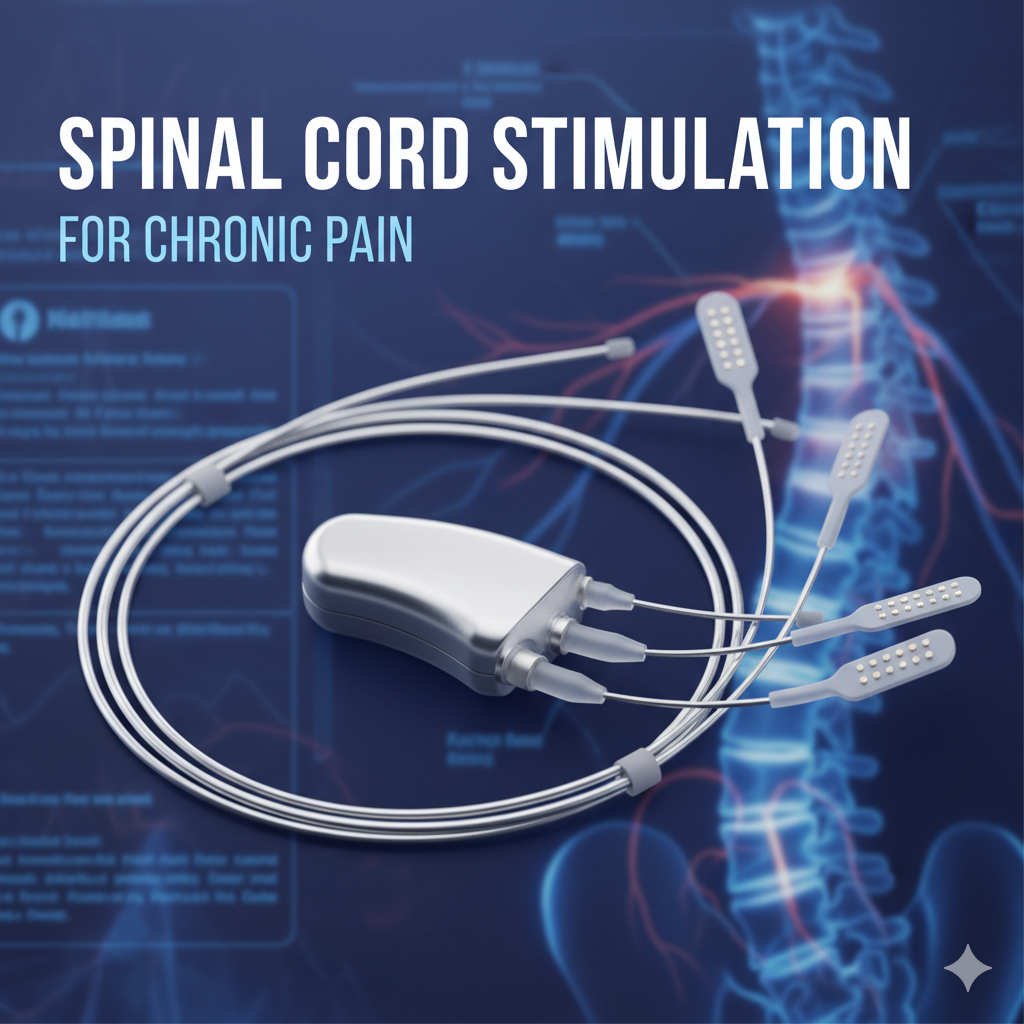
For millions battling chronic back, leg, or nerve pain, each day feels like an uphill struggle. When medications, physical therapy, and even surgery fail to provide relief, hope seems distant. But imagine a treatment that intercepts pain signals before they reach your brain. Enter Spinal Cord Stimulation (SCS) is a groundbreaking neuromodulation therapy transforming pain management. In 2026, India has become a global destination for this life-changing technology, delivering world-class care at remarkably affordable costs.
This comprehensive guide covers everything about SCS treatment in India from the science behind it to accessing top-tier care.
Table of Contents
ToggleUnderstanding Spinal Cord Stimulation: Your Personal Pain Controller
Spinal Cord Stimulation is sophisticated medical technology often called a “pacemaker for pain.” This small, implantable device delivers mild electrical pulses to your spinal cord, effectively masking pain signals.
Think of it this way: Your nervous system is like a highway where pain signals race toward your brain. SCS acts as a sophisticated traffic controller, interrupting these signals before they arrive. Instead of pain, you experience gentle tingling (paresthesia) or, with cutting-edge systems, no sensation at all, just blessed relief.
Is Spinal Cord Stimulation Right for You?
SCS is recommended for patients experiencing chronic, treatment-resistant pain. You might be an ideal candidate if you struggle with:
- Failed Back Surgery Syndrome (FBSS): Persistent pain despite surgical intervention
- Complex Regional Pain Syndrome (CRPS): Severe chronic pain, typically in a limb
- Peripheral Neuropathy: Nerve damage causing pain in hands and feet
- Arachnoiditis: Painful spinal cord lining inflammation
- Chronic Limb Pain: Including sciatica and radiculopathy
- Refractory Angina: In carefully selected cases
Your journey begins with comprehensive evaluation by a specialized pain management physician to determine if SCS suits your specific condition.
India: Your Gateway to World-Class Pain Relief
Choosing India for SCS isn’t merely about affordability, it’s about accessing exceptional, precision-driven healthcare.
1. Premium Expertise Without Premium Prices
This represents the most compelling advantage. India’s cost structure enables substantial savings while maintaining exceptional quality standards.
SCS Investment Comparison (2025)
| Country | Average Total Cost | Savings vs. USA |
|---|---|---|
| India | $12,000 – $18,000 | 70-80% |
| USA | $60,000 – $100,000 | Baseline |
| UK | $45,000 – $70,000 | 50-60% |
| Australia | $50,000 – $75,000 | 50-70% |
| Singapore | $35,000 – $55,000 | 40-50% |
Your Comprehensive Package Includes:
- Complete pre-operative diagnostics (MRI, CT imaging)
- SCS device (leads and implantable pulse generator)
- Surgical implantation procedure
- Hospital accommodation (2-4 days)
- Trial stimulation phase
- Complete medical team fees
- Post-operative care and device programming
2. Cutting-Edge Technology at Your Fingertips
Leading Indian hospitals deploy the latest SCS systems from global innovators including Medtronic, Boston Scientific, Abbott (St. Jude Medical), and Nevro:
- High-Frequency SCS (HFX): Nevro’s Senza® delivers paresthesia-free pain relief
- BurstDR™ Stimulation: Abbott’s system mimics natural neural patterns for organic relief
- Dorsal Root Ganglion (DRG) Therapy: Precisely targets challenging areas like feet and groin
- Closed-Loop Systems: Auto-adjust stimulation based on body position for consistent comfort
3. Globally-Trained Pain Specialists
India’s premier neurologists and neurosurgeons frequently complete fellowships in the US, UK, or Europe. With hundreds of successful procedures, they bring world-class expertise to your treatment.
4. International Quality Standards
Top neuromodulation centers hold JCI and NABH accreditations, guaranteeing the highest standards in patient safety, facility hygiene, and clinical outcomes.
Your SCS Journey: A Strategic Two-Phase Approach
Pain relief through SCS follows a methodical, two-stage process designed for optimal results.
Phase 1: Trial Stimulation—Your Test Drive
This crucial trial period determines if SCS works for you.
- Under local anesthesia, temporary leads are positioned near your spinal cord
- Leads connect to an external battery worn discreetly on your belt
- You return home for 5-7 days to evaluate pain relief during normal activities
- Achieving significant relief (typically 50%+ reduction) qualifies you for permanent implantation
Phase 2: Permanent Implantation—Your Long-Term Solution
Following successful trial results, you proceed to permanent implantation.
- Under sedation or general anesthesia, permanent leads are placed and a rechargeable battery (IPG) is implanted beneath the skin of your buttock or abdomen
- The 1-2 hour procedure allows most patients to return home within 48 hours
- Your new life with dramatically reduced pain begins
India’s Premier SCS Centers
- Medanta – The Medicity, Gurugram: Asia’s most advanced Institute of Neurosciences
- Fortis Memorial Research Institute, Gurugram: Leading neuromodulation center with specialized pain management
- Kokilaben Dhirubhai Ambani Hospital, Mumbai: Comprehensive neurosciences excellence
- All India Institute of Medical Sciences (AIIMS), New Delhi: Pioneer in advanced treatment accessibility with exceptional care
- Apollo Hospitals, Chennai: Multi-city network featuring dedicated chronic pain centers
Conclusion
Chronic pain need not control your destiny. Spinal Cord Stimulation represents proven, advanced technology that liberates you from pain and medication dependency. India delivers an unmatched combination: world-class medical expertise, access to cutting-edge SCS technology, and exceptional value. By selecting a reputable hospital and experienced physician, you’re not just receiving treatment, you’re investing in reclaimed mobility, independence, and life’s joys.
Frequently Asked Questions (FAQs)
What success rate can I expect?
Clinical data from India’s leading centers demonstrates that 70-80% of patients achieve over 50% pain reduction after successful SCS implantation, dramatically enhancing quality of life.
How long does the battery last?
Rechargeable IPGs (most common) function for 8-10 years before replacement. Non-rechargeable units last 2-5 years. Replacement procedures are significantly simpler than initial implantation.
Will I notice the device physically?
Most patients quickly adapt and forget the device during daily activities. The stopwatch-sized IPG sits discreetly under your skin.
Can I undergo MRI scans?
Many modern SCS systems are “MRI-conditional,” permitting safe MRI scans of specific body regions under controlled conditions. You’ll receive device documentation for healthcare providers.
What activities are permitted after recovery?
Following the 4-6 week healing period, most patients resume normal, active lifestyles including walking, swimming, driving, and traveling. High-impact sports and heavy lifting should be avoided to protect lead placement.
Is the trial procedure painful?
Performed under local anesthesia, the trial placement itself isn’t painful. Temporary insertion site soreness may occur. The goal is comfortable at-home system testing.
| Take the First Step It costs Nothing Share your medical reports with Shifam Health and receive a free, personalized assessment within 24 hours. No commitment. No pressure. Just honest information to help you make the right decision for you and your family. www.shifamhealth.com | contact@shifamhealth.com | WhatsApp: +91 81785 95807 24/7 Support Available | Free Consultation | No Hidden Charges |



Popular Posts From Last Week
- September 10, 2026
- shifamhealth
Medically reviewed content · Published 2026 · Last reviewed August 2026 Blount’s disease, also called tibia vara, is…
- September 13, 2026
- shifamhealth
Carpal tunnel syndrome (CTS) is compression of the median nerve as it passes through the carpal tunnel —…
- September 9, 2026
- shifamhealth
A cervical herniated disc occurs when the soft inner material of a disc in the neck pushes through…
- September 10, 2026
- shifamhealth
Chronic back pain is one of the most common reasons people seek medical care, and also one of…
- September 11, 2026
- shifamhealth
Myelopathy means dysfunction of the spinal cord itself — not a single disease, but a syndrome that can…
- September 9, 2026
- shifamhealth
Medically reviewed content · Published 2026 · Last reviewed September 2026 Disc degeneration seen on an MRI does…
- September 12, 2026
- shifamhealth
Medically reviewed content · Published 2026 · Last reviewed September 2026 Discitis is inflammation or infection involving an…
- September 12, 2026
- shifamhealth
A femoral hernia occurs when tissue often part of the bowel or fatty tissue — pushes through the…
- September 11, 2026
- shifamhealth
Kümmell’s disease refers to a delayed collapse of a vertebra — a nonunion or failure to heal properly…
- September 7, 2026
- shifamhealth
Ductal carcinoma in situ (DCIS) is a non-invasive breast condition in which abnormal cells are confined to the…
- September 8, 2026
- shifamhealth
Written by: Shifam Health Editorial Team — Neuro-Oncology Content Division Medically reviewed by: Shifam Health Clinical Advisory Panel…
- September 8, 2026
- shifamhealth
Medically reviewed content · Published 2026 · Last reviewed August 2026 Olfactory neuroblastoma also called esthesioneuroblastoma (ENB) —…