



Why India is Now the Global Leader in Paediatric Cardiac Surgery
Filters & Insights
World-class pediatric cardiac surgery in India. 95%+ success rates, US-trained surgeons, costs 80% less than countries like U.S.
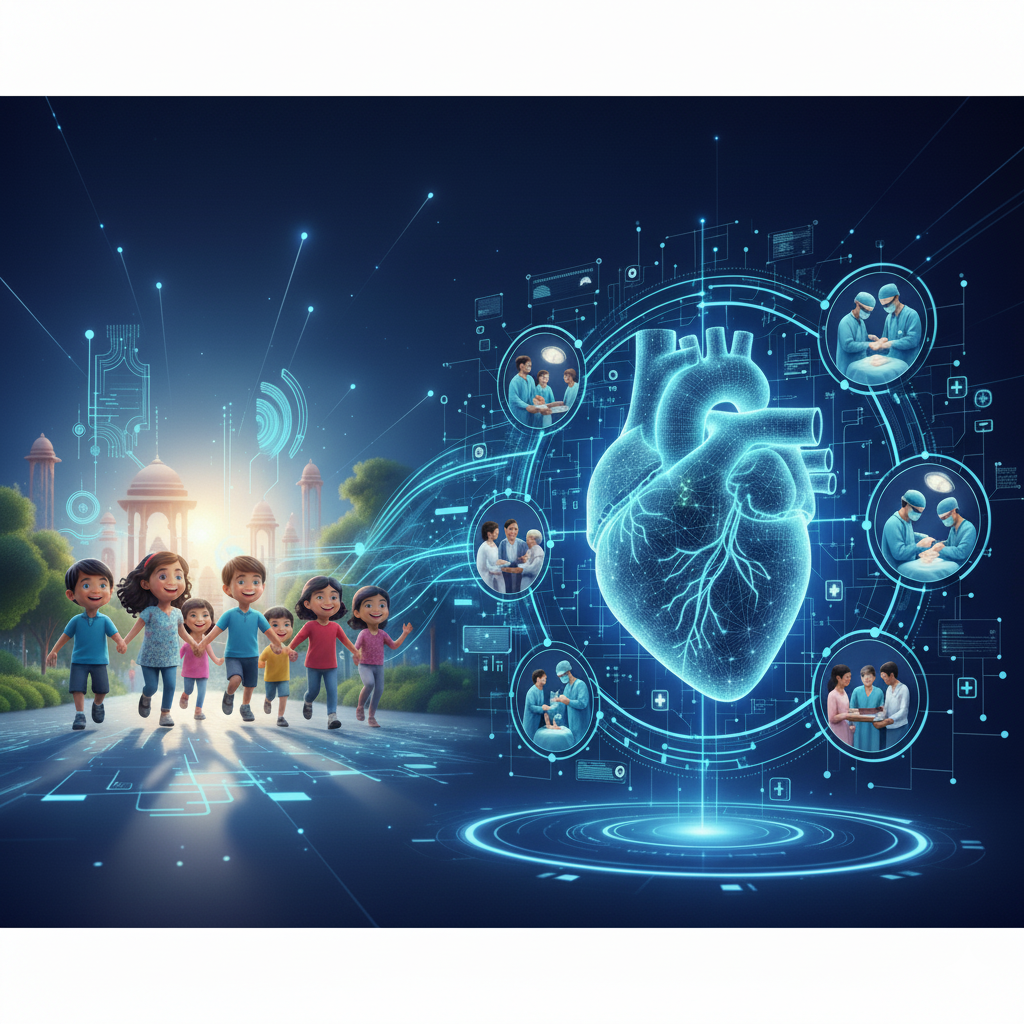
When a doctor says “your child needs heart surgery,” parents naturally feel terrified. Families immediately start searching for the best possible care, but they often face frustrating obstacles like long waiting lists, overwhelming costs, and too few specialists in their home countries. Now, however, more and more families are finding a surprising solution. They are traveling to India for their children’s cardiac care. India is quickly becoming the world’s top destination for pediatric heart surgery because it offers a powerful combination of superior medical expertise, advanced technology, and genuine compassion, all at a cost that families can actually manage.
This impressive growth did not happen by chance. Instead, it results from decades of focused investment, constant innovation, and a deep national commitment to saving children’s lives. Let’s explore the specific reasons why so many international families now trust India with their children’s most critical health needs.
Table of Contents
ToggleWorld-Class Surgeons and High-Volume Experience
India’s greatest strength in pediatric cardiac care lies in its exceptional surgeons. Many of India’s leading pediatric heart surgeons completed their advanced training and fellowships at top hospitals in the United States, Europe, and Australia. These specialists bring world-class skills back to India, where they apply their knowledge every day.
Surgeons Achieve Exceptional Success Rates:
These highly skilled doctors perform a very large number of complex operations each year. They routinely handle everything from simple ventricular septal defect (VSD) closures to highly complicated procedures like arterial switch operations and the staged Norwood surgeries for hypoplastic left heart syndrome (HLHS). This high volume of work gives them incredible experience, which directly leads to outstanding success rates. In fact, Indian hospitals now report success rates of 95-98% for many common congenital heart defects, matching or even exceeding outcomes in Western countries.
Teams Work Together for Comprehensive Care:
A great surgeon needs a great team. Indian hospitals use a collaborative model where paediatric cardiac surgeons, cardiologists, anaesthesiologists, intensivists, and specialized nurses all work together. This team approach means that experts manage every single aspect of the child’s care, from the initial diagnosis through the surgery and into recovery. Everyone focuses on achieving the best possible outcome for the child.
Also Read: Double Valve Replacement Surgery in India (2026): Cost, Types, Risks & Recovery
Advanced Technology and Modern Facilities
To support its brilliant doctors, India’s best hospitals invest heavily in the latest technology. Leading institutions like Apollo Hospitals, Fortis Escorts Heart Institute, Narayana Health, and AIIMS Delhi now feature medical facilities that equal the best in the world.
Hybrid Cath Labs Enable Minimally Invasive Procedures:
Many centres now boast advanced hybrid catheterization labs. These high-tech rooms allow doctors to perform minimally invasive procedures. For example, they can close holes in the heart (like ASD, VSD, or PDA) using tiny devices inserted through a catheter, avoiding large incisions. This approach means children experience less pain, recover faster, and have minimal scarring.
3D Printing and VR Enhance Surgical Precision:
Pioneering hospitals are adopting ground-breaking technologies like 3D printing. Surgeons can now create an exact model of a child’s unique heart before an operation. This model lets them plan and practice the complex procedure in advance, which increases accuracy and safety during the actual surgery. Some hospitals are even starting to use virtual reality for surgical planning and training, pushing the boundaries of modern medicine.
Unbeatable Affordability Without Sacrificing Quality
For families, the cost of surgery often presents a major worry. Here, India offers an undeniable advantage. The total expense for pediatric cardiac surgery in India typically costs 70-80% less than the same procedure in Western countries.
Clear Cost Savings for Families:
Consider this comparison: a complex surgery costing $80,000 to $150,000 in the United States often has a price tag of just $8,000 to $15,000 in India. Importantly, this price usually includes the surgery, hospital stay, diagnostics, and medicines. This affordability removes the terrifying prospect of medical bankruptcy and lets parents concentrate fully on their child’s healing.
Efficient Systems Keep Costs Low:
We must emphasize that lower cost does not mean lower quality. The savings come from efficient hospital management, competitive markets, and innovative models that focus on high-volume, high-quality care. These systems prove that excellent medical outcomes do not have to come with an impossible price tag.
Minimal Wait Times Save Lives
In many countries, children face dangerous delays for essential heart surgeries. These waiting lists can last for months, during which a child’s condition may worsen. India offers a dramatically faster path to treatment.
Quick Access to Life-Saving Care:
The system in India prioritizes speed. A child can typically receive a diagnosis, complete all evaluations, and undergo surgery within a few weeks, or even days if the case is urgent. This rapid access to care can prevent complications and is often crucial for achieving the best long-term result. For a sick child, this efficiency doesn’t just add convenience; it can save a life.
Holistic, Family-Centered Support
Indian hospitals understand that they are treating more than just a patient; they are caring for an entire family. The approach combines technical excellence with deep compassion.
Specialized Help for International Families:
Major hospitals run dedicated international patient departments. These teams provide vital services like language interpretation, visa assistance, and help with travel and local accommodation. They work hard to make sure families from abroad feel welcome, understood, and supported from the moment they arrive.
Focus on Emotional Well-Being:
Recognizing the immense stress that parents endure, hospitals offer psychological support and counselling. This nurturing environment helps the entire family cope with the challenge, ensuring that parents have the emotional strength to support their child through the recovery process.
Conclusion
India’s ascent as a global leader in paediatric cardiac surgery tells a powerful story. It demonstrates how a country can achieve medical excellence while keeping care accessible and compassionate. For families worldwide, India provides a real solution a place where their child can receive world-class treatment without devastating financial burdens or life-threatening delays. By uniting surgical mastery, advanced technology, and heartfelt care, India has truly become a beacon of hope. For parents on this difficult journey, choosing India means choosing a healthy future for their child.
| Take the First Step It costs Nothing Share your medical reports with Shifam Health and receive a free, personalized assessment within 24 hours. No commitment. No pressure. Just honest information to help you make the right decision for you and your family. www.shifamhealth.com | contact@shifamhealth.com | WhatsApp: +91 81785 95807 24/7 Support Available | Free Consultation | No Hidden Charges |

Popular Posts From Last Week
- September 10, 2026
- shifamhealth
Medically reviewed content · Published 2026 · Last reviewed August 2026 Blount’s disease, also called tibia vara, is…
- September 15, 2026
- shifamhealth
Medically reviewed content · Published 2026 · Last reviewed September 2026 Bow legs medically called genu varum —…
- September 14, 2026
- shifamhealth
Medically reviewed content · Published 2026 · Last reviewed September 2026 A “broken ankle” is the common term…
- September 13, 2026
- shifamhealth
Carpal tunnel syndrome (CTS) is compression of the median nerve as it passes through the carpal tunnel —…
- September 9, 2026
- shifamhealth
A cervical herniated disc occurs when the soft inner material of a disc in the neck pushes through…
- September 13, 2026
- shifamhealth
If a lumbar MRI report mentions “kissing spinous processes” or “Baastrup’s disease,” it’s worth pausing before assuming this…
- September 10, 2026
- shifamhealth
Chronic back pain is one of the most common reasons people seek medical care, and also one of…
- September 11, 2026
- shifamhealth
Myelopathy means dysfunction of the spinal cord itself — not a single disease, but a syndrome that can…
- September 9, 2026
- shifamhealth
Medically reviewed content · Published 2026 · Last reviewed September 2026 Disc degeneration seen on an MRI does…
- September 14, 2026
- shifamhealth
Scoliosis is a three-dimensional spinal deformity — sideways curvature combined with rotation — and it is genuinely not…
- September 12, 2026
- shifamhealth
Medically reviewed content · Published 2026 · Last reviewed September 2026 Discitis is inflammation or infection involving an…
- September 12, 2026
- shifamhealth
A femoral hernia occurs when tissue often part of the bowel or fatty tissue — pushes through the…