


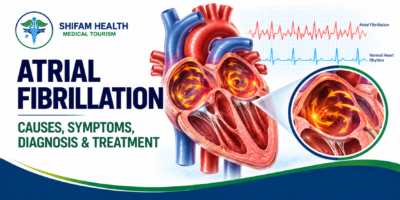
Atrial Fibrillation (2026): Causes, Symptoms, Diagnosis & Treatment
Filters & Insights
Written By :
Medically Reviewed By :

Shifam Health Medical Team
Shifam Health - Medical Reviews Department
10+ Years Of Experience
Learn about atrial fibrillation, including its causes, symptoms, diagnosis, complications & treatment options for managing this heart rhythm disorder.
📅
Last updated: October 15, 2026

- Atrial fibrillation (AF) is a heart rhythm disorder in which the upper chambers fire chaotically, making the heartbeat irregular and often fast.
- It can cause palpitations, breathlessness and fatigue, but some people feel nothing.
- The most important risk is stroke from blood clots. Stroke risk is assessed individually and does not depend on how you feel.
- Treatment has separate goals: stroke prevention, heart-rate control, rhythm control and treating contributing conditions.
- Chest pain, severe breathlessness, collapse or stroke signs need emergency care immediately.
Being told you have atrial fibrillation, or noticing your heart flutter and race for no reason, is unsettling. The questions come quickly: Is this dangerous? Will I have a stroke? Do I need blood thinners or a procedure? This guide explains AF in plain language, including how doctors confirm it, how stroke risk is judged, and how treatments such as medicines, cardioversion and catheter ablation are chosen. It is general education, not personal medical advice.
Atrial fibrillation is an abnormal heart rhythm in which the upper chambers (atria) produce disorganised electrical signals, so the heartbeat becomes irregular and may be faster than normal. Treatment may address stroke prevention, heart rate and rhythm, depending on the patient’s clinical situation.
Table of Contents
ToggleWhat Is Atrial Fibrillation?
In AF, the atria no longer contract in a coordinated way; they quiver instead. As a result, the heartbeat is typically irregular and can be fast, and blood can pool in the atria, where clots may form.
The heart has four chambers: two upper atria and two lower ventricles. In a normal rhythm, an electrical impulse from the sinus node in the right atrium spreads through the atria, passes through the atrioventricular (AV) node and triggers the ventricles to pump. In AF, many chaotic signals fire in the atria. The AV node filters them, but the ventricles still respond irregularly, so the pulse may feel uneven, rapid or fluttering.
Some people notice every episode; others have no symptoms and the rhythm is found during a routine check, an ECG for another reason, or a device alert. AF is different from occasional premature beats, which are single early beats, and from other rhythms such as atrial flutter. AF can come in episodes or become constant, and the pattern guides assessment and treatment.
Types of Atrial Fibrillation
AF is described by how long episodes last. These categories describe the pattern, not the stroke risk or the best treatment.
| Type | Definition (2023 ACC/AHA/ACCP/HRS guideline) | What it means in practice |
|---|---|---|
| Paroxysmal | Intermittent, lasting up to 7 days (stops on its own or with treatment) | Comes and goes; many people feel fine between episodes |
| Persistent | Continuous for more than 7 days; typically needs treatment to stop | Does not stop without an intervention such as cardioversion |
| Long-standing persistent | Continuous for more than 12 months | Longer-duration AF; rhythm control may still be considered |
| Permanent | A shared decision that no further attempts will be made to restore or keep normal rhythm | A treatment decision rather than a fixed biological state; it can be revisited |
The 2023 US guideline also describes earlier stages, such as being at risk of AF and “pre-AF”, and a stage for people who remain free of AF after successful ablation. Stroke risk is judged separately, whichever pattern you have.
Causes and Risk Factors of Atrial Fibrillation
AF develops when the atria’s electrical system and structure change over time. It can be linked to other heart or medical conditions, to ageing, to lifestyle factors, or to a combination. In some people, no clear cause is found.
- Heart conditions: high blood pressure, coronary artery disease and previous heart attack, heart failure and cardiomyopathy, valve disease (especially mitral valve disease), congenital heart disease
- Medical conditions: overactive thyroid, obstructive sleep apnoea, diabetes, chronic kidney disease
- Lifestyle factors: obesity, physical inactivity, heavy or consume excessively alcohol use, smoking, stimulant or recreational drug use
- Acute triggers: infection, serious illness, or recent surgery, particularly heart surgery
- Non-modifiable factors: increasing age and family history or inherited predisposition
Having a risk factor does not mean you have AF or will develop it. The 2023 ACC/AHA/ACCP/HRS guideline treats lifestyle and risk-factor modification (weight, blood pressure, sleep apnoea, alcohol, activity) as a pillar of AF care, alongside rhythm and stroke-prevention treatment.
Symptoms of Atrial Fibrillation
Common symptoms are an irregular or racing heartbeat, fluttering or pounding in the chest, breathlessness, fatigue or reduced stamina, dizziness or light-headedness, and sometimes chest discomfort. Many people also feel anxious because of the sensation of an abnormal heartbeat.
Symptoms vary a lot. Some people have frequent, intense episodes; others have none. This is called silent AF, and it can still carry stroke risk. Many other conditions, such as anaemia, thyroid problems and lung disease, can cause similar symptoms, so only a rhythm recording can confirm AF.
Emergency warning signs
Call your local emergency number immediately if you think you may have AF and also have:
- Chest pain or pressure
- Severe shortness of breath
- Fainting, collapse or severe weakness
- Sudden facial drooping, arm weakness, difficulty speaking, confusion or other possible stroke signs
If you may be seriously unwell, do not drive yourself. Not every episode of palpitations is an emergency, but severe symptoms like these must not be ignored.
Recurring palpitations, a newly detected irregular pulse, unexplained tiredness or reduced exercise tolerance, or a suspected AF diagnosis are reasons to see a doctor or cardiologist for assessment soon.
Is Atrial Fibrillation Dangerous?
AF is not equally dangerous for everyone. Its main risks are stroke and other clot-related events, symptoms that reduce quality of life, and, if the heart rate stays fast for long periods, weakening of the heart muscle. The risk depends on each person’s overall health, not on the rhythm alone.
- Stroke and clots: Blood pooling in the atria can form clots that travel to the brain. This risk can be present even when AF is intermittent or when you feel well, so symptoms do not tell you how high your stroke risk is.
- Heart rate and heart function: A persistently fast rate can strain the heart and may contribute to heart failure over time in some people.
- Quality of life: Palpitations, tiredness and breathlessness can limit daily activity.
- Associated conditions: AF often occurs alongside high blood pressure, heart failure, sleep apnoea and other conditions that also need treatment.
Because the picture differs from person to person, doctors assess both the rhythm and the whole risk profile.
How Is Atrial Fibrillation Diagnosed?
AF is confirmed by recording the heart’s rhythm, usually with an ECG, together with a clinical assessment. A normal ECG does not rule out AF that comes and goes, so longer monitoring is sometimes needed.
Medical history and examination
Your doctor asks when symptoms occur, how long they last, what you were doing, your medical conditions, medicines and family history, and checks your pulse, blood pressure and heart sounds.
Electrocardiogram (ECG)
An ECG records the heart’s electrical activity through sticky electrodes on the chest and limbs. If AF is present during the recording, it shows an irregular rhythm without normal atrial signals, which confirms the diagnosis.
Holter and ambulatory monitoring
If episodes are intermittent, a Holter monitor (typically worn for 24 to 48 hours), an event monitor or patch worn for longer, or sometimes an implanted loop recorder can capture the rhythm when symptoms occur.
Wearables and smartwatch alerts
Smartwatches and home devices can detect an irregular pulse or record a single-lead tracing, which may prompt you to seek care. But an alert is not a diagnosis. Devices can give false alarms and can miss AF, and a clinician must review the tracing. Take your recordings to your doctor rather than starting or stopping treatment on your own.
Echocardiogram
An echocardiogram is an ultrasound of the heart. It shows chamber size, pumping function and valve problems, which affect treatment choices. It does not by itself confirm AF.
Blood tests and further investigations
Blood tests commonly check thyroid function, electrolytes, kidney function and blood count, since these can contribute to AF or affect medicine choice. Further tests, such as a stress test, sleep study or imaging, are used only when clinically needed.
Additional imaging and transoesophageal echocardiography (TEE)
In selected cases, a TEE (ultrasound from inside the oesophagus) can look for a clot in the left atrium, for example before cardioversion in some patients. Not every patient needs advanced imaging.
How Is Atrial Fibrillation Treated?
AF treatment is individualised and has several parallel goals: preventing stroke, controlling heart rate, restoring or maintaining normal rhythm where appropriate, treating underlying conditions, and improving symptoms. These goals are related but are not interchangeable. For example, controlling the rate does not remove stroke risk.
Stroke prevention and anticoagulants
Oral anticoagulants (“blood thinners”) reduce the risk of clots forming and causing stroke in people with AF who are at enough risk. Whether you need one depends on your individual stroke risk, not on how many symptoms you have or whether your AF is paroxysmal or persistent.
How doctors decide:
- Risk scoring: Clinicians use a validated score. The 2023 US guideline accepts validated tools such as CHA2DS2-VASc and bases advice on estimated yearly stroke risk. The 2024 European guideline uses CHA2DS2-VA (which drops sex from the score) and recommends anticoagulation at a score of 2 or more and considers it at 1. These factors include heart failure, high blood pressure, age, diabetes, previous stroke or clots, and vascular disease. Your clinician calculates your own score; this article cannot.
- Which medicine: Direct oral anticoagulants (DOACs) are generally preferred over warfarin, except in people with mechanical heart valves or moderate-to-severe mitral stenosis, where warfarin is used according to current guidance.
- Safety review: Bleeding risk, kidney function, other medicines, adherence and personal circumstances are all considered. Blood-pressure control and limiting alcohol also matter.
- Aspirin is not a substitute: Antiplatelet medicines such as aspirin are not a general replacement for anticoagulation for AF-related stroke prevention.
Never start or stop an anticoagulant because of how you feel, or because a procedure was done, without your clinician’s advice.
Rate-control treatment
Rate control aims to stop the ventricles beating too fast during AF. Clinicians may use beta blockers, certain calcium-channel blockers (generally avoided when heart pumping function is reduced), or digoxin in appropriate patients. The choice depends on blood pressure, heart failure, other conditions and other medicines. Doses are individual and are not covered here.
Rhythm-control treatment
Rhythm control aims to restore and maintain normal (sinus) rhythm in selected patients, using antiarrhythmic medicines, cardioversion or ablation. It is often considered when symptoms are significant, AF is recent, or heart function is affected. Suitability depends on AF pattern and duration, heart disease, other health conditions, medicine risks and your preferences. It is not required for everyone and does not remove the need for stroke-risk assessment.
Electrical cardioversion
In electrical cardioversion, a synchronized electrical shock is delivered under sedation to reset the rhythm. Before it, doctors weigh clot risk. For AF that has lasted 48 hours or more, or for unknown duration, guidelines generally advise either several weeks of effective anticoagulation beforehand or imaging (TEE) to exclude a clot, and then anticoagulation for at least four weeks afterwards, with longer-term treatment based on stroke risk. Urgent situations are handled differently. Cardioversion restores rhythm but does not prevent AF from returning.
Catheter ablation for atrial fibrillation
Catheter ablation uses thin catheters, usually passed through a groin vein into the heart, to create tiny scars (or isolate tissue) that block abnormal electrical signals. In many procedures this means pulmonary vein isolation, which electrically isolates the pulmonary veins, a common source of AF triggers. Energy sources include heat, cold and pulsed electrical fields.
- When it may be considered: For selected symptomatic patients when medicines are ineffective, not tolerated or not preferred, and in some patients as an earlier option. The 2023 US guideline gives ablation a first-line recommendation in selected patients, and the 2024 European guideline lists it as a first-line option in selected patients with paroxysmal AF.
- Shared decision-making: The decision should weigh benefits, risks and your preferences with an electrophysiologist.
- Benefits and risks: Ablation can reduce symptoms and AF episodes in many patients. Complications are uncommon but can be serious and include bleeding or vessel injury at the groin, stroke, fluid around the heart, and rarely injury to the oesophagus or pulmonary veins.
- Recurrence: AF can return, and some patients need a repeat procedure or continued medicines.
- Anticoagulation after ablation: Ablation does not automatically remove the need for anticoagulation. Whether to continue it depends on your stroke risk, not just on how well the procedure seemed to work.
Success rates vary by AF type, heart size, other conditions and technique, and we do not quote a universal figure.
Pacemakers and other devices
A pacemaker does not treat AF itself. It may be used in selected people who also have slow heart rates or conduction problems, or as part of a strategy in which the AV node is ablated and a pacemaker controls the heartbeat. A pacemaker differs from an implantable cardioverter-defibrillator (ICD), which treats dangerous ventricular rhythms; an ICD is not a routine AF treatment.
Treating underlying conditions and risk factors
Treating high blood pressure, sleep apnoea, obesity, diabetes, thyroid disease, heart failure and heavy alcohol use can reduce AF burden and improve overall heart health. This supports treatment but does not replace indicated stroke prevention.
Rate Control vs Rhythm Control: What Is the Difference?
Rate control manages how fast the ventricles beat during AF, while rhythm control tries to restore and keep normal rhythm. Neither is better for everyone, and some patients need elements of both. Stroke prevention is a separate decision.
| Rate control | Rhythm control | |
|---|---|---|
| Main goal | Keep the ventricular rate in a safe, comfortable range | Restore and maintain normal sinus rhythm |
| Typical approaches | Beta blockers, certain calcium-channel blockers, digoxin; AV node ablation with pacing in selected cases | Antiarrhythmic medicines, electrical cardioversion, catheter ablation |
| Key considerations | AF continues; symptoms may persist; heart function and blood pressure guide drug choice | Medicine side effects, recurrence, procedure risk, AF duration and heart structure |
| Stroke prevention | Still assessed separately | Still assessed separately, even if rhythm looks normal |
Can Atrial Fibrillation Be Cured?
AF can often be controlled, and some patients stay in normal rhythm for long periods after treatment, but a permanent cure cannot be promised. AF can recur after cardioversion or ablation, and treatment may reduce symptoms without guaranteeing that AF will never return.
For this reason, follow-up and risk-factor management stay important even after a successful procedure. Decisions about anticoagulation depend on your clinical stroke risk and current guidance, not on symptoms alone or on an apparently successful procedure.
Living With Atrial Fibrillation
- Take medicines exactly as prescribed, and never stop anticoagulants without clinician advice.
- Attend scheduled reviews, including after medicine changes, cardioversion or ablation.
- Keep a simple diary of episodes, triggers and symptoms, and bring any wearable recordings.
- Review all medicines and supplements with your clinician, since some interact with anticoagulants or heart rhythm.
- Work on blood pressure, diabetes, weight, sleep apnoea and alcohol intake.
- Ask your cardiologist about exercise, caffeine and alcohol for you. Many people can stay active, and advice should be individualised rather than universal.
- Know the emergency signs and act on them.
Atrial Fibrillation Treatment in India for International Patients
Patients from abroad can seek a specialist opinion or treatment for AF in India, usually with a cardiologist or a cardiac electrophysiologist (a heart rhythm specialist). A sound process begins with your records being reviewed and ends with a written plan, not with booking a flight.
What to prepare for a consultation:
- ECGs, Holter or event-monitor reports, and any smartwatch recordings your doctor asked you to keep
- Echocardiogram and other imaging reports
- Recent blood tests, especially thyroid, kidney function and blood count
- Discharge summaries and details of previous cardioversion, ablation or device procedures
- A full medicine list, including anticoagulant name and how long you have taken it, and supplements
- A short diary of episodes
What to ask for:
- A clear explanation of your AF type, your stroke-risk assessment and why an anticoagulant is or is not advised
- Why rate control, rhythm control, cardioversion or ablation is or is not recommended for you, with benefits, risks and the chance of recurrence
- A written plan with an itemised cost estimate, expected hospital stay, follow-up and ongoing medicine needs
- Who to contact about urgent problems after you return home, and how records will be shared with your home cardiologist
Safety first. Travel is not appropriate if you have emergency symptoms or an unstable rhythm. Seek local emergency care first. Plan travel only after the treating team confirms it is medically appropriate, and make sure follow-up and urgent-care access are arranged back home.
What affects the cost?
Costs depend on consultations and tests, the type and complexity of AF, medicines and monitoring, whether cardioversion is needed, the ablation technique and complexity, anaesthesia and hospital stay, follow-up, and treatment of other conditions. International patients also have travel, accommodation and other non-clinical costs.
Published online price figures vary widely and we have not found a reliable, attributable current price for AF ablation, so we do not quote one. Ask for an individual itemised estimate, and be cautious if a quote is much lower than others without a clear explanation. A lower price is not necessarily safer or more appropriate.
How Shifam Health fits in. Shifam Health is an India-based healthcare coordination service, not a hospital, cardiology clinic or emergency service. It can help you organise records, seek appropriate specialist opinions, understand available options, and arrange non-clinical parts of care such as estimates, travel and accommodation. Diagnosis, medicine choices and procedure decisions remain with qualified treating clinicians.
Frequently Asked Questions
What is atrial fibrillation in simple terms?
Atrial fibrillation (AF) is an irregular heart rhythm that increases the risk of blood clots and stroke.
What are the first symptoms of atrial fibrillation?
Symptoms may include palpitations, fatigue, breathlessness, dizziness, and a racing heartbeat. Some people have no symptoms.
What causes atrial fibrillation?
Common contributors include high blood pressure, ageing, heart disease, obesity, diabetes, sleep apnoea, alcohol, and thyroid problems.
Is atrial fibrillation dangerous?
It can increase stroke risk and sometimes lead to heart failure or reduced quality of life. Appropriate treatment helps manage these risks.
Can atrial fibrillation cause a stroke?
Yes. Blood clots can form in the heart and travel to the brain, causing a stroke.
Does everyone with AF need blood thinners?
No. Doctors assess individual stroke and bleeding risks before recommending anticoagulants.
Can an ECG detect atrial fibrillation?
Yes, if AF occurs during the recording. Holter or event monitoring may help detect intermittent episodes.
Can a smartwatch diagnose AF?
No. A smartwatch can flag possible irregular rhythms, but medical assessment is needed for confirmation.
When is catheter ablation recommended?
It may be considered for symptomatic patients when medicines are ineffective, poorly tolerated, or not preferred.
Can atrial fibrillation return after ablation?
Yes. AF may recur, and some patients need repeat procedures or medication.
Can people with AF exercise?
Many can exercise safely, depending on their symptoms and heart condition. Seek personalised advice from a cardiologist.
When is atrial fibrillation an emergency?
Seek emergency help for palpitations with chest pain, severe breathlessness, fainting, or stroke symptoms such as facial drooping or speech difficulty.
Conclusion
Atrial fibrillation ranges from occasional episodes to a persistent condition. The essentials are confirming the diagnosis with a rhythm recording, assessing your individual stroke risk, controlling symptoms and heart rate where needed, addressing contributing conditions, and keeping up follow-up. Stroke prevention, rate control and rhythm control are separate decisions, and no single treatment suits everyone.
If you are an international patient who wants help organizing records, seeking specialist opinions or understanding treatment planning in India, Shifam Health can help with coordination. We do not diagnose or treat, and we cannot promise a cure, an outcome, immediate availability or a fixed cost.
If you have chest pain, severe breathlessness, collapse or stroke signs, call your local emergency number now.

Popular Posts From Last Week
- October 13, 2026
- shifamhealth
A note before you read further: “Spondylitis” is not one disease. It is a word that gets applied…
- October 14, 2026
- shifamhealth
If a radiology report used the word “slippage,” it can sound alarming. In most people it is not…
- October 12, 2026
- shifamhealth
Normally, the lower end of the spinal cord floats freely inside the spinal canal and glides a little…
- October 12, 2026
- shifamhealth
The word “stenosis” can sound frightening, and a diagnosis of severe aortic stenosis often arrives with the words…
- October 15, 2026
- shifamhealth
Being told you have atrial fibrillation, or noticing your heart flutter and race for no reason, is unsettling….
- October 14, 2026
- shifamhealth
If your baby has been told they have a PDA, it can be hard to know whether it…
- October 14, 2026
- shifamhealth
If someone has a racing heartbeat with fainting, chest pain, severe breathlessness, confusion or collapse, call your local…
- October 13, 2026
- shifamhealth
If a newborn with suspected or known HLHS has blue or gray lips or skin, fast or difficult…
- October 12, 2026
- shifamhealth
Chiari malformation is a structural condition in which part of the cerebellum (the brain’s balance and coordination center)…
- October 13, 2026
- shifamhealth
What are congenital spinal cord malformations? Congenital spinal cord malformations are developmental conditions, present from birth, that affect…