



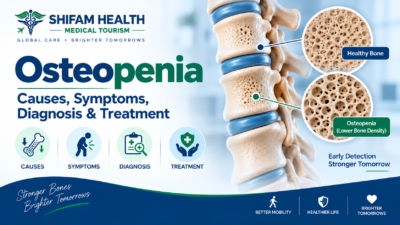
Osteopenia: Causes, Symptoms, Diagnosis & Treatment
Filters & Insights
Osteopenia means bone density below normal but above osteoporosis. Learn what your T-score means, real causes, & whether you actually need treatment.

Osteopenia means bone mineral density lower than the young-adult reference range but not low enough to meet the diagnostic threshold for osteoporosis — a T-score between -1.0 and -2.5 on a DEXA scan. It’s not “mild osteoporosis” and doesn’t automatically progress to it. Osteopenia usually causes no symptoms and isn’t diagnosed from symptoms alone. Not everyone with osteopenia needs medication — treatment depends on overall fracture risk, not the T-score alone.
- Osteopenia means bone density below the normal young-adult reference range but above the threshold for osteoporosis (T-score between -1.0 and -2.5)
- Osteopenia is not “mild osteoporosis” and does not automatically progress to osteoporosis
- It usually causes no symptoms — it’s a DEXA scan finding, not something you’d notice day to day
- Fracture risk depends on more than bone density alone — age, prior fractures, family history, and other factors all matter
- Not everyone with osteopenia needs medication — many people are appropriately managed with nutrition, exercise, and fall prevention alone
- Osteopenia can sometimes improve, particularly when a correctable underlying cause is identified, though “reversal” shouldn’t be presented as guaranteed
Table of Contents
ToggleWhat Is Osteopenia?
Osteopenia refers to bone mineral density that is lower than the young-adult reference range but does not meet the diagnostic threshold for osteoporosis, based on standard bone density testing criteria. It reflects one measurement bone density and is not a complete description of your fracture risk on its own.
A few things worth understanding immediately:
- Bone strength depends on more than just density — it also involves bone quality and structural factors that aren’t fully captured by a density measurement alone
- Bone mineral density is important, but fracture risk is not determined by BMD alone — this is genuinely one of the most important concepts in this entire article, and it comes up repeatedly because it’s so commonly misunderstood
- Osteopenia is a category on a spectrum, not a disease with its own distinct symptoms or a guaranteed trajectory
- Having osteopenia does not mean you will inevitably fracture a bone or develop osteoporosis
Osteopenia vs. Osteoporosis
Osteopenia and osteoporosis are both bone density categories based on DEXA scan T-scores, but they represent different degrees of bone density reduction and are managed somewhat differently — osteopenia is not simply “mild osteoporosis,” even though that’s a common informal way people describe it.
| Feature | Osteopenia | Osteoporosis |
|---|---|---|
| T-score range (postmenopausal women, men 50+) | Between -1.0 and -2.5 | -2.5 or lower |
| Fracture risk | Present, but generally lower than osteoporosis on average | Generally higher, though this varies by individual factors |
| Typical management | Often lifestyle-focused; medication considered in select higher-risk cases | Medication more commonly considered, alongside lifestyle measures |
| Diagnosis basis | DEXA scan T-score plus clinical context | DEXA scan T-score plus clinical context, or a fragility fracture itself in some diagnostic frameworks |
The standard DEXA-based classification (for postmenopausal people of all genders aged 50 and older):
| Category | T-Score |
|---|---|
| Normal | -1.0 or higher |
| Osteopenia / Low Bone Mass | Between -1.0 and -2.5 |
| Osteoporosis | -2.5 or lower |
This classification is specifically intended for postmenopausal people of all genders aged 50 and older — applying these exact T-score categories to children, premenopausal women, or younger men is not appropriate, and this distinction is discussed further in the T-score/Z-score section below. Diagnostic interpretation also depends on which skeletal site was measured, your overall clinical context, and the specific guideline being applied — it’s genuinely not always a simple, universal number.
Bone Mineral Density, T-Scores, and Z-Scores
Bone mineral density (BMD) is measured using a DEXA scan, most commonly at the hip and lumbar spine. Your T-score compares your BMD to the average peak bone density of a healthy young adult; your Z-score compares your BMD to people of your own age, sex, and (depending on the reporting standard) ethnicity — and which score matters more depends on who you are.
Bone mineral density (BMD) measures the mineral content at specific skeletal sites, most commonly the hip (including the femoral neck) and lumbar spine. It’s an important predictor of fracture risk, but it does not capture every aspect of bone strength — factors like bone microarchitecture and overall bone quality contribute to fracture resistance in ways a density number alone doesn’t fully reflect. BMD can also change over time, in either direction.
T-score compares your BMD to the average peak bone density of a healthy young-adult reference population (generally young adults of the same sex). This is the score used for the standard osteopenia/osteoporosis classification above, and it’s specifically designed and validated for postmenopausal people of all genders 50 and older.
Z-score compares your BMD to an age-, sex-, and (depending on the reporting standard) ethnicity-appropriate reference population, rather than to young adults. Z-scores are particularly important in premenopausal women, men younger than 50, and children — using the postmenopausal T-score categories for these groups isn’t appropriate, since a T-score comparison to young-adult peak bone density doesn’t account for the fact that these individuals haven’t yet reached, or aren’t expected to have reached, peak bone mass in the same way.
A key caution: neither a T-score nor a Z-score alone determines whether treatment is needed. These are diagnostic and risk-assessment tools interpreted within your broader clinical picture, not standalone treatment triggers.
Causes of Osteopenia
Osteopenia can result from normal aging and hormonal changes (particularly the estrogen decline around menopause), inadequate nutrition, physical inactivity, certain medications, and a range of underlying medical conditions — often a combination of factors rather than one single cause.
Common contributing factors:
- Normal aging (bone density naturally tends to decline with age after peak bone mass is reached)
- Menopause and the associated decline in estrogen, which plays a protective role in bone density
- Inadequate calcium intake
- Vitamin D deficiency
- Low physical activity levels
- Prolonged immobilization
- Low body weight
- Smoking
- Heavy alcohol consumption
- Certain medications (discussed below)
- Various endocrine disorders
- Malabsorption conditions
- Chronic kidney disease
- Liver disease
- Inflammatory conditions
- Certain gastrointestinal disorders
- Hypogonadism (low sex hormone levels)
- Thyroid disorders
- Hyperparathyroidism
Primary vs. secondary bone loss:
| Type | What It Means |
|---|---|
| Primary bone loss | Associated mainly with aging and normal hormonal changes over time |
| Secondary bone loss | Caused or meaningfully accelerated by another identifiable disease, medication, or nutritional issue |
| Secondary Cause Category | Examples |
|---|---|
| Endocrine | Hyperparathyroidism, hyperthyroidism, hypogonadism |
| Gastrointestinal | Celiac disease, inflammatory bowel disease, malabsorption |
| Renal | Chronic kidney disease affecting mineral metabolism |
| Medication-related | Discussed in detail below |
| Lifestyle | Smoking, excessive alcohol, prolonged inactivity |
| Hormonal | Menopause, low testosterone |
| Inflammatory | Rheumatoid arthritis and other chronic inflammatory conditions |
Medications that may reduce bone density include long-term systemic glucocorticoids (like prednisone), certain anticonvulsants, aromatase inhibitors (used in some breast cancer treatment), androgen-deprivation therapy, and other medications affecting sex hormone levels. Not everyone taking these medications will develop osteopenia — but their use is a relevant risk factor worth discussing with your prescribing doctor. This article is not telling you to stop any prescribed medication — that decision, if it’s ever appropriate, belongs entirely with the clinician managing that specific condition, weighed against why the medication was prescribed in the first place.
Risk Factors
| Non-Modifiable | Modifiable or Potentially Modifiable |
|---|---|
| Age | Smoking |
| Family history/genetics | Excessive alcohol intake |
| Menopause | Inadequate nutrition |
| Previous fragility fracture | Physical inactivity |
| Small body frame, where relevant | Insufficient calcium/vitamin D intake |
| Prolonged immobilization | |
| Fall risk factors |
Symptoms
Osteopenia usually causes no symptoms at all. Low bone density itself generally does not cause pain, and osteopenia is essentially never diagnosed based on how someone feels — it’s identified through a DEXA scan.
Symptoms may arise only if:
- A fracture actually occurs (most often at the spine, hip, or wrist)
- A separate underlying disease causing the low bone density has its own symptoms
Height loss and posture: loss of height over time can be associated with vertebral compression fractures, and progressive kyphosis (a forward-curving upper back) can develop after such fractures. These findings deserve medical assessment rather than being written off as normal, expected aging — they can be a clue to an underlying bone density problem, including fractures that occurred without a dramatic, memorable injury.
It’s also worth saying plainly: the absence of symptoms does not mean bones are automatically healthy — this is exactly why bone density testing, rather than waiting for symptoms, is how low bone density is actually identified.
Fracture Risk and FRAX
Fracture risk depends on multiple factors working together — BMD, age, prior fracture history, family history, falls, certain medications, smoking, alcohol use, body weight, and other medical conditions — not bone density in isolation. FRAX is a widely used tool that estimates fracture probability by combining several of these factors.
Some people with osteopenia have clinically important fracture risk — this is precisely why treatment decisions shouldn’t be based on the T-score number alone, in either direction (neither assuming osteopenia is always low-risk, nor assuming it always requires treatment).
FRAX (Fracture Risk Assessment Tool) estimates the probability of a major osteoporotic fracture and hip fracture over a defined future period (commonly 10 years), incorporating clinical risk factors and, optionally, femoral-neck BMD.
Real limitations of FRAX worth understanding:
- It’s calibrated to specific countries/populations, so its accuracy can vary depending on how well the underlying data matches your actual population
- It’s not a perfect individual prediction — it estimates probability, not certainty
- It may not capture every relevant clinical risk factor for a specific individual
- It should support clinical judgment, not replace it — and treatment thresholds based on FRAX scores vary by country and guideline, so there’s no single universal number that automatically triggers treatment everywhere.
How Osteopenia Is Diagnosed
Osteopenia is diagnosed through a DEXA (dual-energy X-ray absorptiometry) scan, the standard method for measuring bone mineral density, most commonly at the hip and lumbar spine.
What happens during a DEXA scan: it’s non-invasive, generally quick (often around 10–20 minutes), involves very low radiation exposure (lower than a standard chest X-ray), and simply requires lying still on a scanning table while the machine passes over the relevant areas. Specific preparation requirements (like avoiding calcium supplements briefly beforehand) vary by facility — follow the guidance given by your specific testing center.
When is a bone density test recommended? General considerations, which vary somewhat by country and guideline, include:
- Postmenopausal women, particularly with additional risk factors
- Older men, particularly with risk factors
- Younger individuals with significant risk factors for low bone density
- Anyone who has experienced a fragility fracture (a fracture from a fall from standing height or less, or with minimal trauma)
- People on prolonged glucocorticoid therapy
- People with medical conditions known to be associated with bone loss
There is no single universal screening age that applies everywhere — recommendations genuinely vary by country and specific clinical guideline, so this is worth discussing directly with your own physician based on your personal risk profile.
Vertebral fracture assessment, sometimes performed as part of or alongside a DEXA scan, or via a dedicated spine X-ray, can identify vertebral fractures that may not have caused obvious acute symptoms — this matters because vertebral fractures can occur silently and still meaningfully affect fracture risk assessment and treatment decisions.
Other Tests: Investigating Secondary Causes
When low BMD is identified, particularly when it seems unexpected for the person’s age or risk profile, further evaluation for secondary causes may be appropriate. Potential tests, individualized rather than ordered as a blanket panel for everyone, can include:
- Calcium and phosphate levels
- Vitamin D level
- Kidney function tests
- Liver function tests
- Thyroid function tests
- Parathyroid-related testing
- Complete blood count
- Protein studies
- Sex hormone levels
- Celiac disease screening
- Other targeted tests based on individual clinical suspicion
Not every test is appropriate for every patient — your physician selects relevant testing based on your specific history, risk factors, and how unexpected your low BMD finding is for your particular situation.
Osteopenia vs. Osteomalacia
These are genuinely different conditions that are sometimes confused. Osteopenia is a bone density category (not enough mineral, relative to a reference population); osteomalacia is a mineralization disorder (bone that isn’t properly hardening, most often from significant vitamin D deficiency) — and this distinction matters clinically because the underlying problem and treatment approach differ.
| Feature | Osteopenia | Osteomalacia |
|---|---|---|
| Main issue | Reduced bone mineral density relative to reference population | Defective mineralization of bone tissue |
| BMD on DEXA | Reduced | Can also appear reduced, complicating the distinction |
| Mineralization | Generally normal mineralization, just reduced quantity | Abnormal — bone doesn’t harden properly |
| Common causes | Aging, hormonal changes, lifestyle factors, secondary causes | Most often significant vitamin D deficiency, or other mineralization disorders |
| Symptoms | Usually none | Can include bone pain and muscle weakness, unlike typical osteopenia |
| Treatment | Individualized based on fracture risk | Correcting the underlying mineralization deficiency (e.g., significant vitamin D repletion) |
This distinction is clinically important because a patient with unexplained low BMD, particularly with bone pain or muscle weakness (symptoms not typical of straightforward osteopenia), may need evaluation specifically for osteomalacia or another distinct bone disorder, not simply a diagnosis of “osteopenia” and reassurance.
Treatment Overview
Osteopenia management depends on your bone density, age, fracture history, calculated fracture risk (including FRAX where relevant), any identified secondary causes, current medications, fall risk, and overall health — medication is not automatically required simply because a DEXA scan shows osteopenia.
Core management commonly includes:
- Adequate nutrition, including calcium sufficiency
- Adequate vitamin D
- Weight-bearing exercise
- Resistance training
- Fall prevention measures
- Smoking cessation
- Limiting excessive alcohol intake
- Addressing any identified secondary causes directly
The central principle worth repeating: medication decisions for osteopenia are based on overall fracture risk, not simply the label “osteopenia.” Some people with osteopenia may appropriately be offered medication, particularly when their fracture risk (considering BMD alongside other factors) is calculated to be sufficiently high. Many others are appropriately managed with lifestyle measures, monitoring, and addressing any secondary causes, without medication.
Calcium and Vitamin D
Calcium plays a central role in bone health. Meeting calcium needs through food is generally preferred where realistically possible — dietary sources include dairy products, fortified plant-based alternatives, leafy green vegetables, and other calcium-containing foods. Supplementation is a reasonable option when dietary intake is genuinely insufficient or clinically indicated — but the appropriate amount depends on age, sex, existing dietary intake, kidney function, and other individual medical factors, so a single universal dose isn’t appropriate to recommend generically. Excessive calcium supplementation can have its own downsides and isn’t automatically “more is better.”
Vitamin D supports calcium absorption and bone health. Deficiency, where identified, should generally be addressed. Supplementation should be individualized based on your actual vitamin D level and clinical context more is not necessarily better here either, and vitamin D supplementation alone should not be presented as something that prevents all fractures on its own.
Exercise and Fall Prevention
Weight-bearing exercise, resistance training, and balance work all support bone health and reduce fall-related fracture risk but exercise recommendations should be individualized based on your specific fracture risk, existing fractures, and overall fitness, not applied as a blanket program for everyone.
Types of exercise generally beneficial for bone health:
- Weight-bearing exercise — brisk walking, stair climbing where appropriate
- Resistance training — resistance bands, supervised strength training, bodyweight exercises
- Balance exercises — supporting fall prevention specifically
- Posture and functional exercises
Exercises to modify or approach cautiously, particularly for people at elevated fracture risk (this is genuinely nuanced, not a blanket restriction): high-impact activities, uncontrolled twisting movements, heavily loaded spinal flexion, and activities carrying a high fall risk may warrant modification or closer supervision. This does not mean everyone with osteopenia must avoid running, jumping, or bending — appropriate exercise recommendations depend on your individual fracture risk assessment, existing fractures if any, and overall fitness, ideally discussed with your physician or a physiotherapist familiar with your specific situation.
Fall prevention is a genuinely important, sometimes underemphasized component of fracture prevention overall:
- Balance training specifically
- Vision checks (uncorrected vision problems are a real, modifiable fall risk factor)
- Appropriate, supportive footwear
- Home safety — removing loose rugs and clutter, ensuring adequate lighting
- Handrails where relevant
- Reviewing medications that might affect balance or alertness with your physician
- Strength training, which supports both bone health and fall resistance
Smoking, Alcohol, and Body Weight
Smoking is associated with poorer bone health and increased fracture risk — this is well-established, and smoking cessation is a genuinely worthwhile step for bone health among its many other health benefits.
Excessive alcohol intake increases fracture risk both directly (effects on bone metabolism) and indirectly (through increased fall risk).
Body weight: very low body weight is a recognized risk factor for low BMD and fractures. Weight management, in either direction, should be individualized rather than following generic advice — obesity does not automatically protect against fractures, despite sometimes being assumed to, and specific weight recommendations depend on your broader health context, not bone density alone.
Medications for Osteopenia
Not everyone with osteopenia needs medication. It may be considered when overall calculated fracture risk is sufficiently high — for example, in patients with a prior fragility fracture, a high FRAX-calculated risk, or other substantial risk factors — with specific thresholds varying by guideline and country.
| Treatment Category | General Role | Important Considerations |
|---|---|---|
| Bisphosphonates (e.g., alendronate, risedronate, zoledronic acid) | Reduce bone breakdown; effective for fracture reduction in appropriate populations | GI irritation (oral forms), acute-phase reaction (IV forms), rare risks of atypical femoral fracture and osteonecrosis of the jaw |
| Denosumab | Antiresorptive injection therapy, used in osteoporosis and selected high-risk patients | Should not be stopped or delayed without a planned medical strategy — rebound bone loss and vertebral fracture risk can occur after discontinuation |
| Hormone therapy | Can have bone-protective effects in appropriate candidates | Not prescribed for bone health alone in every patient; broader benefit-risk profile must be considered |
| SERMs (e.g., raloxifene) | Selective estrogen receptor modulators with a role in appropriate patients | Specific benefit-risk profile requiring individualized patient selection |
| Bone-forming (anabolic) therapies (e.g., teriparatide, abaloparatide, romosozumab) | Stimulate new bone formation | Generally reserved for patients at high or very high fracture risk, not routine treatment for uncomplicated osteopenia |
No single medication is universally superior — the appropriate choice, if medication is indicated at all, depends on your specific risk profile, other health conditions, and the treating physician’s clinical judgment.
A specific, important safety point on denosumab: because rebound bone loss and increased vertebral fracture risk are recognized risks after stopping this medication without a planned follow-on strategy, any decision to stop or delay denosumab should be made together with your prescribing physician, not independently.
On dental health and antiresorptive medications: there’s a recognized, though uncommon, association between antiresorptive medications (like bisphosphonates and denosumab) and a rare complication called osteonecrosis of the jaw, particularly relevant around certain dental procedures. Routine dental care and good oral hygiene remain important, and it’s worth informing your dentist about any bone medications you’re taking — but medication should not be stopped before a dental procedure unless your treating physician specifically recommends it, since unplanned interruption carries its own risks, as noted above.
Special Populations
- Men: Osteopenia can affect men, particularly with aging, low testosterone, long-term glucocorticoid use, smoking, alcohol use, or chronic diseases. Evaluation and screening should be based on individual risk factors.
- Premenopausal women: Z-scores are generally more appropriate than the standard postmenopausal T-score categories. Low BMD may warrant evaluation for an underlying or secondary cause.
- Children: Bone density should be interpreted using age- and sex-appropriate Z-scores and pediatric reference data, not adult T-scores. Low BMD may require assessment for conditions affecting growth or bone health.
- Pregnancy and lactation: Low BMD in pregnancy or breastfeeding is uncommon and requires specialist evaluation. Standard postmenopausal treatment approaches are not appropriate.
- Postmenopausal women: Declining estrogen can accelerate bone loss around menopause, but DEXA screening is not automatically required for every woman at menopause. Timing depends on age, risk factors, and applicable guidelines.
- Glucocorticoid use: Long-term systemic glucocorticoids, such as prednisone, can increase fracture risk. Prevention and BMD monitoring may be needed. Do not stop glucocorticoids suddenly; medication changes should be guided by the prescribing doctor.
- Thyroid conditions: Hyperthyroidism and excessive thyroid hormone replacement can contribute to bone loss. Proper management of the thyroid condition is important for protecting bone health.
Can Osteopenia Become Osteoporosis? Can It Be Reversed?
Yes, osteopenia can progress to osteoporosis over time — but this progression is not inevitable. The rate of bone loss varies substantially between individuals based on age, underlying causes, lifestyle factors, and whether any identified secondary causes are addressed. It’s also worth restating: fracture risk can be clinically significant even while BMD remains within the osteopenic range — progression to osteoporosis isn’t the only threshold that matters.
Can it be reversed? This deserves a genuinely nuanced answer rather than a simple yes or no:
- BMD can improve in some people, particularly when a correctable secondary cause (like vitamin D deficiency) is identified and addressed
- Lifestyle measures (nutrition, exercise, addressing modifiable risk factors) can support bone health and, in some cases, contribute to measurable improvement
- Medications, in appropriate patients, can increase BMD
- “Reversal” should not be presented as a guaranteed outcome for everyone — for many people, particularly with primary age-related bone loss, the realistic goal is stabilizing bone density and reducing fracture risk, rather than a guaranteed return to “normal” density
How fast does osteopenia progress? This varies too much to state as a single universal number of years — age, menopausal status, baseline BMD, medications, coexisting diseases, nutrition, physical activity, genetics, and fracture history all influence the individual rate, which is exactly why monitoring (discussed next) matters more than a generic timeline.
Monitoring and When to See a Specialist
How often should osteopenia be monitored? Repeat DEXA scan timing should be individualized based on your baseline BMD, age, risk factors, any medications you’re on, and your expected rate of bone loss — there is no single universal interval, like “every year,” that applies to everyone. Some patients are reasonably monitored less frequently, particularly with stable, lower-risk findings; others warrant closer monitoring based on specific risk factors.
When specialist assessment (endocrinology, rheumatology, or another relevant specialty) is appropriate:
- A fragility fracture has occurred
- BMD is very low, or unusually low for the person’s age
- Rapid bone loss is documented between scans
- Low BMD is unexplained, particularly at a younger age
- Multiple significant risk factors are present together
- Long-term glucocorticoid therapy is involved
- An underlying endocrine disease, kidney disease, or malabsorption condition is suspected
- Medication decisions are complex or unclear
- You’re unusually young for the degree of low BMD found
This is also a reasonable point to consider a second opinion, particularly if medication is being recommended despite what seems like relatively low overall fracture risk, the cause of your low BMD remains unclear, you’re being offered long-term treatment without a clear explanation, you have multiple coexisting medical conditions complicating the picture, you’ve received conflicting recommendations from different providers, or you feel a clinic is pushing expensive treatment without adequately explaining your individual risk assessment. Useful records to bring to any specialist consultation or second opinion: your DEXA report (and any prior DEXA scans for comparison), fracture history, relevant blood test results, current medication list, relevant hormone-related history, any other relevant imaging, and previous specialist reports if applicable.
Myths vs. Facts
| Myth | Fact |
|---|---|
| Osteopenia means osteoporosis. | They are different diagnoses with different BMD thresholds. |
| Osteopenia always becomes osteoporosis. | Progression is possible, but not inevitable. |
| Osteopenia causes bone pain. | It is usually symptom-free; pain may indicate another problem or fracture. |
| No symptoms mean healthy bones. | Low bone density can remain silent until a fracture occurs. |
| A low T-score always needs medication. | Treatment depends on overall fracture risk and clinical factors. |
| Everyone with osteopenia needs calcium tablets. | Adequate dietary calcium may be sufficient. |
| More calcium is always better. | Excess supplementation may have risks and should be individualized. |
| Vitamin D alone reverses osteopenia. | Vitamin D supports bone health but is not a standalone treatment. |
| Exercise is dangerous for weak bones. | Appropriate exercise generally supports bone health. |
| Weight training should be avoided. | Properly prescribed resistance exercise can strengthen bones. |
| Osteopenia only affects older women. | Men and younger people can also have low bone density. |
| A normal X-ray rules out osteopenia. | X-rays cannot reliably measure low bone density. |
| DXA measures total bone strength. | DXA measures BMD, an important but incomplete measure of bone strength. |
| FRAX predicts fractures exactly. | FRAX estimates fracture probability; it is not a certainty. |
| Nothing can be done about osteopenia. | Lifestyle measures and appropriate treatment can reduce fracture risk. |
| Osteopenia can always be reversed. | BMD may improve, but complete reversal is not guaranteed. |
| All bone supplements work. | Evidence varies among supplements. |
| Stopping denosumab is harmless. | Unplanned stopping can cause rebound bone loss and vertebral fractures. |
| Children use adult T-scores. | Pediatric assessment uses age-appropriate Z-scores. |
| Steroids should be stopped because they weaken bones. | Never stop glucocorticoids abruptly; changes require medical supervision. |
Osteopenia Evaluation in India
Osteopenia is fundamentally a chronic condition managed through ongoing local care — DEXA monitoring, lab testing, lifestyle guidance, and, where appropriate, medication follow-up — rather than a condition that typically drives international medical travel the way a specific surgery or procedure does. This section is included for completeness, but it’s honest to say osteopenia is generally not a primary reason people travel internationally for care.
That said, India does offer relevant infrastructure for anyone already planning to be in the country, or for patients seeking a second opinion or comprehensive evaluation, including endocrinology and rheumatology consultation, DEXA scanning, relevant laboratory evaluation, nutrition counseling, and physiotherapy services.
On cost: domestic Indian DEXA scan pricing commonly ranges from roughly ₹1,500 to ₹8,500 (approximately $18–$100), varying by city, facility, and how many sites are scanned. This is a diagnostic test cost, not a surgical package, and doesn’t require the same cost-markup discussion relevant to procedures elsewhere — but an international patient’s actual total cost would also include specialist consultation, any secondary-cause laboratory testing, and standard travel-related expenses (accommodation, local transportation) if traveling specifically for this evaluation.
Shifam Health is a medical tourism facilitator/coordinator, not a treating physician, endocrinologist, rheumatologist, orthopedic surgeon, hospital, diagnostic center, or emergency service. Shifam Health may assist with collecting medical records, coordinating specialist opinions, arranging DEXA/laboratory evaluation, hospital coordination, appointment scheduling, treatment-plan communication, cost-estimate coordination, medical visa support, accommodation, airport transfers, local transportation, interpreter/local assistance, and follow-up coordination.
They does not guarantee fracture prevention, BMD improvement, medication effectiveness, exact treatment cost, exact treatment duration, visa approval, or hospital acceptance.
If it would help — particularly if you’re already planning travel to India for another reason, or specifically want a comprehensive bone health evaluation or second opinion — you’re welcome to share your DEXA reports and relevant medical history with Shifam Health for coordination support.
Frequently Asked Questions
What is osteopenia?
Osteopenia means bone density is lower than normal but not low enough to meet the criteria for osteoporosis.
Is osteopenia serious?
It indicates increased fracture risk compared with normal bone density, although the risk varies between individuals.
Is osteopenia the same as osteoporosis?
No. Osteopenia represents a T-score between -1.0 and -2.5, while osteoporosis is -2.5 or lower in appropriate adults.
Can young people have osteopenia?
Yes. In younger people, low bone density often requires evaluation for underlying medical or nutritional causes.
What are the symptoms of osteopenia?
Osteopenia usually causes no symptoms and is commonly discovered during a bone-density test.
How is osteopenia diagnosed?
A DEXA scan measures bone mineral density, usually at the hip and spine.
What does a T-score mean?
A T-score compares bone density with that of a healthy young-adult reference population and is used for osteoporosis classification in appropriate adults.
What causes osteopenia?
Causes and risk factors include aging, menopause, inadequate calcium or vitamin D, low physical activity, certain medications, and medical conditions affecting bone health.
Can osteopenia be reversed?
Bone density may improve when underlying causes are addressed and appropriate treatment is provided, although complete reversal is not guaranteed.
Do I need medication for osteopenia?
Not necessarily. Treatment depends on overall fracture risk, medical history, and other risk factors rather than the T-score alone.
Can osteopenia cause fractures?
Yes. Osteopenia is associated with increased fracture risk, although the risk is generally lower than with osteoporosis.
How can osteopenia be managed?
Regular weight-bearing and resistance exercise, adequate calcium and vitamin D, avoiding smoking, limiting excessive alcohol, and addressing underlying causes can support bone health.
Final Takeaway
Osteopenia is a bone density finding, not a disease with symptoms of its own, and it’s genuinely not the same thing as “mild osteoporosis.” Whether you specifically need medication, closer monitoring, or investigation for an underlying cause depends on your complete risk picture — your T-score alongside your age, fracture history, and other individual factors not the T-score number viewed in isolation. If you’ve received a DEXA scan result, the most useful next step is discussing your complete results and personal risk factors directly with your physician, who can weigh your specific situation in a way no general article can.


Popular Posts From Last Week
- September 21, 2026
- shifamhealth
Hearing “neurofibromatosis” attached to your own or your child’s diagnosis often raises a specific kind of confusion, because…
- September 18, 2026
- shifamhealth
Written by: Shifam Health Editorial Team — Orthopedic Content Division Medically reviewed by: Shifam Health Clinical Advisory Panel…
- September 20, 2026
- shifamhealth
Medically reviewed content · Published 2026 · Last reviewed September 2026 A limb deformity in a child is…
- September 24, 2026
- shifamhealth
Osteopenia means bone mineral density lower than the young-adult reference range but not low enough to meet the…
- September 19, 2026
- shifamhealth
Finding a purple or reddish patch on your skin that won’t fade, or hearing “Kaposi sarcoma” mentioned during…
- September 18, 2026
- shifamhealth
Kyphosis means forward curvature of the spine — and some kyphosis is completely normal anatomy in the mid-back…
- September 21, 2026
- shifamhealth
Medically reviewed content · Published 2026 · Last reviewed September 2026 Hip dysplasia describes a hip joint where…
- September 19, 2026
- shifamhealth
Lumbar radiculopathy is a neurological syndrome caused by irritation, inflammation, or compression of a nerve root in the…
- September 20, 2026
- shifamhealth
Still having pain after spine surgery — whether it never fully went away, or came back after a…
- September 22, 2026
- shifamhealth
Medically reviewed content · Published 2026 · Last reviewed September 2026 The meniscus is a C-shaped piece of…
- September 17, 2026
- shifamhealth
Written by: Shifam Health Editorial Team — Orthopaedic Content Division Medically reviewed by: Shifam Health Clinical Advisory Panel…