



Kaposi Sarcoma (2026): Symptoms, Types, Diagnosis & Treatment Options
Filters & Insights
Learn about Kaposi sarcoma, including its symptoms, types, causes, diagnosis, treatment options, and latest treatment approaches in 2026

Finding a purple or reddish patch on your skin that won’t fade, or hearing “Kaposi sarcoma” mentioned during a medical workup, raises a specific kind of worry — partly because this cancer is closely linked to HIV in a lot of public understanding, and partly because it’s genuinely unfamiliar territory for most people. It’s worth saying clearly up front: Kaposi sarcoma is not exclusively an HIV-related disease, having it does not mean someone has AIDS, and — particularly for the more limited, localized forms — treatment is often effective and well-tolerated.
This guide walks through what Kaposi sarcoma actually is, its several distinct forms, and what treatment realistically involves.
Table of Contents
ToggleWhat Is Kaposi Sarcoma?
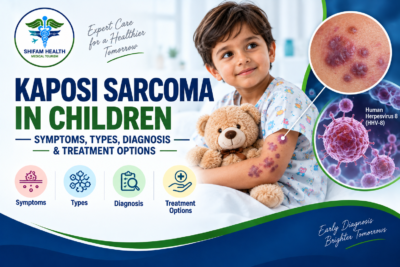
Kaposi sarcoma is a rare cancer of blood vessel-lining cells, caused by infection with human herpesvirus 8 (HHV-8), also called Kaposi sarcoma-associated herpesvirus (KSHV). It typically appears as purple, red, or brown-colored skin lesions, though it can also affect the mouth, lymph nodes, and internal organs including the lungs and digestive tract. Kaposi sarcoma occurs in several distinct clinical forms — associated with HIV, with organ transplant immunosuppression, occurring in older adults without HIV (classic form), or occurring in parts of sub-Saharan Africa (endemic form) — each with different typical patients, disease behavior, and treatment priorities.
Diagnosis requires a biopsy, and treatment ranges from simple observation or local therapy for limited disease to systemic chemotherapy for widespread or organ-involving disease.
Because Kaposi sarcoma varies so much by type and extent, evaluation and treatment planning should be individualized by a specialist team familiar with the relevant subtype — HIV/infectious disease involvement for HIV-associated disease, or transplant-team coordination for transplant-associated disease.
What Causes Kaposi Sarcoma? Understanding HHV-8
Kaposi sarcoma requires infection with HHV-8 (human herpesvirus 8), also known as KSHV — this is a necessary factor, without which the disease doesn’t occur. But here’s the critical point: HHV-8 infection alone does not mean a person has or will develop Kaposi sarcoma. HHV-8 seroprevalence varies substantially by geography — roughly 3-7% in the general U.S. population, but considerably higher in parts of sub-Saharan Africa and the Mediterranean — and the large majority of people infected with HHV-8 never develop Kaposi sarcoma at all.
What actually determines whether disease develops is primarily immune function. Kaposi sarcoma emerges when the immune system’s ability to control HHV-8 is significantly compromised — through HIV infection, immunosuppressive medication after organ transplantation, natural immune decline with age, or, in specific documented cases, biologic immunosuppressive drugs like TNF-alpha inhibitors used for other conditions. This is why Kaposi sarcoma clusters so heavily around specific immune-status categories rather than occurring randomly across the HHV-8-infected population.
Types of Kaposi Sarcoma
There are four long-recognized clinical/epidemiologic forms of Kaposi sarcoma, and recent literature has identified a fifth, distinct pattern — this is worth knowing, since a lot of older patient information still only describes four.
Classic Kaposi sarcoma — Historically described in older adults, often men, of Mediterranean or Eastern European Jewish ancestry, though it can occur more broadly. This form is generally more indolent (slower-growing), often skin-limited, and related to age-related immune decline (immunosenescence) rather than another identifiable immunosuppressive cause. Estimated survival for classic KS has been reported around 70-80% in available data, though outcomes vary by extent and treatment.
Endemic (African) Kaposi sarcoma — Occurs in parts of sub-Saharan Africa, affecting both adults and, notably, children — a pattern distinct from the other forms. Clinical presentation varies, and some presentations can be more aggressive than classic disease. It’s important to distinguish this from HIV-associated disease occurring in the same regions, since both can be present in overlapping populations, and management approach differs based on which is driving the disease.
Iatrogenic (immunosuppression-associated) Kaposi sarcoma — Occurs in the context of immunosuppressive medication, most classically after organ transplantation, but also documented with other immunosuppressive drugs including certain biologic therapies used for autoimmune conditions. This form is particularly notable because it can, in some cases, regress when immunosuppression is reduced — though this requires careful specialist management, discussed further below.
Epidemic (HIV-associated) Kaposi sarcoma — Linked to HIV infection and the immune suppression it causes. It remains, even in the era of effective antiretroviral therapy, among the most common cancers in people living with HIV globally, with sub-Saharan Africa accounting for the substantial majority of the global disease burden.
A newly recognized fifth pattern, described in recent cohort research, occurs in HIV-negative men who have sex with men, presenting with a distinct clinical pattern not fully captured by the traditional four-category framework — an area of active ongoing characterization in the medical literature rather than a settled classification.
Symptoms and What Kaposi Sarcoma Looks Like
Kaposi sarcoma skin lesions are typically purple, red, brown, or bluish (violaceous) in color, and can be:
- Flat (macules)
- Slightly raised (plaques)
- Firm nodules
They most commonly appear on the legs and feet, though they can occur on the face, genitals, or other skin surfaces, and often develop in multiple areas rather than as a single isolated spot. Lesions are frequently painless in early stages, though they can become tender, swollen, or ulcerated as they progress. Growth rate varies considerably — classic disease often progresses slowly over years, while some HIV-associated or aggressive presentations can develop and spread more quickly.
Oral Kaposi Sarcoma
The mouth is a recognized site of involvement, particularly the hard palate, gums, and tongue. Possible symptoms include swelling, bleeding, pain, and — depending on lesion size and location — difficulty chewing or swallowing. Oral involvement is sometimes among the first noticed signs, particularly in HIV-associated disease, and any persistent, unexplained oral lesion — not just ones matching this description — deserves evaluation, since many other conditions can look similar in the mouth.
Visceral Kaposi Sarcoma
Kaposi sarcoma can involve internal organs, most notably the gastrointestinal tract and lungs, and this involvement can occur even without extensive visible skin disease — which is part of why clinical evaluation looks beyond just the skin in higher-risk patients.
Gastrointestinal involvement may cause abdominal pain, nausea, vomiting, gastrointestinal bleeding, diarrhea, or unexplained weight loss. It’s frequently asymptomatic and identified only through endoscopic evaluation performed for other reasons or as part of staging workup in higher-risk patients.
Pulmonary (lung) involvement may cause cough, shortness of breath, chest discomfort, or, in more severe disease, low blood oxygen levels. Pulmonary Kaposi sarcoma is generally considered a marker of more extensive, higher-risk disease requiring more aggressive systemic treatment.
Not every patient needs extensive invasive testing for visceral involvement — this is assessed based on symptoms, disease extent elsewhere, and clinical risk factors, not applied uniformly to everyone.
When to Seek Medical Evaluation
Persistent, unexplained purple or violaceous skin lesions, lesions that are rapidly increasing in size or number, oral lesions, unexplained swelling or bleeding, shortness of breath, or significant gastrointestinal symptoms should be medically assessed — particularly, though not exclusively, in people who are living with HIV, taking immunosuppressive medication, or have received an organ transplant. This isn’t a diagnosis based on the description alone — it’s a signal that evaluation is warranted.
Kaposi Sarcoma vs. Other Purple Skin Lesions
Appearance alone cannot reliably diagnose Kaposi sarcoma — a number of other conditions can look similar, including bruising or purpura, benign hemangiomas, bacillary angiomatosis (a bacterial infection that can closely mimic Kaposi sarcoma clinically), melanoma, angiosarcoma, and various other vascular or inflammatory skin conditions. This is precisely why biopsy, not visual inspection, is the diagnostic standard — self-diagnosing based on lesion color or location risks both unnecessary anxiety over a benign condition and, just as importantly, delayed diagnosis of something that does need attention.
How Kaposi Sarcoma Is Diagnosed
A biopsy is required to confirm Kaposi sarcoma — clinical appearance supports suspicion but does not establish the diagnosis. The broader diagnostic pathway typically includes:
- Clinical examination and medical history, including assessment of immune status and risk factors
- HIV testing, where appropriate and not already known
- Biopsy of an accessible skin or oral lesion
- Histopathology and immunohistochemistry
- HHV-8 testing on the tissue sample where relevant to confirmation
- Imaging (commonly CT) and, where indicated by symptoms or risk, endoscopy or bronchoscopy to assess for visceral involvement
Biopsy and Pathology
Biopsy may sample skin, oral, or other accessible lesions, with the specific approach depending on lesion location and accessibility. Under the microscope, Kaposi sarcoma characteristically shows a proliferation of spindle-shaped cells, abnormal, poorly formed vascular channels, and extravasated red blood cells (blood that has leaked outside normal vessel structures) — findings that give the tumor its distinctive appearance.
Pathologists frequently confirm the diagnosis using immunohistochemistry for HHV-8 latent nuclear antigen (LANA-1), a highly specific marker that helps distinguish true Kaposi sarcoma from lesions that resemble it clinically.
Assessing the Extent of Kaposi Sarcoma
Kaposi sarcoma is not typically assessed using the standard TNM Stage I-IV framework applied to many other cancers. For HIV-associated Kaposi sarcoma specifically, clinicians commonly use the AIDS Clinical Trials Group (ACTG) TIS system, which evaluates three domains together:
- T (Tumor extent) — limited to skin/lymph nodes/minimal oral disease versus more extensive or visceral involvement
- I (Immune status) — based on CD4 count
- S (Systemic illness) — presence of HIV-related systemic symptoms, opportunistic infections, or significant functional impairment
This framework doesn’t apply in the same way to classic, endemic, or transplant-associated disease, which are instead assessed based on the extent, location, and rate of progression of the disease in the context of the patient’s underlying condition — there’s no single universal staging table across all Kaposi sarcoma types, and that’s a genuine feature of this disease, not a gap in this explanation.
HIV-Associated Kaposi Sarcoma
This is the form most people associate with Kaposi sarcoma, and it warrants careful, non-stigmatizing explanation. HIV-associated immune suppression significantly increases HHV-8 reactivation and disease risk. Relevant factors clinicians consider include CD4 count and HIV viral load — but it’s genuinely important to understand that Kaposi sarcoma can occur across a range of CD4 levels, and a relatively preserved CD4 count does not completely exclude it, even though risk rises as CD4 count falls.
It’s also worth being precise about a point of common confusion: Kaposi sarcoma may, in specific clinical circumstances, be classified as an AIDS-defining condition — but Kaposi sarcoma and AIDS are not synonymous, and having Kaposi sarcoma does not automatically mean a person has advanced, uncontrolled HIV disease.
Antiretroviral therapy (ART) is a foundational, non-negotiable part of managing HIV-associated Kaposi sarcoma. Effective ART, by restoring immune function and suppressing HIV viral load, can lead to regression of Kaposi lesions in some patients — sometimes without any additional cancer-directed treatment needed for limited disease. However, ART alone is often insufficient for patients with extensive, symptomatic, rapidly progressive, or visceral disease, where systemic cancer treatment is added alongside ART rather than instead of it. Current WHO guidance recommends immediate ART initiation for mild-to-moderate disease, and immediate ART combined with systemic chemotherapy for severe, symptomatic disease.
We will not tell you to start, stop, or change your HIV medication — this is a decision for you and your HIV/infectious disease specialist, made in the context of your complete clinical picture.
Immune Reconstitution Inflammatory Syndrome (IRIS)
Occasionally, Kaposi sarcoma lesions can appear to worsen shortly after starting effective ART — this is a recognized phenomenon called immune reconstitution inflammatory syndrome, where the newly-restored immune system’s inflammatory response to HHV-8 can transiently intensify visible disease before overall improvement follows. Not every instance of worsening lesions after starting ART is IRIS — this requires clinical assessment to distinguish from genuine disease progression, and should be evaluated by your treating team rather than assumed.
Transplant-Associated (Iatrogenic) Kaposi Sarcoma
Immunosuppressive medication, necessary after organ transplantation to prevent rejection, can increase Kaposi sarcoma risk by allowing HHV-8 reactivation. Management in this context is genuinely delicate: it may involve reducing immunosuppression dosage or switching immunosuppressive strategies for example, to sirolimus, an mTOR inhibitor with some documented anti-Kaposi sarcoma activity alongside its immunosuppressive function under the direct supervision of the transplant team.
This is a critical safety point: changing immunosuppression is not a decision to make independently or without your transplant team’s direct involvement. Reducing immunosuppression too much, or without proper coordination, creates a genuine and serious risk of organ rejection. If dose reduction isn’t feasible given transplant status, conventional local or systemic Kaposi sarcoma treatments (discussed below) may be used instead, coordinated between the oncology and transplant teams together.
Treatment Overview
There is no single treatment appropriate for every Kaposi sarcoma case — treatment depends on the type, extent of disease, presence of symptoms, immune status, HIV status if applicable, transplant status if applicable, organ involvement, and how quickly the disease is progressing.
Local Treatments for Limited Disease
For limited, skin-confined disease — particularly common in classic Kaposi sarcoma or well-controlled HIV-associated disease — local approaches may be sufficient:
- Observation in select asymptomatic, stable, low-burden cases
- Surgical excision for individual lesions
- Radiation therapy, effective for localized skin lesions and sometimes used for painful or bleeding lesions
- Cryotherapy and other local destructive techniques
- Topical or intralesional therapies, including options like topical retinoids in select cases
Treatment choice depends on lesion number, size, location, and symptoms — surgery alone is generally not treated as a universal cure, since Kaposi sarcoma is frequently multifocal, meaning new lesions can develop elsewhere even after successful removal of existing ones.
Chemotherapy and Systemic Therapy
For extensive, symptomatic, rapidly progressive, or visceral disease not adequately controlled by ART and/or local treatment, systemic therapy becomes appropriate. Current WHO and clinical guidelines support two primary options:
Pegylated liposomal doxorubicin (PLD) — a liposome-encapsulated chemotherapy formulation that concentrates in Kaposi sarcoma lesions, commonly used as initial systemic therapy for more extensive disease.
Paclitaxel — an alternative first-line option, or used when PLD isn’t suitable; comparative studies suggest broadly similar effectiveness between the two, with some evidence paclitaxel performs slightly better or comparably in direct comparison, though selection depends on individual patient factors and tolerance.
Treatment selection is individualized based on disease extent, prior treatment, patient tolerance, and clinical context — this is not a one-size-fits-all decision.
Immunotherapy
Immune checkpoint inhibitors (such as those targeting PD-1) are an area of active investigation for Kaposi sarcoma, with emerging evidence supporting their use in select circumstances, particularly for disease that hasn’t responded adequately to standard chemotherapy. This remains an evolving area rather than universal first-line standard of care — it should be discussed with your oncology team as a potential option in specific clinical situations, not assumed to be automatically available or appropriate for every patient.
Radiation Therapy
Radiation is a well-established local treatment option, particularly effective for painful, bleeding, or cosmetically significant skin lesions, and can be used for palliation in more advanced disease. It’s generally used for localized disease control rather than as a systemic treatment for widespread disease.
Prognosis and Survival
Prognosis varies enormously depending on Kaposi sarcoma type, extent of disease, presence of visceral involvement, and — for HIV-associated disease — how well HIV itself is controlled. Classic Kaposi sarcoma, being generally more indolent, has been associated with survival estimates around 70-80% in available data, though this reflects a specific population and disease pattern.
For advanced HIV-associated disease specifically, outcomes are heavily influenced by the broader course of HIV infection — in some cases, infections and other HIV-related complications, rather than the Kaposi sarcoma itself, dominate the overall clinical picture and outcome.
We will not tell you “your survival rate is X%.” These are population statistics from specific studies and treatment eras — your individual outlook depends on your specific disease type, extent, immune status, and response to treatment, which is a conversation to have directly with your treating specialist.
Recurrence and Follow-Up
Kaposi sarcoma can recur or persist even after apparently successful treatment. If recurrence occurs, reassessment typically includes review of immune status (HIV viral suppression, or transplant immunosuppression level), disease extent, and whether new visceral involvement has developed — recurrence doesn’t automatically mean the previous treatment approach should simply be repeated; it may point to a need to address underlying immune status more directly.
Ongoing follow-up typically includes skin (and oral, where relevant) examination, HIV monitoring (CD4 count and viral load) for HIV-associated disease, transplant monitoring for iatrogenic disease, and imaging where clinically indicated. There’s no single universal follow-up schedule — your team will define this based on your specific disease type and risk factors.
Kaposi Sarcoma Treatment Cost in India
There’s no single universal Kaposi sarcoma treatment price, and cost varies dramatically depending on which category of disease is being treated — it genuinely makes sense to separate these:
Localized/limited Kaposi sarcoma — treated with observation, local excision, or radiation — represents a relatively modest cost.
Extensive or visceral Kaposi sarcoma requiring systemic chemotherapy involves substantially higher and ongoing costs.
HIV-associated disease adds ART and HIV-monitoring costs, while transplant-associated disease adds the cost of coordinated oncology-transplant management.
| Component | Typical Range (International Patient, Indicative) | Notes |
|---|---|---|
| Diagnostic Workup (Biopsy, Pathology, HHV-8 Testing) | $400–$1,200 | HIV testing/monitoring adds separately if not already established |
| Local Treatment (Excision, Radiation for Limited Disease) | $1,500–$4,000 | Depends on number of lesions and treatment modality |
| Systemic Chemotherapy (PLD or Paclitaxel, Per Course) | $3,000–$8,000 | Multiple cycles typically required; total cost scales with cycle count |
| ART (Monthly, if Not Already Established) | $30–$150 | India’s generic antiretroviral manufacturing base keeps this comparatively low |
| Visceral Disease Workup (Endoscopy, Imaging, Specialist Evaluation) | $500–$2,000 | Scope depends on suspected organ involvement |
These are component ranges, not a package quote, and no reliable Kaposi sarcoma-specific India package pricing exists publicly to cite as a benchmark — this framework is built from verified component costs rather than a fabricated single figure. An accurate estimate absolutely requires your specific disease type, extent, and immune status reviewed by a treating team.
Kaposi Sarcoma Treatment in India for International Patients
India offers relevant infrastructure across the specialties this disease can require — oncology, dermatology, infectious disease/HIV medicine, pathology, radiation oncology, and transplant medicine for iatrogenic cases — along with a well-established generic pharmaceutical manufacturing base that keeps both ART and certain chemotherapy costs comparatively accessible. What matters when evaluating a treatment center depends heavily on your specific disease type:
- For HIV-associated disease: coordinated oncology and HIV/infectious disease care, not treated as separate, disconnected specialties
- For transplant-associated disease: direct coordination between the oncology team and your transplant center — ideally the same center handling both, or clear, active communication between them
- For all types: dermatopathology expertise capable of confirming diagnosis via HHV-8/LANA testing, and a functioning multidisciplinary approach rather than a single specialist working in isolation
We’re not going to claim India is automatically “the best” option without your specific case being evaluated — what genuinely matters is confirming a center has real experience with your specific Kaposi sarcoma subtype, not just general oncology volume.
Choosing a Kaposi Sarcoma Treatment Center
Rather than a superficial “top hospitals” list, look for a center offering: medical oncology, dermatology and dermatopathology, infectious disease/HIV specialist involvement where relevant, radiation oncology, imaging capability, a transplant team on-site or in active coordination for iatrogenic cases, and a functioning multidisciplinary tumor board. If a hospital is named to you, verify these capabilities directly.
International Patient Journey
- Share medical reports and lesion photographs, where clinically appropriate, for initial specialist review
- Biopsy/pathology review, including HHV-8 and HIV-status information where available
- Immune-status and disease-extent assessment
- Specialist consultation — oncology, and coordinated infectious disease or transplant-team input depending on your specific type
- Treatment recommendation and case-specific cost estimate
- Hospital selection and medical visa guidance
- Travel planning
- Treatment
- Response monitoring and follow-up
- Return-home coordination, including transitioning to reliable long-term ART or follow-up care access if applicable
We coordinate each of these steps but cannot guarantee diagnosis, visa approval, treatment response, cure, exact cost, or survival before your case has been medically evaluated.
Questions to Ask Your Kaposi Sarcoma Treatment Team
- Has the diagnosis been confirmed by biopsy, and is HHV-8/LANA testing positive?
- Which type of Kaposi sarcoma do I have?
- Do I need HIV testing, or is my HIV status already known and being actively managed?
- If I have HIV, what is my current CD4 count and is my viral load controlled?
- Is there evidence of oral, gastrointestinal, or pulmonary involvement?
- Do I need additional imaging or endoscopic evaluation?
- Is local treatment sufficient, or is systemic therapy needed?
- If I have HIV, should ART be started or optimized as part of this treatment plan?
- If I’ve had an organ transplant, will my transplant team be directly involved in this decision?
- What is the treatment goal — disease control, symptom relief, or something else?
- How will treatment response be monitored, and how often?
- What symptoms should prompt urgent reassessment between visits?
How Shifam Health Can Help
A Kaposi sarcoma diagnosis often comes bundled with questions that go beyond the cancer itself — about HIV status, transplant medication, or simply what a purple skin lesion means. We help connect you with oncology teams experienced in your specific disease type, coordinate pathology and immune-status review before you travel, and build a treatment estimate around your actual case rather than a generic cancer-cost page.
Reach out on WhatsApp or submit a quick inquiry — our team responds within 24 hours, with no obligation to proceed.
Frequently Asked Questions
What is Kaposi sarcoma?
A rare cancer of blood-vessel lining cells associated with HHV-8 infection. It commonly causes purple, red, or brown skin lesions but may affect the mouth, lymph nodes, lungs, or digestive tract.
Is Kaposi sarcoma cancer?
Yes. It is a vascular sarcoma, but its behavior varies depending on the type and extent of disease.
What causes Kaposi sarcoma?
HHV-8 infection is necessary for its development, but disease usually occurs when the immune system is weakened, such as with HIV or transplant-related immunosuppression.
Does HHV-8 always cause Kaposi sarcoma?
No. Most people infected with HHV-8 never develop Kaposi sarcoma.
What does Kaposi sarcoma look like?
It may appear as flat or raised purple, red, brown, or bluish patches or nodules, commonly on the legs and feet.
Can Kaposi sarcoma affect internal organs?
Yes. It can involve the mouth, gastrointestinal tract, lungs, lymph nodes, and other organs.
Does Kaposi sarcoma mean I have HIV?
No. It can also occur as classic, endemic, or transplant-associated Kaposi sarcoma.
How is Kaposi sarcoma diagnosed?
A biopsy is required for confirmation, usually with specialist pathology and HHV-8/LANA testing.
Does every patient need chemotherapy?
No. Limited disease may be managed with observation or local treatments. Chemotherapy is generally reserved for extensive, symptomatic, or visceral disease.
Can HIV-associated Kaposi sarcoma improve with ART?
Yes. Effective antiretroviral therapy can cause lesions to regress by restoring immune function. Additional treatment may be needed for extensive disease.
Can Kaposi sarcoma come back?
Yes. Recurrence or persistent disease can occur, so ongoing monitoring is important.
What does Kaposi sarcoma treatment cost in India?
Costs vary according to disease type, extent, and treatment required. A personalized estimate based on pathology and the proposed treatment plan is recommended.


Popular Posts From Last Week
- September 18, 2026
- shifamhealth
Written by: Shifam Health Editorial Team — Orthopedic Content Division Medically reviewed by: Shifam Health Clinical Advisory Panel…
- September 16, 2026
- shifamhealth
Ankle valgus deformity is an abnormal alignment in which the ankle tilts toward the outside of the body,…
- September 15, 2026
- shifamhealth
Medically reviewed content · Published 2026 · Last reviewed September 2026 Bow legs medically called genu varum —…
- September 14, 2026
- shifamhealth
Medically reviewed content · Published 2026 · Last reviewed September 2026 A “broken ankle” is the common term…
- September 15, 2026
- shifamhealth
Medically reviewed content · Published 2026 · Last reviewed August 2026 A burst fracture is a spinal vertebra…
- September 13, 2026
- shifamhealth
Carpal tunnel syndrome (CTS) is compression of the median nerve as it passes through the carpal tunnel —…
- September 13, 2026
- shifamhealth
If a lumbar MRI report mentions “kissing spinous processes” or “Baastrup’s disease,” it’s worth pausing before assuming this…
- September 14, 2026
- shifamhealth
Scoliosis is a three-dimensional spinal deformity — sideways curvature combined with rotation — and it is genuinely not…
- September 16, 2026
- shifamhealth
Epithelial ovarian cancer is the most common broad category of ovarian cancer, arising from the cells covering the…
- September 17, 2026
- shifamhealth
Hepatoblastoma is a rare malignant liver tumor that develops primarily in young children, most commonly before age 5….
- September 19, 2026
- shifamhealth
Finding a purple or reddish patch on your skin that won’t fade, or hearing “Kaposi sarcoma” mentioned during…
- September 18, 2026
- shifamhealth
Kyphosis means forward curvature of the spine — and some kyphosis is completely normal anatomy in the mid-back…