



Home > Blog > Rectal Prolapse Surgery Cost in India | Laparoscopic Rectopexy Guide for International Patients [2026]
Rectal Prolapse Surgery Cost in India | Laparoscopic Rectopexy Guide for International Patients [2026]
Filters & Insights
Rectal prolapse surgery cost in India starts from $1,500. Compare laparoscopic, robotic & open rectopexy options, top hospitals, recovery timelines & international patient guidance.

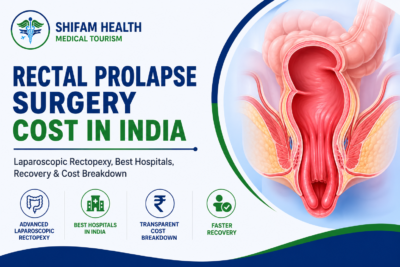
Rectal prolapse is one of the most distressing colorectal conditions a person can face not because it is life-threatening, but because of how deeply it affects daily comfort, dignity, and confidence. When part of the rectum slides outside the body, even the most basic activities walking, sitting, using the bathroom become sources of anxiety and discomfort.
Many patients live with this condition for months or even years before seeking help, often out of embarrassment or because they simply do not know that effective, minimally invasive surgical treatment is available. The good news is that modern laparoscopic rectopexy has transformed how this condition is treated. It offers short hospital stays, minimal scarring, low recurrence rates, and faster recovery and India has become one of the world’s leading destinations to access this surgery at a fraction of what it costs in Western countries.
The average rectal prolapse surgery cost in India ranges from USD 1,500 to USD 4,500 depending on the surgical approach, hospital, and city compared to USD 15,000–40,000 in the USA or UK. With experienced colorectal surgeons, JCI-accredited hospitals, and dedicated international patient support, India now attracts patients from Bangladesh, the Middle East, East Africa, and beyond for this procedure.
This guide gives you everything you need to make a confident, informed decision.
Quick Answer Box
What is rectal prolapse? A condition where the rectum slides outside the anal opening, either partially or completely.
What is rectopexy surgery? A surgical procedure that repositions and secures the rectum to prevent it from prolapsing.
Rectal prolapse surgery cost in India: USD 1,500–4,500 (INR 1,25,000–3,75,000) depending on the technique — laparoscopic, robotic, or open.
Is laparoscopic rectopexy available in India? Yes, widely available at major hospitals across Delhi, Chennai, Mumbai, Bangalore, and Hyderabad.
Recovery time: 2–5 days in hospital; full recovery in 4–6 weeks for laparoscopic surgery.
Table of Contents
ToggleWhat Is Rectal Prolapse?
Rectal prolapse occurs when the rectum — the final section of the large intestine loses its normal attachments inside the body and begins to slide out through the anal opening. It most commonly affects older women, though it can occur in men, younger adults, and even children.
There are three main types:
Complete Rectal Prolapse — The full thickness of the rectal wall protrudes outside the body. This is the most severe form and almost always requires surgical correction.
Partial (Mucosal) Prolapse — Only the inner lining of the rectum slides out, often seen in patients with chronic straining or hemorrhoid disease.
Internal Prolapse (Intussusception) — The rectum telescopes inward on itself without protruding outside, causing constipation and a feeling of incomplete evacuation.
Understanding which type a patient has determines the most appropriate surgical approach.
Symptoms of Rectal Prolapse
Symptoms range from mild and intermittent to persistent and debilitating. The most common signs include:
- Visible protrusion of red or pink tissue from the anal opening
- A feeling of incomplete bowel emptying
- Constipation or difficulty passing stool
- Mucus or blood-stained discharge from the rectum
- Chronic straining during bowel movements
- Fecal incontinence or leakage
- Discomfort, pressure, or pain in the lower pelvic area
When Should You Seek Surgical Treatment?
Surgery is typically recommended when:
- The prolapse is complete (full-thickness)
- Symptoms are significantly affecting quality of life
- Non-surgical treatments such as dietary changes or pelvic floor therapy have not helped
- Fecal incontinence is worsening
- There is bleeding or tissue damage
Early treatment leads to better surgical outcomes and lower recurrence rates.
Rectal Prolapse Surgery Cost in India
The cost of rectal prolapse surgery in India depends primarily on the surgical technique, the hospital, the surgeon’s experience, and the city. The good news for international patients is that even at India’s top-tier private hospitals, costs remain significantly lower than in Western countries.
| Procedure | Cost (INR) | Cost (USD) | Cost (AED) | Cost (BDT) | Cost (GBP) |
|---|---|---|---|---|---|
| Laparoscopic Rectopexy | ₹1,25,000–₹2,00,000 | $1,500–$2,400 | AED 5,500–8,800 | ৳1,65,000–2,65,000 | £1,200–£1,900 |
| Robotic Rectopexy | ₹2,50,000–₹3,75,000 | $3,000–$4,500 | AED 11,000–16,500 | ৳3,30,000–5,00,000 | £2,400–£3,600 |
| Open Rectopexy | ₹1,00,000–₹1,75,000 | $1,200–$2,100 | AED 4,400–7,700 | ৳1,30,000–2,30,000 | £950–£1,680 |
| Perineal Rectosigmoidectomy | ₹1,00,000–₹1,60,000 | $1,200–$1,900 | AED 4,400–7,000 | ৳1,30,000–2,10,000 | £950–£1,520 |
Note: These are indicative ranges. Final costs are confirmed after medical report review.
Why Costs Vary
Even within India, prices are not uniform. A laparoscopic rectopexy at a premium JCI-accredited hospital in Delhi will cost more than the same procedure at a reputable NABH-accredited hospital in a tier-2 city. Robotic surgery costs more because of the technology involved but may offer clinical advantages for certain patients. The cost of consumables, mesh (where used), and anesthesia also contributes.
What Is Included in a Rectal Prolapse Surgery Package?
Most Indian hospitals offer packaged pricing for international patients, which typically includes:
Included:
- Surgeon and assistant surgeon fees
- Anesthesiologist fees
- Operating theatre charges
- Hospital stay (3–6 nights depending on procedure)
- Nursing care and post-operative monitoring
- Standard pre-operative investigations (blood tests, ECG, colonoscopy report review)
- Standard medications during admission
- Meals during hospital stay
- One post-operative consultation
Usually Excluded:
- Pre-operative CT scan or MRI if not already done
- Advanced investigations (manometry, defecography)
- Robotic surgery mesh or specialized implants (may be billed separately)
- Additional nights if complications arise
- Travel, accommodation, and visa expenses
- Interpreter services (offered by Shifam Health at no extra charge)
Always ask for a written cost estimate before confirming your travel.
Cost Comparison | India vs USA, UK, UAE, Turkey & Thailand
| Country | Laparoscopic Rectopexy (USD) | Robotic Rectopexy (USD) | Open Rectopexy (USD) |
|---|---|---|---|
| India | $1,500–$2,400 | $3,000–$4,500 | $1,200–$2,100 |
| USA | $15,000–$35,000 | $25,000–$40,000 | $12,000–$25,000 |
| UK | $12,000–$22,000 | $18,000–$30,000 | $10,000–$18,000 |
| UAE | $8,000–$15,000 | $12,000–$20,000 | $7,000–$12,000 |
| Turkey | $3,500–$6,000 | $5,500–$9,000 | $3,000–$5,000 |
| Thailand | $4,000–$7,500 | $6,000–$10,000 | $3,500–$6,000 |
India’s combination of competitive pricing, internationally trained colorectal surgeons, and advanced minimally invasive infrastructure makes it one of the strongest value propositions globally for this procedure.
Types of Rectal Prolapse Surgery Available in India
Laparoscopic Rectopexy
This is the most commonly performed procedure for complete rectal prolapse in India and is considered the gold standard for most patients.
The surgeon makes 3–5 small incisions in the abdomen, inserts a camera and instruments, and then lifts the rectum back into its correct position and secures it with sutures or a synthetic mesh attached to the sacrum (the bone at the base of the spine).
Who is suitable: Most patients with complete rectal prolapse who are fit for general anesthesia
Advantages: Minimal blood loss, short hospital stay, fast recovery, low recurrence rates (3–10%), minimal scarring
Limitations: Requires general anesthesia; not always suitable for older patients with multiple comorbidities
Recovery: 2–3 days in hospital, return to light activity in 2–3 weeks, full recovery in 4–6 weeks
Estimated cost in India: USD 1,500–2,400
Robotic Rectopexy
Robotic rectopexy uses a da Vinci surgical system to perform the same procedure as laparoscopic surgery but with enhanced three-dimensional vision, greater range of motion, and superior surgical precision — particularly valuable in the confined space of the pelvis.
Who is suitable: Patients who require very precise dissection, those with previous abdominal surgery, or patients where nerve preservation is critical
Advantages: Greater surgical precision, reduced risk of nerve damage affecting bladder and sexual function, faster surgeon learning curve for complex cases
Limitations: Higher cost; not available at all centers
Recovery: Similar to laparoscopic — 2–4 days in hospital, 4–6 weeks full recovery
Estimated cost in India: USD 3,000–4,500
Open Rectopexy
Open rectopexy involves a longer incision in the lower abdomen to access and reposition the rectum. While outcomes are similar to laparoscopic surgery, recovery is longer and post-operative pain is greater.
Who is suitable: Patients in whom laparoscopic surgery is not safe, or in settings where laparoscopic equipment is unavailable
Advantages: Familiar technique with long-term outcome data; can be performed without specialized equipment
Limitations: Longer hospital stay (5–7 days), more post-operative pain, longer recovery (8–12 weeks), larger scar
Estimated cost in India: USD 1,200–2,100
Perineal Rectosigmoidectomy (Altemeier Procedure)
This is a perineal approach — the surgeon works from outside the body through the anal opening, without making any abdominal incision. The prolapsed segment of rectum is removed and the cut ends are joined.
Who is suitable: Older patients, those with high surgical risk, or patients unable to undergo general anesthesia (can be done under spinal anesthesia)
Advantages: No abdominal incision, can be performed under regional anesthesia, suitable for frail patients
Limitations: Higher recurrence rate (15–30%) compared to abdominal approaches; not ideal for younger or fitter patients
Estimated cost in India: USD 1,200–1,900
Laparoscopic vs Robotic vs Open Rectopexy
| Feature | Laparoscopic | Robotic | Open |
|---|---|---|---|
| Incision Size | 3–5 small ports | 3–5 small ports | 10–15 cm incision |
| Hospital Stay | 2–3 days | 2–4 days | 5–7 days |
| Post-operative Pain | Mild–moderate | Mild–moderate | Moderate–severe |
| Return to Work | 2–3 weeks | 2–3 weeks | 6–8 weeks |
| Recurrence Rate | 3–10% | 3–8% | 5–12% |
| Cost in India (USD) | $1,500–$2,400 | $3,000–$4,500 | $1,200–$2,100 |
| Nerve Preservation | Good | Excellent | Good |
| Suitable for Older | Sometimes | Sometimes | Sometimes |
| Cosmetic Outcome | Excellent | Excellent | Fair |
| Technology Required | Laparoscope | Robotic system | Standard surgical equipment |
Which Rectal Prolapse Surgery Is Best?
There is no single answer, the best surgery depends on the individual patient.
- Choose laparoscopic rectopexy if: You are under 70, reasonably fit, have complete rectal prolapse, and want the best balance of outcome and cost.
- Choose robotic rectopexy if: You have had previous abdominal surgery, have complex anatomy, or want the highest precision available — and the extra cost is acceptable.
- Open rectopexy if: Laparoscopic surgery is not available at the recommended center, or if your surgeon believes it is the safest approach for your specific anatomy.
- Choose perineal rectosigmoidectomy if: You are older or frail, have significant comorbidities, and a shorter surgery with regional anesthesia is a safer option.
Your colorectal surgeon will make a personalized recommendation based on your imaging, bowel function tests, and medical history. This decision should never be made on cost alone.
Factors Affecting Rectal Prolapse Surgery Cost in India
Several variables influence the final cost beyond the base surgical fee:
Surgery type: Robotic surgery adds USD 1,500–2,000 over laparoscopic due to technology costs.
Surgeon expertise: Senior colorectal surgeons with 15+ years of experience may charge higher consultation and surgery fees — and for good reason.
Hospital category: JCI-accredited international hospitals charge premium rates for facilities, nursing ratios, and infrastructure. NABH hospitals offer excellent care at lower costs.
City: Delhi and Mumbai tend to be 10–20% more expensive than Chennai, Bangalore, or Hyderabad for comparable procedures.
Mesh or implant use: If mesh fixation is used in rectopexy, the mesh cost (INR 15,000–40,000) is typically billed separately.
Length of stay: Complications requiring extended hospitalization add to the total cost.
Investigations: Pre-operative colonoscopy, MRI pelvis, or anorectal manometry may not be included in the package.
Best Hospitals for Rectal Prolapse Surgery in India
When selecting a hospital for rectal prolapse surgery, international patients should look for:
- A dedicated colorectal surgery department (not just general surgery)
- Availability of laparoscopic and robotic surgical platforms
- JCI or NABH accreditation
- Experienced colorectal surgeon with documented rectopexy outcomes
- International patient department with coordination and interpreter support
- Well-equipped intensive care unit in case of complications
Major hospital groups with strong colorectal surgery programs include Apollo Hospitals, Fortis Healthcare, Max Healthcare, Medanta, Manipal Hospitals, Gleneagles Global Health City, Kokilaben Dhirubhai Ambani Hospital, and HCG. Shifam Health’s medical team evaluates your reports and matches you to the most appropriate surgeon and hospital based on your specific diagnosis — not just availability.
Why International Patients Choose India for Rectal Prolapse Surgery
The decision to travel to India for rectal prolapse surgery involves more than just cost. Here is what makes India a consistently preferred destination:
- Significant cost savings: Patients from the USA and UK save 85–90% on the same surgery performed at comparable quality levels. Even patients from the UAE and Turkey save 50–70%.
- Experienced colorectal specialists: India trains some of the world’s finest colorectal surgeons, many of whom hold fellowships from leading centers in the UK, USA, or Europe.
- Advanced technology: Robotic surgery platforms including the da Vinci system are available across multiple cities. Laparoscopic infrastructure is standard at all major hospitals.
- Short waiting times: Unlike the NHS in the UK, where patients may wait months for elective colorectal surgery, Indian hospitals can typically schedule surgery within 1–2 weeks of confirmation.
- English-speaking medical teams: Communication is rarely a barrier. Interpreters for Arabic, Bengali, Swahili, and other languages are also available through Shifam Health.
- Comprehensive medical tourism support: From medical visa to airport transfer to discharge planning, India’s hospital ecosystem is well-adapted to international patients.
International Patient Treatment Journey
- Share Medical Reports
Send your diagnosis, imaging, and previous treatment history to Shifam Health. We review everything within 24–48 hours.
- Specialist Consultation
Our colorectal surgery specialists review your case and recommend the most appropriate surgical approach.
- Treatment Plan
You receive a detailed written treatment plan including recommended procedure, hospital options, surgeon profiles, and expected hospital stay.
- Cost Estimate
A transparent written cost estimate is provided covering all major expenses.
- Medical Visa Assistance
We prepare your medical visa invitation letter and guide you through the application process for your country.
- Travel and Accommodation Planning
We assist with airport transfers and accommodation options near your hospital, ranging from budget to premium.
- Surgery
You are received by our coordinator at the hospital, supported throughout admission, and kept informed at every step
- Recovery and Discharge
Our team ensures you understand all discharge instructions and dietary guidance before you leave the hospital.
- Post-Operative Follow-Up
We coordinate telemedicine follow-up with your surgeon after you return home. Your local doctor also receives a full discharge summary.
Recovery After Rectal Prolapse Surgery
Laparoscopic Rectopexy Recovery
Most patients are mobile within 12–24 hours of surgery. Pain is generally manageable with oral medication. A soft, high-fibre diet begins within 24–48 hours. Hospital discharge occurs on days 2–3. Patients can typically fly home within 7–10 days of surgery, subject to surgeon clearance.
Robotic Rectopexy Recovery
Recovery is comparable to laparoscopic surgery. The precision of robotic technique may reduce post-operative discomfort slightly in some cases. Hospital stay is 2–4 days.
Open Surgery Recovery
Pain is more significant following open rectopexy and requires stronger pain management in the initial days. Hospital stay is 5–7 days. Patients should plan to remain in India for at least 10–14 days before flying.
Dietary Guidance During Recovery
- High-fibre diet helps prevent constipation (a major risk factor for recurrence)
- Adequate hydration (8–10 glasses of water daily)
- Avoid straining during bowel movements
- Laxatives or stool softeners as prescribed
Recovery Timeline
| Feature | Laparoscopic | Robotic | Open |
|---|---|---|---|
| Incision Size | 3–5 small ports | 3–5 small ports | 10–15 cm incision |
| Hospital Stay | 2–3 days | 2–4 days | 5–7 days |
| Post-operative Pain | Mild–moderate | Mild–moderate | Moderate–severe |
| Return to Work | 2–3 weeks | 2–3 weeks | 6–8 weeks |
| Recurrence Rate | 3–10% | 3–8% | 5–12% |
| Cost in India (USD) | $1,500–$2,400 | $3,000–$4,500 | $1,200–$2,100 |
| Nerve Preservation | Good | Excellent | Good |
| Suitable for Older | Sometimes | Sometimes | Sometimes |
| Cosmetic Outcome | Excellent | Excellent | Fair |
| Technology Required | Laparoscope | Robotic system | Standard surgical equipment |
Risks and Possible Complications
Rectal prolapse surgery is generally safe, particularly when performed laparoscopically. However, patients should be aware of potential complications:
- Recurrence — The prolapse may return, particularly if the patient continues straining chronically. Risk is lowest with laparoscopic or robotic rectopexy (3–10%) and highest with perineal approaches (15–30%).
- Constipation — A well-recognized side effect of rectopexy, particularly when the lateral ligaments of the rectum are divided. Treated with dietary fiber and stool softeners.
- Infection — As with any surgery; treated with antibiotics.
- Bleeding — Rare; more likely in open surgery.
- Bowel obstruction — Rare; related to adhesions in the post-operative period.
- Mesh-related complications — If synthetic mesh is used, there is a small risk of mesh erosion or infection. Most modern surgeons prefer biological mesh or suture fixation where possible.
- Nerve injury — Bladder or sexual dysfunction following injury to pelvic autonomic nerves. Risk is minimized with experienced surgeons and robotic technique.
Questions Patients Commonly Ask Before Surgery
Is laparoscopic rectopexy better than open surgery?
For most patients, yes. Laparoscopic surgery offers equal or better outcomes with shorter recovery, less pain, smaller scars, and faster return to normal life.
What is the recurrence rate after rectopexy?
Laparoscopic and robotic rectopexy have recurrence rates of 3–10% over 5 years. Perineal procedures have higher rates of 15–30%.
Can rectal prolapse come back after surgery?
Yes, recurrence is possible especially if the patient continues straining, has chronic constipation, or regains significant weight. Managing bowel habits long-term is essential.
How long should I stay in India?
For laparoscopic surgery, a minimum of 10–12 days is recommended. For open surgery, 14–16 days. This allows for surgery, recovery, and a final pre-departure check.
Is robotic surgery worth the extra cost?
For complex cases, previous abdominal surgery, or patients concerned about nerve preservation, robotic surgery may offer meaningful clinical advantages. For straightforward cases, laparoscopic surgery delivers excellent results at lower cost.
When can I travel after surgery?
Most patients can fly home 7–10 days after laparoscopic rectopexy. Longer flights should be discussed with your surgeon, and compression stockings should be worn to reduce DVT risk.
Why Choose Shifam Health?
Shifam Health is not a hospital booking platform. We are a patient advisory service meaning we work for you, not for the hospital.
When you come to us with rectal prolapse, we:
- Review your medical reports with our specialist network
- Identify the most appropriate colorectal surgeon for your specific condition
- Provide transparent, detailed cost estimates with no hidden fees
- Assist with your medical visa invitation letter
- Arrange airport transfers and hospital-adjacent accommodation
- Provide an in-person coordinator who stays with you through admission
- Arrange Arabic, Bengali, or Swahili language interpreters as needed
- Coordinate your post-discharge follow-up with your home doctor
We work with patients from Bangladesh, Yemen, Iraq, UAE, Saudi Arabia, Oman, Nigeria, Kenya, Ethiopia, Tanzania, and other countries. Our team understands the cultural, linguistic, and logistical challenges international patients face and we remove those barriers so you can focus entirely on your health.
Frequently Asked Questions
What is the best hospital for rectal prolapse surgery in India?
Leading hospitals include Apollo, Fortis, Max Healthcare, Medanta, Manipal, and Gleneagles. The best choice depends on your condition, budget, and preferred city.
Can laparoscopic rectopexy be performed without mesh?
Yes. Many surgeons perform suture rectopexy without mesh, while mesh rectopexy may be recommended for selected cases.
Is it safe to fly after rectal prolapse surgery?
Most patients can fly 7–10 days after laparoscopic surgery, subject to their surgeon’s approval.
What should I eat after rectal prolapse surgery?
Start with a soft, high-fiber diet and gradually return to your normal diet over the next few weeks.
Will I need physiotherapy after surgery?
Some patients, especially those with pelvic floor weakness or fecal incontinence, benefit from pelvic floor physiotherapy.
How do I know if I need surgery?
Complete rectal prolapse usually requires surgery, while mild or internal prolapse may initially be managed conservatively after specialist evaluation.
What is the difference between rectal prolapse and hemorrhoids?
Rectal prolapse occurs when the rectum protrudes through the anus, while hemorrhoids are swollen veins in the anal canal.
How long should international patients stay in India?
Plan for 10–12 days after laparoscopic surgery and 14–16 days after open surgery.
Can I undergo rectopexy after a hysterectomy?
Yes. Previous hysterectomy does not prevent rectopexy, although surgical planning may differ.
What documents are required for a Medical Visa to India?
You’ll generally need a valid passport, hospital invitation letter, passport-sized photos, and medical records. Shifam Health assists with the documentation process.
What if I have complications after returning home?
Your Indian surgeon can provide teleconsultation, and Shifam Health will coordinate follow-up care with your local doctor if needed.
Relatable Reads:
- Colorectal Surgery Cost in India
- Colon Cancer Surgery Cost India
- Medical Tourism in India: Complete Guide
- Medical Visa for India from Bangladesh
- International Patient Services — Shifam Health
Last reviewed: June 2026. Cost figures are indicative and subject to change. Request a personalized cost estimate from Shifam Health before making travel decisions.



Popular Posts From Last Week
- July 13, 2026
- shifamhealth
Written by: Shifam Health Content Team | Medically reviewed by: Endocrine Surgery Advisory Panel, Shifam Health | Published:…
- July 13, 2026
- shifamhealth
Stapedectomy surgery in India typically costs $900 to $3,500 (roughly ₹75,000 to ₹2,90,000) for international patients, depending on…
- July 14, 2026
- shifamhealth
Parotid gland tumor surgery (parotidectomy) in India typically costs $1,500 to $5,000 for international patients, depending on whether…
- July 16, 2026
- shifamhealth
Rectal prolapse is one of the most distressing colorectal conditions a person can face not because it is…
- July 9, 2026
- shifamhealth
When the small intestine can no longer absorb enough nutrients to sustain life, the standard fallback is intravenous…
- July 10, 2026
- shifamhealth
Kidney stones can cause severe pain, blood in the urine, recurrent infections, and even kidney damage if left…
- July 11, 2026
- Areen Fatima
HIPEC surgery cost in India typically ranges from USD 8,000 to 18,000 for a complete international-patient package —…
- July 10, 2026
- shifamhealth
If you or a family member has just been told there’s a bulge, an aneurysm in the aorta,…
- July 9, 2026
- shifamhealth
Scar revision surgery can meaningfully improve but not completely erase the appearance and function of most scars. In…
- July 14, 2026
- shifamhealth
How much does an IVC filter cost in India? Published pricing from Indian hospitals ranges widely — roughly…
- July 10, 2026
- shifamhealth
Recovery is one of the biggest concerns for anyone considering weight loss surgery. Questions like “How long will…
- July 9, 2026
- shifamhealth
Hearing that a knee replacement has failed can be frustrating, especially after expecting years of pain-free movement. Whether…