


Home > Blog > Pediatric Epilepsy Surgery in India (2026): Best Children’s Hospitals, Surgery Options & Recovery
Pediatric Epilepsy Surgery in India (2026): Best Children’s Hospitals, Surgery Options & Recovery
Filters & Insights
Written By :
Medically Reviewed By :

Shifam Health Medical Team
Shifam Health - Medical Reviews Department
10+ Years Of Experience
Learn about pediatric epilepsy surgery in India, top children's hospitals, surgery options, recovery, and treatment planning for children.
📅
Last updated: July 17, 2026

Your child has been on two, maybe three anti-seizure medications, and the seizures haven’t stopped. Somewhere along the way, a neurologist used the phrase “drug-resistant epilepsy” and mentioned surgery as an option. If you’re reading this, you’re probably somewhere between overwhelmed and hopeful — wondering whether surgery is even appropriate for your child, what it actually involves, whether it’s safe, and what it would take to pursue it in India.
This guide answers those questions directly, without inflating outcomes or glossing over risk. Epilepsy surgery is not the right path for every child, and no responsible specialist will promise seizure freedom before a full evaluation. What follows is a realistic, structured walkthrough of how candidacy is assessed, what the surgical options actually are, what they cost, and how international families navigate the process in India.
Can Children Undergo Epilepsy Surgery in India?
Yes — India has several centers with dedicated pediatric epilepsy surgery programs, offering the full range of procedures used internationally: resective surgery (temporal lobectomy, lesionectomy), hemispherectomy, corpus callosotomy, and device-based options like Vagus Nerve Stimulation (VNS). Surgery is only considered after a child is confirmed to have drug-resistant epilepsy (typically defined as continued seizures despite two or more appropriately chosen anti-seizure medications) and undergoes a comprehensive multidisciplinary evaluation — not on the basis of a single consultation. Costs for international patients broadly range from $9,000 for focal resective surgery up to $25,000+ for complex procedures like hemispherectomy, with device-based options like VNS often priced separately due to the implant hardware itself. Every number here should be treated as a planning range, not a quote — your child’s actual case needs individualized assessment.
Table of Contents
ToggleWhat Is Pediatric Epilepsy?
Epilepsy is a neurological condition defined by recurrent, unprovoked seizures — not a single seizure (which many children experience, often from fever, and which doesn’t constitute epilepsy on its own). A seizure happens when a burst of abnormal electrical activity disrupts normal brain function, temporarily affecting movement, awareness, sensation, or behavior.
In children specifically, uncontrolled epilepsy carries a concern beyond the seizures themselves: frequent seizures during critical developmental windows can affect cognitive and developmental progress. This is a major reason specialists don’t simply wait indefinitely on medication trials once a child is identified as drug-resistant — the earlier a child who is a genuine surgical candidate is identified, the more developmental window is protected.
Most children with epilepsy are managed successfully with medication alone and never need surgery. Surgery becomes part of the conversation specifically when seizures persist despite adequate medication trials.
When Is Epilepsy Surgery Considered?
This is the most important section for parents to read carefully, because most children with epilepsy are not surgical candidates — and understanding why helps you ask better questions of any specialist you consult.
Surgery is typically considered when:
- Drug-resistant epilepsy is confirmed — seizures continue despite trials of two or more appropriately selected, adequately dosed anti-seizure medications
- Seizure frequency significantly disrupts daily life or development — not occasional breakthrough seizures, but a pattern that’s affecting school, safety, or developmental trajectory
- A clear structural or electrical source can be identified — through imaging and monitoring (more on this below), some children have a well-defined seizure focus that can be safely addressed surgically; others don’t, which changes the calculus entirely
- A multidisciplinary epilepsy team agrees surgery is appropriate — this is never a single surgeon’s decision; it requires neurologists, neurosurgeons, radiologists, and neuropsychologists reviewing the case together
Children who are not typically candidates: those whose epilepsy has no identifiable focal source, those where seizures involve widespread brain regions in a way that makes safe removal impossible, or those who haven’t yet completed adequate medication trials. A credible center will tell a family clearly if their child doesn’t fit the surgical profile rather than proceeding anyway.
Types of Pediatric Epilepsy Surgery
| Procedure | Typical Indication | Advantages | Limitations / Considerations |
|---|---|---|---|
| Temporal Lobectomy | Well-localized seizures arising from the temporal lobe. | Excellent long-term outcomes in carefully selected patients. | Requires precise seizure localization and is unsuitable for diffuse epilepsy. |
| Lesionectomy | Seizures caused by a visible tumor, scar, or brain malformation. | Directly removes the seizure-causing lesion. | Only possible when imaging identifies a clear lesion. |
| Hemispherectomy | Severe one-sided epilepsy, usually in young children with extensive brain damage. | Can significantly reduce seizure burden in selected cases. | Major surgery with longer recovery, reserved for severe presentations. |
| Corpus Callosotomy | Generalized epilepsy with frequent drop attacks. | Reduces seizure spread between brain hemispheres. | Not curative; mainly decreases specific seizure types. |
| Vagus Nerve Stimulation (VNS) | Children who are not candidates for resective surgery. | Implantable, adjustable therapy without brain tissue removal. | Often reduces seizure frequency but rarely eliminates seizures completely. |
| Responsive Neurostimulation (RNS) | Selected patients with multiple or unresectable seizure foci. | Detects and treats seizure activity in real time. | Available only at a limited number of advanced centers in India. |
| Laser Interstitial Thermal Therapy (LITT) | Deep or difficult-to-access seizure-causing lesions. | Minimally invasive alternative to open brain surgery. | Requires specialized equipment and expertise; not widely available. |
No procedure guarantees complete seizure freedom. Outcomes depend heavily on how well-localized the seizure focus is, the underlying cause, and the child’s overall neurological picture which is exactly why the pre-surgical evaluation phase matters as much as the surgery itself.
Pre-Surgical Evaluation: Why It Takes Time
Before any procedure is recommended, a comprehensive evaluation establishes whether surgery is appropriate at all, and if so, which type. This typically includes:
- Video EEG monitoring — often over several days, to capture actual seizure events and correlate them with brain activity
- MRI Brain (often high-resolution, epilepsy-protocol MRI) — to look for structural abnormalities
- PET CT and/or SPECT — to identify areas of abnormal brain metabolism between seizures
- Neuropsychological testing — establishes a baseline of cognitive function, both to guide surgical planning and to measure change afterward
- SEEG (Stereo-EEG), in select complex cases — invasive monitoring using electrodes placed directly in the brain to precisely map the seizure focus when non-invasive tests aren’t conclusive
- Functional mapping / language mapping — when surgery is near areas controlling speech or movement, to minimize risk to those functions
- Multidisciplinary team review — all of the above is reviewed together by neurologists, neurosurgeons, radiologists, and neuropsychologists before a recommendation is made
This is not a formality — it’s the process that determines whether your child is actually a surgical candidate, and if so, exactly what should be done. Expect this phase to take real time, sometimes requiring an extended hospital stay for video EEG monitoring alone.
Pediatric Epilepsy Surgery Cost in India
| Component | Estimated Cost (USD) | Notes |
|---|---|---|
| Initial Neurology Consultation | $100–$250 | Often included in the comprehensive evaluation package. |
| Video EEG Monitoring (Multi-day) | $1,000–$2,500 | Duration depends on how quickly seizures are recorded. |
| MRI Brain (Epilepsy Protocol) | $300–$600 | Specialized imaging to identify seizure focus. |
| PET-CT Scan | $500–$900 | Required only in selected cases. |
| Neuropsychological Assessment | $300–$700 | Evaluates memory, language, and cognitive function before surgery. |
| SEEG (If Required) | $3,000–$6,000 | Used only for complex cases needing invasive seizure mapping. |
| Focal Resective Surgery | $9,000–$16,000 | Includes temporal lobectomy or lesionectomy with standard ICU and hospital stay. |
| Corpus Callosotomy | $10,000–$18,000 | Recommended mainly for severe generalized epilepsy with drop attacks. |
| Hemispherectomy | $14,000–$25,000 | Higher complexity with a longer ICU stay. |
| VNS Device + Implantation | $15,000–$25,000 | Device cost is the largest expense. Always confirm whether it is included in the package quote. |
| Pediatric ICU (Per Day) | $150–$350 | Complex procedures may require several ICU days. |
| Anti-Seizure Medications | $10–$50/month | Many children continue medication after surgery. |
| Rehabilitation / Physiotherapy | $20–$50 per session | Particularly important after hemispherectomy. |
| Follow-up Visits (Years 1–3) | $50–$150 per visit | Regular monitoring and medication adjustment are essential. |
A note on conflicting published figures: you will see wildly different numbers across medical tourism websites for this procedure — some domestic-facing Indian sources quote figures as low as ₹1.5–6 lakh (roughly $1,800–$7,200) for standard surgeries, while some international aggregator sites cite hemispherectomy at $100,000–$200,000, a figure far closer to U.S. pricing than anything reflected in India’s actual cost structure. Treat any single confident number you see online with skepticism — the figures above represent a realistic international-patient planning range compiled from multiple sources, but your child’s actual cost depends entirely on which procedure is recommended after evaluation, and should be confirmed in writing against a specific hospital quote before you travel.
What Drives the Total Cost
- Which procedure is recommended — resective surgery, hemispherectomy, and device implantation sit in different cost tiers entirely
- Complexity and length of pre-surgical evaluation — a case requiring SEEG adds meaningfully to the total versus one where non-invasive imaging is sufficient
- ICU and hospital stay duration — hemispherectomy typically requires longer critical care than focal resection
- Device costs (VNS/RNS) — imported hardware is often the single largest line item, separate from the surgical fee itself
- Hospital tier and city
- Post-operative rehabilitation needs, particularly after hemispherectomy
Recovery After Epilepsy Surgery
- Immediate post-op — ICU monitoring for a period that depends on surgery type (typically 1–3 days for focal resection, longer for hemispherectomy)
- Hospital stay — generally 3–7 days for resective surgery; longer for more extensive procedures
- Medication adjustment — most children continue anti-seizure medication after surgery, at least initially; the goal of surgery is usually significant seizure reduction and improved quality of life, not automatic medication discontinuation
- Return to school — timelines vary by procedure and individual recovery, typically weeks rather than days
- Developmental follow-up — particularly important after hemispherectomy or callosotomy, given the broader impact on brain function
- Long-term monitoring — periodic neurology follow-up continues for years, tracking both seizure control and developmental progress
A mistake worth naming directly: some families pursue surgery hoping it replaces medication entirely, or choose a center based primarily on price without confirming it has genuine pediatric epilepsy surgery volume (not just general neurosurgery capability). Both lead to disappointment. Ask specifically how many pediatric epilepsy surgeries — not adult cases — the center performs annually, and go in with realistic expectations about continued medication.
Benefits, Limitations, and Risks — An Honest Look
Potential benefits (not guaranteed, and dependent on case selection):
- Significant reduction in seizure frequency
- Improved quality of life and daily function
- In well-selected cases, improved developmental trajectory once seizures are better controlled
Potential risks:
- Infection and bleeding, as with any neurosurgery
- Neurological deficits, depending on the brain region involved
- Memory or cognitive changes, particularly with temporal lobe procedures
- Continued seizures — no procedure guarantees complete seizure freedom, and outcomes vary significantly by case
Any center or advisor who promises seizure freedom before your child has completed evaluation is not giving you an honest picture. Ask directly what outcome range is realistic for your child’s specific type of epilepsy, not epilepsy surgery in general.
Best Hospitals in India for Pediatric Epilepsy Surgery
| Hospital Group | Accreditation | Notable For |
|---|---|---|
| NIMHANS (Bengaluru) | Government Institute | India’s leading neuroscience institute with extensive neurology, neurosurgery, and epilepsy surgery expertise. |
| Apollo Hospitals | JCI, NABH | Established epilepsy programs across multiple cities with comprehensive pediatric and adult care. |
| Manipal Hospitals | NABH | Multidisciplinary epilepsy board with ketogenic diet therapy support and advanced neurological care. |
| Artemis Hospital | NABH | Experienced in VNS implantation with dedicated pediatric neurology and epilepsy services. |
| Kokilaben Hospital | NABH | Comprehensive pediatric neurology, neuropsychology, and pre- and post-surgical epilepsy assessment. |
| Fortis Healthcare / Max Healthcare | JCI, NABH | Multi-city network with structured international patient services and dedicated epilepsy specialists. |
What matters more than the hospital’s general reputation: whether they run a genuine multidisciplinary epilepsy board (not just a neurosurgeon operating in isolation), their specific pediatric surgical volume, and whether they have in-house neuropsychology and rehabilitation support for the recovery phase — not just the surgery itself.
How to Choose the Right Epilepsy Center
- Multidisciplinary epilepsy board — does a team of specialists genuinely review each case, or does one surgeon make the call?
- Pediatric-specific surgical volume — ask for their pediatric epilepsy surgery numbers specifically, not combined adult/pediatric figures
- Full diagnostic capability in-house — video EEG, PET, SEEG capability (if needed) without requiring you to travel between facilities
- Pediatric ICU — appropriate critical care infrastructure for children, not just adults
- Post-surgical rehabilitation and neuropsychology — recovery support shouldn’t be an afterthought
- Transparent, case-specific cost estimation — a center that quotes a number before reviewing your child’s actual EEG and MRI data is not giving you a real estimate
India vs. Other Countries
| Factor | India | USA / UK | Turkey / UAE |
|---|---|---|---|
| Typical Cost Range | $9,000–$25,000+ | $60,000–$150,000+ | $20,000–$40,000 |
| Multidisciplinary Epilepsy Centers | Available at major metro hospitals and NIMHANS. | Widely available but significantly more expensive. | Growing availability with fewer dedicated pediatric epilepsy programs. |
| Waiting Time for Evaluation | Generally shorter. | May involve longer specialist waiting times. | Moderate. |
| Device Availability (VNS/RNS) | VNS widely available; RNS limited to select advanced centers. | Both VNS and RNS widely available. | Limited availability, varying by country and hospital. |
India’s advantage here is real specialist depth (NIMHANS in particular has decades of neurosurgical case volume) combined with a fraction of Western pricing — though families should weigh this against the fact that highly complex cases may still have somewhat more limited RNS/advanced-device access than in the US or UK.
Myths vs. Facts
| Myth | Fact |
|---|---|
| Epilepsy surgery guarantees my child will be seizure-free. | No procedure can guarantee complete seizure freedom. Outcomes depend on the epilepsy type, seizure focus, and careful patient selection. |
| Surgery means my child can stop all medication. | Most children continue anti-seizure medicines after surgery, at least initially. The goal is better seizure control, not automatic medication withdrawal. |
| Any neurosurgeon can perform epilepsy surgery. | Successful pediatric epilepsy surgery requires a specialized multidisciplinary epilepsy team, not general neurosurgical expertise alone. |
| If medicines fail after a few weeks, surgery should happen immediately. | Drug-resistant epilepsy is usually confirmed only after adequate trials of two or more appropriate medications, followed by a detailed surgical evaluation. |
| VNS is an inferior alternative to brain surgery. | VNS is the preferred option for children who are not candidates for resective surgery. It serves a different purpose rather than being a lesser treatment. |
How Shifam Health Supports Your Family’s Journey
The starting point isn’t a flight booking — it’s getting your child’s EEG recordings, MRI scans, and existing medical history in front of a multidisciplinary specialist team for genuine review. Shifam Health coordinates that initial evaluation, helps you understand which procedure (if any) is actually being recommended and why, and manages the logistics that are hard to plan from abroad: medical visa documentation for your child and accompanying parent(s), scheduling around what can be a multi-day evaluation and monitoring period, accommodation near the hospital, and a structured plan for follow-up once you’ve returned home.
We won’t tell you your child needs surgery before a specialist has actually reviewed the case — and you should be cautious of anyone who does.
Frequently Asked Questions
Can children undergo epilepsy surgery in India?
Yes. Several leading hospitals in India offer dedicated pediatric epilepsy surgery programs after a comprehensive evaluation.
How much does pediatric epilepsy surgery cost in India?
International patients typically pay USD 9,000–25,000+, depending on the procedure and whether devices like VNS are required.
Who is eligible for epilepsy surgery?
Children with drug-resistant epilepsy who continue having seizures despite trying two or more appropriate medications may be candidates.
What tests are needed before surgery?
Evaluation usually includes video EEG, MRI, PET/SPECT scans, neuropsychological testing, and sometimes SEEG.
What is Vagus Nerve Stimulation (VNS)?
VNS is an implanted device that helps reduce seizure frequency in children who are not suitable for brain surgery.
Will my child stop epilepsy medicines after surgery?
Not always. Many children continue anti-seizure medications initially, with adjustments based on recovery and seizure control.
How long is the hospital stay?
Most children stay 3–7 days after surgery, while more complex procedures may require a longer stay.
Can international patients receive a treatment plan before traveling?
Yes. Sharing your child’s EEG, MRI, and medical history allows specialists to provide an initial opinion and estimated treatment cost.
Is a Medical Visa required?
Yes. Children require an Indian Medical Visa, and parents or caregivers can apply for a Medical Attendant Visa.
How is follow-up managed after returning home?
Most hospitals provide teleconsultations, medication guidance, and coordinate follow-up care with your child’s local neurologist after returning home.



Popular Posts From Last Week
- October 23, 2026
- shifamhealth
A fluttering chest, a sudden racing heartbeat or a skipped beat can be frightening, and it is hard…
- October 25, 2026
- shifamhealth
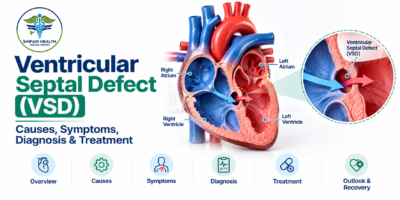
What is a ventricular septal defect? A ventricular septal defect (VSD) is an opening in the wall (septum)…
- October 22, 2026
- shifamhealth
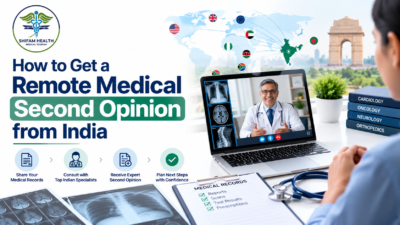
A remote medical second opinion from India allows patients living in the USA, UK and other countries to…
- October 21, 2026
- shifamhealth
When you receive treatment estimates from two hospitals in India, do not compare only the final amounts. To…
- October 22, 2026
- shifamhealth
An itemized hospital quote in India should clearly explain the expected cost of treatment by separating major charges,…