


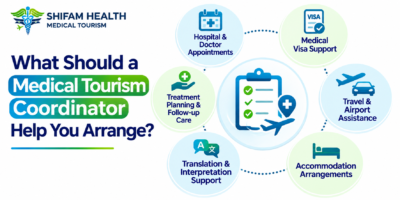
What Should a Medical Tourism Coordinator Help You Arrange?
Filters & Insights
Written By :
Medically Reviewed By :

Shifam Health Medical Team
Shifam Health - Medical Reviews Department
10+ Years Of Experience
Understand medical tourism coordinator services in India, from hospital appointments to travel and aftercare support.
📅
Last updated: November 7, 2026

Planning medical treatment in another country involves several decisions. You may need to identify a suitable hospital, communicate with specialists, share medical reports, understand treatment estimates, arrange travel documents and organise accommodation. For patients travelling to India, managing all these details from abroad can feel overwhelming.
A medical tourism coordinator can help organise many of these non-clinical arrangements. The role is to make communication and planning easier, help patients understand the next steps and coordinate with hospitals and relevant service providers.
However, it is important to understand what a coordinator should actually do. A coordinator is not a doctor, hospital or visa authority. Medical decisions must remain with qualified healthcare professionals, while visa approvals are made by the relevant government authorities.
This guide explains what medical tourism coordinator services in India may include, what international patients should expect, which questions to ask before choosing a coordinator and how to prepare for treatment.
Table of Contents
ToggleUnderstanding the Role of a Medical Tourism Coordinator
A medical tourism coordinator acts as a communication and logistics support point for patients who are considering or receiving treatment away from their home country.
The coordinator may help connect the patient with hospitals, doctors and other service providers. Depending on the organisation’s scope, assistance may begin with the first enquiry and continue through travel planning, hospital visits and planned post-treatment communication.
Typical responsibilities may include:
- Understanding the patient’s initial treatment enquiry.
- Helping organise medical reports for hospital review.
- Coordinating communication with relevant hospital departments.
- Requesting consultation appointments.
- Helping patients obtain hospital treatment estimates.
- Assisting with medical visa invitation letter coordination, where applicable.
- Coordinating airport pickup and accommodation arrangements.
- Helping organise translation and interpretation support.
- Supporting communication after treatment and discharge.
The exact services vary between organisations. Patients should always request a written explanation of what is included, what is optional and what may involve additional charges.
A coordinator should also explain the limits of their role. They can help arrange a specialist consultation, but they cannot independently diagnose a patient, prescribe medicines or guarantee a treatment outcome.
For a broader overview, read how to compare medical travel support services in India.
What Should a Medical Tourism Coordinator Help You Arrange?
Step 1: Initial Enquiry and Understanding the Patient’s Requirements
The process usually begins when a patient or family member contacts the coordinator.
At this stage, the coordinator should understand the basic requirements, such as:
- Patient’s country of residence.
- Age and relevant medical background.
- Diagnosis or suspected condition.
- Previous treatment, if any.
- Type of specialist or treatment being explored.
- Preferred hospital, if the patient has one.
- Expected travel period.
- Whether a family member or attendant will accompany the patient.
The purpose is to understand what coordination may be required.
A responsible coordinator should not make a diagnosis based on a brief message or a few medical reports. If the diagnosis is unclear, the patient’s records should be shared with an appropriate specialist for medical review.
Step 2: Collecting and Organising Medical Records
Hospitals need relevant medical information to understand the patient’s condition and decide whether a consultation or further evaluation is appropriate.
A coordinator may help the patient organise and submit:
- Recent consultation notes.
- Medical history.
- Blood test reports.
- MRI, CT, X-ray or ultrasound reports.
- Pathology or biopsy reports, where relevant.
- Previous prescriptions.
- Details of previous surgery or treatment.
- Other investigations requested by the hospital.
The coordinator should explain which documents are required and how they can be shared securely.
The patient should retain original reports and copies of all submitted documents.
Useful preparation resources include:
- How to prepare a digital medical file for an overseas specialist
- How to share large MRI and CT files with an Indian hospital
- How international patients can organise pathology slides for review in India
Step 3: Coordinating Hospital and Specialist Consultations
Once the relevant medical information is available, the coordinator may approach suitable hospitals or departments for further communication.
This may involve:
- Identifying hospitals that provide services for the relevant speciality.
- Coordinating medical record submission.
- Requesting a specialist consultation.
- Confirming appointment dates and timings.
- Sharing hospital responses with the patient.
- Helping the patient understand the next administrative steps.
Patients should be allowed to review their options and express their preferences.
The coordinator should not present a hospital or doctor as the best clinical choice without appropriate evidence. The treating specialist is responsible for assessing the patient’s medical condition and recommending treatment.
Before confirming an appointment, ask whether the doctor has reviewed the records or whether the consultation is intended to establish the diagnosis and treatment plan.
Read what happens during a virtual consultation with an Indian specialist to understand how an initial online consultation may work.
Step 4: Helping Obtain Treatment Estimates
International patients often need an approximate understanding of treatment expenses before deciding to travel.
A coordinator may request estimates from hospitals and help organise the information for comparison.
Depending on the treatment, the estimate may cover:
- Hospital admission.
- Doctor or surgeon fees.
- Operating theatre charges.
- Room category.
- Investigations.
- Medicines and consumables.
- ICU charges, if applicable.
- Expected length of stay.
- Exclusions and additional expenses.
Ask whether the estimate is issued by the hospital and whether it is provisional or final.
A coordinator should not change a hospital’s clinical recommendation or present an estimated cost as a guaranteed final bill.
Patients should also ask what may happen if additional tests, longer admission or an unexpected clinical requirement changes the original estimate.
For more guidance, read:
- Questions to ask before accepting a medical treatment package in India
- How to compare hospitals beyond the headline treatment price
Step 5: Coordinating Medical Visa Documentation
Patients travelling to India for treatment may need a suitable visa category and supporting documentation.
Depending on the patient’s nationality and circumstances, a coordinator may assist with:
- Communicating with the hospital about an invitation letter.
- Explaining the hospital’s documentation requirements.
- Helping organise documents requested for the visa process.
- Sharing general information about medical and attendant visa procedures.
- Coordinating hospital appointment details where required.
The coordinator should never promise visa approval or suggest that an invitation letter automatically guarantees a visa.
Visa applications and decisions are handled by the relevant government authorities.
Patients should check the Government of India’s official visa portal for current requirements and application procedures.
Shifam Health also provides general information through its guides on medical visas for India and medical attendant visas.
Step 6: Arranging Airport Pickup and Local Transport
After travel is confirmed, patients may need assistance getting from the airport to their accommodation or hospital.
A medical tourism coordinator may help arrange:
- Airport pickup.
- Transport to the hospital.
- Transfers between accommodation and hospital appointments.
- Accessible transport, where required.
- Assistance for patients travelling with companions.
The type of vehicle and support should match the patient’s mobility and medical requirements.
For example, a patient who has difficulty walking may need an accessible vehicle rather than an ordinary car. Patients who require clinical ambulance transport should have this assessed and arranged through appropriate medical transport providers.
Confirm the following before travel:
- Who will provide the transport?
- What is included in the charge?
- Where will the driver meet the patient?
- Is assistance with luggage available?
- Can the vehicle accommodate mobility aids?
- What happens if the flight is delayed?
Read how to arrange accessible transport for patients in India for additional planning guidance.
Step 7: Helping Arrange Accommodation
Some patients need to remain in India for several days or weeks, depending on their treatment and follow-up requirements.
A coordinator may help identify accommodation options according to:
- Distance from the hospital.
- Patient mobility.
- Length of stay.
- Budget.
- Availability of an accompanying family member.
- Access to food and daily necessities.
- Lift and accessibility requirements.
Patients should confirm whether the accommodation is suitable for their recovery needs. A hotel room may not be appropriate for someone who requires specialised nursing or medical supervision.
Ask for the accommodation’s location, facilities, cancellation terms and total charges before confirming a booking.
For more information, read affordable accommodation for medical tourists in India.
Step 8: Coordinating Translation and Interpretation Support
Language differences can make medical travel more difficult, especially when patients need to discuss complex medical information.
Depending on availability, a coordinator may help arrange:
- Interpretation during hospital appointments.
- Translation of general patient communication.
- Assistance with appointment instructions.
- Help communicating practical requirements.
- Language support for caregivers.
Patients should understand whether interpretation is available for the entire hospital visit or only during selected appointments.
For important medical discussions, interpretation should be accurate and should not replace direct communication between the patient and the treating doctor.
Step 9: Supporting Communication During the Hospital Stay
Once the patient is admitted, the coordinator may help with non-clinical communication and practical arrangements.
This may include:
- Helping the family understand administrative procedures.
- Coordinating requests for hospital documents.
- Communicating appointment or schedule updates.
- Supporting language requirements.
- Helping coordinate accommodation or transport changes.
- Assisting with general administrative queries.
The treating hospital remains responsible for clinical care, nursing, treatment decisions and emergency management.
A coordinator should not interfere with the medical team’s decisions or independently explain complex clinical findings without the doctor’s input.
Step 10: Coordinating Discharge and Post-Treatment Follow-Up
The coordination process may continue after the patient is discharged.
Depending on the service agreement, a coordinator may assist with:
- Requesting discharge summaries.
- Organising prescriptions and reports.
- Coordinating planned follow-up consultations.
- Helping communicate with the treating hospital.
- Arranging interpretation for follow-up discussions.
- Supporting practical arrangements for the patient’s return journey.
The patient should also have a clear plan for receiving medical care in their home country.
Read these related resources:
- What to ask about complications and emergency contacts before discharge
- How to arrange remote follow-up consultations after medical travel
- Planning rehabilitation after returning home from treatment in India
Documents and Information to Prepare Before Contacting a Coordinator
Preparing basic information before the first enquiry can make coordination more efficient.
Patient information
- Full name.
- Country of residence.
- Age.
- Contact number and email address.
- Preferred language.
- Expected travel period.
- Whether an attendant will accompany the patient.
Medical information
- Diagnosis or suspected condition.
- Recent medical reports.
- Previous treatment history.
- Current prescriptions.
- Imaging and laboratory reports.
- Previous operation details, where applicable.
- Specific questions or concerns.
Travel information
- Preferred travel dates, if known.
- Number of accompanying persons.
- Accommodation requirements.
- Mobility or accessibility needs.
- Preferred airport, if relevant.
- Language support requirements.
Questions to ask a medical tourism coordinator
- Which services do you provide?
- Do you charge a separate coordination fee?
- Can you coordinate with more than one hospital?
- Will hospital estimates be shared in writing?
- Can I choose my preferred hospital and doctor?
- How are medical reports shared with hospitals?
- Do you assist with medical visa invitation letter coordination?
- Can you arrange airport pickup and accommodation?
- Are translation and interpretation services available?
- What support is available during hospital admission?
- Can you coordinate planned follow-up after discharge?
- Who should I contact if I have a concern during the process?
Common Mistakes to Avoid When Working with a Medical Tourism Coordinator
Assuming the Coordinator Is a Doctor
A coordinator may understand the process of arranging medical care, but that does not qualify them to diagnose or prescribe treatment.
Always direct clinical questions to a qualified doctor.
Not Understanding the Service Agreement
Before paying, understand exactly what is included and what may involve additional charges.
Ask for written details rather than relying only on verbal assurances.
Accepting an Estimate Without Checking Its Source
Confirm whether the estimate comes from the hospital and whether it includes exclusions and possible additional costs.
Sharing Medical Documents Without Understanding How They Are Used
Medical reports contain sensitive information. Ask who will receive them, why they are required and how they will be shared.
Believing That a Visa Is Guaranteed
No coordinator can guarantee a government visa decision. Use official government information and submit accurate documents.
Expecting Every Service to Be Included
Airport pickup, accommodation, interpretation and other arrangements may be separate services. Confirm the scope before travel.
Ignoring Aftercare Planning
Ask how discharge documentation and planned follow-up communication will be coordinated. Do not assume that all support automatically continues after treatment.
When Should You Contact a Hospital or Specialist Directly?
A medical tourism coordinator can help arrange communication, but certain matters require direct confirmation from the hospital or treating specialist.
Contact the hospital or specialist when you need to confirm:
- Whether the hospital treats your specific condition.
- Whether the doctor has reviewed your medical records.
- Whether a particular treatment is clinically appropriate.
- Which investigations are required.
- Whether a procedure is available.
- Whether a treatment estimate is official.
- Whether the patient is fit for travel.
- What complications or risks are relevant to the treatment.
- Which follow-up arrangements are medically necessary.
You can also verify relevant professional and hospital information through official sources:
- National Medical Commission – Medical regulation and registration information.
- National Accreditation Board for Hospitals and Healthcare Providers – Hospital accreditation information.
- Government of India’s official visa portal – Official visa information.
For additional guidance, read how to verify a doctor’s qualifications before medical travel and how to confirm whether a hospital treats your specific condition.
How to Evaluate Whether a Medical Tourism Coordinator Is Suitable
Before selecting a coordinator, assess whether its working process is clear and transparent.
| Evaluation area | What to look for |
|---|---|
| Communication | Clear and timely responses |
| Medical records | Organised and responsible document coordination |
| Hospital coordination | Transparent appointment and enquiry process |
| Estimates | Written information from identifiable hospitals |
| Service charges | Clear fees and payment terms |
| Visa assistance | Accurate guidance without promises of approval |
| Travel support | Clearly explained transport and accommodation arrangements |
| Language support | Transparent information about available languages |
| Privacy | Responsible handling of medical information |
| Aftercare | Clear explanation of planned follow-up coordination |
A good coordinator should be comfortable answering questions about its services and limitations.
Be cautious if an organisation pressures you to pay immediately, discourages you from contacting the hospital directly or promises guaranteed clinical results.
How Shifam Health Helps International Patients
Shifam Health is a medical travel coordination company based in Delhi, India. It assists international patients who are exploring treatment options in India and require support with hospital communication and travel-related arrangements.
Depending on the patient’s needs, Shifam Health may help coordinate:
- Hospital and specialist appointment requests.
- Medical report collection and submission.
- Communication with relevant hospital departments.
- Written treatment estimate requests.
- Medical visa invitation letter coordination, where applicable.
- Airport pickup and local transport arrangements.
- Accommodation options.
- Medical escort coordination.
- Translation and interpretation support.
- Planned post-treatment follow-up communication.
Shifam Health acts as a facilitator and coordinator. It does not independently diagnose patients, prescribe treatment, perform medical procedures or guarantee clinical outcomes. Medical decisions remain with the treating doctors and hospitals.
Patients and families can review their options, ask questions and make informed decisions about their treatment arrangements.
If you are planning medical treatment in India and need help coordinating the process, contact Shifam Health.
Conclusion
A medical tourism coordinator can make treatment planning in India more manageable by helping international patients organise hospital communication, medical documents, appointments and travel arrangements.
However, patients should understand the coordinator’s exact responsibilities before choosing a service provider. Ask about fees, hospital relationships, privacy practices, travel support and post-treatment coordination. Make sure clinical decisions remain with qualified healthcare professionals and that visa-related information is based on official requirements.
The right coordination support should make the process clearer, not more confusing. It should help you understand the next steps while allowing you to remain informed and involved in every important decision.
Planning medical treatment in India? Shifam Health can assist with hospital coordination, medical appointments, travel arrangements and planned post-treatment communication. Contact our team to discuss your requirements.
Frequently Asked Questions
What does a medical tourism coordinator do in India?
A medical tourism coordinator helps international patients organise non-clinical aspects of treatment, such as hospital communication, appointment requests, medical document coordination, travel arrangements and planned follow-up support.
Does a medical tourism coordinator choose the treatment for the patient?
No. Treatment decisions must be made by qualified doctors after reviewing the patient’s medical condition. A coordinator can help arrange consultations and communicate medical recommendations.
Can a coordinator arrange hospital appointments?
Yes, appointment requests can be coordinated with hospitals, subject to the hospital’s procedures and the doctor’s availability.
Can a medical tourism coordinator help with medical visas?
A coordinator may help organise hospital invitation letter documentation and provide general process information. Visa approval remains the responsibility of the relevant government authority.
Does medical travel coordination include accommodation and airport pickup?
Some organisations offer or coordinate these services, while others do not. Ask for written confirmation of what is included and any additional charges.
Can a coordinator help after treatment is completed?
Depending on the organisation’s service scope, it may help coordinate discharge documents, planned follow-up appointments and communication with the treating hospital.




Popular Posts From Last Week
- November 1, 2026
- shifamhealth
A practical guide for international patients planning treatment in India when more than one specialist is needed. Learn…
- November 2, 2026
- Shifam Health
A practical guide for international patients explaining how to organise existing medical reports, confirm additional test requirements, prepare…
- November 2, 2026
- Shifam Health
Planning medical treatment in another country involves more than choosing a hospital and booking a flight. International patients…
- November 2, 2026
- Shifam Health
If you are travelling to India for surgery, one of the most important questions to answer before booking…
- November 3, 2026
- Shifam Health
When a patient travels to India for medical treatment, having a companion can make the journey easier to…
- November 3, 2026
- Shifam Health
Travelling to India with someone for medical treatment requires more than arranging flights and accommodation. Caregivers need to…
- November 3, 2026
- Shifam Health
Planning a hospital visit in India involves more than treatment and accommodation. International patients and their companions also…
- November 7, 2026
- Shifam Health
Planning treatment in another country involves hospital communication, medical records, appointments, travel documents and practical arrangements. A medical…
- November 5, 2026
- Shifam Health
Medical treatment abroad does not always follow the original schedule. Additional investigations, specialist consultations, hospital availability or recovery…
- November 5, 2026
- Shifam Health
Repeat investigations and additional specialist consultations can affect the total cost of medical treatment in India. Even when…
- November 4, 2026
- Shifam Health
When a patient travels to India for medical treatment, a close family member may need to remain in…
- November 4, 2026
- Shifam Health
When comparing hospitals in India for treatment, it is tempting to focus on the total amount mentioned in…